
If you sleep on your stomach and shop on DHgate, start with one rule: a genuinely low-loft, soft pillow that keeps your head close to the mattress is usually more comfortable than a thick, firm one that lifts and twists your neck. Treat that as a strong comfort guideline—not a medical promise—and use it to judge every pillow spec and design claim you see in DHgate listings.
The core rule for stomach-sleeper pillows
As a stomach sleeper, the simplest DHgate rule is to favor a clearly thin, soft pillow—or sometimes no pillow at all—because extra height and firmness tend to lift your head away from the mattress and crank your neck into a steeper bend. With a thick, firm pillow, your head is pushed up and back while your neck twists to one side, which usually feels tight or strained. A very low-loft, soft pillow keeps your head much closer to the mattress, makes the angle at your neck gentler, and usually feels more comfortable and easier to relax into.
This is a comfort and alignment guideline, not a medical treatment or guarantee, and there will always be individual differences: some stomach sleepers feel best on almost no pillow, others want a very thin one. I would personally rather choose a simple, low-loft pillow whose height and softness are honestly described than gamble on a tall, heavily contoured design or trendy cooling gels that might be too thick for stomach sleeping.
Keep this rule in mind as you read DHgate listings: every spec—loft (height), firmness, material, and any special shape or “stomach-sleeper” label—should be judged by one question: will this pillow keep my head low to the mattress and avoid exaggerated neck angles, or will it push me higher than I’m comfortable with?
How low-loft should a stomach-sleeper pillow be?
For stomach sleepers, loft (pillow height) is the spec that most directly controls how far your head sits above the mattress. You can think in simple ranges: very low loft is roughly 1–2 inches (about 2–5 cm) when the pillow is under your head, low loft around 2–3 inches (about 5–8 cm), medium loft about 3–5 inches (8–13 cm), and high loft above 5 inches (over about 13 cm). On your stomach, very low and low loft keep your head close to the mattress, so your neck doesn’t have to bend back as sharply. Medium and high loft usually hold the head much higher, which can feel more like the heights meant for side or back sleepers.
Most stomach sleepers should aim for very low to low loft—roughly 1–3 inches once the pillow is compressed by your head and weight—while treating medium and high loft as generally too tall unless you only occasionally end up on your stomach. There isn’t one perfect number, because body size, shoulder width, and mattress softness all change how that height feels, so treat these as comfort-oriented ranges rather than guarantees of neck-pain relief. If you often switch between stomach, side, and back, it can be reasonable to accept a slightly higher loft for versatility, but it’s still wise to avoid obviously thick pillows that are marketed mainly for side sleepers when you know stomach sleeping is part of your routine.
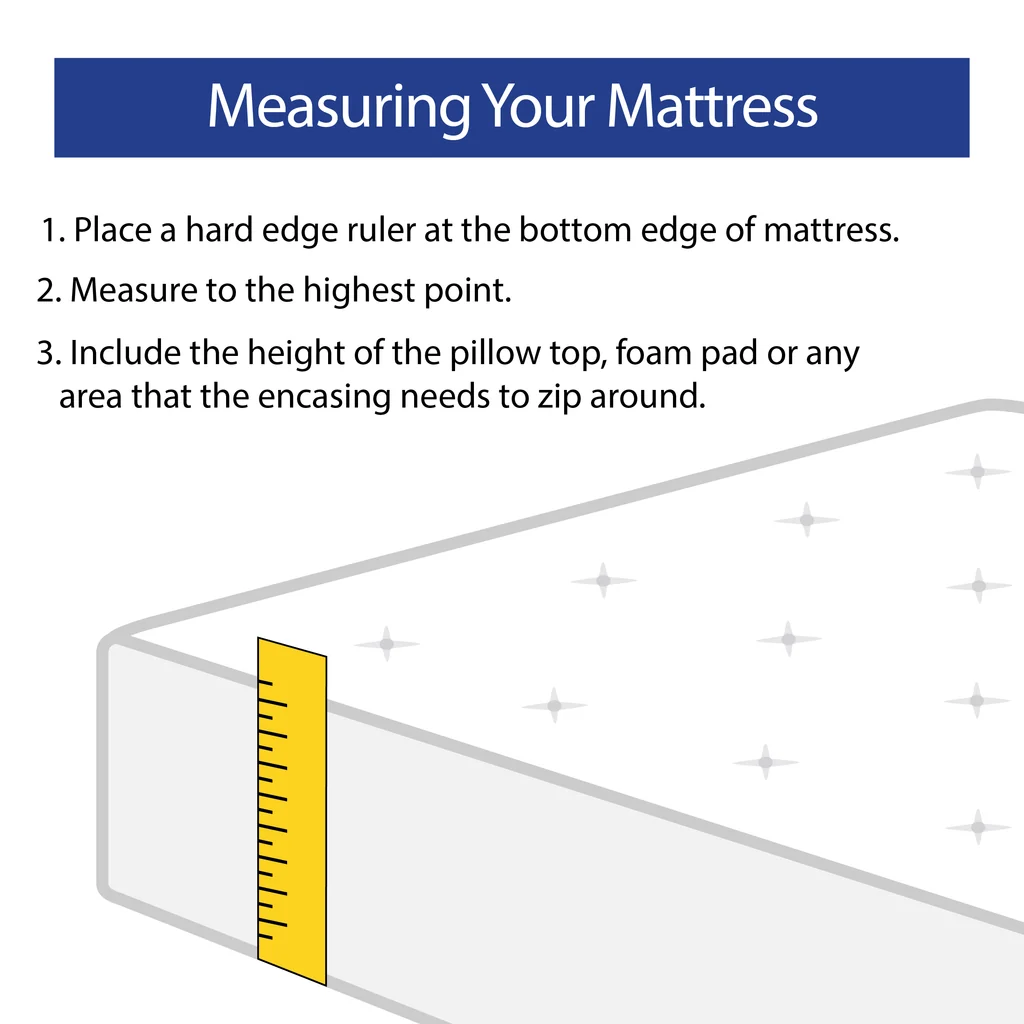
- Check the dimensions in the DHgate listing and look specifically for a thickness or height value in the specs table or bullet list. Treat that number as the pillow’s uncompressed height—how tall it is when nothing is pressing down on it.
- Compare uncompressed height to how it will feel once you lie on it. Softer, more flexible pillows usually compress by a noticeable amount, so a listed height of 3 inches might feel closer to 2 inches in use, while very firm pillows stay closer to their listed height and feel taller.
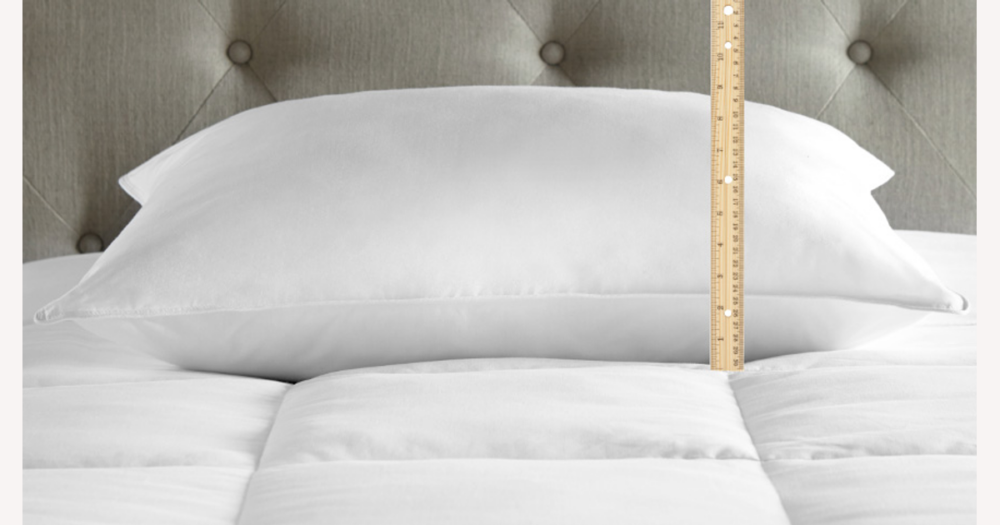
- Look closely at side-view photos that show the pillow’s profile, especially any image with a ruler or measurement overlay. Cross-section pictures or photos of the pillow next to familiar objects (like a book or a hand) help you judge whether it really looks like a very low or low loft option for stomach sleeping.
- Scroll buyer photos and reviews for real-world thickness impressions. Comments such as “thinner than expected,” “pretty flat,” or “much thicker than the pictures” are helpful clues about how the pillow’s loft behaves in everyday use.
- Be cautious with listings that only say things like “thin” or “low profile” without giving actual numbers, or that never show a clear side-view image. For stomach sleepers, predictable loft matters, so it’s safer to favor DHgate listings that provide specific height measurements and believable photos over vague descriptions.
A side-view height measurement—like a ruler held against the edge of a pillow on a mattress—shows the actual loft and helps you confirm whether a DHgate pillow is truly thin enough for stomach sleeping.
Softness, fill materials, and how they feel for stomach sleepers
Firmness is essentially how much a pillow squashes under your head and how quickly it springs back. For stomach sleepers, the goal is usually a soft or extra-soft feel that lets your head sink down instead of staying propped up high, making the bend at your neck gentler alongside a low loft.
On DHgate you’ll see several common fill types, and they tend to behave in predictable ways. Loose fiberfill or down-like materials usually feel soft and easy to compress, so your head can nestle in and sit lower. Shredded foam can land in the middle: if there’s a lot of foam packed in, it can feel closer to medium firmness, but with less fill it can soften and flatten out more. Solid blocks of memory foam or latex-like foam often stay taller and firmer, holding your head closer to the listed height unless the design is very thin to begin with.
Because different materials collapse differently, a softer, more compressible fill combined with low loft will usually feel more stomach-friendly than a dense, firm block at the same stated height. Two pillows both listed at around 3 cm or 3 inches can behave very differently once you lie on them: the soft one may sink so your head is effectively lower, while the firm one can keep you elevated as if it were much thicker.
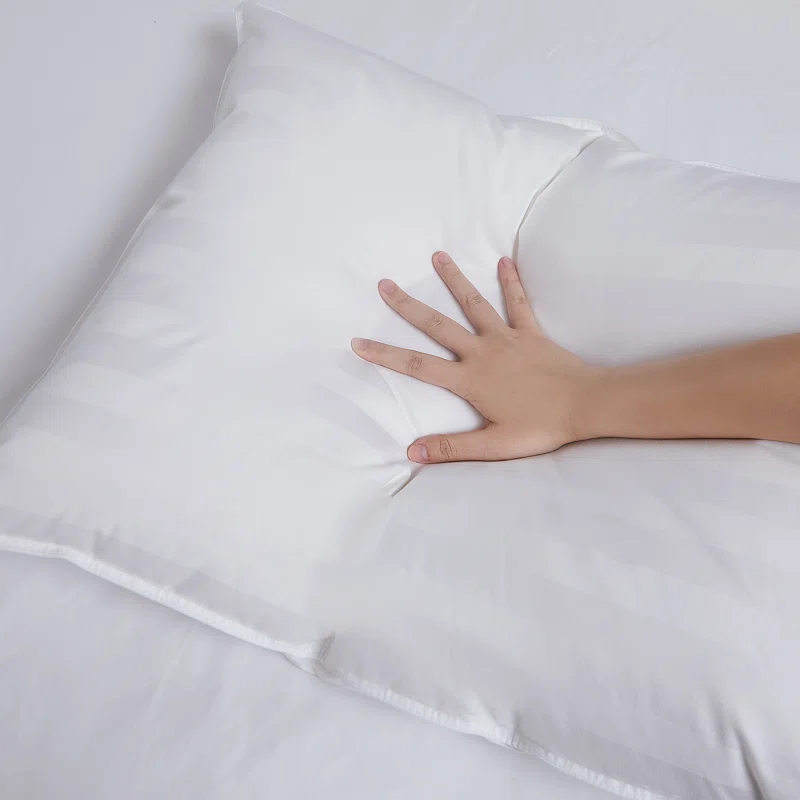
DHgate listings often use vague phrases like “soft yet supportive,” “medium soft,” or “comfort support” instead of clear firmness scales. When you see those, treat them as starting points, not guarantees. Cross-check the wording against buyer reviews that mention how soft or firm the pillow actually feels, look for photos showing hands pressing into the pillow or the pillow under someone’s head, and pay attention to any simple firmness scale (such as soft/medium/firm) in the specs.
When you weigh materials and firmness on DHgate, it’s more useful to chase clear, believable descriptions of softness and fill than trendy branding or extra features. I would rather choose a plainly described, soft, low-loft pillow whose photos and reviews match the claim than a heavily marketed design that talks about “neck care” without showing how low it sits. Keep your focus on how the pillow is likely to position your head and neck, not on medical promises or buzzwords.
Pillow shapes and ‘stomach-sleeper’ designs
From a stomach sleeper’s point of view, the simplest shape is a thin, flat rectangular pillow. It doesn’t force your neck into a fixed curve, and as long as the loft is genuinely low and the fill is soft, your head can stay close to the mattress. In contrast, contoured cervical pillows with waves or built-in neck rolls are usually designed around back or side sleepers. Their raised ridges can feel too high or awkward when you lie face down, especially if you end up resting on the thicker part instead of a lower edge.
Some designs add shoulder or arm cut-outs, creating spaces where you can tuck an arm or fit your shoulder. On your stomach, these can be hit-or-miss: if the overall loft is still low and the cut-out lets you lie fairly flat, they may feel comfortable, but deep cut-outs combined with thick foam often keep your head higher than you’d like. Adjustable-fill pillows are more promising, because you can remove stuffing to reduce both height and firmness. However, they only truly help stomach sleepers if the minimum fill level can get very thin and soft instead of stopping at a mid-height profile.
Labels such as “orthopedic,” “cervical,” “neck-care,” or even “for stomach sleepers” in a DHgate title don’t automatically mean a pillow is low and gentle enough for your position. The real test is whether the design keeps your head low and avoids a big tilt or twist. Check side-view photos and diagrams showing where the head rests, and look for clear notes on minimum and maximum height so you can judge whether there’s a genuinely thin area you could use on your stomach.
Practical DHgate cues include cross-section photos that reveal waves or cut-outs, drawings of different sleep positions, and a specs table that lists thickness ranges. If those images suggest most of the pillow is quite tall, treat it as more suitable for back or side sleepers. Unless a listing clearly shows a dedicated low-profile zone meant for stomach sleepers, I would still prioritize a simple, low-loft, soft rectangular pillow over complicated contours. Specialty shapes can work for some people by preference, but the safest bet is a design that visibly keeps your head close to the mattress.

Side view of a thin, flat rectangular pillow that sits low against the mattress, illustrating the kind of simple, low-loft shape many stomach sleepers prefer.
Side view of a taller, wave-shaped cervical pillow, showing how contoured designs can hold the head higher and create a fixed curve.
Step-by-step DHgate checklist for stomach-sleeper pillows
- Note your own sleep pattern first. If you mostly sleep on your stomach, plan to prioritize a very thin, soft pillow; if you often switch to side or back, be ready to compromise slightly on loft for versatility.
- Check the listing’s dimensions and look for a clearly stated thickness. Choose a genuinely low-loft height for stomach sleeping, and make sure the measurement refers to the pillow under weight (compressed) rather than just its uncompressed edge.
- Read the firmness description carefully. Favor clear words like “soft” or “extra soft” and use buyer reviews to confirm that people describe the pillow as squishy or easy to sink into, not stiff or overly supportive.
- Identify the fill material—such as fiberfill, down-like fill, shredded foam, solid foam, or latex-like foam—and match it to how you expect it to compress. Softer, more pliable fills usually let your head settle closer to the mattress than dense, solid blocks of foam.
- Study the pillow’s shape and any “stomach-sleeper” or orthopedic claims in the photos and diagrams. Check side-view images to see whether the profile stays low and simple or adds extra height and rigid contours that would hold your head higher.
- Review DHgate seller information: ratings, number of completed sales, and buyer comments that mention real thickness, firmness, and overall quality. Give more weight to detailed, spec-focused feedback than to short, generic praise.
- Confirm practical details such as estimated shipping time and total cost, including any taxes or fees, so you know what you’re committing to before ordering.
- Read the return, refund, and dispute policy closely and prefer listings that offer a reasonable way to send the pillow back or resolve issues if it arrives feeling taller or firmer than you expected.
- Use this checklist as a way to reduce the chance of another uncomfortable pillow purchase on DHgate. It helps you make clearer, spec-based decisions, but it cannot guarantee health outcomes or eliminate all risk of discomfort.
Common online pillow-shopping pitfalls for stomach sleepers
- Be cautious with pillows marketed for “all positions” or primarily for side and back sleepers when they list medium or high loft. Even if the marketing suggests universal use, that extra height often feels too tall for stomach sleeping.
- Do not rely on vague, health-sounding labels such as “orthopedic,” “cervical,” “neck-care,” or “pain-relief” if the listing does not also provide clear dimensions, firmness, and material details. These terms do not guarantee a low, soft profile.
- Treat listings that skip thickness measurements or only show staged photos with no obvious scale as red flags. Without a verifiable loft number, you cannot judge how high your head will sit on the pillow.
- Avoid trusting stock images or generic spine-alignment icons on their own. Always cross-check them against actual height specs and material descriptions, since polished visuals can hide a pillow that is thicker or firmer than it appears.
- Do not overlook return and refund options. Even with careful spec checking, a pillow can arrive feeling higher or harder than you expected, and a clear, fair policy makes it easier to correct a misjudged purchase.
- Whenever dimensions, firmness, or material information are unclear or inconsistent, remember the core rule: a pillow that turns out thicker or firmer than you intended is likely to feel worse on your stomach. In those cases, it is safer to pause, ask questions, or choose a better-documented listing.
Specs vs promises: what you can actually verify
On DHgate, the most trustworthy information in a pillow listing is the objective detail: dimensions (length, width, and especially height or loft), material labels (such as polyester fiberfill, memory foam, latex‑like foam, or down‑like fill), firmness wording, sleep‑position tags, clear profile photos, seller ratings, review counts, and written shipping and refund policies. These are the parts you can cross‑check: numbers should be plausible, materials should match the photos, and buyer feedback should be consistent with how the pillow is described.
In contrast, treat strong comfort or health claims as marketing language unless there is credible evidence you can independently verify. Phrases like “cures neck pain,” “eliminates headaches,” “medical‑grade,” or “doctor‑approved” usually describe hoped‑for outcomes, not guaranteed results, especially when they appear without detailed specs or trustworthy supporting information. For stomach sleepers, those claims do not replace the need to confirm how tall, soft, and compressible the pillow actually is.
This guide talks about pillows on DHgate as comfort products, not medical devices. The advice is based on observable relationships: a lower loft and softer, more compressible fill tend to keep your head closer to the mattress and reduce the steep bend in your neck compared with a higher, firmer pillow. Whether any specific pillow improves or worsens pain is individual and cannot be promised from a listing alone.
When you judge a DHgate pillow for stomach sleeping, give most weight to the verifiable parts: stated height range, material type, firmness description that matches buyer reviews, sleep‑position labels, side‑profile photos, and solid seller metrics plus clear shipping and refund terms. If a listing sounds dramatic—promising miracle comfort or medical‑level benefits—but its dimensions, material details, or firmness information are missing, vague, or inconsistent, it is safer to move on to a better‑documented option that lets you clearly see whether the pillow is likely to be low and soft enough for your stomach‑sleeping needs.
FAQ: Special cases for stomach sleepers
Is it okay for a stomach sleeper to use no pillow at all?
For some stomach sleepers, using no pillow can feel comfortable because it keeps the head almost level with the mattress and avoids extra height that might bend the neck back. It isn’t a rule, though. If lying flat makes your chest or face feel compressed, or you simply don’t like the sensation, a very thin, soft pillow is a reasonable alternative. Think in practical terms: choose the option—no pillow or a genuinely low-loft one—that keeps your head as close to neutral and relaxed as feels comfortable, without expecting it to solve health issues on its own.
How should I choose a pillow if I switch between stomach, back, and side sleeping?
If you regularly rotate between positions, you’re balancing stomach-sleep comfort with the extra height side and back sleeping often need. A common compromise is a relatively thin but not ultra-flat pillow—something lower than typical side-sleeper pillows but not as flat as a pure stomach-sleeper option. Another practical route is to accept that you may need different pillows for different positions, such as a very low-loft, soft pillow for stomach nights and a taller one for side sleeping. On DHgate, judge any “all-position” pillow by the same core idea: if it looks quite tall and firm, it will probably feel less comfortable on your stomach, even if it’s fine on your side or back.
How often should I reassess whether my pillow still suits my stomach-sleeping needs?
Revisit your pillow choice whenever the pillow’s feel or your comfort clearly change. Signs include the pillow flattening or clumping so much that support feels uneven, becoming firmer or lumpier than when you bought it, or simply no longer feeling comfortable when you lie on your stomach. At that point, it’s worth re-checking loft, softness, and how close your head stays to the mattress, then comparing those impressions with any new pillow you consider on DHgate. Treat this as routine comfort maintenance: adjust or replace the pillow when it stops supporting a relaxed, low head position, rather than on a strict schedule or in hopes of guaranteed health outcomes.