
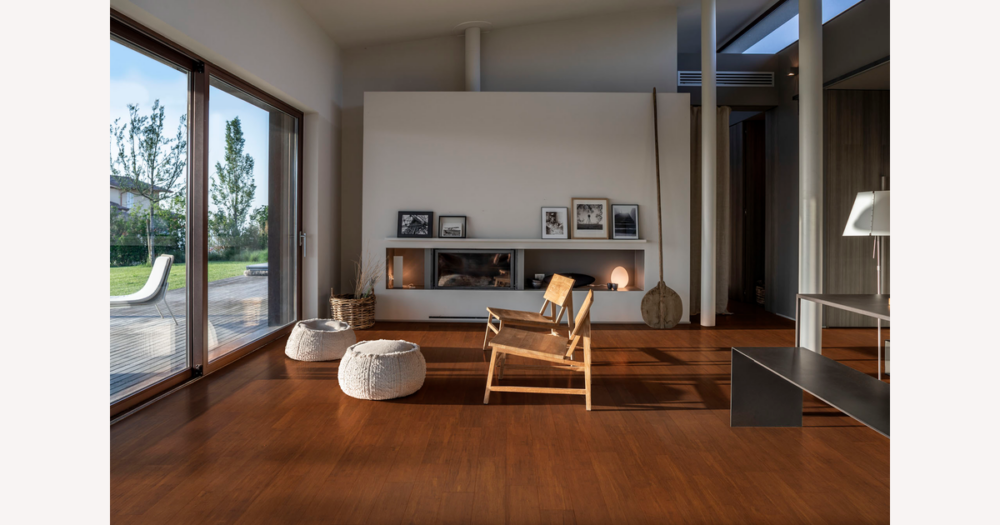
For a Canadian home facing freezing winters and heavy daily foot traffic, engineered strand-woven flooring over a stable core is usually the most forgiving bamboo option. It tends to stay flatter and more predictable through humid summers and dry, heated winters while better resisting dents from kids, pets, and everyday life. On DHgate, focus on listings that clearly describe an engineered core, a strand-woven bamboo wear layer, and honest construction and finish details. Then check the seller’s history, shipping terms, and dispute protection so you don’t have to gamble on an under-specified plank for your busy household.
Solid vs engineered bamboo: which construction fits a cold, busy Canadian home?
For a Canadian home with long, cold winters and a busy family, I would treat engineered strand-woven bamboo over a stable core (often plywood or similar) as the default choice. That kind of construction typically handles seasonal expansion and contraction more predictably than solid bamboo, so you’re less likely to see noticeable gapping or cupping when indoor air swings from humid summer to dry, heated winter.
That recommendation applies specifically to a cold Canadian climate and a household with regular foot traffic, kids, or pets. It doesn’t mean engineered bamboo is perfect or that solid bamboo always fails; engineered cores generally offer more forgiveness when the indoor environment isn’t tightly controlled, reducing the risk of visible movement or wear becoming a source of dissatisfaction.
In simple terms, solid bamboo planks are made mostly or entirely of bamboo, while engineered bamboo uses a bamboo wear layer on top of a different core. When you choose an engineered, strand-woven product, you’re combining a dimensionally stable core with a dense, durable surface, which is why it’s usually the safer bet for this specific cold, busy-home scenario.
Solid bamboo flooring is made from bamboo itself, typically by gluing and pressing strips of bamboo into planks. The entire thickness of the board is bamboo, so its movement with changes in humidity is largely governed by how that material expands and contracts.
Engineered bamboo flooring uses bamboo mainly as the top veneer or wear layer, bonded to a core of another material such as plywood or a similar layered substrate. That core is designed to stay more dimensionally stable, which helps the floor move more evenly through humid summers and dry winters.
Within both solid and engineered categories, you’ll see different bamboo styles. Strand-woven bamboo is made by shredding the bamboo into fibers, mixing them with resins, and compressing them under high pressure into very dense blocks or layers. Traditional horizontal or vertical bamboo uses stacked strips that show a more recognisable bamboo grain. Strand-woven can appear as a solid-style plank or as the wear layer on an engineered core, and in practice it’s the combination of core design plus strand-woven or strip construction that shapes how the floor behaves in your home.
- I would still consider solid bamboo in Canadian settings where indoor humidity doesn’t swing as widely—for example, coastal areas with milder winters or homes that actively maintain stable humidity year-round with humidifiers and monitoring.
- Solid bamboo is also more reasonable when household traffic is moderate, with fewer heavy impacts from kids, pets, or dropped objects, and when the homeowner genuinely prioritises its particular look and is prepared to live with some visible movement over time.
- If you choose solid bamboo for a colder or less controlled environment, you are accepting a higher likelihood of issues such as small gaps between boards or slight cupping during dry spells. That trade-off isn’t automatically wrong, but it should be a conscious choice rather than a surprise after installation.
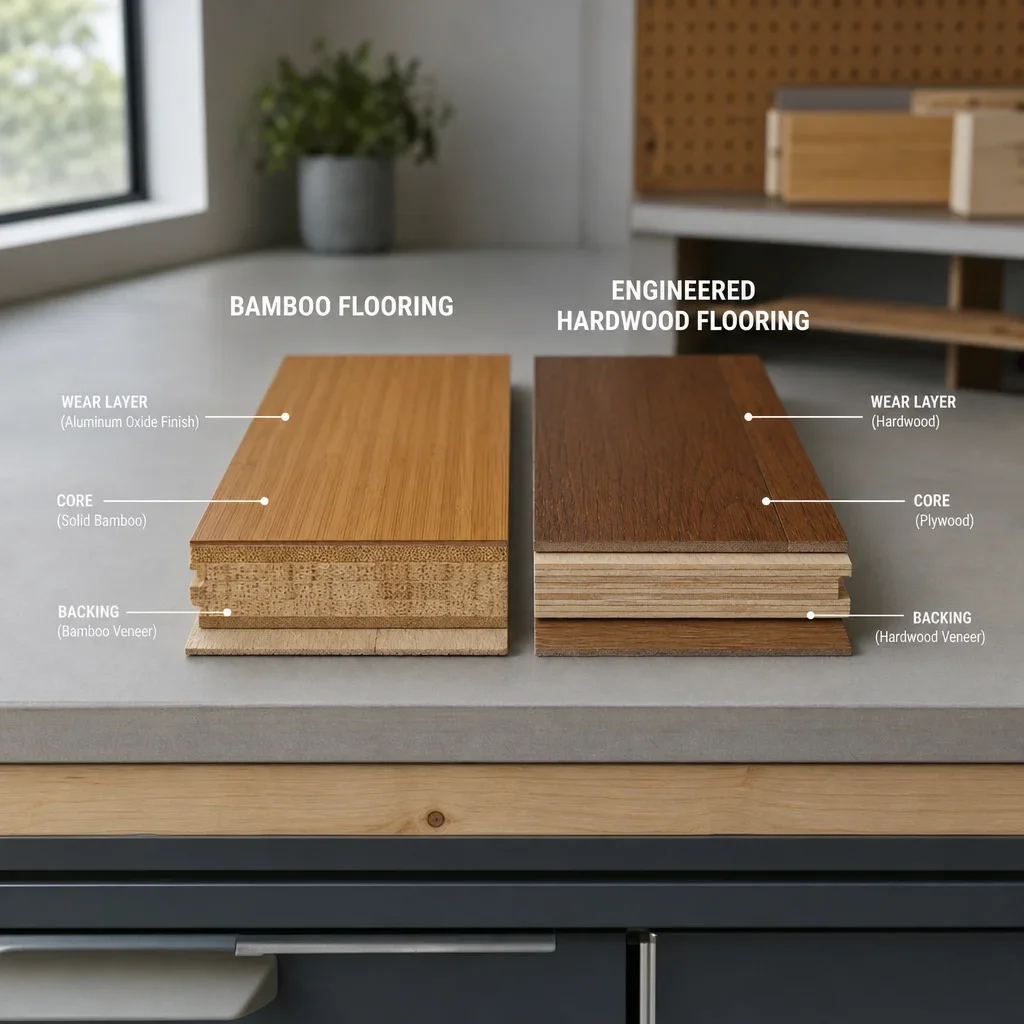
Use the cross-section image to see how an engineered floor has a distinct core beneath a separate bamboo wear layer, while a solid plank is more uniform through its thickness. When reviewing DHgate product photos or diagrams, identifying that layered structure helps confirm whether a listing is truly engineered bamboo or closer to solid construction.
How bamboo flooring behaves in Canadian winters and family use
In a cold Canadian climate, bamboo flooring mainly has to cope with two stresses: winter dryness from heating and occasional high moisture from humid summers or basement slabs. When indoor air dries out, boards can shrink slightly, showing small gaps or, in some cases, a bit of cupping as the edges lift. When moisture rises—from a damp subfloor, spills left standing, or poor vapor control—planks may swell or the surface finish can start to look tired sooner than expected.
Solid bamboo planks, especially in wider formats, tend to show more of this visible movement when humidity swings sharply. Engineered bamboo, built on a layered, stable core, is designed to limit that movement so the floor stays flatter and joints stay more consistent. Strand-woven wear layers add another layer of resilience: their dense, compressed fibers are typically more resistant to denting and surface wear than traditional horizontal or vertical strip constructions, which is helpful in busy homes with kids, pets, or heavy furniture.
Moisture and subfloor conditions are just as important as the plank itself. Rooms over basements or slab-on-grade concrete need careful moisture testing and an appropriate underlay or vapor barrier to keep water from wicking into the flooring. In a high-traffic family space, combining an engineered core, strand-woven surface, and suitable underlay gives you a better chance of avoiding problems than relying on solid bamboo alone.
These are risks to plan for, not guarantees of failure. You can reduce them by acclimating the bamboo planks to your indoor conditions before installation, following manufacturer guidance on underlayment and moisture barriers, and maintaining reasonable indoor humidity rather than letting the air swing from very damp to extremely dry. Detailed performance numbers vary by brand and factory, and technical data are limited, so treat this as cautious planning advice based on typical behaviour patterns rather than a precise prediction for every product.
Comparing bamboo types on durability, stability, maintenance, and environmental feel
| Bamboo type | Durability for busy families | Climate stability in cold Canadian winters | Maintenance demands | Environmental feel and aesthetics |
|---|---|---|---|---|
| Solid bamboo, horizontal/vertical grain | Moderate dent resistance; surface can mark more easily under kids, pets, and heavy furniture. | More prone to visible gaps and slight cupping when indoor humidity swings sharply between humid summers and very dry, heated winters. | Similar sweeping and cleaning to hardwood, but needs closer humidity control and faster cleanup of spills to avoid movement and edge wear. | Classic bamboo strip look with clear nodes; feels “pure” and simple, appealing if you value a traditional material expression. |
| Solid strand-woven bamboo | High dent and wear resistance from dense, compressed fibers, useful for busy family areas. | Still a solid plank, so seasonal shrink–swell can show as movement at joints if humidity isn’t managed carefully. | Tough surface tolerates daily use well, but you still need to watch indoor humidity and moisture at the subfloor in a harsh climate. | Distinctive, varied grain and a more contemporary, textured appearance while remaining all-bamboo in construction. |
| Engineered bamboo, traditional grain wear layer | Good everyday durability; typically less resistant to dents than strand-woven but comparable to many hardwoods. | Layered core (often plywood or similar) is designed to handle seasonal moisture and temperature changes more predictably than solid planks, reducing visible movement. | Day-to-day care is straightforward; humidity control matters but the core usually forgives minor swings better than solid bamboo. | Shows familiar horizontal/vertical bamboo grain, but includes non-bamboo core layers, which some buyers see as less “pure” but still generally eco-leaning. |
| Engineered strand-woven bamboo | Typically the strongest dent and wear resistance, well suited to high traffic, kids, and pets. | Combines a stable engineered core with a dense strand-woven surface, offering the most predictable performance through Canadian freeze–thaw cycles and indoor humidity changes. | Routine sweeping and cleaning are simple; focus on basic humidity management and manufacturer guidelines rather than intensive special care. | Modern, often bold grain with a mixed-material construction: bamboo wear layer over another core, trading a bit of perceived material simplicity for practicality and robustness. |
Taken together, engineered strand-woven bamboo offers the most practical mix of dent resistance and climate stability for a cold, busy Canadian home. Its layered core handles seasonal moisture and temperature swings more predictably than solid planks, while the dense wear layer stands up well to the daily scrapes and knocks that come with kids, pets, and heavy use.
Solid bamboo and non-strand constructions can be worth considering if you care most about a particular grain pattern or a feeling of material “purity,” but they usually ask more of you in return: tighter humidity control, more acceptance of small gaps or movement, and a higher tolerance for visible wear in a harsh climate. Use the comparison table to decide whether you value maximum robustness in your space or are comfortable trading some stability and durability for a look you prefer.
How to vet bamboo flooring listings and sellers on DHgate
- Review the DHgate listing description carefully to pin down the construction: confirm whether the floor is solid or engineered, strand-woven or traditional grain, what core material is used, plank dimensions, finish type, and the recommended installation method for your subfloor.
- Check seller reliability by looking at overall ratings, the number of completed orders, and buyer reviews that mention product quality, packaging, and delivery experience—pay extra attention to comments about warped boards, colour variation, or damage in transit.
- Verify shipping and packaging details, including estimated delivery times to Canada, how the planks are wrapped and boxed, and any notes about protecting the flooring from moisture or temperature extremes during transport if the seller provides them.
- Message the seller when key bamboo-related specs are unclear. Ask directly about strand-woven construction, core stability (for engineered products), exact plank thickness, and any recommendations they have for underlayment in cold climates or over concrete slabs.
- Before ordering, read DHgate’s buyer protection, dispute, and refund information so you understand how to open a dispute, upload photos, and document problems if the flooring arrives damaged, warped, or significantly different from the description.
- These steps turn general guidance about engineered and strand-woven bamboo into concrete marketplace checks, lowering the chance of ending up with low-quality or unsuitable planks for your Canadian family home.
Confirming specs and seller reliability on DHgate is the practical way to make sure the floor you receive matches the engineered or strand-woven constructions and cold-climate suitability discussed earlier. In a Canadian home with heavy use, I would favour listings that clearly document construction type, core material, thickness, finish, and installation guidance over vague descriptions, because that transparency gives you a better chance of getting bamboo flooring that can genuinely cope with your winters and busy household.
Key bamboo flooring specs for a busy Canadian family home
- Look for engineered bamboo construction with a clearly stated stable core, such as quality plywood or another dimensionally stable material.
- Look for a strand-woven bamboo wear layer or top surface that the seller describes as suitable for heavy residential or busy-family use.
- Confirm plank thickness and overall build that indicate robust construction (for example, multi-layer engineered planks), without relying on exact “ideal” thickness claims.
- Confirm that the flooring has a protective finish described for high-traffic areas, along with straightforward cleaning recommendations that fit your household routine.
- Look for explicit installation guidance that matches your subfloor type (such as concrete slab or wood subfloor) and specifies compatible underlayment for cold climates.
- Check seller notes or specifications that mention performance or suitability in regions with seasonal moisture and temperature swings, not just generic “all-climate” claims.
- Keep stability and durability as your top priorities: when choosing between DHgate listings, I would accept a slightly higher price or a less exotic grain pattern in favour of engineered, strand-woven bamboo with clear specs over cheaper, vaguely described options.
Common claims, remaining questions, and DHgate recourse
How long does bamboo flooring typically last in a high-traffic Canadian home?
In a busy household, bamboo flooring can often remain serviceable for well over a decade, but the actual lifespan varies widely. Engineered strand-woven products with a robust core and good finish tend to cope better with foot traffic, pets, and seasonal humidity changes than cheaper, thin, or poorly finished planks. Installation quality, underlayment choice, and routine care—such as cleaning grit, managing indoor humidity, and avoiding standing water—also matter. Because DHgate sellers source from different factories, you should treat any quoted “years of life” as indicative only and rely on construction details, finish description, and buyer reviews rather than expecting a fixed guarantee.
Can bamboo flooring from DHgate be used over radiant in-floor heating in a Canadian home?
Some engineered bamboo floors are designed to work over radiant heating, but compatibility is product- and manufacturer-specific. Using the wrong construction or ignoring temperature and humidity limits can increase the risk of movement, gaps, or finish stress. Before planning radiant heat, look for listings that explicitly mention suitability over underfloor heating and any maximum surface temperature or installation requirements. Then confirm those details with the seller and follow the guidance of both the flooring manufacturer and your installer. If a product does not clearly state that it is approved for radiant systems, treat it as unsuitable rather than assuming it will cope with the extra heat.
What should I do if a DHgate bamboo flooring order arrives warped, damaged, or not as described?
If your flooring arrives with visible warping, damage, or major differences from the description, start by documenting the problem clearly: keep all packaging, take dated photos of the boxes and individual planks, and note what differs from the listing (for example, wrong thickness or construction type). Contact the seller through DHgate with this evidence and ask for a resolution—replacement, partial refund, or return. If the response is slow or unsatisfactory, use DHgate’s dispute process within the platform timelines, uploading your photos and any message history so support staff can review the case. The more clearly you can show the mismatch between the listing specs and what you received, the stronger your position under DHgate’s buyer protection.
What should I expect where evidence about bamboo performance is limited or product-specific?
Bamboo flooring performance in cold, busy Canadian homes depends on many factors that vary by product: construction quality, adhesives and finishes, installation, and household habits. Online claims about universal durability, moisture resistance, or climate suitability rarely capture that nuance. When evidence is limited or specific to one manufacturer, expect outcomes to vary and avoid assuming that every bamboo floor will behave the same. On DHgate, lean on clear specifications, honest seller communication, and the platform’s dispute and refund protections rather than treating broad marketing language as a guarantee of how the floor will perform in your home.