
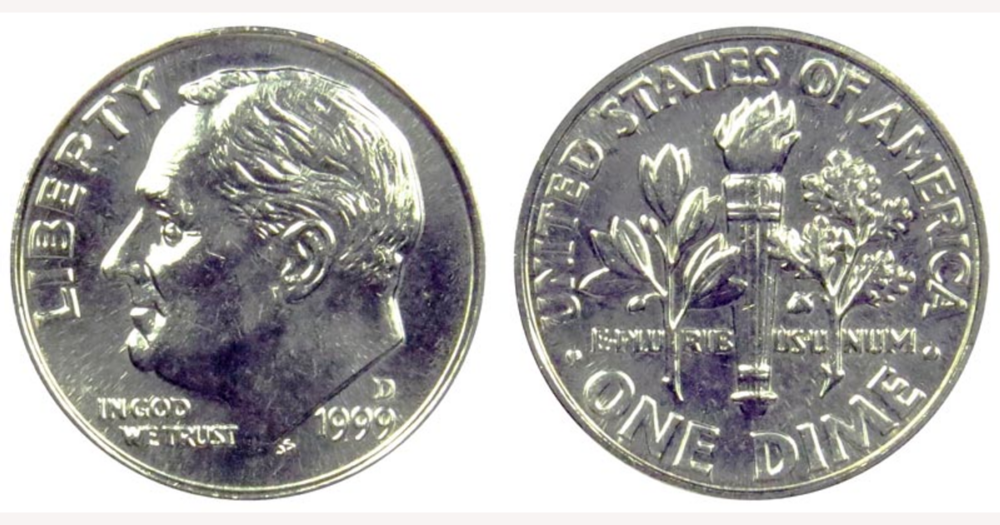
On DHgateWiki, the key thing to know about a 1999 D Roosevelt dime is that most examples are worth about face value, not a windfall. General US coin price guides show ordinary circulated pieces trading around $0.10, with only modest premiums for nicer coins. Truly high prices are limited to exceptional, professionally graded or major error dimes, so for most readers the safest assumption is that their coin is common—and that DHgate is more useful for learning about coins and checking buyer protections than for trying to sell a single dime at auction‑level prices.
Typical value range for a 1999 D Roosevelt dime
For a typical 1999 D Roosevelt dime pulled from change, general US coin price guides show it trading right around face value—about $0.10—sometimes a small premium if it’s lightly worn. In other words, if your dime looks like ordinary pocket change, it’s usually best to treat it as just that rather than a special collectible.
Value only climbs when condition is unusually strong or formally certified. Bright, uncirculated 1999 D dimes with sharp detail and minimal marks can bring a few dollars, and top‑graded, slabbed examples in the highest mint‑state tiers may reach into the tens of dollars with the right collector interest. Those prices reflect specific grades and numismatic demand reported in standard value references, not a typical outcome for a random coin.
Occasional headlines or auction stories about 1999 dimes worth far more than face value almost always involve either major mint errors or extremely high‑grade, professionally certified pieces. Without that kind of exceptional condition or a clear, dramatic error, a 1999 D dime is very unlikely to match those record prices, and using DHgate or any other marketplace to chase them will usually cost more effort than the coin is worth.
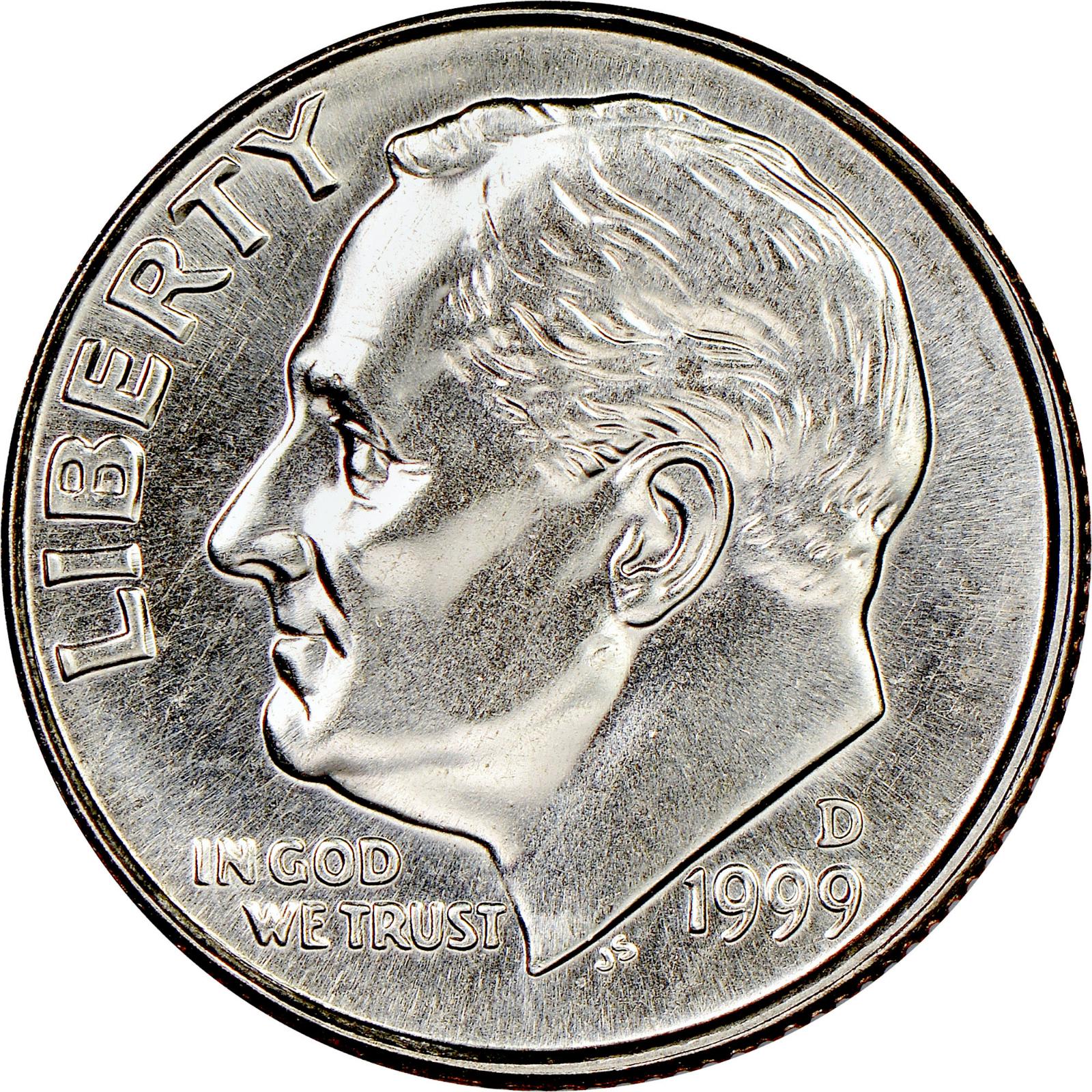
A standard 1999 D Roosevelt dime in typical condition, showing the obverse design and the D mint mark below the year so readers can confirm they are looking at the same coin type.
How condition, mint mark, and obvious errors affect value
Start by confirming the mint mark. On a 1999 dime from the Denver Mint, the letter D appears on the obverse near the date; a clear, normal D simply tells you the coin is the expected 1999 D issue, not a rarity by itself.
Then look at overall wear and brightness. A typical circulated coin shows dull surfaces, flattened high points on Roosevelt’s face and hair, and plenty of small scratches and contact marks. By contrast, an unusually sharp coin has strong luster, crisp lettering and design lines, and very few marks—this kind of nearly mark‑free, bright appearance is closer to uncirculated condition and is one of the few reasons a 1999 D dime might deserve extra attention.
Obvious errors are the other major signal. Dramatic off‑center strikes, clearly doubled lettering or numbers, missing parts of the design, or a badly misaligned image are the kinds of minting problems that stand out even without magnification and can affect value. A coin that is extremely clean and sharply struck or shows a bold, unusual error is worth showing to a local coin shop or club for an informed opinion.
Minor nicks, tiny irregularities in the rim, or slight color changes rarely add value on their own. Because subtle grading differences are hard to judge without experience, and most small imperfections simply mark normal use, it’s wise to assume a 1999 D dime is common unless its condition looks exceptional or its error is clearly dramatic.
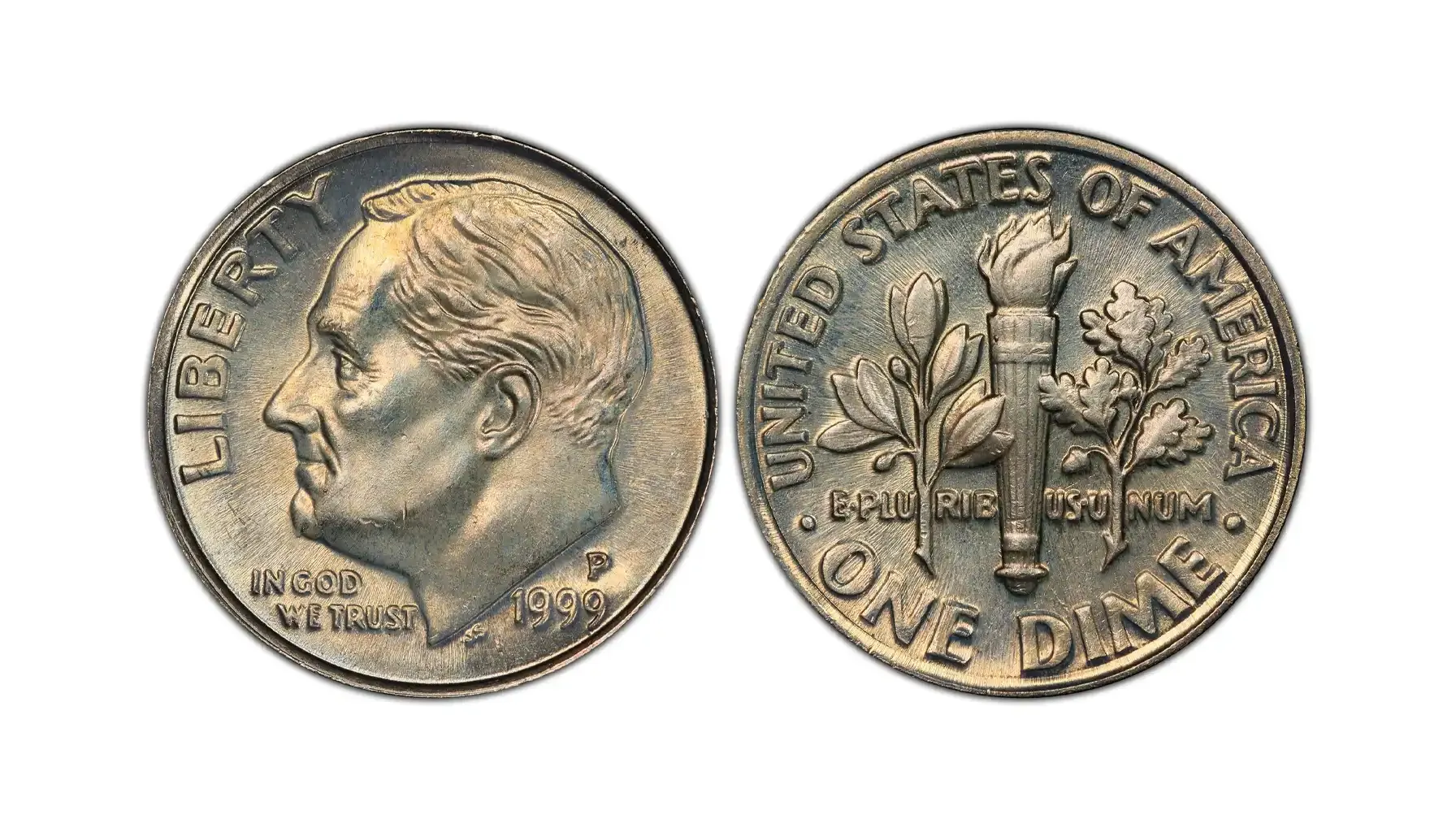
Example of a heavily circulated Roosevelt dime with dull surfaces and worn details to illustrate what ordinary wear looks like.
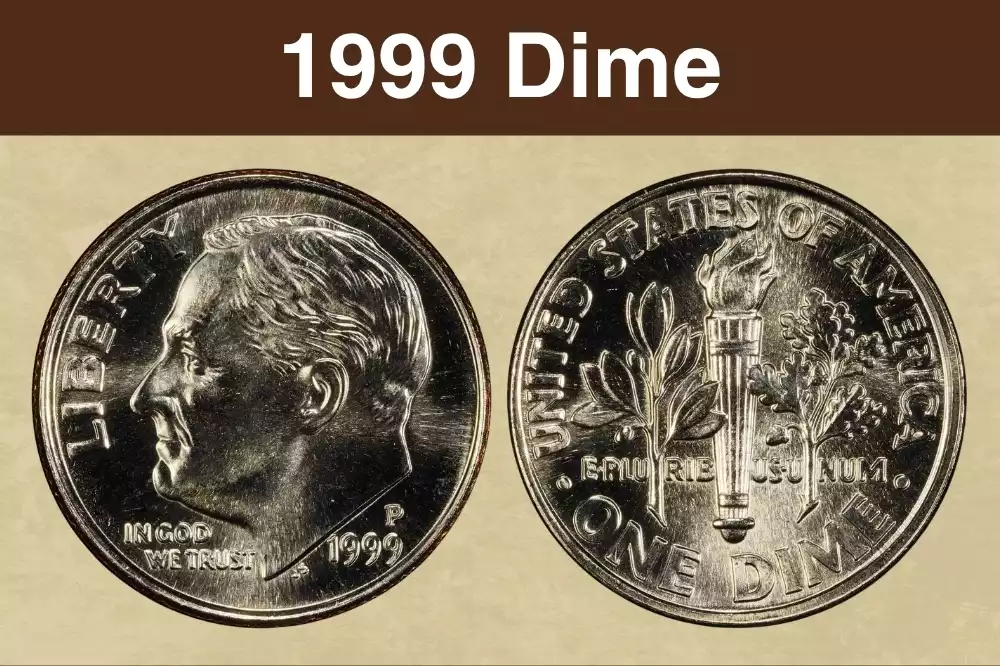
Example of a bright, uncirculated 1999 dime with strong luster and sharp lettering, contrasting clearly with a worn piece.
Practical steps to assess your coin and choose a next move
- Look closely at your 1999 D Roosevelt dime under good light. If the surfaces are dull, the high points on Roosevelt’s face and hair are flattened, and there are many small scratches, treat it as a typical circulated coin. If the coin is very bright with strong luster, sharp details, and few marks, note that it may be closer to mint‑state condition.
- Think about whether anything on the coin looks dramatically wrong rather than slightly imperfect. Bold off‑center strikes, clearly doubled letters or numbers, or a large missing part of the design are the kinds of obvious errors that can matter; minor rim nicks or small color changes usually do not.
- Use general online US coin price guides or reference ranges for 1999 Roosevelt dimes to sanity‑check your impression. Treat these figures as broad ballpark values, not promises of what one coin will sell for, and notice that ordinary circulated examples are typically around face value.
- If your coin looks like standard pocket change and aligns with low value ranges, it’s reasonable to keep or spend it without further effort. If it appears unusually pristine or shows a clear, dramatic error, consider asking a local coin shop or coin club for a quick opinion before you think about grading or selling.
- When you are still unsure but the coin doesn’t show obviously exceptional condition or a striking error, keep your effort light: read a bit more, maybe get one informal local opinion, and avoid paying professional grading or high selling fees based purely on speculation for a single 10‑cent coin.
How DHgate can help with coin research and safe buying
DHgate is a broad online marketplace, not a specialist coin auction house, so its strongest role for a 1999 D Roosevelt dime is helping you understand how coins and coin‑related items are described and sold in general. Browsing relevant categories can show you how sellers present condition, mention any errors, and describe authenticity, as well as how the platform structures orders and protections. For a single 1999 D dime that is likely worth around face value, creating a dedicated listing on DHgate is rarely practical; the time and effort would usually outweigh any realistic return. Instead, treat DHgate as a place to learn marketplace norms and, if you ever buy coin‑related items there, apply careful buyer checks rather than viewing it as the primary venue to sell one common coin.
- Check seller ratings and reviews to see whether previous buyers report accurate descriptions, timely shipping, and satisfactory resolution of any problems.
- Read product descriptions in full, looking for clear condition details, realistic value statements, and good photos, and be wary of vague or sensational claims about rarity or huge profits.
- Keep all payments within DHgate’s secure payment system instead of agreeing to off‑platform transfers, so that you preserve the platform’s order tracking and protection mechanisms.
- Review the stated shipping, return, and refund terms on any listing you consider, and make sure you understand how DHgate’s dispute process works in case the item you receive does not match the description or fails to arrive.
Avoid hype and overinvesting in a common dime
When specialized coin venues make more sense than marketplaces
Broad marketplaces such as DHgate are built to handle many kinds of goods at once. Their strengths are reach, convenience, and platform protections—useful if you are dealing with low‑value coins, accessories, or supplies where secure payment, order tracking, and basic buyer safeguards matter more than squeezing out every last dollar of collector value. For a common 1999 D dime, that kind of general marketplace environment is usually sufficient if you ever choose to sell it as part of a small group or learn from how similar items are described.
Specialist coin venues—local coin shops, clubs, shows, and established auction houses—focus on numismatics and attract buyers who understand grading, rarity, and pricing. They are better equipped to evaluate a truly unusual or certified high‑grade 1999 D dime and to present it to the right audience if it does turn out to be valuable. If an experienced dealer or grader believes your coin might be rare or especially high‑grade, it makes more sense to lean on these specialist channels than to expect a listing on a broad marketplace like DHgate to realize top prices.
Targeted answers: common listing and DHgate questions
Is a single 1999 D Roosevelt dime worth listing online by itself?
In almost all cases, no. A typical 1999 D dime in circulated condition is worth about face value, so the time, listing effort, and any fees would outweigh what you are likely to receive. Online sales usually make more sense for bulk lots of common coins or for clearly notable pieces that experts already consider special.
What obvious signs mean I should ask an expert about my 1999 D dime?
Consider expert input only if your dime looks clearly exceptional: very bright, mint‑state surfaces with sharp detail and almost no marks; dramatic minting errors such as obvious off‑center strikes, doubled designs, or missing parts of the image; or if it already has a professional grading label from a recognized service. Ordinary wear, minor nicks, or slight color changes are not enough on their own to justify grading or complex selling routes.
Is DHgate better for buying common or rare Roosevelt dimes?
DHgate is more realistically suited to common coins or coin‑related items, where its seller ratings, secure payments, shipping information, and dispute/refund protections help you shop safely. Truly rare or high‑grade Roosevelt dimes—especially professionally graded or major error pieces—are usually better handled through specialist coin dealers, shows, or auction houses rather than broad marketplaces like DHgate.