
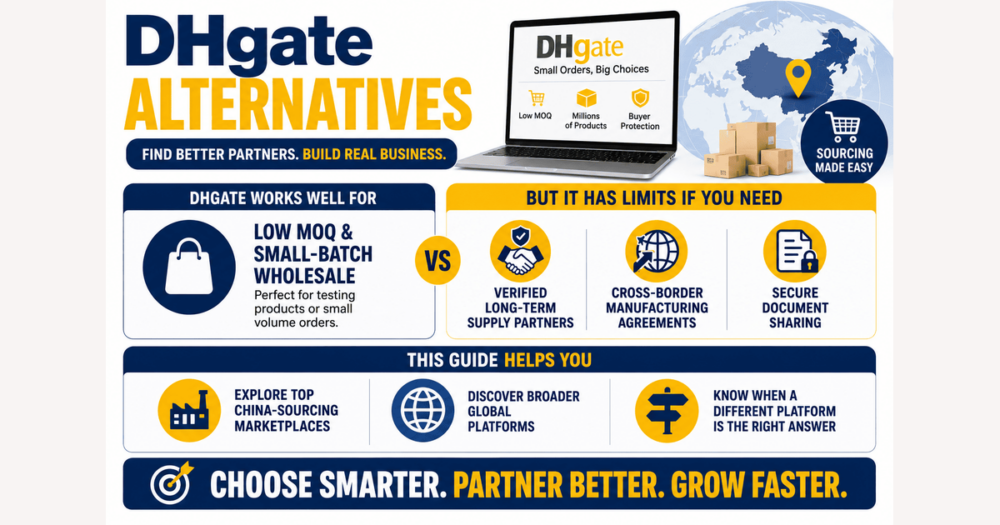
Australian businesses often source goods through global B2B marketplaces like DHgate as well as export directories and domestic procurement portals, but there is no single “most popular” platform. What really matters is whether a site gives you transparent seller ratings, secure payments, clear shipping to Australia, understandable customs responsibilities and a workable dispute process. This guide uses DHgate as a representative example so you can see how those flows work in practice and what to check on any marketplace before placing a significant order.
How Australian businesses actually use B2B marketplaces
Australian businesses do not rely on a single “most popular” B2B marketplace. In practice, they use several types of platform, depending on what they need to buy, how complex shipping to Australia will be, and how clearly a site explains its rules. Global B2B marketplaces such as DHgate represent one major category: many independent suppliers list bulk products, and Australian buyers use search and filters to source cross‑border, often for resale or operational use. Other options include international export platforms and supplier directories, where manufacturers showcase capabilities and buyers enquire directly, as well as domestic B2B directories or industry procurement portals focused on local suppliers, tenders or standardised contracts. Some hybrid consumer marketplaces also offer bulk packs or business programmes, which smaller Australian buyers sometimes use when minimum quantities are modest.
There is no authoritative ranking that tells you which B2B marketplace Australians use most, and public traffic statistics tend to emphasise consumer marketplaces rather than true B2B volume. For a business buyer, popularity is experienced as visibility and reliability rather than raw numbers: how many relevant suppliers and product categories are available, how straightforward it is to arrange shipping to Australia, and whether seller ratings, reviews, payment flows and dispute rules are easy to understand. A platform that explains these operational details clearly often feels more trustworthy than one that simply boasts the lowest prices or the biggest user base.
An Australian buyer might turn to a global marketplace like DHgate to source diverse items in bulk from overseas, a specialised export directory to find a manufacturer for a custom product, a domestic procurement portal for regulated tenders, and occasionally a hybrid consumer/B2B site for small test orders. The choice depends on product type, required quantities, logistics support to Australia and comfort with the platform’s processes. Personally, I would rather use the marketplace where seller vetting, payment protection, shipping options and dispute rules are transparent, even if another site claims to be larger or cheaper. For substantial B2B purchases, that clarity matters more than chasing the absolute lowest headline price.
What the DHgate buyer journey looks like for an Australian business
- Set up your DHgate account with accurate business and contact details, including a primary shipping address in Australia and any relevant tax information. Completing these fields properly helps avoid problems with invoicing and delivery later.
- Use search, categories and filters to find suitable products, paying close attention to minimum order quantities, available variants and bulk pricing tiers. For B2B sourcing, the real decision is whether the listing can meet your quantity and specification needs at a sustainable total landed cost, not just the unit price.
- Open individual product listings to review descriptions, specifications, size and material details, available options and photos. Check that the information is consistent, that specifications match your requirements, and that any variant menus clearly describe differences that would matter in your use case.
- Inspect each seller’s profile as a key reassurance checkpoint: overall ratings, number of completed transactions, feedback history, years active on the platform and any badges or indicators of performance. I would favour sellers with a long track record and detailed reviews over a newer seller offering a slightly lower price.
- Before committing to a large order, message the seller to confirm critical details in writing: exact specifications, packaging, production lead times, available shipping methods to Australia, expected transit windows, and who is responsible for customs duties and GST. Keeping this confirmation inside the DHgate message system creates a record you can refer to if there is a dispute.
- When you are satisfied with the listing and the seller’s answers, place the order by selecting the correct variants and quantities, choosing a shipping option, and reviewing the order summary. Check product totals, shipping costs, any platform fees and the delivery address carefully so the order reflects what you agreed in messages.
- After payment, the order moves into DHgate’s lifecycle: processing, shipment and delivery, with statuses and messages updated through the platform. At this stage you should monitor notifications, tracking information and seller communication, because later protection on DHgate is tied to how promptly you respond if something looks wrong.
- For significant B2B purchases, I would deliberately slow down at the due‑diligence stage—reading reviews, clarifying terms in writing and double‑checking the order summary—rather than rushing to secure the lowest advertised price. On DHgate or any similar marketplace, that extra care upfront is one of the most effective ways to reduce risk before your money and goods start moving.
How DHgate handles payments and buyer protections
On DHgate, an Australian buyer chooses from the payment methods the platform supports for their region—typically card payments and other online options—and pays DHgate rather than sending money directly to the seller. Once payment is submitted, the order usually moves through clear statuses such as “payment pending”, “processing”, “shipped” and “completed”, so you can see where your money and goods are in the flow.
The way DHgate handles that money broadly resembles an escrow system. The platform holds your funds while the seller prepares and ships the order, and only releases payment to the seller when certain conditions are met, such as you confirming receipt, or a defined buyer‑protection period expiring without a dispute. This structure is designed to give you a chance to react if the goods never arrive or differ significantly from what was described.
Buyer protection is tied directly to payment status and platform rules. If an order is delayed, damaged or not as described, you can normally open a dispute through DHgate before funds are released, asking for a refund, replacement or partial compensation. Whether protection applies depends on timing, the current order status and the evidence you can provide—messages, photos, tracking information and any agreements recorded in the platform.
To benefit from these protections as an Australian buyer, you need to use DHgate‑supported payment methods, stay within the stated protection timeframe and follow the dispute procedure step by step. Missing deadlines, moving conversations off‑platform or paying outside DHgate (for example via an unrecorded bank transfer) can reduce or remove the safeguards that the escrow‑style model is meant to provide.
Before you pay, it is worth checking a few details: which payment methods are available from Australia, how long your buyer‑protection period lasts, what types of evidence DHgate typically asks for in disputes, and whether any payment options carry fewer built‑in safeguards than others. I would rather choose the method that keeps funds inside DHgate’s controlled flow than save a small fee on a route that offers weaker recourse if something goes wrong.
For Australian businesses comparing marketplaces, DHgate’s approach offers a useful benchmark: funds are clearly held by the platform, release triggers are defined, and the dispute process is documented. Other B2B marketplaces may not work identically, and no system can guarantee a favourable outcome, but looking for this combination of transparent fund holding, explicit release rules and a formal dispute channel is one of the most practical ways to judge how much protection a platform really provides before you commit a large payment.
Shipping from overseas to Australia on DHgate
For orders shipping to Australia, DHgate sellers usually present one or more international shipping options on the listing or at checkout. These can range from slower, lower‑cost postal services to faster express couriers or consolidated logistics solutions, each with indicative costs and estimated delivery windows. When you place the order, you choose the method that fits your budget and timing, and DHgate records that choice in the order details alongside an expected delivery timeframe.
Those timeframes are only approximations. Actual delivery can be affected by production lead times at the factory, how quickly the seller hands the goods to the carrier, carrier performance, seasonal peaks and any customs inspections in transit. For B2B buying, I treat the listed estimate as a best‑case guide rather than a promise, and build some buffer into my planning, especially if the goods are needed for a launch, event or resale schedule in Australia.
Customs duties, GST and general import compliance for Australia are commonly your responsibility as the buyer unless the listing or contract clearly states otherwise. In practice, that means budgeting for potential charges when the goods enter Australia and being prepared to handle clearance, rather than assuming low‑value thresholds or exemptions will always apply. DHgate and its sellers may provide tools or guidance, but the legal obligation to comply with Australian import rules ultimately sits with your business.
Some sellers or logistics partners may offer arrangements similar to delivered duty paid (DDP), where duties and taxes are included in the price and handled on your behalf. These can reduce uncertainty, but only if they are explicitly described and agreed in writing—ideally in the DHgate message system and order terms—so you know exactly what is covered and how parcels will be declared. Without that clarity, I would still plan as though I am paying duties and GST myself.
Before confirming a significant shipment, it helps to ask the seller practical questions: how the goods will be declared on customs paperwork, whether multiple cartons or pallets will be used, which carrier or service level will handle the route to Australia, and how refused entry, returns or re‑shipments would be managed. Recording these answers in platform messages gives you a reference if there are later problems at the border or with delivery.
The overall pattern on DHgate and similar marketplaces is that shipping and customs outcomes depend heavily on the individual seller, carrier and route rather than a single uniform rule. For Australian buyers, the safest approach is to focus on understanding your responsibilities—choosing realistic shipping methods, allowing for delays, and budgeting for duties and GST—rather than expecting every shipment to move at the same speed or cost as a simple domestic order.
Order tracking, status updates and action windows on DHgate
Once a DHgate seller ships an order to Australia, they typically upload a tracking number and select the carrier or service type. That tracking ID, the carrier name and the shipping method then appear in your order details, so you can see which service is being used and follow the parcel’s progress.
From there, the order usually moves through clear status labels such as “awaiting shipment”, “shipped”, “delivered” and “completed” or their equivalents. “Awaiting shipment” covers the period after you have paid but before the seller hands the goods to the carrier. “Shipped” indicates that a tracking number has been provided and the parcel is in transit. “Delivered” reflects carrier delivery confirmation, and “completed” generally means that the buyer has confirmed receipt or the protection period has expired without a dispute.
Buyer protection on DHgate is tied to these events. Protection periods are typically counted from shipment or delivery, and when the countdown shown on the order page reaches zero, the platform may automatically release funds to the seller. If you have not confirmed receipt, requested help or opened a dispute by then, your options to recover money or arrange returns can narrow quickly.
For that reason, I watch two things closely on every cross‑border order: the tracking updates from the carrier and the countdown timers or deadlines visible in the DHgate interface. For Australian shipments that may spend time at customs or move slowly through international hubs, it is sensible to set calendar reminders for key dates so you can review progress and act before protection expires, rather than noticing a problem after the window has closed.
Tracking quality depends heavily on the shipping method. Express couriers and some premium consolidated services usually provide frequent, detailed scans; low‑cost postal or economy options may only show a few milestones or update with delays, which makes it harder to judge where a parcel really is. Sparse tracking does not remove your responsibilities, but it does mean you need to be more cautious about timelines and more ready to ask the seller for clarification when scans stall.
Integrated tracking and visible protection timers are signs of a mature platform design, but they only help if you use them actively. For DHgate orders to Australia, that means checking tracking regularly, comparing it with the expected delivery window, and contacting the seller or opening a dispute promptly if scans stop moving, the parcel appears lost or the goods arrive with issues. The platform provides structure; maintaining protection depends on you noticing problems in time and using that structure before deadlines pass.
Disputes, refunds and after‑sales on DHgate
When something goes wrong with a DHgate order—goods arriving late, damaged or not as described—the first step is normally to contact the seller through the platform’s messaging system. You explain the problem clearly, attach photos or videos if helpful, and suggest a realistic solution such as replacement items, a partial refund, a discount on a future order or reshipment.
If that direct negotiation does not lead to a satisfactory outcome, or the seller is slow to respond, you can escalate by opening a formal dispute within the buyer protection period. In the dispute form you choose a reason that best matches the issue (for example, quality problem or item not received) and indicate the resolution you are seeking, such as a refund, return or partial compensation.
Once a dispute is opened, DHgate’s team may review the order details, message history, listing information and any evidence you provide—photos, unboxing videos, courier documents and so on—to decide whether to approve a refund, allow a return or support the seller’s position. Decisions are based on the platform’s rules, the timing of events and how convincingly the evidence shows a discrepancy between what was promised and what you received.
Because outcomes depend so much on documentation, I treat record‑keeping as part of the buying process. For Australian orders, that means saving copies of listings and specifications before purchase, keeping invoices, preserving all DHgate message threads, and taking clear photos or videos as soon as parcels arrive, especially if there is visible damage, missing items or quality concerns.
Time limits are critical. Disputes usually need to be opened before buyer protection expires; after that, DHgate may treat the order as completed and your ability to claim refunds or returns can become very limited. Popularity or size of the marketplace does not override these rules—on any high‑traffic platform, including DHgate, after‑sales support operates within defined procedures and deadlines rather than offering automatic refunds whenever something goes wrong.
For Australian business buyers comparing B2B marketplaces, DHgate’s structured dispute and after‑sales process is a useful reference point for what to look for elsewhere: clear steps from seller contact to formal dispute, written policies on refunds and returns, and visible timelines tied to order statuses. Even with these structures, outcomes are not guaranteed, so the safest approach is to combine them with careful evidence gathering and prompt action whenever a problem appears.
How DHgate’s model compares with other B2B platforms Australians use
| Platform model | What the platform handles | Key buyer responsibilities | Typical advantages for Australian buyers | Typical trade-offs for Australian buyers |
|---|---|---|---|---|
| DHgate-style global wholesale marketplace | Hosts many international sellers, listing bulk products across varied categories; provides search and filters, processes payments through the platform, and offers structured dispute and buyer-protection tools. | Select suppliers, verify listings and ratings, negotiate details in messaging, choose shipping methods and costs per order, and manage customs and compliance on the Australian side. | Wide choice of products and price points, access to overseas manufacturers, transparent order statuses and platform-mediated payment and dispute processes that give some structure to cross-border buying. | Mixed seller quality and varying logistics reliability; more work to screen suppliers and clarify specifications; customs and tax responsibility usually sits with the buyer; protections depend on acting within platform rules and timelines. |
| B2B supplier directories and trade portals | Publish company profiles, product summaries and contact details; may host enquiries or RFQs but generally do not handle payment, shipping or disputes. | Conduct full due diligence on suppliers, negotiate contracts and prices directly, arrange freight and insurance, and manage customs, duties and GST under standard procurement practices. | High flexibility to structure deals, potential for long-term relationships and tailored terms, and better fit with traditional procurement processes for complex or specialised goods. | Very limited platform-level protection; time-consuming vetting and contract work; greater exposure if a supplier fails to deliver; all logistics and dispute management fall on the buyer or their brokers. |
| Structured or domestic procurement marketplaces and industry platforms | Pre-vet or approve suppliers, standardise contracts and terms, sometimes integrate logistics, credit and invoicing; may enforce compliance rules and performance standards. | Align internal policies with platform rules, check that supplier lists and contract templates meet regulatory needs, and manage ongoing performance and budgets within the structured environment. | Clearer seller quality signals, more predictable service levels, easier compliance reporting, and reduced need to negotiate every detail from scratch—useful for larger or higher-risk orders. | Higher prices or stricter minimums, narrower supplier choice, and less room to experiment; buyers trade some flexibility for process clarity, which I generally prefer for substantial or critical purchases. |
Key risks and how to reduce them on DHgate and similar marketplaces
- Cross-border B2B sourcing through marketplaces in Australia carries recurring risks. Careful practices can reduce them, but never remove them entirely.
- Product mismatch: listings may use vague specs, generic photos or unclear certification claims, so goods arrive with different quality, sizing or standards than expected. Mitigation: insist on detailed written specifications, ask focused questions, request photos or samples for larger orders, and start with small trial shipments before committing to volume.
- Timeline risks: production delays, slow economy or sea freight and customs inspection can stretch delivery well beyond initial estimates. Mitigation: confirm lead times in writing, choose more reliable shipping methods when timing is critical, and plan around realistic ranges rather than the fastest promised date.
- Cost surprises: underestimated shipping, duties, GST and handling fees can make the landed cost far higher than the unit price on the listing. Mitigation: get a full breakdown of shipping charges, ask how values will be declared, assume that duties and GST are likely, and model landed-cost scenarios before placing the order.
- Limited practical recourse: even with platform policies, returning bulky or low-value goods can be slow, expensive or uneconomic, and refunds depend on evidence and rules. Mitigation: document listings and messages, keep invoices and tracking records, understand dispute timelines and requirements in advance, and keep initial orders modest while testing a new supplier.
- Seller reliability and communication: some marketplace sellers respond slowly or avoid clear answers, increasing the chance of misunderstandings. Mitigation: favour sellers with strong ratings, detailed feedback and responsive, transparent communication, even if their prices are slightly higher—I would rather pay a bit more for clarity than risk a large opaque order.
- Order size and criticality: the same risk feels very different on a small test order versus a key shipment for your business. Mitigation: match your caution level to the stakes—use trial orders to validate suppliers and logistics before relying on them for critical or high-value shipments.
- Marketplace popularity: a widely used platform like DHgate offers more review data and seller history to interpret, but high traffic does not cancel these risks or guarantee outcomes. Mitigation: treat popularity as a source of information, not a safety net, and base decisions on the platform’s rules, your documentation and the specifics of each deal.
Checklist: what to verify before placing a significant order
- Use this checklist as a reusable pre‑order review tool on DHgate or any B2B marketplace before you commit to a large or high‑risk order.
- Seller checks: confirm the seller’s identity details where available, review overall ratings and the volume of completed transactions, read a sample of detailed feedback (especially from recent orders), and test responsiveness and clarity by asking specific questions in messages.
- Payment and protection checks: verify who actually receives your payment (platform vs. seller), when funds are released to the seller, the length of the buyer protection period, which issues are explicitly covered or excluded, and which payment methods are supported for buyers in Australia.
- Shipping and logistics checks: review the shipping methods and carriers offered, estimated delivery windows for each option, whether your order will be split into multiple parcels, and whether a tracking number will be provided for every shipment.
- Customs, GST and tax checks: clarify who is responsible for duties and GST, whether prices shown include any taxes, how the seller or platform will declare values on shipping documents, and whether any delivered‑duty‑paid (DDP‑style) options are clearly offered and explained.
- Dispute and after‑sales checks: confirm how to open a dispute through the platform, key deadlines for doing so, what evidence (messages, photos, videos, invoices, tracking) is usually required, the basic return or replacement policy, and who pays return shipping if something goes wrong.
- Process habit: save or adapt this checklist into your internal procurement workflow so it becomes a routine pre‑flight step before placing significant orders on DHgate or any other B2B marketplace.
Common questions about DHgate and Australian B2B buying
Is DHgate available to Australian buyers, and are there any notable regional limitations?
DHgate is a global B2B marketplace that serves buyers in many countries, including Australia. In practice, Australian businesses can register accounts, browse listings and place orders, but availability still depends on individual sellers: some may choose not to ship certain products to Australia, set different minimum order quantities, or run region-specific promotions. Before planning a large purchase, check that the seller explicitly ships to Australia, review their shipping options and delivery estimates for your address, and confirm any regional conditions in DHgate messages so you have a written record.
How do Australian GST and customs usually interact with DHgate or similar cross-border marketplace orders?
When goods are shipped from overseas to Australia, import duties, GST and other border charges often fall on the buyer unless a clearly documented arrangement states otherwise. How those charges apply can depend on factors such as order value, product type, the nature of the transaction and whether an overseas marketplace is registered to collect GST on certain low-value goods. Rules and thresholds can change, and treatment may differ between consumer and business purchases, so it is safer to treat listed prices as pre-tax and budget for possible duties and GST. For binding information, always check current guidance from Australian government sources or consult a professional adviser rather than relying on marketplace listings alone.
Does this guide provide tax or legal advice about GST and customs for DHgate orders?
No. This guide explains general patterns—such as import taxes often being the buyer’s responsibility—but it does not provide tax, legal or accounting advice. The way Australian GST, duties and other obligations apply to your DHgate orders depends on your business status, the type and value of goods, and current legislation or ATO guidance. For decisions that affect compliance or reporting, you should rely on up‑to‑date government resources or qualified professional advice, and treat marketplace information as a starting point for your own checks rather than a definitive answer.
Should marketplace popularity be the main factor when choosing where to buy for Australian B2B orders?
Popularity can be useful—it usually means more suppliers, more review data and a more refined platform experience—but it should not be the main factor for substantial B2B purchases. A well-known marketplace like DHgate can make it easier to see seller history and follow structured payment, shipping and dispute flows, yet high traffic does not guarantee outcomes or remove risk. For larger or higher‑stakes orders, it is more important to understand each platform’s rules: how seller vetting works, how payments and protections are structured, which shipping and tracking options exist to Australia, who is responsible for customs and GST, and how disputes are handled. Choosing the marketplace where these processes and responsibilities are clearest is usually safer than simply following the most popular name.