
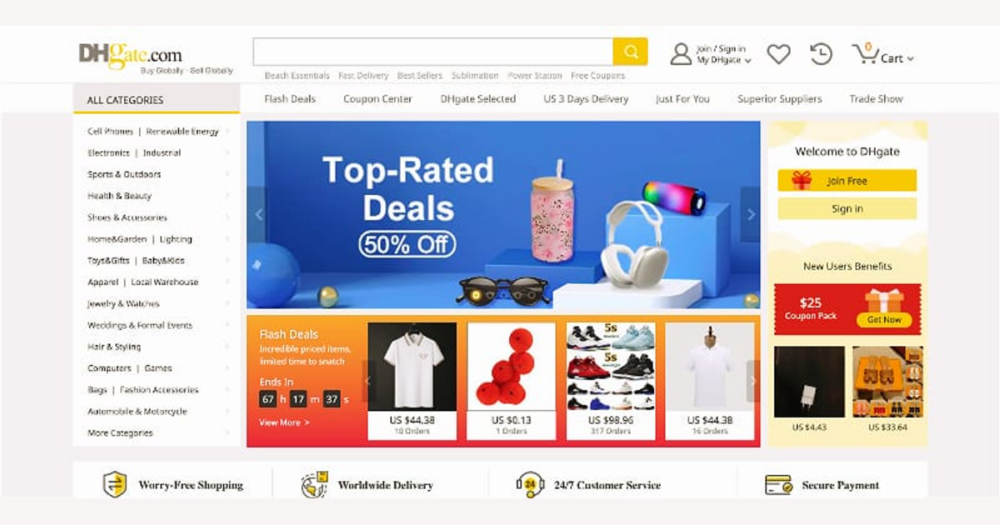
If you’ve searched for the “best websites to find good deals,” you’ll often see curated deal feeds and coupon sites—but DHgate works differently. It’s a marketplace where independent sellers post their own offers, so a low price is only a potential deal until you check who’s selling, the total cost and delivery window, and how DHgate’s buyer protection would apply if the order doesn’t arrive as described.
How DHgate differs from typical “deal websites”
DHgate is an online marketplace, not a single “best deals” feed. Instead of one editorial team picking and posting bargains, DHgate hosts many independent sellers who open their own stores, create listings, set prices, and choose shipping terms. When you search on DHgate you’re looking across these separate offers, so there is no central guarantee that the cheapest-looking option is the best or has been vetted as a true deal by DHgate itself.
On DHgate, a price only starts to look like a good deal once you can see enough context: who the seller is, how long they’ve been active, what other buyers say, what shipping will cost and how long it will take, and how buyer protection would apply if something goes wrong. Marketing language about “big discounts” or “lowest prices” doesn’t change that structure. DHgate shows the listings, tools, and dispute processes; you decide whether a specific combination of price, seller, shipping, and protection feels acceptable. I would only treat a DHgate listing as a good deal when that full picture is visible and makes sense for my budget and timing.
Platform tools on DHgate that matter for finding deals
Once you know DHgate is a marketplace, use its interface tools to sort through offers. Search and category browsing help you find the general type of item you want, while filters such as price range, shipping options, and sometimes seller rating can narrow the results to listings that fit your budget and tolerance for delivery time. Together, these tools help you set aside obviously out-of-scope offers and focus on a smaller group worth examining in detail.
Each listing then shows a current price, and in some cases a crossed-out reference price or percentage-off banner, along with any available coupons or promo code fields. DHgate may also surface site-wide campaigns on banners or dedicated pages, but these discounts often come with conditions such as a minimum spend, limited time windows, or specific categories. A deal only holds up if those terms match how you actually plan to buy: if the coupon requires a higher cart total than you intended, or a campaign excludes the category you need, the apparent discount doesn’t really improve value. A convincing DHgate deal is one where the price, any discount, and the delivery estimate are all visible upfront and still align with what you’re willing to spend and wait.
Reading seller and listing details before trusting a bargain
Seller history is one of the clearest signals you can use when judging whether a low price on DHgate is worth trusting. Each store typically shows an overall rating, the number of completed transactions, feedback comments from previous buyers, and sometimes indicators of how long the store has been active or what level it has reached. A seller with many orders, consistently high ratings, and recent, specific feedback generally inspires more confidence than a brand‑new account or one that only shows a handful of older reviews. I would rather pay a little more to buy from a seller with a clear, stable track record than chase the absolute cheapest offer from a store whose history is hard to read.
Listing‑level detail is just as important. Strong product descriptions, clear specification tables, and well‑organized options for size, color, and quantity make it easier to see whether a cheap listing really matches what you expect to receive. Multiple photos that show the item from different angles, and any buyer‑uploaded images or reviews, can help you spot obvious mismatches or quality concerns before you order. By contrast, very short or vague descriptions, a single generic photo, or missing specs introduce more uncertainty; the bargain price may come with a higher risk of disappointment. Ratings and feedback are helpful signals, but they are not guarantees—one glowing or negative review doesn’t define a typical experience, so it’s better to look at the overall pattern and how clearly the seller explains the product before deciding a low price counts as a good deal for you.
A practical step-by-step routine for checking a DHgate deal
- Define what you want before you start: the type of item you’re looking for, a rough budget, and how long you are willing to wait for delivery. This makes it easier to spot listings that fit your own idea of a good deal instead of chasing every low price you see.
- Use DHgate’s search and category browsing to find relevant items, then apply filters such as price range and shipping options to narrow results. Open a few listings that roughly match your budget and acceptable delivery window so you can compare them in more detail.
- For each listing you consider, check the seller’s overall rating, the volume and recency of feedback, and any signs of store age or level. Favor sellers with clearer, more consistent histories over those with little activity or mixed reviews, especially when the price looks unusually low.
- Read the product description and specification details carefully. Confirm that size, color, quantity, and any other key features match what you intend to buy, and that photos and any buyer reviews or images support the description rather than contradict it.
- Review the available shipping methods, estimated delivery ranges, and whether tracking is offered. Factor in your tolerance for delay: a slower, cheaper international option may be fine for some buyers but not for time‑sensitive purchases, and customs notes may matter for higher‑value orders.
- Before you decide, check the cart or order summary to confirm the full cost, including shipping and any applicable coupons or promo codes. Then make a conscious call: does the total price, delivery timeframe, seller history, and visible protection context feel acceptable to you? I would only treat a listing as a real deal once these checks line up; if they don’t, a slightly higher‑priced but clearer, lower‑risk option may be worth choosing instead.
Payment handling and buyer protection: how safe does a deal feel?
On DHgate, you pay through the platform rather than directly to the seller. After you place an order and choose a payment method that DHgate supports, the platform records the payment and manages the transaction between you and the independent seller. In many cases, funds are only released to the seller according to DHgate’s rules—such as after you confirm receipt or once a set time period passes—so the payment flow is designed to keep some control with the platform while the order is in progress.
DHgate also offers buyer protection and a dispute system intended for issues like packages that never arrive or items that differ significantly from the listing description or arrive damaged. These mechanisms can lead to refunds or other resolutions, but the exact conditions, timelines, and outcomes depend on current DHgate policies, the evidence you provide, and the details of your case. A deal feels safer when you can clearly see your payment status and know which steps to take if something goes wrong, so it’s worth reading DHgate’s official buyer protection and dispute documentation before relying on any safeguard, and checking whether your chosen payment method or country has specific terms attached.
Price versus delivery time: weighing DHgate’s shipping trade-offs
Shipping is a major part of whether a low DHgate price is practical for you. Listings typically show available methods such as standard or, where offered, faster options, along with whether shipping is free or has an extra fee, an estimated delivery range, and whether tracking is included. Slower, cheaper methods can be acceptable if you are flexible about timing, while paid, faster options may suit time‑sensitive orders better. Being able to see the method, cost, and tracking details upfront makes it easier to judge the overall convenience of a listing, not just the item price.
Many of the lowest prices on DHgate rely on slower international shipping, which can mean longer delivery windows and possible customs or import charges depending on your country and what you buy. These extra steps can change both the effective total cost and how long it takes for the order to clear and reach you. Compared with faster, often more expensive platforms, DHgate’s bargains make more sense if you are comfortable with the delivery window and any potential extra fees. Always read the shipping section and any customs or import notes on each listing carefully and factor that information into your personal definition of a good deal, rather than assuming the headline price is the final cost.
Disputes and refunds: knowing your options if a deal goes wrong
Common pitfalls when chasing the lowest prices on DHgate
- Picking the absolute cheapest listing without checking seller ratings, feedback, or store history is one of the highest‑risk behaviors on DHgate. Ultra‑low prices from new or opaque stores can mean more uncertainty about how issues will be handled. A safer pattern is to spend a little time reading the seller’s profile and recent comments and, if necessary, accept a slightly higher price from a store with clearer history.
- Ignoring shipping details and delivery estimates can turn a bargain into a frustration. Many low prices rely on slower international methods, which may involve long windows and possible customs or import charges. Always read the shipping section, check whether tracking is included, and factor shipping fees and potential duties into your total cost before you treat a listing as a good deal.
- Assuming DHgate has centrally vetted every offer is another common misunderstanding. As a marketplace, DHgate hosts independent sellers, and the platform’s ratings, policies, and dispute tools are there to help you manage risk, not to pre‑approve every bargain. A practical countermeasure is to combine seller checks, careful reading of the listing, and awareness of the dispute and refund framework so you know what recourse you have if a cheap order fails to meet expectations.
- Focusing only on headline price while ignoring your own tolerance for uncertainty can leave you disappointed even when the transaction technically follows the rules. I would rather pay a bit more for clear information, predictable timelines, and a seller whose track record I can understand. Some buyers may willingly accept more risk to chase the lowest possible price, but that trade‑off should be conscious: weigh transparency, delivery time, and your comfort with the dispute process against the savings before you commit to an ultra‑cheap listing.
DHgate and other deal sites: answers to common questions
Can DHgate replace other deal websites entirely?
DHgate can be one useful place to look for low prices, but it isn’t designed to replace every other deal site. It’s a marketplace where independent sellers post their own offers, with its own mix of prices, shipping speeds, and risk levels. Curated deal feeds and coupon aggregators typically highlight short‑term promotions across many platforms or local retailers, which can surface different kinds of bargains. In practice, DHgate usually works best as one tool in a broader deal‑hunting strategy: use it when you’re comfortable with international shipping and marketplace variability, and rely on other sites when you need faster, more predictable delivery or locally focused offers.
How should I think about customs or import fees on cheap international listings from DHgate?
When you buy from overseas sellers on DHgate, customs and import rules are set by your own country, not by DHgate or the seller, and they can change over time. Depending on what you order and its declared value, your shipment may be assessed taxes, duties, or handling fees, and clearance can add extra days to the delivery window. To treat a listing as a real deal, include these possibilities in your total cost and timing: read any customs notes on the listing, check official information from your government or postal service, and consider how you’ll feel if extra charges appear on arrival. A price that looks very cheap on the product page may feel less attractive once taxes or duties are added.
What if DHgate’s payment, protection, or dispute processes differ from generic deal‑hunting tips I’ve read elsewhere?
Generic advice from deal blogs often assumes certain return policies or relies heavily on credit card chargebacks, but each platform has its own rules. When you shop on DHgate, the most important reference is DHgate’s current official documentation on payments, buyer protection, and disputes. If those rules differ from general tips, base your decision on how clearly DHgate and the seller show the total price, delivery expectations, dispute steps, and evidence requirements, and decide whether you’re comfortable with that framework before ordering. I would prioritize platforms and sellers that spell out these conditions in a way I can understand rather than assuming another site’s protections automatically apply to DHgate.