
Canadians looking for reindeer ugly Christmas sweaters usually get the best results from four routes: big-box retailers, niche ugly-sweater and costume sites, general marketplaces, and thrift/DIY. For a single party sweater, Walmart.ca and other mass retailers are often the simplest starting point because they stock themed knits like a “Reindeer Head” ugly Christmas sweater in-season. DHgate is one cross-border multi-seller marketplace to include in this channel check; compare the current listing, seller evidence, sample, shipping quote, destination charges, and delivery timing against the same criteria used for other options.
Where Canadians Actually Find Reindeer Ugly Christmas Sweaters
For a Canadian buyer or small seller, the real question is not “are reindeer sweaters available” but “which channel fits my budget and timing.” Here’s how the landscape breaks down.
Big-box and general retail in Canada. Large retailers with Canadian sites, such as Walmart.ca’s holiday sweater listings, routinely carry reindeer-themed ugly Christmas sweaters around the holidays. Selection can be seasonal and limited, but this route is predictable: easy returns, clear sizing charts, and domestic shipping.
Niche ugly-sweater brands. Dedicated ugly-sweater labels lean into reindeer themes with entire collections. Tipsy Elves organizes reindeer designs into a category so you can quickly filter by cut (men’s, women’s, unisex) and look (cute vs. outrageous). Other specialty sites, such as UglyChristmasSweater.com’s reindeer page, operate similarly, though many ship from the U.S. or overseas.
Costume and novelty shops. Ugly-sweater and costume retailers, like the ones selling the “adult reindeer head” sweater on Fun.com, sit between fashion and costume. Their pieces are aimed squarely at party wear—big 3D reindeer heads, pom-poms, and lights—so they work both for personal outfits and small-scale resale if you’re curating a themed drop.
Marketplaces. Marketplaces such as eBay host individual sellers with one-off vintage finds and new novelty sweaters. Search terms like “reindeer ugly Christmas sweater” usually surface a mix of handmade, small-brand, and mass-market items, which can be useful if you want something unusual or second-hand.
Thrift and DIY. Editorial guidance on holiday fashion repeatedly calls out thrift stores and DIY projects as the cheapest way to get an ugly Christmas sweater. You can pick up a plain knit at a thrift shop, then add felt reindeer, fabric paint, bells or lights. This route is especially appealing in Canada where local thrifts often have off-season stock and you avoid cross-border shipping.
Once you understand these core channels, you can start matching them to your goal—single sweater, matching family set, or inventory for a micro-store.
How Each Platform Type Works for Reindeer Sweater Sourcing
The same reindeer motif plays very differently depending on where you source it. Here’s what the main platform types look like in practice.
Big-box and general online retail
Large retailers operate on a straightforward retail model:
- They buy holiday assortments months in advance, then list them online and in-store in early fall.
- You’re buying directly from the retailer, not from a third-party seller, so sizing, materials, and return routes are standardized.
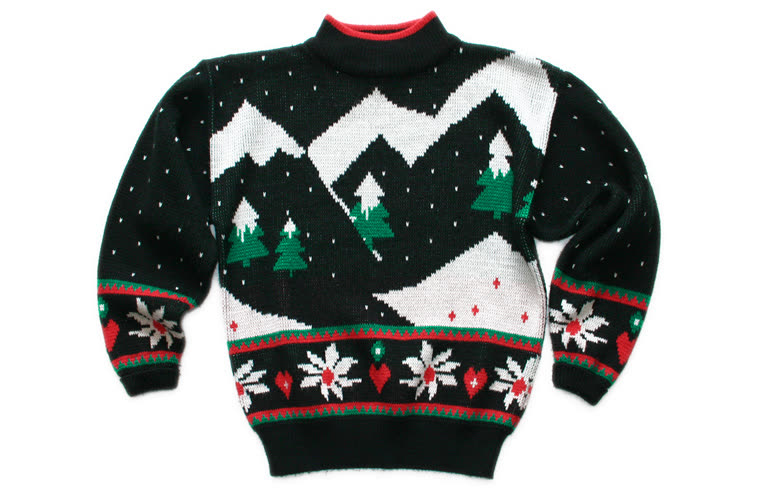
- Assortment tends to favor safe designs: fair isle reindeer bands, red-and-green color blocking, and some tongue-in-cheek graphics.
You browse their holiday category, add your size to cart, and check out. For a Canadian buyer, this is usually the lowest-risk way to get one or two sweaters delivered in time for December.
Niche ugly-sweater and reindeer collections
Specialty ugly-sweater brands are closer to direct-to-consumer fashion labels:
- They design and commission their own novelty patterns, including heavy reindeer emphasis—sometimes hundreds of SKUs spread across cuts and colors.
- They sell directly from their own sites, like Tipsy Elves’ reindeer category, where you can filter by size and theme.
- Quality and fabric weight can be higher than generic novelty knits, but prices also trend up.
For small ecommerce sellers, these brands can function as semi-wholesale if they allow bulk or reseller orders, but you’d need to negotiate that case-by-case rather than assuming wholesale terms.
Costume and party-wear retailers
Costume-focused sites treat reindeer sweaters as props:
- Designs often feature oversized reindeer heads, plush elements, or attached antlers, as seen in listings on Fun.com.
- Many products are marketed specifically as “ugly Christmas” pieces for themed events.
- Stock can be more limited and seasonal than general fashion retailers.
Operationally, they work like niche DTC brands: browse, buy, receive. For a micro-brand, these are more often competitors than suppliers, but they’re useful inspiration for how extreme designs can get.
Online marketplaces and second-hand routes
Marketplaces (e.g., eBay) and smaller ugly-sweater shops combine multiple seller types:
- Individual crafters list handmade or one-off reindeer sweaters.
- Resellers list surplus stock from brands or liquidation events.
- Vintage sellers offer older, often truly “ugly” retro pieces.
The buying flow is: search, compare listings, check photos and descriptions closely, then purchase from the specific seller. Because these are multi-seller platforms, sizing and materials vary. This is where reading product detail and examining photos matters more than brand name.
Thrift and DIY operations
Thrift and DIY behave differently from retail but can be powerful for budget and uniqueness:
- Thrift stores provide low-cost base sweaters; you’re trading predictability for price and randomness.
- DIY builds on that. As DHgate’s editorial guides on holiday fashion point out, a plain sweater plus fabric paint, felt, and a reindeer idea can become an affordable statement piece.
- For small ecommerce, DIY is viable if you can repeat a design consistently, but it’s labor-intensive.
This is less a “platform” than a sourcing strategy, but for ugly Christmas sweaters—where charm often beats quality—it’s a realistic route.
Choosing the Right Channel for Your Budget and Volume
Not every channel makes sense for every buyer. Here’s a concise comparison that reflects how Canadian buyers and small sellers typically use these options.
| Channel type | Best for | Typical price feel* | Volume comfort | Reindeer design variety |
|---|---|---|---|---|
| Big-box retail (e.g., Walmart.ca) | Single sweaters, family sets | Low to mid retail | 1-10 pieces | Moderate, safe/cute themes |
| Niche ugly-sweater brands | Statement outfits, curated resale | Mid to higher retail | 1-20 pieces via direct buy | High, themed collections |
| Costume/novelty shops | Party costumes, themed events | Mid retail | 1-10 pieces | High, extreme/3D designs |
| Marketplaces / second-hand | Unique, vintage, handmade looks | Highly variable | 1-5 pieces per seller | Mixed, from subtle to over-the-top |
| Thrift + DIY | Ultra-budget, one-off creative pieces | Lowest overall cost | 1-5 pieces (labor-bound) | Whatever you’re willing to create |
*Price ranges here are editorial judgment, not specific quotes.
Scenario: single Canadian buyer
You just need one reindeer ugly Christmas sweater for an office party:
- Start with Canadian big-box or general retailers online for straightforward sizing and shipping.
- If you care more about humor than convenience, jump to a niche ugly-sweater brand or a costume retailer and accept cross-border shipping time.
- If budget is tight, hit a thrift store and go DIY with antlers, a red nose, and some fabric glue.
Scenario: small ecommerce brand testing a holiday drop
You run a micro-brand in Canada and want to test reindeer sweaters without overcommitting.
- For a tiny test (under ~20 units), buying retail from niche ugly-sweater brands or costume shops and reselling is the simplest, but margins will be thin.
- To protect margin, consider designing your own graphics and ordering blanks locally, then using print or embroidery, or going DIY if your audience values handmade.
Timing matters here. Seasonal novelty apparel often needs to arrive by early November in Canada to have a real sales window. Anything that depends on cross-border logistics or custom production should be locked in months earlier.
Scenario: building a highly themed inventory
If your concept is “all reindeer, all the time”—for example, a pop-up store or online shop dedicated to reindeer ugly Christmas sweaters:
- Use niche reindeer collections (like Tipsy Elves and other specialty sites) as design references and to fill gaps you can’t produce yourself.
- Layer in marketplace finds for vintage and handmade pieces that create depth and uniqueness.
- Keep thrift and DIY for your most outrageous or one-of-a-kind designs, marketed explicitly as handmade.
This multi-channel mix reduces risk: you’re not dependent on a single supplier and can adjust the balance between margin, effort, and variety each season.
For any of these scenarios, the right platform is the one that lines up with your budget, risk tolerance, and calendar. Big-box is safest and fastest inside Canada, niche brands and costume shops give you the loudest looks, marketplaces and thrift/DIY unlock uniqueness and cost savings if you’re willing to do more legwork.