
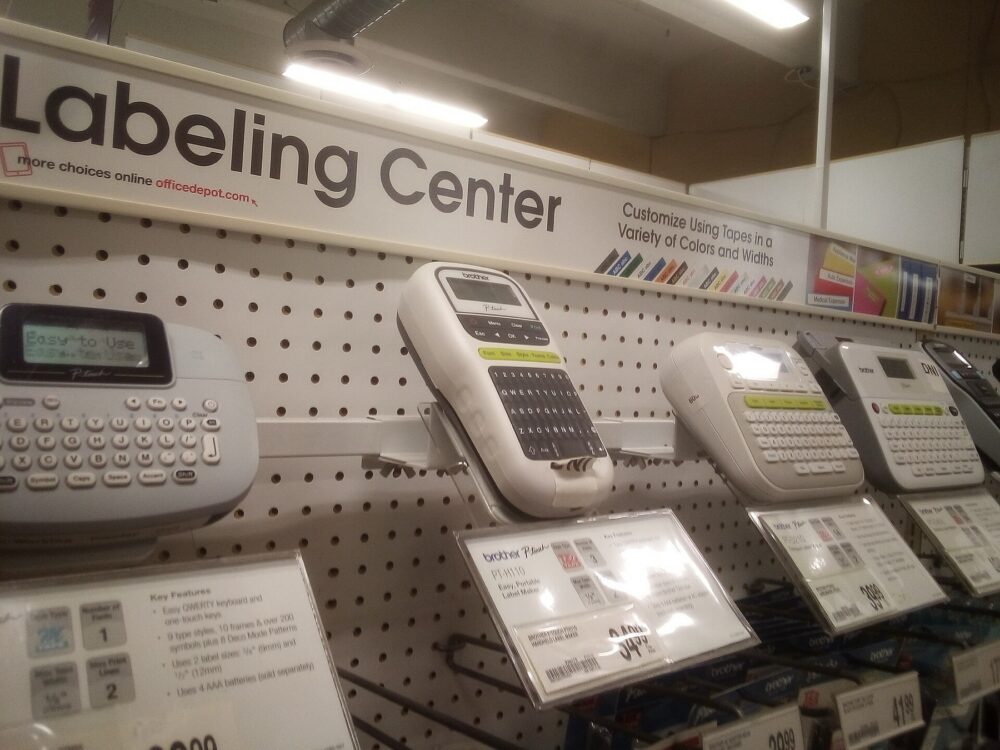
For most Australian Amazon FBA sellers, the practical route is to buy a proven, Amazon‑compatible label printer through retail or office‑supply channels, then use China‑based marketplaces like DHgate to experiment with bulk labels or secondary units once your workflow is stable.
That mix gives you predictable label printing for your core FBA operations, while still letting you use cross‑border sourcing to reduce your per‑label cost over time.
The Platform Landscape for Amazon FBA Label Makers
From Australia, you effectively have four platform categories for Amazon FBA label makers and labels:
- Retail marketplaces (Amazon, eBay) – Useful for buying one or two printers, with lots of reviews and accessory bundles.
- Office and POS suppliers (Officeworks, specialist online shops) – Focused on business printing gear, often with clearer specs and support.
- China B2C / hybrid marketplaces (DHgate, AliExpress, Temu) – Mix of consumer and business buyers; wide label maker and label selection, attractive for bulk and niche options.
- China B2B platforms (Alibaba, 1688‑style sites) – Geared toward larger‑volume orders and factory connections, especially if you want custom labels or OEM printers.
Retail and SMB channels like Amazon are generally positioned around individual‑item purchases and low quantities, with convenience rather than deep bulk discounts as the main value. In contrast, DHgate is known for wholesale‑friendly pricing and can be more cost‑effective than Amazon for many product types when you start buying in bulk, especially accessories such as labels.
For FBA workflows, that difference matters: you typically only need one reliable, compatible printer, but you consume large volumes of labels as your order count grows.
How Retail, Wholesale and China Marketplaces Work for FBA Labeling
For FBA labeling, you’re sourcing two things with different risk profiles:
- A label printer that must work reliably and stay compatible with your shipping workflow.
- Labels and other consumables that mostly affect cost per order.
Here’s how the main platform types line up against those two needs.
| Platform type | Typical order size pattern | Better suited to… | Common role for FBA labeling |
|---|---|---|---|
| Retail marketplaces (Amazon) | Single units, small accessory bundles | Getting a proven printer with strong user feedback | Primary printer, initial label stock |
| Office/POS suppliers | 1-5 units, small case packs | Business‑grade gear and clear specs | Primary printer, durable labels for higher‑volume sellers |
| China hybrid marketplaces (DHgate etc.) | Multi‑unit orders or larger label lots | Bulk accessories, experimenting with models | Ongoing labels, backup printers, niche sizes |
| China B2B platforms (Alibaba etc.) | Carton‑ or pallet‑level quantities | Custom or OEM products and true wholesale | Private‑label printers, branded labels at scale |
Retail / SMB channels (Amazon, office suppliers)
Operationally, these routes are straightforward. You search for a thermal shipping label printer, filter by decent ratings, and buy one or two units. For Australian FBA sellers, this is often the lowest‑friction way to get a printer that other Amazon merchants already use for 4″ × 6″ shipping labels and FNSKU stickers.
You usually won’t see dramatic bulk discounts on a single printer through these channels, but the printer itself is not the major long‑term cost driver. The value here is in compatibility, documentation, and more predictable buyer support compared with many cross‑border marketplaces.
China B2C / hybrid marketplaces (including DHgate)
Hybrid marketplaces like DHgate sit between full wholesale and consumer retail. A query‑time DHgate listing snapshot taken on 2026-10-08 shows multiple compact thermal label makers and label‑related accessories, such as:
- Mini Portable Thermal Printer Label Maker Wireless Bluetooth in the Printers & Accessories category, with a price range of USD 61.36-64.26 from seller mengdastore (Mini Portable Thermal Printer Label Maker).
- Label Maker Machine with Tape Portable Printer Mini Thermal Printers in the Printers category, priced around USD 38.30-47.12 from seller bong04 (Label Maker Machine with Tape Portable Printer).
- Labeling Machine Label Printer Convenient Smart Bluetooth Thermal Label Maker in Printers, with a price range of USD 34.34-93.33 from ddmymaster (Labeling Machine Label Printer Convenient Smart Bluetooth).
- Waterproof Adhesive Labels – Durable Stickers Ideal for Various Uses in Labels & Tags, priced around USD 1.00-1.03 from czsmtcybz (Waterproof Adhesive Labels).
Prices, stock and ratings can change, but this snapshot illustrates the typical pattern: a wide range of compact, often Bluetooth‑centric label makers and bulk‑friendly label listings that can be combined in different ways.
These platforms are attractive if you want to:
- Reduce consumable costs by buying large quantities of labels.
- Test alternative printers once your main setup is stable.
- Source non‑standard sticker sizes for internal inventory or non‑FBA processes.
They also connect you with suppliers who may be producing similar hardware or label materials for other brands, which matters if you later explore private‑label packaging.
China B2B platforms (Alibaba‑style)
For day‑to‑day FBA shipping, these platforms usually become relevant when:
- Your label volume is high enough to justify carton or pallet‑level purchasing.
- You want custom‑printed or branded labels and potentially OEM printers.
At earlier stages, the complexity of factory negotiations and custom specs often outweighs the benefits for a typical small Australian FBA seller.
Choosing Your Route: When DHgate Makes Sense and When It Doesn’t
Different FBA seller profiles in Australia should bias toward different platform routes. Below are three common scenarios.
1. New or low‑volume FBA seller
Goal: Get labels printing correctly with minimal complexity.
- Printer route: Use Amazon or a local office supplier for a known thermal printer that supports 4″ × 6″ labels and works with your chosen shipping tools.
- Labels route: Start with the same channel for standard label rolls until you’re confident in your exact size and material needs.
2. Growing seller focused on cutting per‑label costs
Goal: Keep the proven printer, reduce consumable costs in a controlled way.
- Printer route: Stick with your existing locally or retail‑sourced printer unless you have a specific reason to change.
- Labels route: This is where China hybrid marketplaces can matter. Prior DHgateWiki editorial on Amazon bulk buying notes that DHgate can be cost‑effective for bulk purchases like label makers and labels, provided you’re careful about product selection and supplier checks.
- Practical use of DHgate here:
- Focus on listings with clear size specs and photos for shipping labels.
- Ask sellers to confirm core dimensions (e.g., 4″ × 6″ for FBA shipping labels) before ordering.
- Start with moderate quantities to validate print quality and compatibility before committing to larger runs.
Buyer support and review reliability tend to be more consistent on Amazon than on DHgate, where experience varies by seller and requires closer scrutiny. That is another reason to keep your main printer on a channel with more predictable feedback while you experiment with label sourcing on cross‑border marketplaces.
3. Private‑label or higher‑scale seller
Goal: Control brand and costs across hardware and labels.
- Printer route: Once your volume justifies it, manufacturer‑focused platforms such as Alibaba can become relevant for exploring OEM printers or more customized hardware options.
- Labels route: Mix China hybrid marketplaces (for flexible, medium‑scale sourcing) with true B2B platforms (for custom‑printed or branded rolls at high volume).
- Workflow: Keep your existing proven printer as the baseline. When testing OEM units or custom labels sourced from China, run parallel trials in a limited subset of your FBA operation before making a full switch.
In this scenario, DHgate’s blend of B2B and B2C can act as a bridge: it can be easier to move from small trial orders to larger quantities without immediately engaging in factory‑level contract discussions.
Practical Takeaway for Australian Sellers
For most Australian Amazon FBA businesses, a hybrid route balances simplicity and cost:
- Use Amazon or local office/POS suppliers for your first, mission‑critical label printer and early label stock. That’s where compatibility signals and review volume are strongest.
- Once your labeling process is proven, explore bulk labels and secondary printers via marketplaces like DHgate, treating them as cost‑optimization and experimentation tools rather than the core of your setup.
- Consider manufacturer‑centric platforms only when your scale or private‑label plans clearly justify the extra sourcing work.
For additional platform context, you can also read comparison pieces such as Alibaba Alternatives for product sourcing to understand how different China‑focused sites position themselves.
For additional DHgate platform context, use What DHgate is and how the marketplace works, Compare online marketplaces and shopping platforms, and Compare DHgate with AliExpress, Alibaba and Temu.
That approach makes each platform type work where it is strongest and keeps DHgate in a realistic role: flexible, bulk‑friendly sourcing for accessories and extra units, while your main printer comes from channels that prioritize convenience and user feedback.