
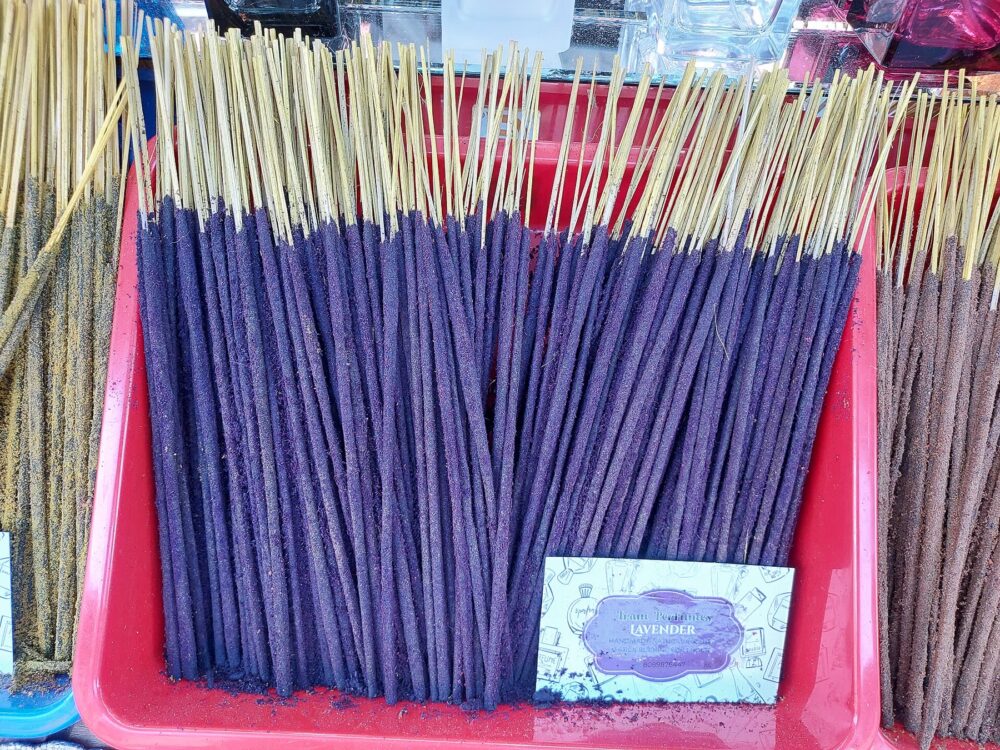
Lavender and sandalwood fragrance products are widely available online, but they’re sold through very different kinds of platforms. If you’re just buying one or two finished candles, a brand retail site or a big marketplace like Amazon or eBay will usually be simplest. If you’re making your own candles or stocking an ecommerce shop, US-based supplier platforms that sell lavender–sandalwood fragrance oils give you more control and more predictable quality, while global marketplaces can provide cheaper bulk options with extra verification work.
This guide maps the main platform routes for US buyers to actual product types: finished candles and mists vs fragrance oils and inputs. It then compares those routes so you can choose the right place to buy or source lavender–sandalwood products for personal use or resale.
How Lavender & Sandalwood Products Reach You: Market Landscape
Lavender & sandalwood is a well-established fragrance profile. It shows up both as a standalone scent and blended with other notes in home fragrance and personal care.
You’ll see it in:
- Finished candles and home fragrance. For example, Habersham sells a Sandalwood Lavender Rondure candle through its own retail site, a finished product with that scent already dialed in.Habersham sandalwood–lavender candle
- Body and room mists. Thornridge lists a “Secrets Sandalwood Lavender” refreshing fragrance mist within its fragrance mist collection, a ready-to-use spray.Thornridge sandalwood lavender mist
- Perfumes and fine fragrance. Bath & Body Works has a Lavender Sandalwood perfume documented by fragrance directories like Fragrantica, showing that big brands treat this pairing as a standard aroma profile.
- Fragrance oils for makers. Craft and supplier platforms sell oils such as makesy’s “Lavender Blooms & Soothing Sandalwood” fragrance oil and a similarly named oil at Michaels, aimed at candle and soap creators.Lavender Blooms & Soothing Sandalwood oil at makesy · Lavender Blooms & Soothing Sandalwood oil at Michaels
Alongside those, consumer marketplaces like eBay host many lavender-based candles, including seasonal or mixed-note options that pair lavender with woods, vanilla, or florals.Lavender candles on eBay
So your first decision is simple: are you buying a finished lavender–sandalwood product, or buying the inputs to create your own? Finished goods lean toward brand sites and retail/consumer marketplaces. Inputs lean toward supplier platforms and wholesale or cross-border marketplaces.
Platform Types for Lavender & Sandalwood: Retail, Marketplaces, and Supplier Sites
Online platforms that sell this scent fall into three broad models.
1. Brand and specialty retail sites
These are the standalone sites for candle and fragrance brands or small boutiques. They usually:
- Sell finished, curated products (no custom blending).
- Emphasize a particular aesthetic and ingredient philosophy.
- Offer limited but focused scent ranges.
Habersham’s Sandalwood Lavender candle is a good example: you’re buying a single brand’s interpretation of the scent in a specific wax format.Habersham sandalwood–lavender candle
This route works well if you care about packaging, brand story, and don’t need bulk pricing or private label rights.
2. Consumer marketplaces (Amazon, eBay, Etsy)
Consumer marketplaces aggregate thousands of independent sellers. For lavender–sandalwood, you’ll find:
- Mass-market candles and mists from bigger brands.
- Handmade soy candles and wax melts from micro-brands.
- Seasonal lavender blends (e.g., lavender + vanilla + sandalwood).
On eBay, for instance, there are many lavender seasonal candle listings, some combining lavender with woods or bakery notes. That breadth lets you quickly compare ingredient claims like “all-natural soy” vs mixed wax, or look for specific features such as dye-free or phthalate-free.
Marketplaces are ideal if you want choice and price competition on finished products, but quality and formulation standards vary widely between sellers.
3. Craft/supplier platforms for fragrance oils
Supplier-focused platforms cater to people making candles, soaps, and mists themselves or for resale. They mainly sell:
- Fragrance oils, often clearly labeled for candle, soap, or body use.
- Waxes, wicks, and containers.
Lavender–sandalwood oils on makesy and Michaels are typical of this route:
- Makesy presents “Lavender Blooms & Soothing Sandalwood” as a blended fragrance oil for creators, sitting alongside other technical supplies.Lavender Blooms & Soothing Sandalwood at makesy
- Michaels sells a similarly named fragrance oil in its DIY section, aimed at hobbyists and small producers.Lavender Blooms & Soothing Sandalwood at Michaels
If you’re a small ecommerce business, this route lets you control wax type, wick, and concentration—key for building your own line.
Comparing Routes and Matching Platforms to Your Buying Scenario
High-quality candles and fragrance products are usually described as having natural or well-formulated waxes, good scent throw, and a clean, even burn. Those factors show up differently depending on where you buy.
Here’s a compact comparison for typical lavender–sandalwood needs:
| Buying scenario | Best-fit platform type | What you actually get | Trade-offs |
|---|---|---|---|
| 2-3 candles for personal use | Brand/specialty retail or consumer marketplaces | Finished lavender–sandalwood candles with set burn profile and packaging | Higher per-unit price; less control over ingredients beyond label claims |
| Trying many scent variations | Consumer marketplaces (Amazon/eBay/Etsy) | Wide mix of lavender blends, from soy travel tins to seasonal jars | Quality and wax type vary; you must vet each seller individually |
| DIY candles or small local sales | US craft/supplier platforms (makesy, Michaels, others) | Lavender–sandalwood fragrance oils plus waxes, wicks, vessels | Requires you to learn formulation and testing; upfront supply purchases |
| Scaling a private-label line or seeking very low-cost inputs | Cross-border wholesale/marketplaces (Alibaba, Cross-border multi-seller, etc.) | Cheaper bulk fragrance oils (described as including lavender), containers, possibly finished candles | More work verifying suppliers, longer shipping, and uneven documentation; compliance is your responsibility |
For personal buyers, retail sites and consumer marketplaces are usually the least effort. You can rely on existing product descriptions and reviews and focus on cues like soy vs paraffin, jar size, and how other buyers describe scent strength.
For small ecommerce brands, the decision is more nuanced:
- If your business model is curating other brands, consumer marketplaces and brand sites are your sourcing ground, and you focus on wholesale or multi-pack options.
- If you want true product control, supplier platforms that sell lavender–sandalwood oils and waxes are a better match. You choose your wax blend, wick size, and fragrance load to hit the scent throw and burn profile you want.
- Cross-border marketplaces like Alibaba or DHgate enter the picture when you’re focused on lower-cost inputs or specific hardware (e.g., candle vessels) not easily found domestically.
If you consider that route, treat each listing as a standalone business decision: review supplier documentation, ask detailed questions about intended use (home fragrance vs body products), and consider third-party testing for any product that will contact skin or be burned indoors.
For a deeper look at how DHgate functions as a marketplace before you factor it into your sourcing mix, you can read What DHgate is and how the marketplace works or see it compared to AliExpress and Alibaba in Compare DHgate with AliExpress, Alibaba and Temu.
Quick scenario callouts
- Hobbyist making a few candles per month: Start with US supplier platforms (makesy, Michaels, similar). Their lavender–sandalwood oils are designed for small-batch projects, and you avoid cross-border complexity.
- Local brand selling at markets: Use supplier platforms for core fragrance oils and containers, and optionally test finished lavender–sandalwood candles from established brands to benchmark scent throw and burn quality.
- Online store curating gifts: Use brand sites and consumer marketplaces to source distinctive lavender–sandalwood candles and mists, prioritizing brands that clearly describe wax type and fragrance profile.
If you match your platform choice to how much control you need—finished product vs inputs—and to your tolerance for sourcing risk, it becomes much clearer where to buy lavender and sandalwood candles or fragrance oils that fit your plans.