
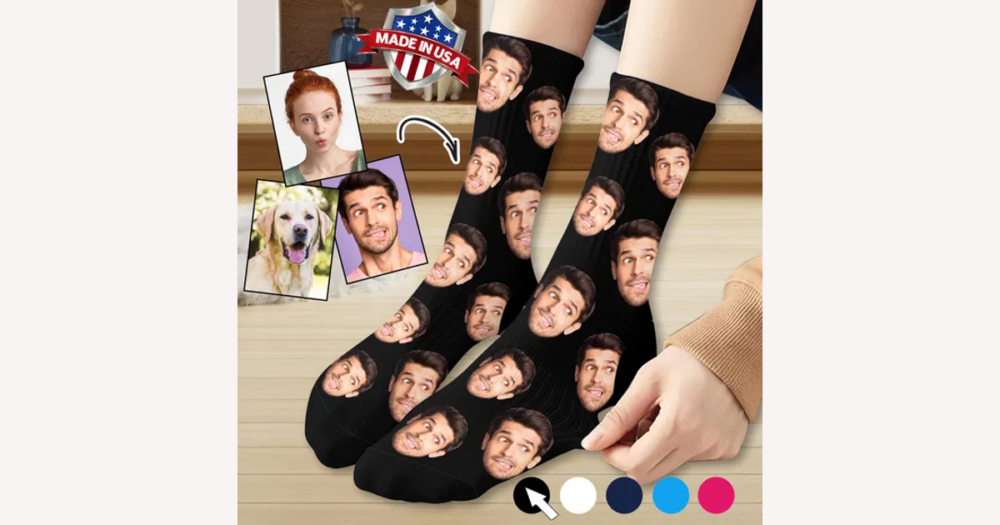
DHgate can also be a place to order personalized face socks with your photos, but it works differently from the upload-and-checkout flow you may know from Etsy or Amazon. Instead of one standard form, you search for promising listings, message individual sellers about your design, and get the customization, price, and timeline confirmed in writing on DHgate before you pay. That seller-driven process—and the platform tools around payment, shipping, and disputes—is what this guide explains so you can pursue custom socks through DHgate with more confidence.
How DHgate fits your custom face sock idea
On DHgate, you’re not dealing with one central store for personalized face socks. DHgate is a marketplace where many independent sellers may offer custom photo socks alongside other goods, and each seller controls their own options and workflow.
If you’re used to Etsy or Amazon, you might expect a single, standardized product page with an upload box for your photos and a few fixed dropdowns for size and color. On DHgate, custom work is usually more flexible but also more manual: you read the listing description for signs that the seller accepts custom printing, then use DHgate’s messaging to share your photos and design ideas instead of relying only on a built‑in uploader.
This guide stays focused on DHgate’s mechanics—how to search for potential sock listings, contact sellers, agree on the exact customization, pay through DHgate, and handle problems if the result doesn’t match what you agreed—without naming or endorsing specific products.
Because every seller can handle photos, faces, and layout differently, the safe approach is to treat the listing as a starting point and then confirm all important details in DHgate chat before you place the order. Clear written messages about the design, quantities, and timing are what make a personalized, overseas order feel low‑risk.
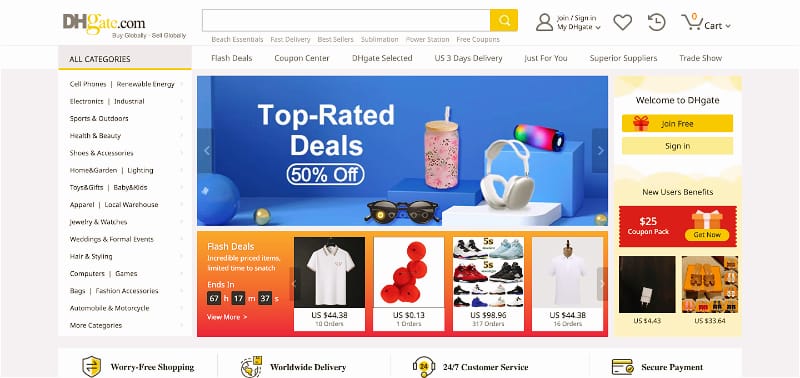
On DHgate you start by searching from the main marketplace interface, then narrow down to sellers who mention custom or photo printing in their listings.
How custom orders for face socks usually work on DHgate
- Search DHgate for terms like “custom face socks,” “photo socks,” or “personalized socks,” and browse the relevant categories to see which sellers mention customization or printing services.
- Open individual listings and read the description carefully to check whether custom printing is actually offered, what kinds of photos or faces are allowed, any limits per pair, and whether there are minimum quantities for orders.
- Use DHgate’s messaging tool to contact the most promising sellers instead of relying only on the listing. Describe your idea clearly and share key details—photos you want to use, the number of pairs, sock sizes, colors, and any text or layout preferences.
- Wait for the seller to confirm whether they can produce your design, clarify the price, minimum order quantity, and estimated production time, and, when possible, share examples or a simple mockup so you know what to expect.
- Align on all important specifications in DHgate chat—how many faces per pair, background style, sock size and color, print placement, any text, and packaging—so there is a written record inside the platform if anything later goes wrong.
- Follow the seller’s instructions for placing the order. That may mean buying from an existing listing and adding a clear customization note, or having the seller publish a dedicated custom listing for your design and asking you to place the order there.
- Treat this as the typical DHgate pattern for custom goods: search for likely listings, message the seller, confirm the design, price, and timing in writing, then place the order through DHgate once everything important is documented in your messages.
A short tutorial video can help you visualize the flow of searching DHgate, opening listings, messaging sellers about customization, and completing checkout once details are confirmed.
Customization details to confirm for your face socks
- Faces and images: Ask how many faces can be printed on each pair, whether you can mix different people and pets on the same sock, and if there are any restrictions on certain images (for example, celebrity photos or logos).
- Photo requirements: Confirm what kind of photos the seller prefers—minimum resolution, vertical or horizontal orientation, clear lighting, and whether close-up face shots are needed for best results—and how you should submit or replace photos through DHgate messages or file upload tools.
- Text and graphics: Check if the seller can add names, dates, or short messages, whether there is a character limit, and what font and color options are available for any text or extra graphics.
- Sock options: Verify the available sizes (such as men’s, women’s, youth, or unisex), approximate size ranges, and which colors or patterns they offer, including how the pattern might affect where the faces are placed on the sock.
- Material and print coverage: Ask what fabric blend the socks use, how thick and stretchy they are, and whether the design will cover the whole sock or only specific areas like the leg or ankle.
- Design preview: Find out whether the seller will provide a digital mockup or photo proof for you to approve before production, or if they go straight to printing once they receive your photos and instructions.
- Packaging or gifting: If the socks are a gift or for an event, ask about any available gift packaging, labels, or special presentation options and whether they cost extra.
- Treat each of these points as questions to confirm in DHgate messages, not automatic features. Getting clear answers in writing about faces, photos, text, sizes, materials, layout, and packaging gives you a shared design reference and stronger support if you later need to raise an issue with the order.
Common pitfalls with DHgate custom face socks and how to avoid them
Paying safely on DHgate for customized socks
On DHgate, you pay through the platform’s own checkout rather than sending money directly to the seller. You’ll use DHgate’s supported payment methods, and the money is generally held by DHgate until the order is marked as received or a platform confirmation period passes. That holding step gives you time to check your custom face socks before the seller finally receives the funds.
Because personalized socks are made to your photos and can’t easily be resold, it’s usually harder to return them just because you changed your mind. The safer angle is to make sure you can show that the seller didn’t do what was promised: the socks never arrive, or they clearly don’t match the listing description or the written agreement you reached in DHgate messages. In those cases, buyers can normally raise a complaint or dispute through DHgate instead of trying to sort it out off‑platform.
To keep that protection, pay only through DHgate’s official checkout and ignore any request to use external links, direct bank transfers, or messaging apps for payment. When you agree on special customization—how many faces per pair, layout, background, colors, sizes—make sure those terms are either in the listing or clearly written in DHgate chat so you can point to them later if needed. Before confirming you’ve received the order, take a moment to inspect the socks and be aware of the order’s protection period and dispute deadlines as explained in DHgate’s help center. In practice, your main safety foundation is a clear, documented agreement plus strictly on‑platform payment and confirmation.
Production and shipping timelines for DHgate face socks
Quick checks to vet DHgate sellers for custom socks
- Check ratings and feedback: look at the seller’s overall score and read recent reviews, paying extra attention to comments and customer photos that mention custom or printed items.
- Glance at order history: note how many completed orders or followers the seller has as one sign of experience, without automatically ruling out newer sellers.
- Evaluate listing photos: prefer real-life shots or consistent product images that look like the seller’s actual work rather than only generic mockups.
- Test communication: send a brief message about your face sock idea and see how quickly and clearly the seller replies, including whether they answer specific customization questions.
- Check policy clarity: make sure the listing and messages spell out production time, shipping options, and what happens if there’s an issue in straightforward language.
- Use the checklist as a filter: narrow your options to one or two responsive, detail‑oriented sellers, even if their prices are slightly higher, because that usually improves the odds of a smooth custom order.
If something goes wrong: using DHgate support and disputes
- Track the order’s progress and expected delivery dates in DHgate’s order details and tracking tools so you know whether it’s moving as promised.
- If delivery is late or tracking stalls, message the seller through DHgate to ask for an update or proposed solution, keeping all communication on the platform.
- When the socks arrive, inspect them before confirming receipt, checking that the design, faces, size, and overall quality match the listing and what you agreed in messages.
- If there is a clear problem—such as wrong faces, missing pairs, or major defects—take clear photos or short videos that show the issue from different angles.
- Share this evidence with the seller in DHgate messages and request a reasonable resolution, such as a partial refund, remake, or replacement, within a set time frame.
- If the seller does not respond or declines a fair solution, open a dispute from the order page within the buyer‑protection window, attaching your message history and evidence.
- Follow DHgate’s prompts during the dispute, respond on time, and keep your explanations factual and tied to what the listing and chat originally documented.
- Remember that dispute outcomes are stronger when your expectations and customization details were clearly written down with the seller before payment, making it easier to show how the result differs from the agreement.
FAQ: one-off pairs, photo safety, and bulk orders
Can I order just one or a few pairs of custom face socks on DHgate, or is it mainly for bulk orders?
Both small and bulk orders are possible on DHgate, but each seller sets their own rules. Some will accept a single pair or a small batch, while others require a minimum quantity. Check the listing for minimum order numbers and then confirm in DHgate messages how many pairs they are willing to produce for your request before you place the order.
How safe is it to upload photos of faces to DHgate for custom socks?
Uploading face photos to DHgate shares those images with the seller and stores them in DHgate’s system as part of your order communication. In practice, sellers use the photos only to create your design, but it’s still wise to avoid highly sensitive or private images, keep all file sharing inside DHgate’s own upload or attachment tools rather than external links, and review DHgate’s privacy and data information if you are concerned about how your content is handled.
What should I expect if I want dozens or hundreds of custom face socks for an event or business?
For larger quantities, many DHgate sellers will treat your order as a bulk or business request. Pricing, production time, and proofing steps may differ from standard small orders, and you may see longer timelines or tiered pricing. Mention your approximate quantity upfront in DHgate messages, ask how bulk pricing and scheduling work, and expect more back‑and‑forth to confirm the design and any samples or previews before you commit to payment.