
Buying a unique or hard-to-find item on DHgate follows a clear sequence: search and review a listing, place and pay for the order through DHgate, then follow shipment updates through delivery and the short window for raising problems. Understanding that flow up front makes it easier to decide whether each step gives you enough information to proceed comfortably.
Understand the DHgate buying flow for unique items
- Create a DHgate account or log in, then search or browse for your unique item using clear keywords and relevant categories.
- Open a promising product page and check the seller profile and listing details to decide whether the offer looks credible enough to consider.
- If it seems acceptable, choose any required options such as size, color, or variant, confirm the quantity, and add the item to your cart.
- Go to checkout, confirm your shipping address, select a shipping method if options are available, and review the estimated delivery window and any key notes.
- Choose a DHgate-supported payment method, complete payment through DHgate’s checkout, and wait for the order status to show that it has been submitted and is being processed.
- After the seller ships, look for tracking details on your DHgate order page so you can follow the package as it moves toward the US.
- When the package arrives, compare the item with the listing. If everything matches, confirm receipt; if there is a problem, consider opening a dispute within the available time window rather than delaying.
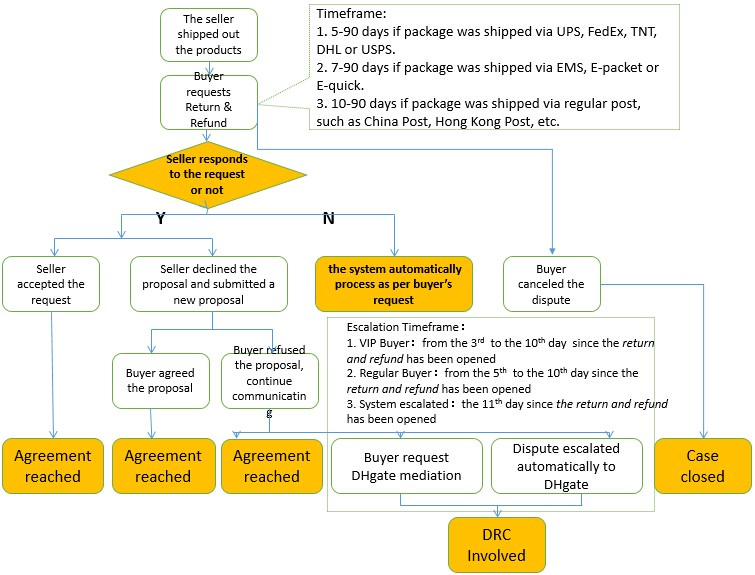
Think of a DHgate order as a chain of stages: search and listing review, order and payment, shipment with tracking, delivery, and a limited dispute window if something goes wrong.
Check seller profiles and listings before you trust a unique item
DHgate seller profiles give you a first snapshot of who you are buying from. Details such as the store name, how long the seller has been active, their overall rating, the number of completed orders, and the volume of feedback all add up to a picture of reliability. A seller with a solid history, steady ratings over time, and a meaningful amount of feedback generally feels more predictable than a brand‑new store with only a handful of transactions.
For unusual or highly specific items, patterns matter more than any single score. I pay the most attention to detailed reviews that mention whether the product matched the description, how quickly it was shipped, and how issues were handled. Stores that clearly specialize in related categories—and show consistent feedback on those products—tend to inspire more confidence than sellers offering a random mix of unrelated items.
Listing details should reinforce that trust. Clear photos from multiple angles, specific specifications such as sizes, materials, or versions, carefully labeled options or variants, and honest notes about customization or special conditions all suggest the seller understands and can consistently supply the item. By contrast, very new stores with little history, sparse or generic reviews, blurry or mismatched photos, missing specs, or big claims and “certificates” that are not actually shown or explained are practical red flags, especially for unique products that you cannot easily compare to something familiar.
I would rather choose a seller who provides thorough, consistent information—even if their price is slightly higher—than gamble on a sparse listing at the absolute lowest cost. If a page leaves you with major unanswered questions about what you will receive or how it will be shipped, it is usually safer to skip that offer and look for one where the seller has already done the work of explaining things clearly.
Understand DHgate payment options and buyer protection
On DHgate, you normally pay through the platform’s own checkout rather than sending money directly to a seller. The order and payment are recorded in your DHgate account, and DHgate routes funds according to its rules, often tying release of money to milestones such as the seller shipping the item or the order reaching a confirmed-delivery stage. Using the built‑in checkout means every step—amount paid, timestamps, and status changes—is documented inside the same system you would rely on if you later needed support.
The safest pattern is to keep the entire transaction inside DHgate. An on‑platform payment creates a clear record and connects directly to DHgate’s tools for messaging the seller, tracking the order, and, if needed, opening a dispute. By contrast, if a seller asks you to pay by bank transfer, cash app, or any other off‑platform method, you lose that integrated record and make it much harder for DHgate to help if something goes wrong. I would treat any suggestion to pay outside DHgate’s checkout as a serious red flag, even if the seller claims it will be cheaper or faster.
After you submit payment through DHgate, you should see an order confirmation and a status such as “pending” or “processing” while the seller prepares and ships the item. Once shipment details are provided, the status typically changes to “shipped” and a tracking entry appears. Later, when delivery is confirmed or the protection period expires, the order may move to a completed state. These status changes usually align with time windows for the seller to act and for you to raise issues, so check your orders page to see how much time remains if a problem arises.
Because payment menus and security features can change, you should confirm which specific cards, wallets, or other methods are currently supported at checkout and in DHgate’s help center, and review any method‑specific conditions there. For unique or hard‑to‑replace items, I would rather choose a DHgate‑supported payment route that keeps everything traceable inside the platform—even if another option might save a small fee—so that I have a single, documented trail if I need to question a charge or prove what was agreed.
How DHgate shipping, logistics, and tracking usually work
Once your payment is processed and the seller accepts the order, they choose one of the shipping options they offer—often a mix of slower, cheaper routes and faster, more expensive ones—prepare the package, hand it to a carrier, and create the shipment record. They then provide a tracking number and carrier details, which appear in your DHgate order information. DHgate itself is not the shipping company; its role is to host the transaction and display the logistics updates that come from the seller or their shipping partners.
For international orders from overseas sellers to the US, it is normal for delivery to take longer than a domestic shipment. Even when everything goes smoothly, transit usually involves several stages and can take at least several days, sometimes a few weeks, as the package moves through export processing, international transport, and final delivery within the US. Tracking statuses commonly progress through steps such as “accepted by carrier,” “in transit,” “customs clearance” or similar wording, and finally “out for delivery” or “delivered,” with DHgate reflecting these updates in your order timeline.
Estimated delivery dates you see on DHgate are best read as approximations, not promises. Carrier schedules, customs inspections, weather, and local delivery issues can all push the actual delivery earlier or later than the estimate, and these factors are largely outside DHgate’s direct control. If a package appears stuck, it is often worth checking the carrier’s tracking site for more detail and then contacting the seller through DHgate messaging to ask how they plan to handle delays.
For a unique or hard‑to‑replace item, it is usually safer to prioritize clarity over the absolute lowest shipping cost. Read the shipping method name and description, check any estimated timeframe and seller notes about handling or cut‑off times, and favor options that include trackable shipping over very cheap, untracked routes. I would rather pay a little more for a tracked service with a realistic timeframe than gamble on a vague, rock‑bottom option where neither you nor the seller can easily see where the package went if something goes wrong.
Customs and import duties for DHgate orders to the US
DHgate after-sales support, disputes, and refunds
If something goes wrong with a DHgate order—such as non‑delivery, serious delay beyond the expected window, or an item arriving damaged or very different from the description—the usual pattern is that you have a limited time to open a dispute through your DHgate account. That dispute window is tied to order status milestones, such as shipment and confirmation of receipt, so watching the dates on your order page matters just as much as watching the tracking updates.
Opening a dispute typically means choosing a problem type from a list, writing a short explanation of what happened, and uploading evidence. For a unique item, that evidence might include clear photos of the product and packaging, close‑ups of defects or differences from the listing, and screenshots of tracking information showing a long stall or a final status that does not match what you received.
Depending on DHgate’s current rules and the seller’s policies, the platform’s dispute tools can lead to different outcomes: partial or full refunds, an agreement to return the item for a refund, or a reshipment. Who pays for return shipping and which solutions are available can vary by category, order value, and seller terms, so it is important not to assume that every order has the same options.
Before you buy, it is worth reading both the return and refund terms shown on the listing and the general guidance in DHgate’s help center, and noting any mention of deadlines to confirm receipt or open a dispute. I would rather pick a seller whose policies are written clearly—even if their prices are slightly higher—than gamble on a vague promise that might leave less protection if a unique item arrives with problems.
Once you place an order, keep your communication and documentation organised: use DHgate messaging instead of private channels, save key messages, and store photos and tracking screenshots while the order is active. That way, if you need to escalate an issue, you already have a clear record to support your claim within the dispute system and a better chance of reaching a resolution within the available time.
Key risks with unique DHgate items and how to reduce them
Pre-purchase checklist for buying unique items on DHgate
- Seller & store: Do ratings, feedback volume, and store age look solid, and does the seller seem to specialise in related products rather than random categories?
- Seller & store: Are recent reviews broadly consistent, without a pattern of serious complaints about quality, shipping, or communication?
- Listing details: Are photos clear, up to date, and consistent with the written description, especially for size, colour, and included accessories?
- Listing details: Are key specs (dimensions, materials, compatibility, power requirements, variants) written precisely enough that you know what you’ll receive?
- Listing details: If the listing mentions certificates, guarantees, or brand claims, are they described in enough detail that you understand what is actually promised?
- Payment & security: Are you planning to pay only through DHgate’s official checkout using a supported method, with no request from the seller to pay off‑platform?
- Payment & security: Does the order summary clearly show the total amount, currency, and any discounts before you confirm payment?
- Shipping & tracking: Have you reviewed the available shipping methods and chosen one with tracking and a realistic estimated delivery window, not just the cheapest vague option?
- Shipping & tracking: Would you still be comfortable with this order if delivery took several weeks rather than the shortest estimate shown?
- Customs & total cost: Could this type of item reasonably attract US customs duties, and if so, are you prepared for possible extra charges and delays?
- Customs & total cost: After mentally adding potential duties and tax to the price, does the purchase still make sense for you?
- Returns & disputes: Have you read the listing’s return/refund wording and noted any conditions about who pays return shipping and what problems are covered?
- Returns & disputes: Do you know DHgate’s current dispute window and are you ready to keep order records, messages, and photos so you can act within that timeframe if something goes wrong?
DHgate buyer FAQs about unique and international orders
Is DHgate the actual seller of my item, or just the platform?
DHgate is a marketplace platform, not the direct seller for most products. Independent sellers create listings, set prices, describe items, choose shipping options, and define many of the store‑level policies within DHgate’s rules. DHgate provides the transaction framework—account registration, checkout, order records, messaging, dispute tools, and general platform policies—but it does not usually own or ship the goods itself. This division matters because product details, handling quality, and some after‑sales terms come from the seller, while DHgate focuses on providing structure and tools for resolving issues when they arise.
What can happen if US customs refuses or returns my DHgate package?
If US customs refuses, delays, or returns a package, the outcome is driven mainly by customs rules and the carrier’s procedures, not by DHgate alone. Possibilities can include the parcel being held for extra checks, returned to the sender, assessed additional duties or fees, or in some cases not released if it is not compliant with import rules. Whether you can get a refund or reshipment depends on the specific situation, DHgate’s current policies, and the seller’s terms. If customs trouble appears in tracking or notifications, contact the seller through DHgate, review relevant help pages for current guidance, and be prepared that options may be limited if authorities or carriers decide a shipment cannot proceed.