
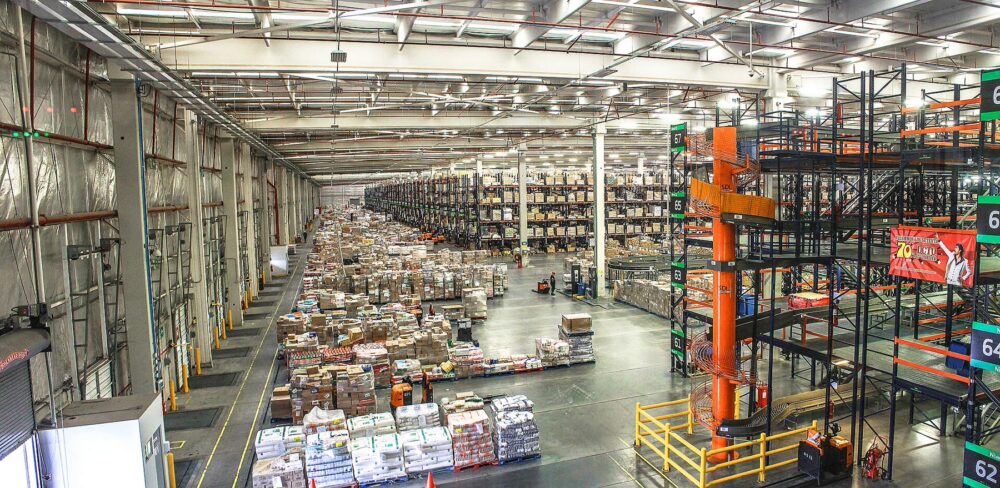
Distribution centers and warehousing platforms give Canadian e‑commerce sellers a place to keep stock plus a way to move it. For a small brand shipping across Canada or into the US, they’re the backbone behind fast delivery, multi‑channel selling, and not drowning in boxes at home. The right route depends on where your products come from (Canada, US, China), how many orders you ship, and how much control you want over inventory and customer experience.
How Distribution Centers and Warehousing Fit Into Modern E‑Commerce
At the simplest level, you’re choosing between three kinds of nodes in the supply chain:
| Facility type | Main role | Typical services for e‑commerce sellers |
|---|---|---|
| Warehouse | Storage-focused | Pallet/rack storage, inventory counts, limited handling |
| Distribution center | Storage + movement hub | Receiving, cross‑docking, order consolidation, outbound TL/LTL shipments |
| Fulfillment center | Order-level pick/pack/ship | Picking, packing, carrier labels, returns processing |
Canadian providers often operate blended facilities, but the emphasis still matters. Warehouses focus on secure, organized storage of goods with racked and bulk space, often in gated, monitored buildings with controlled access and some inventory tracking systems — features illustrated by services like Mantoria’s Canadian warehousing.
Distribution centers add motion. They receive inbound freight, may break down pallets, consolidate loads, and arrange outbound transport to retailers, wholesalers, or sometimes directly to consumers. Canadian storage and distribution services describe these hubs as central points where goods are received, stored, and dispatched along the supply chain, which matches the role shown by providers such as Bourret’s storage and distribution.
Fulfillment centers are tuned for e‑commerce orders: they hold inventory that’s already broken down to bin or shelf level and focus on picking, packing, and shipping individual orders. Shopify’s Canadian documentation distinguishes distribution centers, which hold bulk inventory and feed other nodes, from fulfillment centers that handle end-customer parcels and last-mile shipping for online stores, reinforcing that they’re different roles even when housed in similar buildings.https://www.shopify.com/ca/blog/fulfillment-center-vs-distribution-center
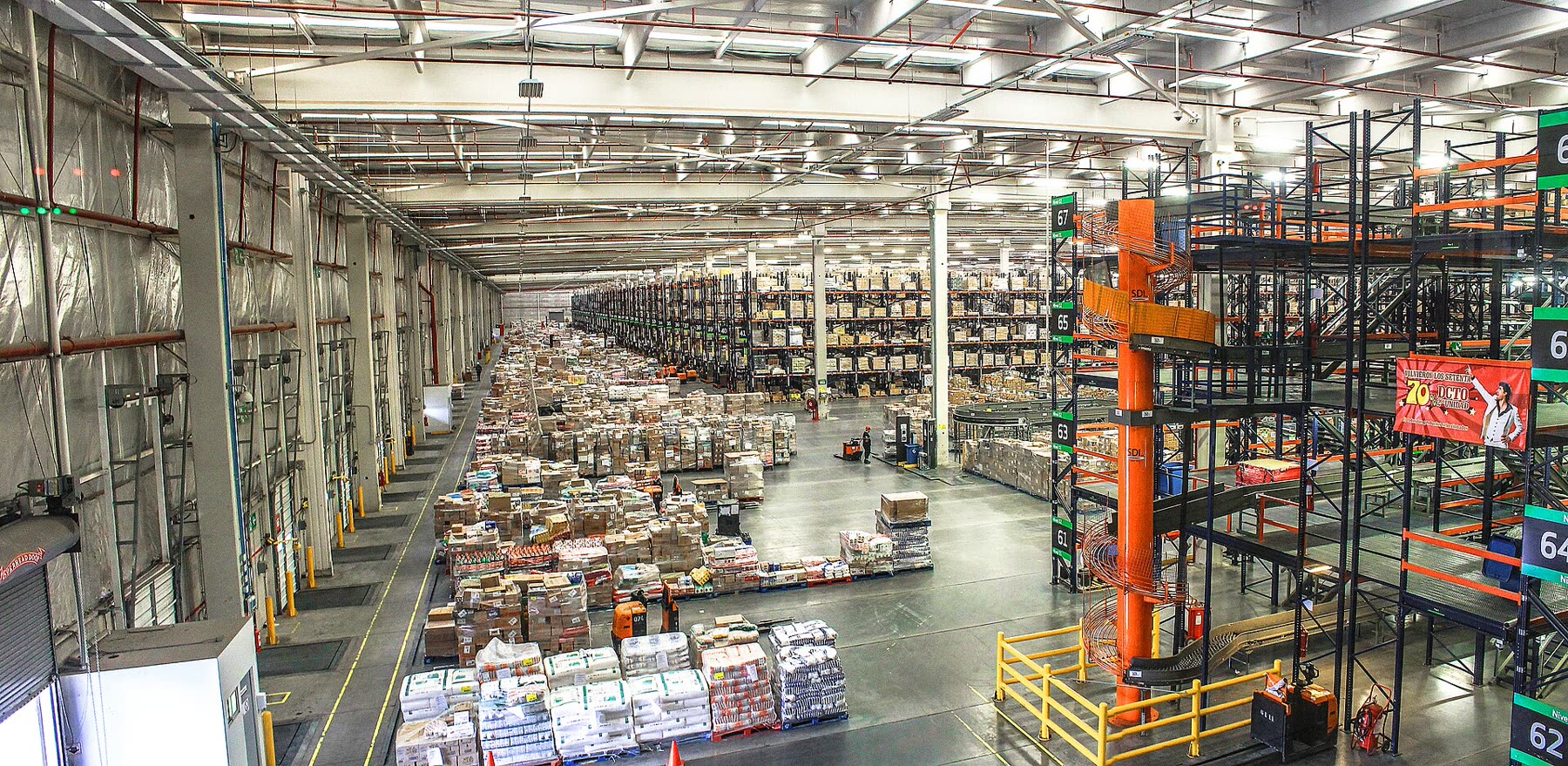
For a multi‑channel Canadian seller, these nodes usually show up as:
- A 3PL warehouse/distribution center in a major metro (Toronto, Vancouver, Montreal).
- A fulfillment partner linked to your Shopify, Amazon, or marketplace accounts.
- Your own small storage space or micro-warehouse if you’re still bootstrapping.
Platform Types: From 3PL Warehouses to Marketplaces and Supplier Portals
You don’t usually “buy” a distribution center; you access warehousing and movement through different platform and service models.
3PL warehousing and distribution providers
Third‑party logistics (3PL) companies are the most direct route. In Canada, 3PLs frequently bundle:
- Ambient or temperature-controlled warehouse space.
- Racked and bulk storage for pallets and oversized items.
- Transportation services (truckload, less‑than‑truckload, smaller local runs).
Pacific Coast Distribution near Vancouver, for example, combines gated, monitored storage with a fleet ranging from 40’–53′ dry vans to smaller 5‑ton trucks for food and dry goods distribution.https://www.pacificcoast.ca/warehousing That kind of bundle — storage plus transport — is typical of Canadian 3PLs, especially if you ship to retailers or wholesale customers as well as direct-to-consumer.
Operationally, your inventory arrives at the 3PL’s distribution center by container or truck. They receive it, store it, and either:
- Ship full pallets or consolidated freight to retailers or other warehouses.
- Feed a fulfillment center that handles last‑mile delivery.
Some 3PLs also offer pick and pack services themselves, so one facility acts as both distribution and fulfillment center.
E‑commerce fulfillment platforms
Fulfillment platforms sit closer to your sales channels. You connect your Shopify store, Amazon listings, or other marketplaces; send them inventory; and they handle:
- Receiving and storage at one or more fulfillment centers.
- Automatic syncing of orders from connected channels.
- Pick, pack, and shipping with your chosen carrier mix.
Shopify’s explanation of fulfillment centers reflects this: the focus is on improving order routing, shipping speed, and automation, using distribution centers upstream as needed. For a Canadian brand selling direct-to-consumer first and wholesale later, these platforms can be a simpler starting point than a raw 3PL contract.
Wholesale and retail marketplaces, plus supplier portals
Marketplaces and supplier platforms don’t store your goods by default — they help you source products and sometimes connect you to logistics.
- Wholesale marketplaces connect you with distributors or manufacturers. You might buy pallets and then ship them into a Canadian warehouse or 3PL.
- Retail marketplaces (Amazon, eBay, etc.) may offer optional fulfillment (e.g., FBA), in which case your marketplace and fulfillment center are tightly linked.
- Supplier portals and China-based marketplaces (such as platforms described in DHgate’s own editorial content) connect overseas buyers directly with manufacturers and wholesalers. DHgate itself is one such marketplace: it links China-based merchants with overseas buyers and aims to enable manufacturers to sell directly to distributors.https://www.dhgate.com/blog/?p=15766 Inventory bought there typically ships into your own Canadian warehouse or 3PL network.
The relationship is layered: sourcing platforms help you choose products and suppliers; distribution and warehousing platforms help you physically handle those goods once they land.
Choosing the Right Distribution and Warehousing Route for Your Business
The best route for a Canada‑based multi‑channel business depends on order volume, complexity, and how global your sourcing is. A few concrete scenarios can help you place yourself.
Scenario 1: Small DTC brand, Canada‑only, under 200 orders/month
You run a Shopify store, ship only within Canada, and import limited SKUs from the US.
- You probably don’t need a full distribution center. A small fulfillment partner or even a modest 3PL warehouse with basic pick/pack can be enough.
- Look for facilities that can integrate with your ecommerce platform, offer racked storage for your cartons, and ship standard parcel carriers.
- Keep bulk storage minimal to avoid long-term warehousing fees; your risk is tying up cash in inventory that sits.
Here, marketplaces are just sales channels. Your main platform decision is whether to outsource fulfillment or keep it in-house until volumes grow.
Scenario 2: Multi‑channel seller, Canada + US, retail and online
You sell on Shopify, Amazon.ca/.com, and to a handful of brick‑and‑mortar retailers.
- A Canadian 3PL that bundles warehousing with transport starts to make sense, because you’re moving both pallets and parcels.
- You might use one or more distribution centers (e.g., Ontario and BC) to shorten transit times to retailers and US entry points, while feeding separate fulfillment centers for DTC orders.
- You’ll want clear processes for ASN (advance shipment notice), pallet labeling, and inventory counts so your 3PL can reliably ship to retail partners.
The trade-off: you get scale and geographic reach, but lose some hands-on control. You’ll spend more time managing SLAs and data than tape guns.
Scenario 3: Cross‑border sourcing from China, growing volumes
You source products directly from Chinese manufacturers or marketplaces and ship containers into Canada, then sell across channels.
- You’ll need a distribution/warehousing solution that can handle container de‑stuffing, palletization, and storage, plus onward transport.
- Many Canadian providers highlight secure, monitored facilities and racked bulk storage as standard features for this kind of operation.https://mantoria.com/warehousing
- Fulfillment can sit on top of that distribution layer, either in the same company or via a specialist that pulls inventory from the 3PL.
Marketplaces like DHgate, Alibaba, or others sit upstream here: they help you find suppliers and negotiate orders. They do not, by default, solve customs, Canadian warehousing, or last‑mile shipping. When you use DHgate specifically, treat it as a sourcing marketplace: verify individual suppliers, clarify packaging and Incoterms, and decide separately how you’ll bring inventory into a Canadian distribution center or fulfillment network. For more on DHgate’s marketplace role, see What DHgate is and how the marketplace works and broader online marketplace comparisons.
How to match platform type to your next 12-18 months
Rather than locking into a complex logistics setup too early, match your platform choice to where you realistically expect to be in a year:
- If you’re testing a product and channel fit: start with simple fulfillment (or in‑house) and a small, flexible warehouse arrangement. Avoid long contracts or high minimum volumes.
- If your wholesale and retail channels are already established: prioritize 3PL distribution centers with solid transport options and inventory reporting, since your risk is missing B2B deliveries.
- If your constraint is cross‑border complexity from China or the US: invest first in a reliable Canadian 3PL that understands import flows and can serve as your central hub; treat sourcing marketplaces like DHgate as interchangeable inputs you can change if supplier quality or terms shift. Use marketplace comparisons such as DHgate vs AliExpress, Alibaba and Temu to choose sourcing channels, not distribution partners.
The practical test: if moving your goods from origin to your customer requires more than two handoffs (factory → port → warehouse → customer), you’re operating a small supply chain, not just a store. Choosing an appropriate mix of warehouses, distribution centers, and fulfillment platforms early — and keeping sourcing marketplaces in their lane — will save you both cash and stress as you grow.