

DHgate can be a useful online shopping and sourcing platform if you treat it as a marketplace of independent sellers, not a single store you blindly trust. It connects mostly Chinese wholesalers and manufacturers with global buyers, with prices that are often lower than U.S. retail and minimum order sizes that are friendlier than classic wholesale platforms. The tradeoff is uneven product quality and seller accountability, so you have to vet listings carefully and pick your use cases. For a small U.S. ecommerce business, DHgate can work for testing products or buying modest quantities, but it’s less suited to complex, high-stakes procurement.
Where DHgate Fits in the Online Shopping and Sourcing Landscape
Before you decide if DHgate belongs in your sourcing mix, it helps to understand what kind of platform it is.
Broadly, you’ll run into three types of platforms when you shop or source internationally:
- Retail marketplaces like Amazon or many U.S. big-box sites: primarily consumer-focused, standardized listings, and a lot of direct retail inventory.
- Cross-border consumer marketplaces like AliExpress: tons of low-priced listings, mostly small orders, still aimed at individual buyers.
- Wholesale-leaning marketplaces and supplier platforms like Alibaba: oriented toward bulk orders, customization, and business buyers.
Independent guides consistently describe DHgate as a B2B/B2C intermediary marketplace. It connects third-party sellers—often Chinese wholesalers or manufacturers—with buyers worldwide, similar in role to eBay or AliExpress rather than a traditional online store.
Editorial reviews from sites such as AliDrop’s DHgate marketplace review and sourcing blogs generally position DHgate in a middle ground:
- Wholesale-leaning, but accessible: often better for smaller orders and quicker purchases than heavyweight B2B platforms geared to large, customized orders.
- Mixed reputation: praised for low prices and variety, but criticized for inconsistent quality and seller follow-through.
That mix matters for U.S. buyers. Compared with a platform designed around big, bespoke deals, DHgate tends to be more attractive when you want to:
- Experiment with a product line without committing to very high minimum order quantities.
- Buy ready-made goods rather than co-developing a custom product.

A shopping cart beside a laptop represents the online marketplace step of cross-border sourcing. Photo: Shixart1985, CC BY 2.0, via Wikimedia Commons.
How DHgate Works for Buyers: Platform Mechanics and Risk Checks
DHgate’s mechanics will feel familiar if you’ve used large marketplaces before, but the risk profile is different enough that you should structure how you use it.
The basic buyer flow
In broad strokes, shopping or sourcing on DHgate looks like this:
- Search and browse: You search for products and filter by category, price, or seller metrics.
- Evaluate a listing: You see photos, specifications, price tiers, and seller information for each product.
- Place an order: You choose quantity/variants, submit the order, and pay through the platform’s checkout.
- Wait for fulfillment and shipping: The seller prepares the goods and ships; timelines can vary significantly by seller and product.
- Receive and inspect: You check the delivery against what was advertised.
Those steps are generic, but on DHgate, your outcome depends heavily on your due diligence.
DHgate’s own editorial content openly acknowledges buyer skepticism about less-familiar platforms and urges caution in online dealings, placing itself alongside names like Alibaba and AliExpress. Brand blog posts that look at “global buyer happiness” describe competitive pricing and broad product variety, while also noting ongoing challenges around seller accountability.
What you need to verify yourself
Because DHgate is an open marketplace, you should treat each listing as a separate risk assessment. These are the checks that make a practical difference:
- Seller profile depth and history: Look for how long the seller has been active and how many products they list. Sparse, 1-2 product storefronts with little history are higher-risk for sourcing.
- Review patterns across multiple products: DHgate hosts buyer feedback and ratings, but instead of trusting a single five-star score, scan several products from the same seller. Are complaints similar (sizing, build quality, communication)? Do they appear recent or clustered?
- Listing realism versus trend hype: TikTok and social media often promote “dupes” and ultra-cheap gadgets on DHgate. Compare images and descriptions carefully; if photos look like they were lifted from major brands without clear differentiation, you’re in a legally and ethically grey area and quality may be wildly inconsistent.
- Specification detail for business use: For ecommerce resale, you need more than “good quality” in the description. Look for dimensions, materials, voltage/specs for electronics, packaging details, and any variability between batches the seller mentions. Vague specs are a red flag for repeatable sourcing.
These aren’t generic “read reviews” tips; they’re the difference between treating DHgate as a casual bargain site and using it as a repeatable sourcing channel.
If you want a broader orientation on DHgate’s marketplace basics beyond sourcing, you can read an overview at What DHgate is and how the marketplace works.
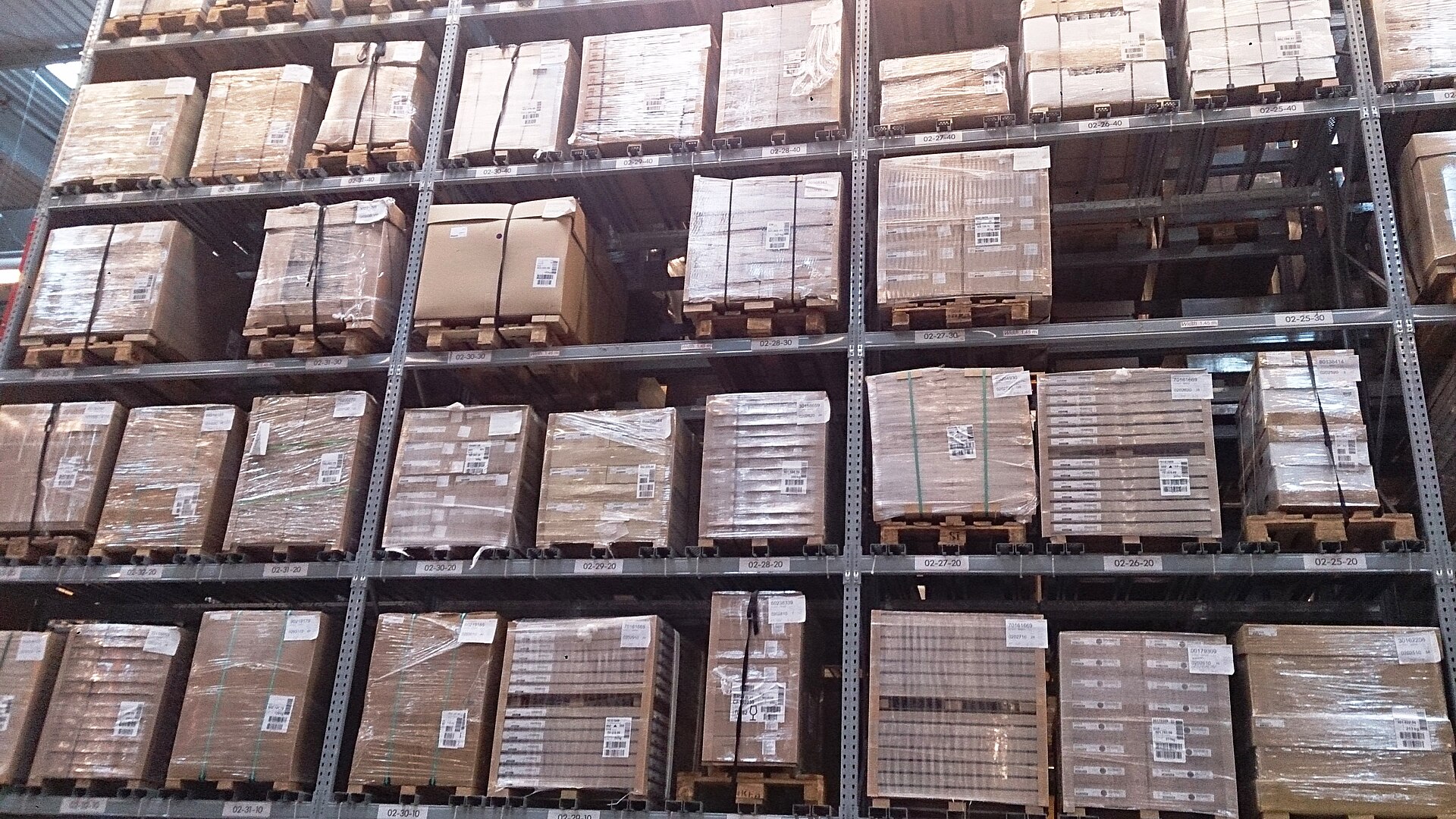
Warehouse inventory illustrates the fulfillment and stock-planning work that follows marketplace sourcing. Photo: ProjectManhattan, CC0 1.0, via Wikimedia Commons.
Scenario-based risk view
The table below keeps the focus on buyer-controlled checks and fit by scenario, not on platform-wide guarantees or policies.
| Sourcing scenario type | DHgate-specific considerations | Buyer-controlled checks that matter most |
|---|---|---|
| Small test orders of new products | Mixed reviews: low prices and variety, uneven quality | Deep seller profile scan; cross-listing reviews; realistic expectations on variability |
| Simple, ready-made goods for resale | Often practical for non-complex items with clear specs | Verify materials and dimensions in listings; order a small batch first |
| Trend-driven, hype products from social media | High risk of inconsistent build and unclear origin | Compare listing photos to official brand materials; avoid IP-sensitive items |
| Electronics and technical items | Higher stakes if specs are wrong or inconsistent | Check voltage, standards, and detailed specs; avoid vague or incomplete listings |
| Building a repeat supplier relationship | Marketplace structure can make long-term control harder | Communicate with the seller, test several orders, and document product expectations |
Who DHgate Suits (and Doesn’t) for Cross-Border Sourcing
For U.S. buyers, DHgate is neither a universal win nor something to avoid outright. It fits specific scenarios.
Independent guides that compare DHgate with supplier platforms like Alibaba commonly conclude:
- DHgate is more practical for beginner or small-volume buyers who want smaller orders, quicker, with less negotiation.
- Alibaba-type platforms are stronger for large-volume, customized procurement where you’re co-developing products, specifying materials, and potentially signing formal supply agreements.
For a U.S. small ecommerce business, that translates into a few concrete use cases.
Situations where DHgate tends to make sense
- Testing product ideas at modest scale: You want to trial modest quantities of a trending item to see if it sells, but you’re not ready to commit to an OEM relationship. DHgate’s wholesale-leaning catalog and relatively accessible order sizes can work here, if you accept variability.
- Supplementing a product mix with lower-risk items: Simple goods with clear specs—like basic accessories or non-electronic home items—are easier to evaluate from photos and reviews than complex, safety-critical products.
- Budget-conscious sourcing where margins are tight: DHgate and independent reviewers both highlight consistently low pricing as a core attraction. If you can absorb some product inconsistency and have a plan for quality sorting, the cost savings can be meaningful.
Situations where DHgate is often a poor fit
- Highly regulated or safety-critical products: Anything where certification, warranty, and traceability are central (for example, certain electronics or children’s products) carries more risk on an open marketplace when you don’t have direct, verifiable supplier relationships.
- Brand-heavy or IP-sensitive goods: Social media hype around designer “dupes” and replicas comes with significant counterfeit and legal issues. Besides legal risk, quality swings are huge, making them unreliable as a serious ecommerce strategy.
- Large, customized orders: If you’re ready to place a large order and want custom branding, tailored specs, and long-term agreements, supplier-focused platforms like Alibaba are usually better structured for that level of control.
Platform fit by scenario
Here’s a compact way to think about DHgate in relation to other platform types, focusing only on fit by scenario, not detailed policy or protections.
| Sourcing scenario | DHgate marketplace fit | Alternative platform type that may fit better |
|---|---|---|
| Testing small batches of a new product | Often practical if you vet sellers closely | Cross-border consumer marketplaces or local wholesalers |
| Ongoing, customized brand manufacturing | Less suited; customization options vary by seller | Supplier platforms geared to OEM/ODM |
| Filling gaps in a low-priced product catalog | Can work, with careful selection and inspection | Mix of wholesale marketplaces and local wholesale |
| Products where compliance and documentation are central | Riskier to rely on marketplace listings alone | Local distributors and directly vetted manufacturers |
If you’re still deciding which overall platform route fits your sourcing needs, you can explore broader marketplace coverage at Online marketplaces and shopping platforms and a comparison that includes DHgate, AliExpress, Alibaba, and Temu at Compare DHgate with AliExpress, Alibaba and Temu.