
Marketplace Pulse is a specialist e‑commerce intelligence firm that focuses on online marketplaces like Amazon, eBay, Etsy, and Walmart. It collects and analyzes marketplace‑wide data, then packages it as research, reports, and custom data for companies that need to understand seller dynamics and market structure, not just their own account performance.Source For a Canadian or US‑facing small business weighing cross‑border sourcing, Marketplace Pulse can be useful when you care about where sellers are winning, how marketplace power is shifting, or which brands and aggregators dominate specific niches. If your immediate need is tactical listings, fulfillment, and pricing decisions, simpler tools or marketplace dashboards are usually enough.
What Marketplace Pulse Is and Where It Fits in Marketplace Analytics
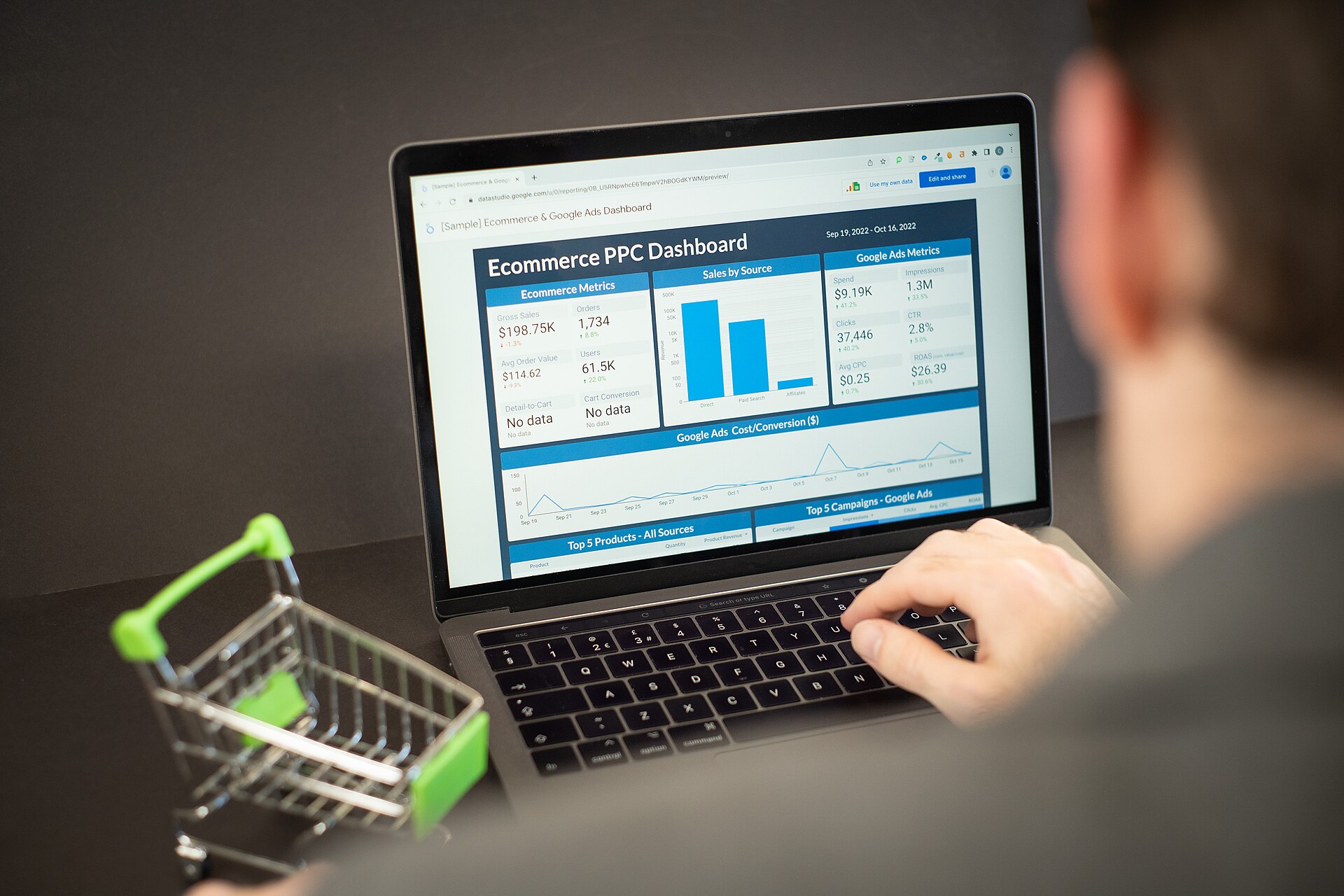
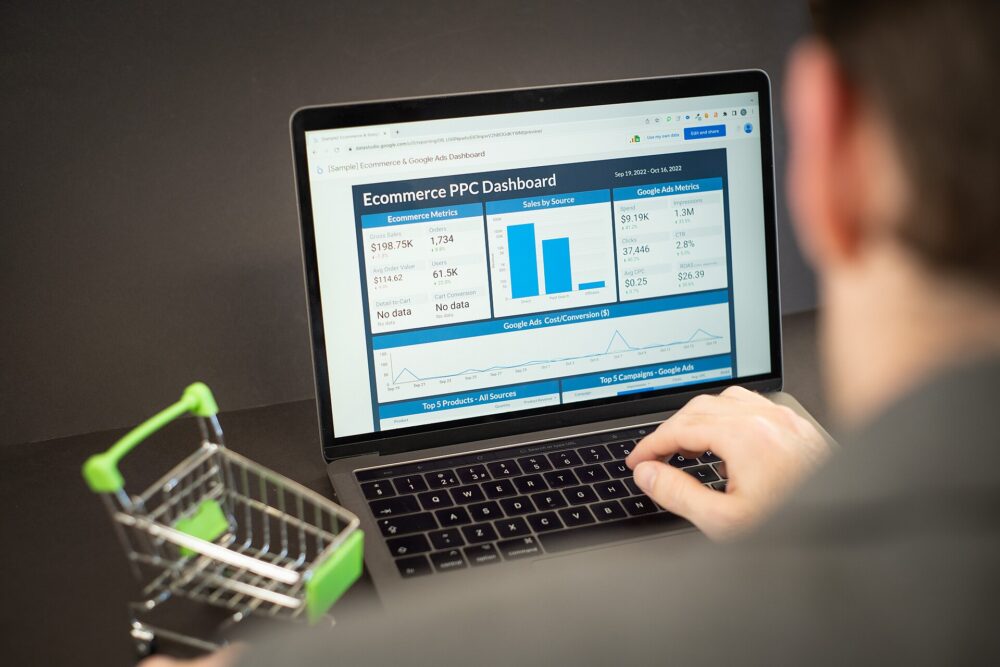
Reviewing ecommerce performance data illustrates the evidence-based monitoring behind a useful marketplace pulse; photo by Zuko.io Images, CC BY 2.0, via Wikimedia Commons.
Marketplace Pulse describes itself as an e‑commerce/business intelligence firm focused on marketplace data rather than on operating a marketplace or a seller tool.Source It tracks and analyzes millions of marketplace sellers and product offers across platforms, offering:
- Public articles and research on marketplace trends
- Deep‑dive reports like the Seller Index
- Raw data feeds and APIs with custom seller datasets
The Marketplace Pulse Seller Index 2026 is a good example of how it works. It’s a survey‑driven analysis of how marketplace sellers are handling growth, profitability, and platform power, based on 181 marketplace businesses representing over US$2 billion in annual revenue.Source The report segments those sellers into cohorts (thriving vs distressed), then looks at sentiment and performance patterns.
Beyond reports, Marketplace Pulse offers raw data feeds and APIs that provide custom data on millions of sellers for clients who need to power market research or sales outreach at scale.Source That’s a very different role from a typical seller tool: instead of optimizing your PPC campaigns or inventory, Marketplace Pulse helps you answer questions like:
- How concentrated is seller power in my category on Amazon vs Walmart?
- Are US‑based sellers losing share to international sellers, and where? (a topic explored in its research on US seller market share on Amazon)Source
- Which Amazon brand aggregators are active in my niche, based on their dedicated aggregator tracking?[\aggregators]
Third‑party profiles, such as Tracxn’s company summary, also describe Marketplace Pulse as an e‑commerce business intelligence firm. That reinforces the positioning: it’s primarily a data and insight provider, not a marketplace, not a seller app, and not a sourcing platform.
Comparing Marketplace Pulse With Other Ways to Get Marketplace Insight
Before deciding on Marketplace Pulse, it helps to sort marketplace analytics options into broad buckets:
- Marketplace‑wide intelligence firms – cross‑platform data on sellers, categories, and market structure.
- Platform‑native analytics – dashboards inside Amazon, eBay, Etsy, Walmart, etc. that show your own performance, some category metrics, and limited benchmarking.
- General BI and analytics tools – Google Analytics, Tableau, Mixpanel, and similar tools that analyze traffic and behavior for your own sites/apps.Source
Marketplace Pulse sits firmly in bucket 1. Here’s a compact comparison of how that differs, at a practical level:
| Option type | Main strength | Best for decisions |
|---|---|---|
| Marketplace‑wide intelligence (e.g., Marketplace Pulse) | External marketplace context across platforms; deep seller and listing data plus trend researchSource | Strategic moves about which marketplaces and categories to enter, and how concentrated or competitive they are |
| Platform‑native analytics (e.g., Amazon Seller Central dashboards) | Detailed visibility into your own sales, ads, and operations on each marketplace | Day‑to‑day optimization of pricing, inventory, advertising, and listings |
| General BI & analytics tools (e.g., Google Analytics, Tableau, Mixpanel)Source | Flexible analysis of your first‑party web, app, and order data; custom dashboards | Holistic view of customer behavior and performance across your owned channels |
Marketplace Pulse’s edge is in external marketplace context. If you’re deciding whether to expand into Amazon Canada or Walmart US with a cross‑border brand, it can help you gauge the competitive landscape, or track how international sellers’ share is changing over time (as in its research on US vs international seller share on Amazon).Source
General BI tools sit somewhere else entirely. They’re powerful but generic. A tool like Tableau becomes marketplace analytics only after you feed it marketplace data—whether from your own exports, third‑party APIs, or intelligence providers such as Marketplace Pulse.Source
Which Option Makes Sense for Your Business (and When to Add Marketplace Pulse)
For a small or mid‑size business, the right analytics option depends on the decisions you’re actually making.
1. Small marketplace seller focused on one or two platforms If you mainly sell on Amazon.ca and Amazon.com, and your immediate problems are ad performance, inventory turns, and listing optimization, you’ll get more value from:
- Native marketplace dashboards and reports
- Lightweight ad and SEO tools
Marketplace Pulse is likely overkill unless you’re at a stage where you’re making strategic bets—like whether to expand into Walmart or invest in new brands based on aggregator activity.
2. Brand owner or DTC site expanding into marketplaces If you run your own site and are adding marketplaces as serious channels, your stack typically looks like:
- A BI tool (Google Analytics, Tableau, Mixpanel) for your site and CRM dataSource
- Marketplace‑native analytics for seller accounts
Marketplace Pulse starts to matter when you need to justify expansion to investors or senior leadership. Its Seller Index and marketplace‑level articles can help you benchmark your strategy against cohorts representing over US$2B in marketplace revenue.Source That’s relevant if you’re asking, “Are our margins and growth targets realistic compared to other marketplace businesses?”
3. Aggregator, agency, or data‑driven reseller If you acquire brands, manage many accounts, or run outbound sales to marketplace sellers, Marketplace Pulse is much more directly useful:
- Its raw data feeds and APIs can power lead‑scoring and outreach by providing custom data on millions of sellers.Source
- Its research on seller concentration, cross‑border participation, and aggregator activity can inform where you scout for deals.
Here, Marketplace Pulse (or similar firms) is less a nice‑to‑have and more a core data supplier.
4. Cross‑border importer or sourcing‑focused business If your main game is finding suppliers and managing cross‑border sourcing—say you’re importing electronics or apparel into Canada—marketplace intelligence plays a different role. Your day‑to‑day tools are sourcing platforms and logistics partners, not necessarily Marketplace Pulse.
Sourcing marketplaces such as DHgate exist primarily to connect buyers with suppliers, not to sell analytics. DHgate’s own editorial case study on analytics describes how it uses AI and data internally to improve buyer‑seller experience and optimize sourcing decisions.Source That’s helpful context, but for you as a buyer, DHgate is a channel where you act on insights (by testing products and suppliers), not where you get marketplace‑wide intelligence.
In that sourcing‑heavy scenario:
- Use platform‑native analytics on Amazon/eBay to measure real performance of SKUs you import.
- Consider marketplace‑wide intelligence like Marketplace Pulse only when you need to validate big strategic moves—such as entering a new marketplace country or pivoting into a category dominated by aggregators.
For most small Canadian and US‑facing operations, the realistic path is:
- Start with platform‑native analytics and a basic BI stack.
- Layer on marketplace‑wide intelligence (Marketplace Pulse or similar) once you’re making six‑ or seven‑figure decisions about marketplaces themselves—expansion, acquisition, or fundraising—rather than just tuning your next product launch.