
Harvey Wreckers is easiest to compare with other auto parts suppliers if you start from the part, not the yard. First lock in exactly what you need (part number, engine code, body style), then price that same spec across three channels: Harvey’s self-serve yard using its published price list, at least one other local wrecker or parts retailer, and one online marketplace. Only after you’ve got like-for-like prices should you factor in condition, warranty, travel or shipping time, and the risk of a misfit. That way you’re comparing total cost and value, not just a cheap-looking sticker.
What Harvey Wreckers & Auto Parts Actually Offers
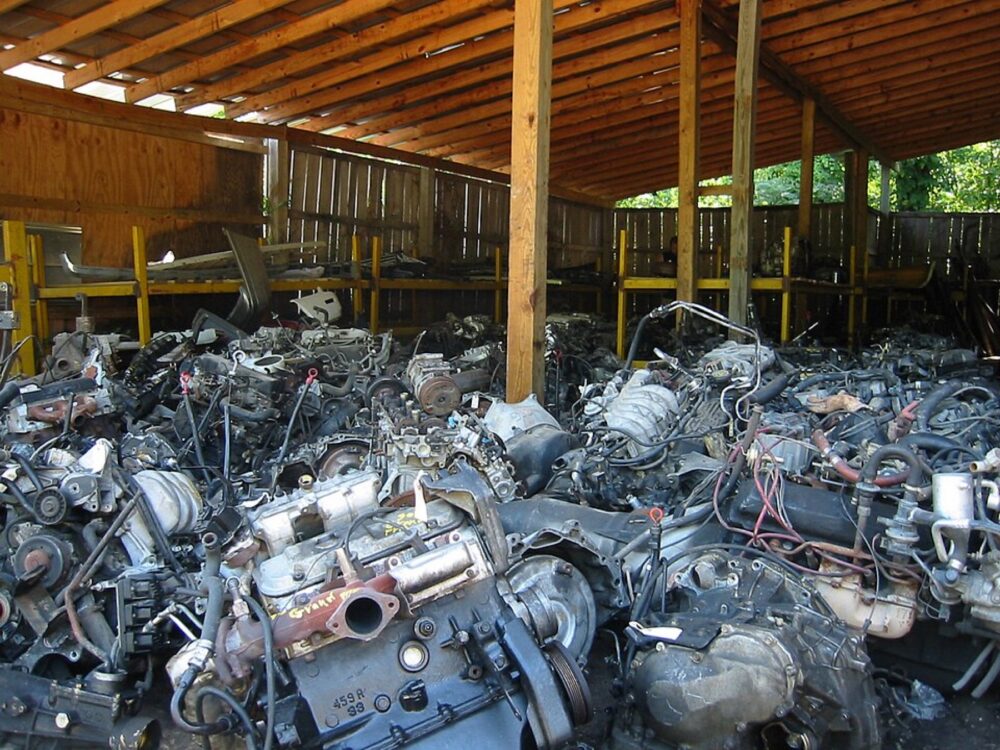
Harvey Wreckers is a self-serve car wrecker based in Melbourne’s south-east. The business positions itself as a leading self-serve auto recycler with a large, organized yard and friendly service, where you can walk in, find a donor car, pull your own parts, and pay a set price at the gate rather than haggling on each item.
On its site, Harvey Wreckers explains that the self-serve model is the main reason prices are lower: you roll up your sleeves, bring your own tools, and remove the part yourself, so they don’t charge you a dismantling fee. That’s a different proposition from a traditional wrecker where staff pull the part and quote you a price each time.
Harvey also publishes a detailed auto parts price list that assigns a fixed price to a wide range of components. At the time it was checked, the list covered many common items and was clearly linked from their site; they describe it as having “a cost for every possible car part that can be picked.” For many buyers this is valuable because you can estimate spend before you drive out.
The yard is advertised on the site and through third-party listings like Apple Maps and Whitepages as operating seven days a week around 9am–5pm, with the official site currently stating “Open 7 Days, 9am to 5pm.” Directory entries place the yard at 400 Warrandyte Road, Langwarrin South, Victoria, but you should always confirm hours directly on the Harvey Wreckers homepage before heading there, as they can change.
Harvey isn’t just a physical yard. It has an eBay Australia store where it sells used car parts that are already removed. The store description notes that Harvey Wreckers has been selling used car parts for many years and covers most makes and models. That dual offline/online presence matters because it gives you two different price and convenience profiles from the same supplier: do-it-yourself self-serve versus pre-pulled parts shipped to your door.
Price and Value Factors to Compare Across Auto Parts Suppliers
Once you understand Harvey’s model, you can use it as a benchmark. The trick is to compare on specific dimensions, not just “wreckers vs retail.” DHgate’s editorial content on buying wrecking-yard parts stresses checking multiple suppliers, verifying compatibility by part number and vehicle details, and weighing price against quality and safety. That maps neatly to a short, practical checklist for comparing Harvey against other suppliers.
1. Part specification and compatibility
Start by pinning down the exact spec so every quote is for the same thing:
- VIN, make, model, year build and month
- Engine code and transmission type
- Body style (sedan, wagon, ute), drivetrain (FWD, RWD, AWD)
- OEM part number where possible
Harvey Wreckers encourages buyers to “make sure you’ve got the right fit” on its site. DHgate’s wrecking-parts guide backs that up, recommending you check part numbers and cross-check compatibility before buying used parts anywhere. The same rule applies to retail counter sales and online marketplaces; if one seller can’t confirm compatibility but another can, that difference has value, even if the price is a bit higher.
2. Price transparency and how you’re charged
With Harvey Wreckers, pricing is transparent up front via the public parts list. You know a starter motor or door assembly will cost a set amount, regardless of the donor vehicle’s badge or trim level.
Other suppliers may price quite differently:
- Full-service wreckers often quote per part based on demand, condition, and how hard it is to remove.
- Retail parts stores use catalog pricing that can differ by brand (OEM vs aftermarket) and may have frequent promotions.
- Online marketplaces let individual sellers set their own prices, so the spread can be wide.
DHgate blog content on price comparison stresses that when prices vary widely, you should compare both price and quality, and read reviews to understand why one seller might be cheaper.
3. DIY effort vs service level
A self-serve yard like Harvey expects you to bring tools, pull the part, and transport it. That might be fine for a headlight or mirror, but less attractive for a heavy engine or transmission.
By contrast:
- Some wreckers will remove parts for you, often adding a labor component.
- Retailers sell new or remanufactured parts off the shelf—no dismantling involved.
- Online sellers ship parts to your address, but you’ll still need installation.
DHgate’s wrecking guide suggests that bringing your own tools and doing removal yourself can save money. The flip side is your time and the risk of damaging the part during removal.
4. Condition, testing, and warranty
Used parts from Harvey Wreckers are sold as recyclables from donor cars. The site emphasizes a massive range of used parts but doesn’t spell out warranty terms on the main pages; those details are best confirmed directly by phone or in person.
Other channels may:
- Grade used parts (e.g., A/B condition) and offer short warranties.
- Offer new aftermarket or OEM parts with manufacturer warranties.
- Provide test results (for alternators, ECUs, etc.) in the listing.
DHgate editorial advice is to prioritize condition, compatibility, and warranty when buying wrecking parts. That’s particularly important for safety-critical components; they suggest that for items like airbags, seatbelts or brakes, buying new from authorized dealers can be the safer route.
5. Discounts, extras, and total landed cost
The DHgate car-wrecking guide notes that some wreckers may offer discounts, promotions, loyalty programs, or core-exchange deals where returning your old part reduces the price. There’s no public evidence that Harvey Wreckers specifically offers these, so treat them as questions to ask any supplier:
- Are there multi-part discounts if you’re pulling a bundle of components?
- Is there a core charge or refund for exchanging an old unit?
- What’s the cost of delivery vs your fuel and time to visit the yard?
Total landed cost should include:
- Part price
- Your travel costs and time
- Any shipping or freight charges
- Installation cost if you’re paying a mechanic
- Potential rework if a misfit forces a return or replacement
How Harvey Wreckers Compares With Local Wreckers, Retailers, and Online Marketplaces
Using those dimensions, you can position Harvey Wreckers against other channels. The table below generalizes how Harvey’s model compares; real-world offers will vary by supplier.
| Channel / factor | Pricing style & level (typical) | DIY vs service | Condition & warranty profile | Convenience & risk trade-offs |
|---|---|---|---|---|
| Harvey Wreckers self-serve yard | Fixed prices via public list; often lower for DIY parts | High DIY: you locate and pull the part | Used parts; condition checked on-site by you; policies should be confirmed directly | Requires travel and tools; low price but misfit/effort risk is on you |
| Other local self-serve or full-service wreckers | Often quote per part; prices vary by demand and difficulty | Range from DIY pick-a-part to staff removal | Used, sometimes graded; some may offer short warranties | Less price transparency; can be closer to you or have different stock |
| Auto parts retailers (new/aftermarket) | Catalog pricing; usually higher than wreckers per part | Low DIY: part is on shelf; you or mechanic fit | New or reman parts with clearer warranty and spec | High convenience; lower risk of hidden damage; higher upfront cost |
| Online marketplaces (incl. eBay, Cross-border multi-seller, etc.) | Wide price spread; potential for competitive deals | Low DIY on sourcing; you still handle fitting | Mix of new, used, and aftermarket; condition and warranty vary by seller | No travel; you rely on listing accuracy; shipping delays and misfit risk |
Harvey’s eBay store adds a hybrid option: you still buy used parts from Harvey, but without yard time. You pay shipping instead of entry and fuel, and have less ability to inspect a donor vehicle. That can be attractive if you’re interstate or buying smaller items.
Among online marketplaces, DHgate’s own editorial blog names DHgate as a global e-commerce platform connecting buyers to auto parts sellers, highlighting that direct access to suppliers can result in competitive pricing. For buyers comparing Harvey’s used parts to imported new or aftermarket components, that means a DHgate listing can be one of several online benchmarks—as long as you carefully review compatibility details and seller ratings and don’t assume any marketplace is automatically cheaper or safer than your local yard.
For broader marketplace context, you can also look at how DHgate stacks up against other platforms in our comparison of DHgate vs AliExpress, Alibaba and Temu, especially if you’re considering importing multiple units for resale.
Worked Example: One Part Across Harvey Wreckers and Other Channels
To see how this plays out, imagine you’re sourcing a used front door (shell only, no trim) for a common small hatchback.
Step 1: Lock in the spec
You collect:
- VIN and exact model variant
- Paint code (to improve color match chances)
- OEM part number if available
You also decide that a perfect color match isn’t essential—you’re willing to respray if the price difference is large.
Step 2: Get the Harvey Wreckers baseline
You check Harvey’s auto parts price list online and find the fixed price category that applies to a complete door shell. That gives you a baseline cost before you leave home.
Next, you:
- Check Harvey’s stock section or call to confirm they’re wrecking your model.
- Estimate your total visit cost: entry fee if any, fuel, tolls, and a couple of hours on-site.
If the price list shows, for example, that a front door is significantly cheaper than the new or aftermarket equivalent you were previously quoted, Harvey becomes your benchmark.
Step 3: Price the same part at another local supplier
You call a traditional full-service wrecker or a parts retailer:
- Provide VIN, model, and paint code.
- Ask for a price on a used door shell, including removal and any warranty.
Suppose they quote a higher price than Harvey’s list, but the door comes pre-pulled, inspected, and with a short warranty. Your decision becomes: is saving, say, AU$50–AU$100 worth spending a Saturday pulling your own door at Harvey, or do you pay the premium for convenience and some risk coverage?
Step 4: Check an online marketplace option
You search an online marketplace such as eBay or a cross-border platform for a matching door:
- Filter by your model and region.
- Read the listing carefully to confirm which side, year range, and body style it fits.
- Add shipping and potential import charges to the part price.
Step 5: Compare total cost, effort, and risk
Now line everything up:
- Harvey Wreckers self-serve: lowest part price, moderate travel and time cost, hands-on inspection possible, DIY removal risk.
- Local full-service wrecker/retailer: higher part price, low effort, some warranty, potentially better fit assurance if they use OEM cataloging.
- Online marketplace: part price plus shipping; no travel; fit and condition depend on listing accuracy; potential delays.
You might choose Harvey if:
- The price gap to other options is large.
- You’re comfortable working with tools and inspecting panels for rust and damage.
- You want to pull several parts in one visit to maximize the trip.
You might choose a retailer or online seller if:
- The price difference shrinks once you count your time, fuel, and potential repaint.
- You’re risk-averse on fitment or don’t want to deal with yard logistics.
- The part is structural or safety-related and you prefer new stock.
For supporting DHgate context in this channel comparison, use What DHgate is and how the marketplace works, and Find wholesale suppliers on DHgate.
By using Harvey’s transparent price list and self-serve model as a baseline, you can make these comparisons methodically instead of guessing. That approach scales: whether you’re a single DIY buyer hunting for a mirror or a small ecommerce seller testing used-parts sourcing, the same steps—fix the spec, gather multiple quotes across channels, and compare total value—help you choose the right supplier mix.