The right choice shifts as your business model and volume change. Below, we’ll break down how each channel handles DTF printers, films, powders, inks, and fabric, and where DHgate genuinely fits versus where another route is a better bet.
What You’re Really Choosing for DTF Gear and Supplies
For DTF and direct-to-fabric work, the sourcing decision isn’t just “which website is cheaper.” You’re deciding:
- Do you print in-house (own a DTF/DTG printer) or buy ready-to-press transfers?
- Are you sourcing heavy hardware once, or consumables and fabric every week?
- How much risk can you tolerate in quality, compatibility, and delays?
Those choices drive which criteria matter most:
1. Print quality and consistency DTF succeeds or fails on consistent color, stretch, and wash durability. Variability in film, powder, or ink from batch to batch can show up immediately on customer shirts.
2. Compatibility and technical support DTF printers can be finicky. Matching ink, film, and powder to your specific machine—and having someone to help when heads clog or colors shift—is often more important than shaving a few dollars off consumables.
3. Minimum order quantity (MOQ) and cash flow Side hustles and small shops need low MOQs to test films or powders without locking cash into cartons they might never use. Larger operations care more about unit cost once a formula is dialed in.
4. Lead time and customs risk If you’re in the UAE (AE region) or elsewhere outside China, cross-border shipments add customs clearance and transit time. That matters more for consumables and fabric you need weekly than for a printer you buy once.
5. Business risk vs experimentation freedom Broad marketplaces give you more suppliers and products to experiment with. That flexibility can improve margins—or introduce risky inconsistency—depending on how disciplined your testing is.
Keep these criteria in mind as we look at how different channels actually source DTF and related gear.
How Key Channels Handle DTF Printers, Films, and Inks
Broad China marketplaces (DHgate, Alibaba, AliExpress)
These platforms connect international buyers with China-based suppliers across many categories.
- Product range: DHgate markets itself as a large Chinese wholesale marketplace with millions of products and a wide supplier base across clothing, accessories, electronics, and printing-related services. That breadth extends to print hardware and consumables.
- Around 2026-09-14, for example, DHgate listed a digital garment printer:
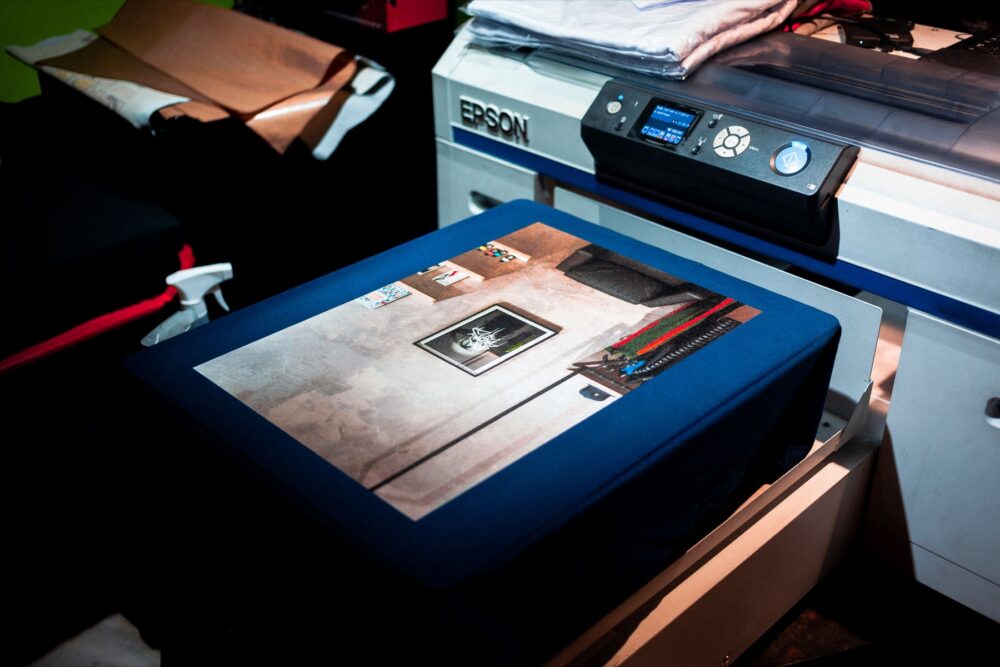
- High Quality DTG Printer A4 Flatbed Printer For Tshirt PVC Card Phone Case Printer Multi color DTG Printing Machine in Printers & Accessories, priced roughly between $1,097.49–$1,567.84 with a 5.0 rating from a handful of reviews (listing).
- DHgate also carries niche DTF consumables like “0.5KG Black Magic DTF Powder For Direct Transfer Film Printing For DTF Ink Printing PET Film Printing And Transfer” in an ink-related category, with prices shown in the $47.56–$48.79 range (listing).
- MOQ tendency: DHgate is often described editorially as friendlier to small and medium businesses importing in relatively small batches. Its minimum order quantities generally skew lower than some traditional B2B platforms like Alibaba, which are more focused on higher-volume procurement.
- Pricing style: DHgate positions itself as offering a blend of wholesale-style pricing and niche products compared with retail-heavy platforms like Amazon or eBay. Blog descriptions highlight that buyers often see incentives where unit prices drop as quantities increase.
- Buyer fit: AliExpress leans more retail (single-piece or very small orders), Alibaba more B2B with higher MOQs, while DHgate sits in a middle ground: wholesale orientation but relatively accessible order sizes.
Because these marketplaces are structurally open, every supplier sets its own specs, prices, and level of support. That diversity is both their strength and their main risk.
Specialist DTF transfer/print providers
These are companies whose core business is DTF printing: they sell ready-to-press transfers or branded DTF inks, films, and powders.
- Product range: Focused on DTF, sometimes alongside screen print or HTV. They often offer branded film and powder matched to their own or recommended printers.
- MOQ & service style: Typically low MOQs for transfers (you can order a few sheets or small gang sheets), but unit pricing is higher than importing from a marketplace. Many include design setup, color management, and application guidance.
- Support: They tend to provide practical “how to press” and troubleshooting help, because the success of your press job ties directly to their reputation.
These providers are attractive for AE-region and US buyers who don’t want to manage printers at all, or who want consumables dialed in by a single brand.
Local or regional distributors (US, EU, AE)
Regional distributors carry DTF/DTG printers (often well-known brands) plus ink, film, powder, and sometimes fabric.
- Product range: Branded hardware plus compatible consumables. Often part of a larger sign or garment decoration supply catalog.
- MOQ & pricing: MOQs are generally manageable but unit pricing is higher than directly importing from China. The trade-off is predictable stock and technical support.
- Lead time: Faster delivery and simpler customs handling for AE buyers compared with cross-border China shipments.
For shops that rely on steady, weekly printing revenue—especially in regions where customs can slow parcels—local distributors often reduce operational stress.
Marketplace vs Specialist: Trade-Offs That Hit Your Profit
Rather than crown a single “best” option, it helps to see how marketplace sourcing (DHgate, Alibaba, AliExpress) and specialist DTF providers differ on meaningful dimensions.
| Channel type | Experimentation & choice | Consistency & support | Typical MOQ / cash impact |
|---|---|---|---|
| Broad China marketplaces | Very high: many brands of film, powder, inks, and printers listed; you can trial multiple suppliers. | Variable: depends on each seller; technical DTF guidance is uneven. | Often low-to-medium; DHgate in particular is described as suitable for smaller batch imports. |
| Specialist DTF providers | Medium: focused catalog; fewer brands, more curation. | High: business built around DTF results and repeat orders. | Low MOQ on transfers but higher per-unit cost; better for cash-light startups prioritizing reliability over margin. |
| Local/regional distributors | Medium: limited by regional inventory; more brand-driven choice. | High: support for branded printers and matched consumables. | Medium: reasonable case/carton MOQs; higher unit cost but easier forecasting and faster replenishment. |
Key trade-offs:
- Experimentation vs reliability: Broad marketplaces maximize choice; you can test unusual DTF powders or films, including listings like the “Black Magic DTF Powder” example above. Specialist providers and distributors narrow the range but invest in consistency.
- Compatibility risk: On marketplaces, you shoulder the burden of matching film, powder, and ink to your specific printer and environment. If you buy hardware and consumables from the same specialist or distributor, they often design the bundle to work together.
- Unit cost vs total business risk: Marketplace prices can look attractive on a per-kilo or per-printer basis. But a failed batch of shirts due to poor film or ink, or extended downtime while you diagnose a clog without local support, can erase those savings quickly.
Matching Channels to Different DTF & Fabric Store Profiles
1. Testing a side hustle or custom merch idea
If you’re just seeing whether DTF or direct-to-fabric merch will sell:
- Buying ready-to-press DTF transfers from specialist providers is usually the safest start. You avoid hardware investment and maintenance.
- For fabric or blanks, a local distributor or retail marketplace can be enough.
- DHgate and other marketplaces become relevant once you confirm demand and want to test cheaper films or powders in small batches to improve margins.
2. Small shop needing reliable weekly transfers
For a neighborhood shop or online store doing regular but moderate volume:
- Specialist DTF transfer providers are often the backbone: predictable quality and straightforward support when a job misbehaves.
- As volume grows, you might import fabric or packaging from marketplaces for cost savings, while keeping DTF consumables and transfers with a specialist.
- AE-based shops should factor in customs timing; relying entirely on cross-border consumables can be risky if orders cluster around holidays.
3. Scaling print-on-demand apparel brand
If you’re running a brand with growing repeat orders:
- Owning a DTF or DTG printer becomes compelling for margin and control. Here, local/regional distributors or well-supported international brands are often the first choice for hardware.
- After your process is stable, marketplaces like DHgate or Alibaba can be used surgically to source certain consumables (films, powders) at lower cost—provided you test thoroughly before switching.
- Supplier consolidation matters; juggling multiple marketplace sellers adds admin overhead and quality tracking challenges.
4. AE-region retailer managing customs and lead time
For AE-based buyers:
- Local distributors and regional specialist DTF services reduce customs uncertainty on time-sensitive jobs.
- Broad China marketplaces are still relevant for planned bulk imports—like stocking a spare DTG/DTF printer or large runs of film and powder—if you can absorb longer and less predictable lead times.
- The more your revenue depends on fast turnaround (e.g., festival or event merch), the more cautious you should be about relying exclusively on cross-border consumables.
Where DHgate Makes Sense for DTF Printing—and Where It Doesn’t
Within this landscape, DHgate is one option, not a one-stop solution.
What DHgate is structurally good at
- Access to niche print-related products: DHgate’s diverse catalog includes printing-related services and components, from DTG printer cleaning solutions to the A4 flatbed DTG printer example and specialized DTF powders. That matters if you want to test specific consumables beyond what a local distributor stocks.
- Low-to-moderate MOQs for international buyers: Editorial descriptions of the platform emphasize that it was built to let small and medium businesses import Chinese goods in relatively small batches. If you want to trial a new film or powder without committing to pallet-level quantities, that’s a real advantage.
- Wholesale-leaning pricing with flexibility: DHgate is often framed as offering wholesale-style pricing where unit costs can drop for bulk orders, while still serving buyers who only need modest quantities. That dual focus can help you ramp volume gradually as your DTF workflow stabilizes.
- Global reach and multilingual interface: DHgate connects China-based manufacturers with buyers worldwide and supports multiple languages, including Arabic and English. For AE-region buyers comfortable sourcing directly from China, that makes cross-border procurement more accessible.
Where DHgate is a weaker fit compared with other channels
- Deep technical support for your specific printer: DHgate itself is a marketplace; each seller handles support differently, and many focus on product sales rather than hand-holding you through DTF color management or head maintenance. If your business lives or dies on uptime and predictable tech help, branded distributors or specialist DTF shops tend to be more aligned.
A practical way to use DHgate in your DTF mix
- Use specialist DTF providers or local distributors for your core workflow: printers, baseline consumables, and urgent jobs.
- Layer in DHgate for:
- Test runs of alternative films or powders (like the PET film-compatible DTF powder listed above) to see if you can improve feel or wash performance.
- Secondary or backup hardware where you’re comfortable handling integration and support yourself.
- Bulk replenishment of consumables once you’ve validated that specific DHgate listings perform consistently in your environment.
If you’re a price-sensitive buyer who’s willing to do more vetting and testing, DHgate’s blend of small-batch-friendly wholesale and niche product coverage can be a useful part of your DTF sourcing strategy. If your priority is stable, repeatable print quality with minimal troubleshooting, specialist DTF providers and regional distributors should carry more of the load, with marketplaces used selectively rather than as your primary channel.