
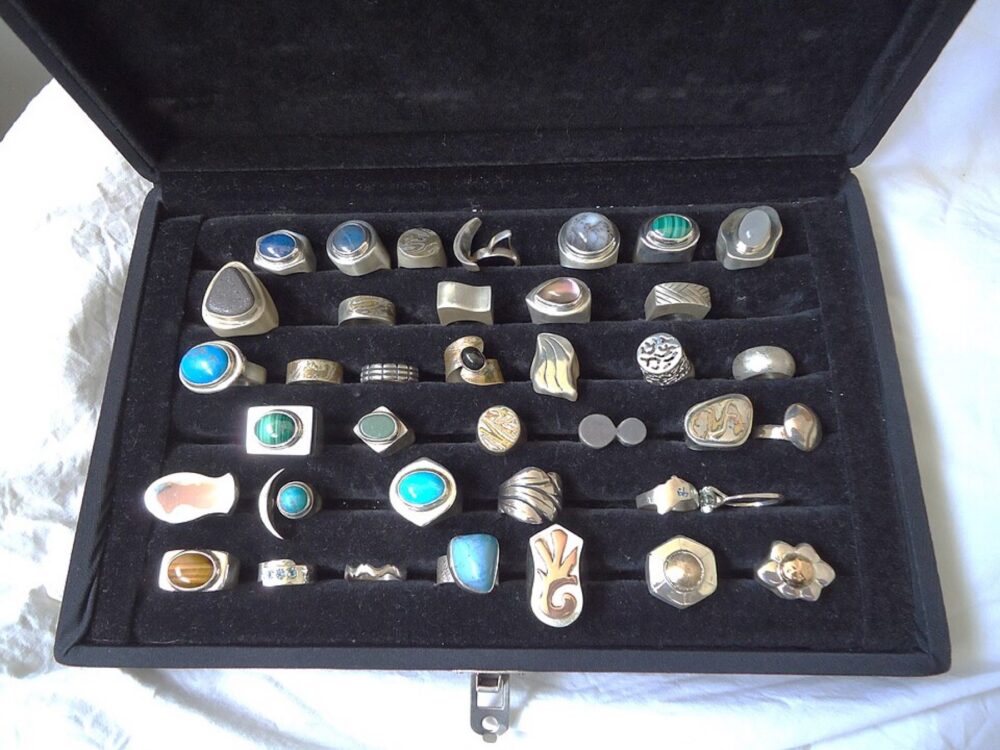
Velvet jewelry boxes in wholesale usually cost least per unit if you buy from overseas manufacturers or marketplaces, but that doesn’t automatically mean you pay less overall. For a US-based jewelry or ecommerce business, your true “best price” depends on how many boxes you need, whether you want custom branding, and how shipping and import charges stack up. Domestic wholesalers are simpler and faster, yet often cost more per box; cross‑border suppliers can be cheaper on the product itself but add logistics risk and fees.
If you’re buying a few hundred standard ring boxes without logos, expect the product cost to be roughly in the $1–$2 range from some cross‑border listings, before shipping and duties. Larger multi-compartment velvet organizers tend to cluster around the mid-teens to mid‑$30s per unit from similar sources, again before logistics. Custom branding, low order quantities, and rush shipping quickly push your real landed cost higher, sometimes making a US-based packager more attractive despite higher unit prices.
What Velvet Jewelry Boxes Wholesale Really Costs
Wholesale velvet jewelry boxes simply means buying these boxes in bulk for resale or to package your own products. They’re used for rings, necklaces, bracelets, earrings, and full sets, often with foam or insert trays under the velvet to hold each piece securely.
Your total cost breaks into four buckets:
- Box price – what you pay per unit.
- Shipping – domestic ground vs. international air or ocean.
- Import duties and taxes – if you source outside the US.
- Extras and fees – artwork setup, payment fees, warehouse receiving, etc.
More complex velvet jewelry storage boxes and travel organizers—multi-slot trays, zipper cases, or full-range sets—cluster much higher. Several jewelry box listings show price bands roughly in the mid-teens to mid-$30s per unit before logistics, such as:
- A compact velvet jewelry storage case for rings, necklaces, and bracelets with prices around $13.35–$16.27 (storage case example).
- Travel-style zipper square velvet organizers in the $16.24–$18.43 range (travel organizer example).
- A black velvet “full range” set with holders for rings, earrings, bracelets, and necklaces at roughly $21.16–$35.14 per unit (full range set example).
These are snapshots, not guarantees—prices can move either way, and they exclude shipping and duties. US-based custom packagers like Gentlever and others described in the SERP typically don’t show public price lists, instead quoting case-by-case based on size, print, and volume.
Landed cost checklist for velvet boxes
To compare deals across suppliers, include these items in your per-box math:
- Product unit price (including any per-color or per-logo upcharges)
- Plate or setup charges spread across your order
- Domestic or international freight: per-carton or per‑kg
- Customs, tariffs, and import fees for US import (see this breakdown: customs, tariffs and import fees explained)
- Bank, card, or platform payment fees
- Any 3PL receiving or labeling fees if you ship straight to a warehouse
A “$1.30 box” that costs you another $0.80 in freight and import fees can suddenly look more like a $2.10 box—similar to what some domestic wholesalers quote without the delay.
Why MOQ, Branding, and Shipping Method Push Your Price Up or Down
Three levers change velvet box pricing more than anything else: how many you buy, how customized they are, and how you move them.
Order size (MOQ and volume). Many Chinese manufacturers and packagers promote flexible minimum order quantities and full customization for velvet boxes aimed at global buyers, like the wholesale messaging on Gentlever’s velvet box page. In practice, smaller runs usually cost more per box because the supplier spreads setup and tooling across fewer pieces. If you can move from 100 units to 1,000, unit cost often drops enough to offset higher shipping or import fees.
Customization and logo work. Editorial guidance from DHgate’s packaging blog points out that customization, box size, style, and material quality significantly change pricing, and that branded boxes cost more than plain ones. A plain stock ring box with no logo sits at the low end of the price spectrum; add debossed logos, special velvet colors, custom inserts, or unusual shapes and you’re now paying for premium material and more complex production.
Shipping method. For US buyers working with overseas suppliers, your choice between air and ocean freight is huge:
- Air: faster (often 5-15 days door-to-door) but much higher per‑kg; worth it for urgent launches or small orders where time is money.
- Ocean: lower per‑kg rates but longer transit and more complexity; makes sense if you’re filling a pallet or container and can plan 8-10+ weeks ahead.
Within the US, ground shipping from domestic wholesalers is comparatively straightforward, but heavy cartons of rigid boxes still add noticeable cost. If your boxes nest or ship flat, they may be cheaper to move than finished rigid presentation boxes.
Choosing the Cheapest Viable Channel for Your Order Size
You have four realistic channels: US stock wholesalers, US custom packagers, overseas manufacturers, and global marketplaces like DHgate or Alibaba. Each suits different budgets and volumes.
Here’s a compact way to think about them:
| Channel type | Typical use case (US buyer) | Unit price tendency | Effort & complexity |
|---|---|---|---|
| US stock wholesaler | 50-500 plain boxes, quick restock, no logo | Higher than overseas simple boxes; you’re paying for speed and low risk | Low: simple checkout, predictable ground shipping |
| US custom packager | 200-5,000+ boxes with branding and tailored inserts | Moderate to high; strong on value if you care about brand feel more than rock‑bottom price | Medium: quoting, proofs, design back-and-forth |
| Overseas manufacturer (China, etc.) | 500-10,000+ fully custom branded velvet boxes | Lower product costs, especially for complex designs, if volume is high | High: sourcing, vetting, freight, customs, longer lead times |
| Marketplace (Cross-border multi-seller, Alibaba, etc.) | 100-1,000+ boxes, mix of stock and semi‑custom | Product prices often similar to direct manufacturers; snapshots show $1.24–$1.86 for simple boxes and mid‑teens to mid‑$30s for storage cases before logistics | Medium to high: you still handle seller selection, shipping options, and import paperwork |
Where DHgate can make sense—and where it may not
However, DHgate is not automatically the right fit:
- For small, urgent orders (say 50-100 boxes needed in 2 weeks), a US supplier is usually safer despite higher unit prices.
- If you need heavy branding support or complex inserts and don’t have design resources, a US custom packager may deliver better results with less back‑and‑forth.
- If your business can’t comfortably handle import compliance, you should be cautious with any cross‑border channel.
Practical Ways to Keep Velvet Box Costs Down
You can often save more on velvet jewelry boxes by adjusting how you buy than by chasing the absolute cheapest unit price.
- Match box style to product margin. Reserve premium velvet presentation cases for high‑ticket pieces and use simpler velvet pouches or trays for lower‑margin items. That keeps your average packaging cost aligned with what each product can support.
- Batch branding changes. Each new logo color or design variation tends to add setup cost. If you can standardize your logo placement and box color across collections, you make it easier for suppliers to quote aggressively.
- Order slightly ahead and consolidate. One 1,000‑unit order typically beats two 500‑unit orders on setup and freight, especially with overseas manufacturers.
- Compare channels using landed cost, not list price. Take a specific scenario—say 500 branded velvet ring boxes—and ask for full quotes from a US custom packager and an overseas manufacturer or marketplace seller. Once you add shipping and duties to the overseas number, you may find the gap narrows or disappears.
- Use import know‑how as a lever, not a gamble. If you decide cross‑border sourcing is right for you, invest a bit of time in understanding US import costs so they stop being a surprise surcharge. The guide on customs, tariffs and import fees is a good starting point.
If you’re a small US jewelry or ecommerce brand, a simple rule of thumb is: buy domestically for low volumes or urgent timelines, experiment with cross‑border sources for repeatable orders where you can plan ahead and absorb some complexity. Use the price bands above as reference points, but always re‑run the landed cost math for your exact order size and box style.