
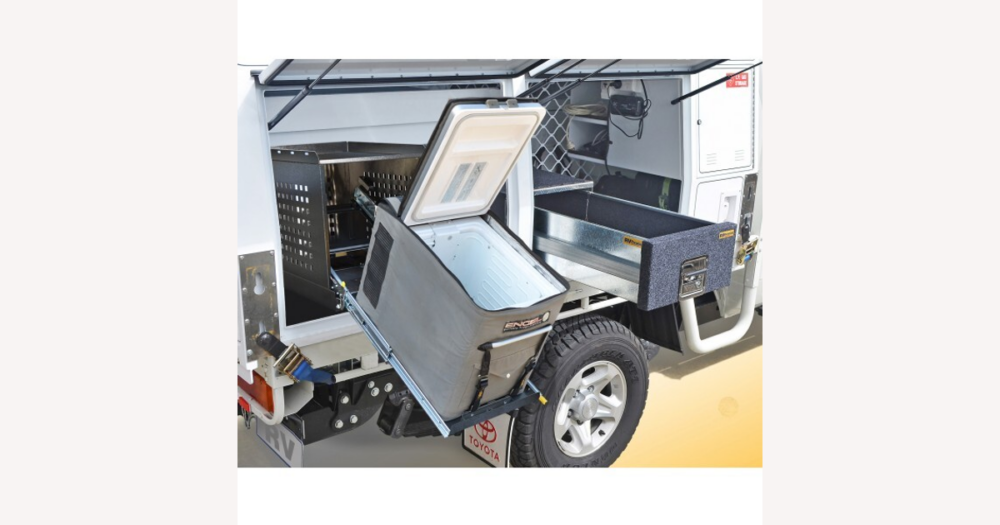
DHgate isn’t an Australian retailer for Dometic or Waeco fridge slides, but you can use it to source generic RV fridge slides and calculate their true landed cost into Australia. Once you price in shipping, GST, fees and defect risk, you can compare that cost per usable unit with the domestic branded prices you already know and decide whether DHgate sourcing really improves your profit margin or whether local stock makes more sense.
What DHgate can (and can’t) replace when you’re looking for Dometic or Waeco fridge slides
You started by looking for Australian retailers and current prices on Dometic or Waeco fridge slides, but DHgate works differently. DHgate is a cross‑border marketplace connecting you with overseas sellers; it is not an Australian authorised retailer for Dometic or Waeco, and you should assume listings are compatible or generic RV fridge slides unless brand authorisation is clearly documented and independently verifiable.
Because of that, this guide won’t list specific Australian stores or quote live prices for branded slides. Instead, it treats domestic Dometic/Waeco‑style slides as your mental benchmark and focuses on how to read DHgate offers: what drives their total landed cost into Australia, how fees and discounts work, and how seller terms affect whether a cheap‑looking slide is actually good value.
The real decision you’re making is financial and strategic. You’re weighing the lower ex‑factory prices of generic fridge slides on DHgate against higher but simpler Australian retail prices for known brands, once you factor in shipping, tax, defect risk and after‑sales complexity. The rest of the guide walks through landed cost per usable unit, discount effects, risks and resale pricing power so you can see when importing via DHgate genuinely improves your margin—and when it’s safer to walk away and buy branded slides locally.
How to calculate true landed cost for fridge slides bought on DHgate
- Start with the DHgate item price, including any seller handling or packaging charges shown in the listing. Treat this as your base ex‑factory cost, not the final amount you’ll pay per slide in Australia.
- Add international shipping, paying close attention to how the fridge slide’s weight and dimensions affect the quote and whether the method is slow post, courier or consolidated freight. Heavy hardware can make seemingly small shipping differences matter a lot to your total.
- Include any optional insurance, DHgate platform fees, and payment or currency‑conversion charges from your card or payment provider. These costs may be small per order but can noticeably move your per‑unit price on low‑volume shipments.
- Account for Australian import charges: GST on low‑value imported goods and, for consignments above the relevant threshold, any customs duty and clearance or brokerage fees charged at the border. Check current Australian guidance before you order and build a reasonable estimate into your model.
- Estimate a defect or dispute rate for this category and seller—units that arrive damaged, mis‑specified or simply unsellable—and spread the cost of those problem slides across the good ones. That gives you a more honest landed cost per usable unit instead of assuming every item is perfect.
- Compare this total landed cost per usable fridge slide with the typical Australian price you see for a comparable size and load rating, rather than with the raw DHgate sticker price. Only that like‑for‑like comparison will tell you whether importing via DHgate really beats domestic sourcing once all costs are included.
How DHgate discounts and order size change your per-unit cost
Once you have a basic landed cost per usable fridge slide, DHgate’s discounts and your order size are the main levers that move that number. On DHgate you’ll typically see platform‑wide coupons, seller‑specific coupons, bulk or tiered pricing where the unit price drops beyond certain quantities, and limited‑time promotions. Each of these reduces the total order value, but the real effect on your per‑unit cost only becomes clear after you add shipping, taxes and fees back into the equation.
Because shipping, import charges and payment fees are largely fixed per shipment, spreading them over more units usually lowers the effective cost per slide. A larger order that qualifies for a better unit price and uses the same shipping service will often beat a smaller order on per‑unit economics. The trade‑off is that you tie up more cash, pay more total shipping, and take on more exposure if the specs or quality are not as described—losses scale with quantity, not just with price.
A practical approach is to model at least two scenarios: a small test order that uses modest discounts, and a larger replenishment order that takes full advantage of coupons and tiered pricing. For each, recalculate your landed cost per usable unit by folding discounts into the item subtotal and then re‑adding fixed costs, and compare that figure with realistic Australian retail prices for comparable slides. Only then can you see whether DHgate’s apparent savings survive once all costs are spread across the order.
Treat discounts as an enhancer of a sound deal, not a reason to ignore risk. They improve profit margin only when the underlying product specs are correct and the seller is reliable enough that most units arrive usable and sellable. If you need to assume high defect or dispute rates, the extra write‑offs and time spent resolving problems will erode any coupon‑driven savings, and a straightforward domestic purchase may be the more rational choice.
Pricing in the risks of importing fridge slides through DHgate
Spec checks to ensure you’re comparing like-for-like fridge slides
- Measure the overall platform size and usable internal dimensions, then compare them with the portable fridges or slide setups you actually plan to use, including any Dometic or Waeco‑style units you’re using as your benchmark.
- Confirm extension travel and locking positions so the slide extends far enough to open the fridge comfortably, stays put on uneven ground and behaves as expected in day‑to‑day RV use.
- Check the stated load rating against the full weight of a stocked fridge, add a safety margin, and avoid slides that would be running close to their maximum rating under normal use.
- Match the mounting hole pattern, bracket options and overall layout to your drawer system or vehicle mounting points so installation doesn’t require major re‑drilling or custom fabrication.
- Review materials, thickness, weld quality, surface coatings and corrosion resistance, especially if the slide will see outdoor, dusty or coastal conditions that can quickly damage lighter hardware.
- Look for information or reviews about mechanism smoothness and noise (ball bearings, runners, stops), because rough or noisy operation lowers perceived quality and the price you can confidently charge.
- Treat lower DHgate prices as a genuine saving only when these specs align with your domestic Dometic/Waeco benchmarks or current setup. If listings are vague, request drawings or clarification from the seller before you buy; otherwise you risk importing slides that are cheaper on paper but functionally compromised, which erodes usability and resale value.
Checking DHgate seller reliability before you trust your numbers
On DHgate, seller ratings, badges and transaction counts are your quickest view of how reliably a seller has handled similar hardware. Prioritise fridge slide offers from sellers with solid star ratings over many orders, especially where those orders include other heavy automotive or RV components rather than only small accessories.
Detailed, recent buyer feedback is just as important. Comments that mention actual dimensions, load performance and build quality give you evidence that the slides match their description in real installs. Thorough listings with clear specs, multiple photos and attached documentation, plus responsive Q&A where the seller answers sizing or load questions consistently, all reduce the chance of mis‑specification and surprise defects.
Use these trust signals directly in your cost model: strong, consistent signals justify assuming a lower defect or mismatch rate when you calculate risk‑weighted landed cost per usable unit. When ratings are patchy, feedback is vague or contradictory, or the listing looks thin and unresponsive, either increase the risk allowance you add to each unit or exclude that offer entirely. The goal is not just peace of mind but making sure the profit numbers you rely on are grounded in a realistic view of how many slides will arrive fully usable and resellable.
DHgate imports vs Australian branded slides: when does each make more sense?
| Factor | DHgate generic imports | Australian branded slides |
|---|---|---|
| Landed cost per usable unit | Typically lower ex-factory price, especially with bulk discounts, but shipping, GST and a risk allowance for defects can narrow or erase the gap. | Higher sticker price per slide, but freight, taxes and risk are simpler and more predictable, so the final per‑unit cost is easier to estimate. |
| Total cash tied up in inventory | Lower unit prices let you buy more units for the same cash, but larger MOQs and longer lead times mean money is locked up for longer and some units may be unsellable. | You usually buy smaller batches at higher unit cost, tying up less stock for shorter periods and reducing the chance of holding slow‑moving or unusable items. |
| Lead times and logistics complexity | Longer production and international shipping times, plus customs handling, increase the delay before you can sell and add planning overhead if anything goes wrong in transit. | Shorter, more predictable delivery within Australia, with simpler tracking and no cross‑border customs steps, so stock turns into cash more quickly. |
| Warranty and after‑sales handling | Seller policies vary widely; resolving defects or mismatches can involve long disputes, language barriers and expensive returns, so after‑sales work and write‑offs need to be priced into your margin. | Clearer consumer protections, documented warranties and easier returns or exchanges through local channels, meaning less time and money spent fixing problems after the sale. |
| Resale pricing power and brand recognition | Generic or unbranded slides usually need sharper pricing and stronger descriptions to move; margin depends on staying clearly cheaper than familiar brands while still covering risk. | Recognised brands like Dometic/Waeco‑style slides can support higher ticket prices and easier sell‑through, so even with higher cost you may keep comfortable margins if buyers value the name and warranty. |
Can I source official Dometic or Waeco fridge slides through DHgate?
Can I realistically use DHgate to buy genuine Dometic or Waeco fridge slides for resale in Australia, and plan my profit as if they were official branded stock?
Treat DHgate fridge slide listings as generic or unbranded hardware by default. Some sellers may mention well‑known brands like Dometic or Waeco in titles or descriptions, but that wording alone does not prove the slides are officially authorised products.
Only treat a listing as genuine branded stock if the seller provides clear documentation of brand authorisation (for example, distributor or reseller certificates) and you can independently verify that status through the brand’s own authorised channel information. Without that level of verification, assume you are buying compatible or look‑alike slides, not official Dometic or Waeco goods.
For profit planning, build your numbers around reselling generic hardware: set expectations on function, specs and price rather than on brand prestige or official warranty. If your business model depends on marketing and supporting genuine Dometic or Waeco products, the safer route is to source through confirmed authorised distributors and established local Australian channels, not cross‑border marketplace listings where brand provenance is unclear.