
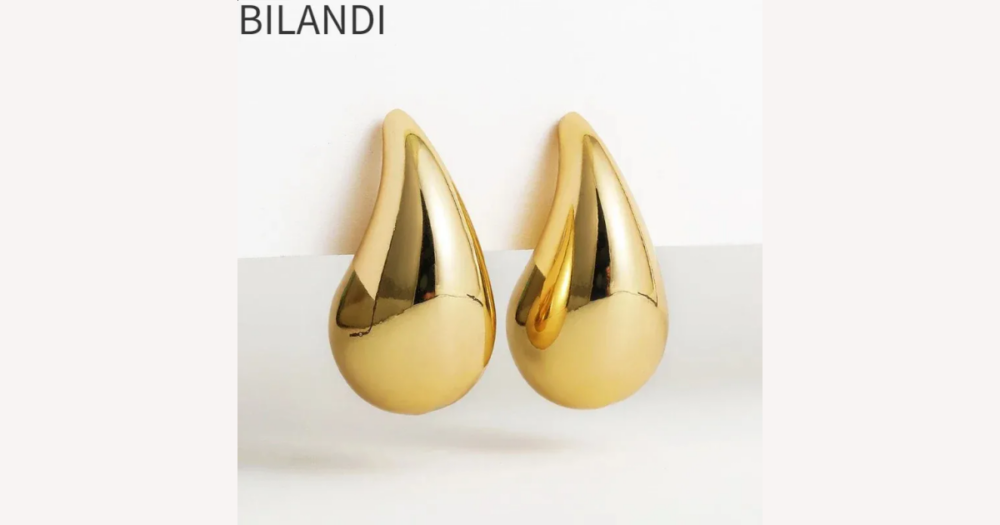
When you’re in Canada searching for “high-quality teardrop earrings with good reviews,” DHgate works differently from familiar brand-name retailers. Instead of hunting for a trusted label, you get many individual listings from smaller sellers, each with its own mix of price, information quality, and risk. This guide focuses on what you can actually verify on DHgate—seller history, listing details, total landed cost, shipping, and dispute protection—so you can decide whether a specific teardrop earring offer is worth trying, even when the brand itself doesn’t mean much.
On DHgate, “high-quality teardrop earrings” means evaluating each listing, not chasing brands
On DHgate, searching for “high-quality teardrop earrings with good reviews” is less about finding famous brands and more about judging individual listings. Most teardrop earring offers are from smaller or unbranded sellers, so the key decision is whether a specific listing gives you acceptable value for the risk you’re taking.
Instead of treating “high quality” as a guaranteed standard, think in terms of a balance: a realistic price, clear and consistent listing information, and manageable uncertainty. On DHgate you can actually check quite a lot at listing level—product photos that look like real shots, detailed descriptions, material claims such as sterling silver versus plated alloys, size and color options, and how clearly the seller explains variants.
You can also judge the seller’s track record: overall rating, how many orders they’ve completed, whether they have a steady flow of recent feedback, and how past buyers describe their experience. Shipping terms, estimated delivery windows, and any mention of DHgate’s buyer protection around that listing round out the picture. These signals help you estimate whether the earrings are likely to match the photos and last reasonably well, but they still can’t prove metal purity or long-term durability without independent testing.
Personally, I would rather pay a bit more to a DHgate seller who offers honest-looking photos, precise material and size details, and a consistent pattern of positive, recent reviews than chase the very lowest price from a barely rated listing. This guide stays within that approach: it will not recommend particular brands or stores, but will show you how to read any teardrop earring listing on DHgate by combining seller trust signals, total landed cost, shipping choices, and dispute protection into a single judgment about whether the deal is worth trying.
Reading DHgate seller ratings and reviews for teardrop earrings
Seller ratings and reviews on DHgate are among the most useful signals you have for teardrop earrings, but they’re still only signals. Start with the basics: a higher overall seller rating, a meaningful number of completed orders, and a steady flow of recent feedback usually indicate that the seller delivers something close to what they advertise and resolves problems at least reasonably well.
Look closely at what buyers actually say about teardrop earrings. Detailed reviews with photos are far more helpful than short, generic praise. Pay attention to comments about how closely the color and shine match the listing photos, whether the metal finish looks cheap or decent, whether stones stay in place, and whether the earrings feel comfortable or cause irritation. For jewelry, mentions of nickel sensitivity, tarnish appearing after a few wears, or the earrings being heavier or lighter than expected are especially informative.
Teardrop earrings are often sold in multiple variants—different metal colors, stone colors, or sizes—so try to match reviews to the exact option you plan to buy. A buyer photo of the gold-tone, large teardrop may not tell you much about the small silver variant. Patterns matter more than one-off opinions: repeated complaints about skin irritation, color fading, stones falling out, or items looking very different from the photos should push you toward either a different listing or a higher price point; a long run of specific, positive reviews with consistent photos is a good sign that the listing is at least reasonably honest.
At the same time, ratings and reviews can’t prove everything. They reflect past buyers’ experiences with particular batches and expectations, and they do not guarantee objective metal purity, allergy safety, or how the earrings will hold up over years of use. I would generally prioritize DHgate sellers with a solid volume of recent, specific feedback over brand-new or poorly reviewed sellers, and only accept the higher risk of a lightly reviewed listing if the price difference is large enough that I’m consciously using it as a low-stakes experiment. Used this way, reviews don’t certify “high quality” in an absolute sense, but they do help you decide whether a given teardrop earring listing offers a level of value and reliability you personally find acceptable.
Calculating the real landed cost of teardrop earrings on DHgate
Once you’ve decided a DHgate seller for teardrop earrings looks reasonably trustworthy, the next step is to estimate the real landed cost. Start with the basics: item price in the listing currency, the shipping charge for your address, and any visible platform fees or insurance. For a Canadian buyer, that visible total is only part of the story, because import duties and taxes are assessed by Canadian authorities and carriers, not by DHgate, and they are not always shown at checkout.
Treat duties and taxes as an estimate rather than a fixed number. Small jewelry orders may or may not be taxed depending on their declared value, how the carrier processes low‑value shipments, and CBSA rules at the time. You can use online duty and tax estimators or carrier guidance to get a rough percentage, but those tools explicitly note that their results aren’t guaranteed. When you plan your budget, assume a plausible range instead of counting on zero.
A simple way to think about landed cost is: item price + shipping – coupon savings + estimated duties/taxes. For example, if a pair of teardrop earrings is listed at the equivalent of CAD 10, shipping is CAD 5, and you apply a coupon worth CAD 3, your visible total is CAD 12. If you assume a hypothetical 15% in combined duties and taxes on the declared value, that could add about CAD 1.80, taking the estimated landed cost to roughly CAD 13.80. The exact tax rate will differ in reality, but this kind of quick calculation helps you see whether a seemingly cheap listing stays cheap once everything is counted.
Discounts change this math. Seller coupons, DHgate platform coupons, and bulk discounts can push the per‑pair price down, and a larger cart can spread one shipping fee across several pairs. If you buy four similar pairs together, that CAD 5 shipping becomes about CAD 1.25 per pair, which looks much better on paper. At the same time, a higher combined order value can make it more likely that customs treats the package as taxable, increasing the chance you’ll pay duties and sales tax at the border. Low unit prices plus higher total declared value can still produce a bill you didn’t expect.
If prices are listed in a foreign currency, remember that your actual charge in CAD depends on the exchange rate at the moment your card or PayPal processes the payment, and may include a conversion fee. That can move your landed cost up or down a little compared with the number you calculated from the listing. For buyers who plan to resell teardrop earrings, think in terms of cost per unit after all these factors, then compare that to your expected resale price to see whether there is enough margin to justify the risk and effort.
In practice, I would rather accept a slightly higher landed cost from a DHgate listing that has clear shipping terms, realistic delivery windows, and strong, specific feedback than chase the absolute lowest advertised price with vague shipping and unknown duty handling. The goal is to compare your estimated landed cost—including uncertainty around taxes and currency—to other options, like similar teardrop earrings on different platforms or local shops, and decide whether the savings are still worth the extra risk and potential hassle.
Keeping payment secure when ordering teardrop earrings
A good landed‑cost estimate only helps if your payment and order flow are handled safely. On DHgate, buyers normally pay through the platform using approved methods, and DHgate then routes funds to the seller, often with a protection window before the seller fully receives the money. The exact mechanics can vary by order and over time, so you should check DHgate’s current policies, but the basic idea is that paying through DHgate keeps your transaction within a system that supports order tracking and dispute handling.
Before you pay for teardrop earrings, run a quick set of checks: confirm that the seller’s rating and feedback volume look acceptable for your risk tolerance; read the product details carefully so you understand the materials, size, color options, and any customization terms; check which shipping method is selected, whether it’s tracked, and the estimated delivery window; and look for any summary of buyer protection on the listing, such as refund or replacement conditions. These steps help you avoid surprises that no payment system can fully fix after the fact.
Keep all pre‑sale and post‑sale questions inside DHgate’s messaging system. If you need to clarify metal composition, ask about sensitive ears, confirm packaging, or discuss shipping changes, do it through DHgate rather than external chat apps. Having your conversations recorded on the platform gives you better evidence if you later need to open a dispute, and it reinforces that the order is being managed under DHgate’s rules rather than private arrangements.
Secure payment behavior is one layer of protection, not a guarantee. DHgate’s system can reduce the risk of paying for earrings that never ship or of having no recourse at all, but it cannot eliminate every form of misrepresentation or quality disappointment. Combining on‑platform payment, documented communication, and the trust and cost checks you’ve already done keeps the overall risk more manageable, especially when you’re balancing low prices against your time and stress.
Choosing shipping options that balance cost, speed, and risk
For small, light items like teardrop earrings on DHgate, sellers often default to low‑cost or free economy shipping. Those methods can take several weeks, may offer only basic or no tracking, and sometimes pass through multiple postal operators. That keeps the upfront price attractive but makes delivery timing and proof of arrival less predictable, which increases uncertainty if anything goes wrong.
Most listings also offer more expensive tracked or express options through postal services or courier companies. Paying extra for tracked shipping usually means clearer scan events, firmer delivery windows, and better handling, which can matter if you need the earrings for a specific date or if you plan to resell and want reliable logistics. The trade‑off is simple: higher shipping fees raise your landed cost per pair, but they can reduce stress, disputes, and lost time.
When the earrings themselves are very cheap, it’s common for shipping charges to equal or exceed the item price. At that point you should compare the total—item plus shipping, plus any likely taxes or carrier handling fees—to what you could reasonably pay for similar earrings from local options or other platforms. Economy, untracked shipping can be acceptable for a low‑stakes trial order if you’re comfortable with delays and some risk of loss; for larger or time‑sensitive, multi‑pair orders, I would usually pay for tracked or faster shipping so the logistics side doesn’t undermine the apparent savings.
Because carriers and customs authorities control many shipping‑related charges, some costs and delays sit outside DHgate’s direct control. Handling fees, inspections, or extra paperwork can add uncertainty, especially on international routes. Treat these possibilities as part of your risk tolerance: choose a shipping method whose price, tracking level, and expected timeline still feel reasonable if things take longer than the optimistic estimate.
Using DHgate’s dispute and refund protections for teardrop earrings
Even with careful seller and shipping choices, teardrop earring orders on DHgate can still go wrong. Typical reasons to open a dispute include non‑delivery within the buyer protection or order completion period, packages that arrive but contain earrings that clearly differ from the photos or description (wrong style, size, or obvious quality mismatch), or items that are visibly damaged in transit.
In those situations, DHgate’s buyer protection tools are meant to provide a structured way to request a refund or partial compensation. In general, you need to act within DHgate’s dispute window, which is tied to delivery or an order‑completion deadline that DHgate defines and can change over time. Before opening a case, gather as much on‑platform evidence as you can: screenshots of the original listing, order and payment details, shipping or tracking information, and clear photos or short videos that show what actually arrived or that nothing arrived at all.
Keep all communication with the seller inside DHgate’s messaging system so it can be referenced during mediation. If you negotiate about reshipping, partial refunds, or quality problems in private apps or off‑site channels, it becomes harder to demonstrate what was agreed. Depending on DHgate’s current rules and how convincingly your evidence supports the claim, outcomes can range from a full refund to a partial refund or a denial if DHgate decides the seller met the stated terms.
Because the exact wording of buyer protection, dispute deadlines, and thresholds is controlled by DHgate and can change, you should always read the current official buyer protection information before relying on specific expectations. More importantly, treat disputes as a safety net with real friction and uncertainty, not as your primary plan for fixing problems. A listing with slightly higher price but clearer descriptions, realistic delivery estimates, and consistent positive feedback often reduces the chance that you’ll need to enter a dispute process at all, which fits the goal of balancing low prices against your time and stress.
How DHgate compares to other marketplaces for teardrop earrings
Compared with larger, more conventional marketplaces, DHgate usually feels less curated and more variable. You’ll often see lower headline prices and more unbranded or lightly branded teardrop earrings, but with longer international shipping times and return processes that can involve more steps. On big, mainstream platforms, offers tend to come with clearer brand identities, higher review counts from local buyers, and standardized, easy-to-trigger return policies—though the prices are often higher or at least more stable.
DHgate makes the most sense when you’re willing to invest time in evaluating each listing and are comfortable accepting more uncertainty in exchange for potential savings. If you carefully check seller history, listing detail, shipping options, and buyer protection, you can sometimes reach a landed cost that beats mainstream marketplaces, especially for styles you don’t need urgently or for exploratory purchases where you can tolerate some risk.
Other marketplaces are usually preferable when fast, predictable delivery and frictionless returns matter more than pushing your cost down. If you’re buying a gift with a firm deadline, want a well-known brand with clear standards, or know you’ll return the earrings if they aren’t quite right, paying more on a platform with simple local logistics can be the better trade-off. The key is to match the platform to your own budget and risk tolerance: DHgate suits buyers who prioritize low landed cost and are willing to work for it, while mainstream marketplaces suit buyers who prioritize predictability and convenience over maximum discount.
Step-by-step checklist for evaluating a DHgate teardrop earring listing
- Check the seller’s background. Look at overall rating, number of completed orders, how recent the feedback is, and whether there are recurring complaints about quality, misrepresentation, or late delivery. Favor sellers with consistent positive comments over those with thin or mixed histories, even if the latter look slightly cheaper.
- Review the listing details for the exact pair of teardrop earrings. Confirm stated materials, size measurements and weight, closure type, and available colors or finishes. Make sure the photos look realistic, consistent across variants, and not heavily reused stock imagery, since vague or generic visuals make quality and style harder to trust.
- Scan buyer reviews and user photos that mention teardrop earrings, ideally the same variant you want. Pay attention to remarks about how the finish looks in real life, comfort when worn, and whether the earrings match the listing images and description. Treat scattered complaints about tarnishing, irritation, or obvious differences from the photos as warning signs.
- Estimate total landed cost. Combine item price, chosen shipping, any visible platform fees or insurance, and a rough expectation of duties or taxes for jewelry shipped to Canada. Apply coupons or bulk discounts if available, then ask whether the resulting per-pair cost still feels like good value given the seller’s track record and your risk tolerance.
- Choose a shipping method that matches your timing and appetite for risk. Economy shipping is cheaper but slower and often less trackable; tracked or express options cost more but improve delivery predictability and proof of arrival, which can matter for disputes or resale plans. Decide consciously which trade-off fits this particular purchase.
- Confirm payment stays on DHgate. Check that you’ll pay through DHgate’s own checkout and approved methods, and be prepared to refuse any request to send money via external apps, bank transfers, or other off-platform channels. Off-platform payment removes DHgate’s transaction framework and raises fraud and non-delivery risk.
- Note the buyer protection and dispute terms shown on the listing or in DHgate’s help content. Check protection windows, conditions for refunds, and what evidence you would need if something goes wrong. Plan to keep order details, tracking information, and all seller messages inside DHgate in case you need to open a dispute.
- Use this checklist every time you consider a DHgate teardrop earring listing so you apply the same trust, cost, shipping, and protection checks consistently. If a listing fails several steps—unclear materials, weak feedback, opaque shipping, or poor protection wording—it’s usually better to walk away, even when the price looks tempting.
Common red flags and cost traps to avoid
- Listings priced far below similar teardrop earrings, especially when paired with few or no reviews or a weak seller rating, usually mean higher risk that the earrings arrive late, look different from the photos, or feel cheap in person. I would skip those unless other trust signals are unusually strong, because the small extra savings rarely justify the extra dispute risk.
- Feedback that repeats problems like misrepresented metals, rough or uneven finish, broken clasps, or earrings that clearly don’t match the listing photos is a strong sign to walk away. Recurring complaints show the seller’s pattern, and in my view even a good price is not worth buying into a known quality and honesty problem.
- Material descriptions that are vague or contradictory—for example, calling them “gold earrings” without saying plated versus solid, or listing several metals inconsistently—create real uncertainty about both quality and potential skin reactions. I would treat that as a quality and trust red flag and favor listings that clearly state metal type, plating, and any allergy‑related details.
- Cost traps include shipping fees that rival or exceed the item price, very long untracked shipping windows, and discounts that only unlock if you buy more pairs than you truly need. Those patterns can erase apparent savings and may push the order into higher customs or tax exposure, especially for Canadian buyers. When I see that combination, I assume the real landed cost and hassle will be higher than it looks and usually choose a clearer offer instead.
- Any request to pay outside DHgate—through bank transfer, messaging apps, or other off‑platform channels—is a critical red flag. Off‑platform payment cuts you off from DHgate’s normal order tracking and dispute framework and makes recovering funds much harder if something goes wrong. I would decline immediately and move on to a different seller.
- If a listing triggers several of these warning signs at once—ultra‑low price, thin or negative feedback, unclear materials, heavy shipping charges, or off‑platform payment—I assume the chance of a dispute and the difficulty of getting a fair outcome are high. In that situation, the risk‑to‑savings ratio stops making sense, and I would personally walk away even if the headline price looks tempting.
FAQs about buying teardrop earrings on DHgate
Is DHgate a good option for bulk buying teardrop earrings for resale?
It can be, especially for unbranded or lightly branded teardrop earrings at low unit cost, but the profit picture depends on how carefully you manage risk. Treat DHgate as a source to test, not a guaranteed wholesale pipeline: start with a small trial order from any new seller, inspect the earrings in person for finish, comfort, and consistency, and watch defect rates before committing to larger quantities. Use the same trust checks as for single pairs—seller rating, detailed reviews, realistic photos, clear material descriptions—and then calculate your cost per unit, including shipping for the whole batch, estimated duties and taxes, and any currency conversion fees. Only if that all‑in cost leaves enough margin against your planned resale price, after allowing for some defective or unsellable pieces, does bulk buying on DHgate make sense from a budget-and-profit perspective.
How should a Canadian buyer think about customs duties and taxes on small jewelry shipments from DHgate?
For small, low‑value jewelry shipments, Canadian buyers should treat duties and taxes as a possibility rather than a certainty. Whether a DHgate teardrop earring order is charged depends on current CBSA thresholds, how the package is declared, and how the carrier handles low‑value imports, and these details can change over time. In practice, some small parcels arrive with no extra charges, while others generate bills for sales tax and handling fees even when the item itself was cheap. The safest approach is to build a rough allowance for potential duties and taxes into your landed‑cost estimate, then check up‑to‑date Canadian import rules from official sources or your carrier’s guidance before placing larger or repeated orders. Avoid relying on fixed numbers or past experiences, because customs treatment is not guaranteed to be the same for every shipment.
What should I do if a seller stops responding or tracking stalls after my teardrop earrings are shipped?
Keep all communication on DHgate and watch the buyer protection timeline closely. If tracking shows no meaningful updates for a long period, or if the seller stops replying to reasonable questions about the shipment, send a clear message through DHgate summarizing the issue so it’s documented. Check the order page for the deadline to open a dispute and do not wait until it has nearly passed; if delivery still hasn’t occurred or tracking remains stalled as you approach that window, open a dispute through DHgate with screenshots of the listing, order details, tracking history, and your on‑platform messages. The key point is timing: protection depends on acting within DHgate’s current rules, which you should review in the latest buyer protection documentation, since policies and exact deadlines can change.