
If you’re buying magnetic pen holders and whiteboard accessories in bulk for an Australian office or classroom, your budget hinges on two things: matching strength and capacity to the way you teach or work, and comparing the true per‑unit cost across local suppliers and cross‑border marketplaces once shipping and taxes are included. For many school and small‑office orders, local Australian suppliers and general marketplaces are competitive; cross‑border sourcing starts to pay off only when your volume is high enough that very low per‑piece pricing outweighs freight and import costs.
What Magnetic Pen Holders and Whiteboard Accessories Actually Cost
Bulk pricing breaks into four buckets: product cost, shipping, GST/import charges, and any platform or payment fees. You won’t usually see all of these itemized on one page, so it helps to have rough ranges in mind.
On the local retail side, Australian chains like Officeworks pen cups give a baseline for desk‑style organizers at everyday prices. These aren’t magnetic, but they show what a simple plastic or metal pen container costs when bought in ones and twos.
For magnetic items and markers, specialist sites such as AussieMagnets whiteboard accessories list markers, erasers, and related hardware designed for offices and classrooms. Those prices are typically per piece or per small set, with fast domestic shipping and GST included at checkout.
Cross‑border marketplaces illustrate how low per‑unit prices can go once you order in bulk. On 2026-09-29, DHgate listing snapshots for relevant products showed:
- Plastic magnetic pen holder for whiteboards/fridges – a storage box pitched for home, office, and classroom use with a price band around USD 14.82-17.53 per lot (Plastic Magnetic Pen Holder Erase Marker Storage Box).
- Mesh magnetic pen holder for whiteboard/refrigerator – a lightweight basket organizer at USD 20.42-23.10 per lot (Magnetic Pen Holder For Whiteboard Refrigerator).
- Magnetic whiteboard markers with built‑in eraser – dry‑erase pens with magnet and eraser in the USD 0.14-0.33 per piece band (Whiteboard Marker Magnetic Whiteboard Pen).
- Magnetic whiteboard markers (other variants) – another marker style at about USD 0.36-0.39 per piece (Magnetic Whiteboard Markers, Stick to Metal Surfaces).
- 8‑pack colorful magnetic whiteboard pens – bundled sets for kids and office use in the USD 15.41-15.81 per 8‑piece pack range (8Pcs/Pack Colorful Magnetic Whiteboard Pen).
These are wholesale‑style examples only; prices, currencies, and minimum order details change regularly, and do not include international shipping or any customs‑related costs.
For context, cross‑border sites like AliExpress magnetic pen holder listings show a similar spread: solo holders, sets bundled with whiteboard stickers, and school‑branded accessories. Again, list prices are only part of the total.
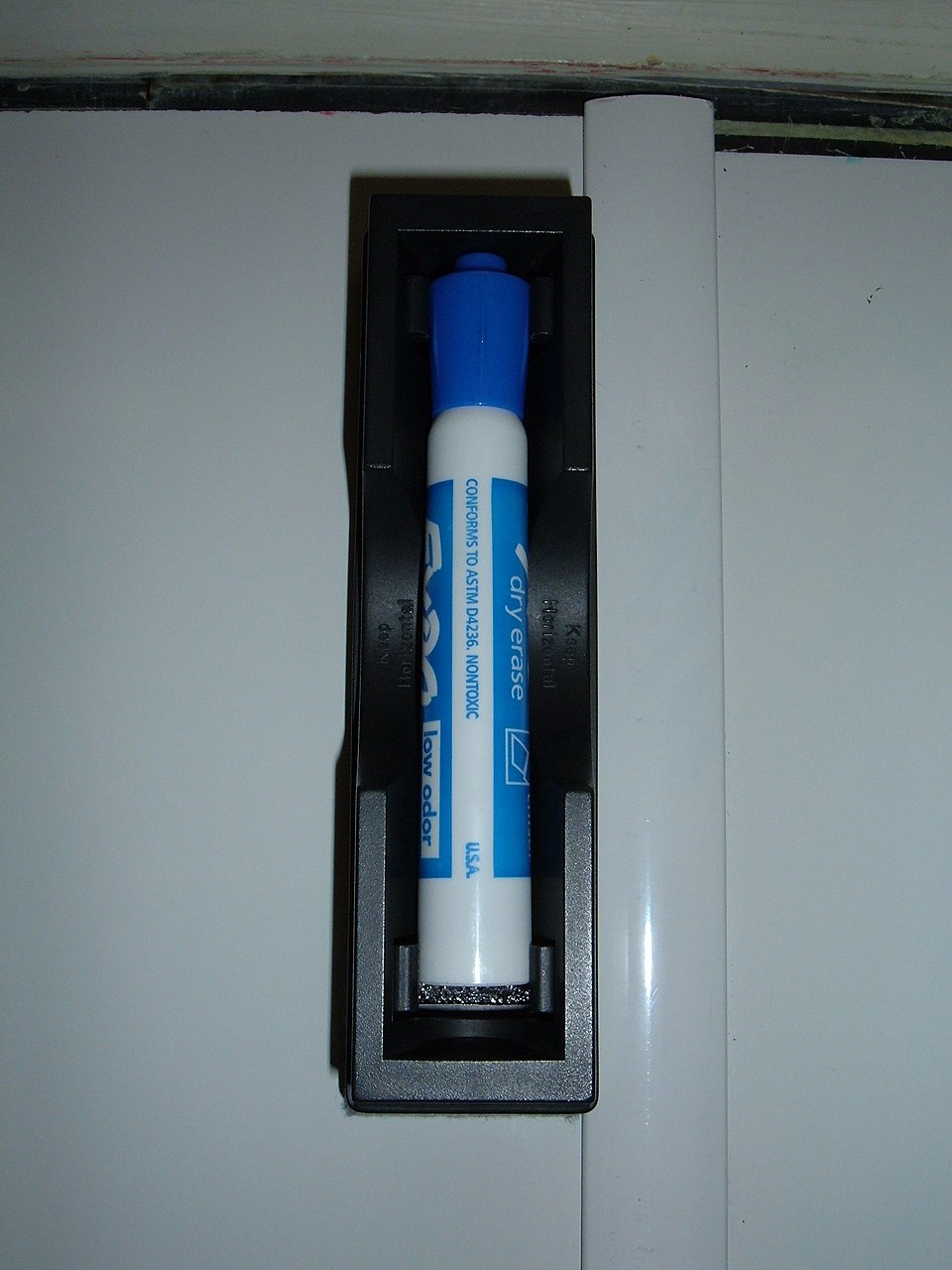
Image credit: BrokenSphere via Wikimedia Commons, CC BY-SA 3.0.
Two quick scenarios
- Small school order (one classroom): You might need 2-3 holders and 12-24 markers. Local Australian pricing will usually beat cross‑border once you add international freight, because your total volume is too small to spread those costs.
- Ecommerce reseller stocking multipacks: If you’re importing hundreds of markers and dozens of holders to resell, per‑unit prices in the USD 0.14-0.39 band for magnetic markers can offset shipping. You still need to model freight and GST to see if the landed cost actually undercuts Australian wholesale.
Why Prices Vary: Strength, Materials, MOQ, and Shipping Choices
Magnetic pen holders and markers look simple, but four factors drive price differences that matter in schools and offices.
1. Magnet strength and quality DHgate’s editorial advice on magnets stresses matching magnet strength to intended use and comparing brands for durability. For whiteboards in active classrooms, that translates to holders that don’t slide when the board is wiped, and markers that stay put when students slam the door. Stronger, better‑coated magnets generally cost more, but cheap weak magnets mean pens on the floor and more replacements.
2. Materials and construction Plastic holders like the DHgate storage box example tend to sit at the lower end of the price band. Mesh steel baskets and silicone adjustable holders (e.g., DHgate’s silicone magnetic pen holder around USD 45.18-46.35 per lot) cost more, but may handle rough handling and heavier loads better. For an office board used by adults, lighter plastic may be fine; for primary classrooms, mesh or thicker plastic is usually safer.
3. Sets vs single items The 8‑pack and 12‑color marker sets in the DHgate snapshots show how bundling changes the math. Sets often have a higher ticket price per lot but lower per‑marker cost, especially when they include magnets and small erasers. Local Australian sites like AussieMagnets tend to sell markers and erasers in smaller packs; great for one staff room, less efficient for a reseller.
4. MOQ and shipping choices Minimum order quantities (MOQs) on cross‑border marketplaces may require you to buy several lots of markers or holders. That can drop the per‑unit price but push the total into a range where international shipping and any import‑related charges become noticeable. Ocean or consolidated freight is cheaper per unit but slower; express courier is faster but can erase the savings from low product pricing.
For a budget‑conscious school in Australia, step one is honestly assessing how many boards and users you’re outfitting. Buying a slightly stronger magnet grade and a mid‑range marker avoids constant replacement, which is where budgets quietly blow out.
Choosing a Sourcing Channel: Local Wholesale vs Cross‑Border Marketplaces
Here’s a compact way to think about the main sourcing channels for Australian buyers.
| Channel type | Typical use case | Cost profile (editorial view) | Effort & risk considerations |
|---|---|---|---|
| Local Australian retailers & specialists (e.g., Officeworks, AussieMagnets) | One office, one or a few classrooms; quick replacement stock | Higher per‑unit product prices than wholesale, but domestic shipping, clear GST, and fast delivery. Good for small quantities. | Low admin overhead; easy returns via local consumer law processes; limited choice for niche magnetic holders. |
| General marketplaces (Amazon AU, eBay AU) | Mix of small bulk and everyday use; branded classroom products | Competitive per‑unit pricing for small sets; shipping varies by seller but often domestic or regional. | Need to compare sellers and read reviews; pricing and availability change frequently. |
| Cross‑border marketplaces (AliExpress, Cross-border multi-seller) | Large classroom networks, ecommerce resellers importing stock | Very low list prices in snapshot ranges (e.g., Cross-border multi-seller markers around USD 0.14-0.39 per piece; holders around USD 14.82-23.10 per lot), but true cost must add freight and any import‑related charges. Best fit once you reach substantial volumes. | Longer lead times, currency conversion, and import admin. You must check each listing’s shipping terms and factor in GST/import fees yourself; no single platform can be assumed cheapest or safest across all cases. |
DHgate specifically can be useful for Australian buyers who either run an online store or are outfitting many classrooms at once. The listing snapshot from 2026-09-29 shows:
- Low per‑marker bands for magnetic whiteboard pens suitable for school and office use.
- Multiple pen‑holder styles (plastic boxes, mesh baskets, silicone holders) aimed at classrooms, fridges, and lockers.
For deeper platform‑level tradeoffs between DHgate and rivals like AliExpress and Alibaba, you can zoom out with this marketplace comparison: Compare DHgate with AliExpress, Alibaba and Temu.
Keeping Your Magnetic Whiteboard Budget Under Control
To keep spending tight without frustrating teachers or office staff:
- Standardise on a magnet strength and holder type. Pick one pen holder that reliably sticks to your existing whiteboards and order it across rooms. This lets you buy larger lots and compare apples‑to‑apples across suppliers.
- Bundle accessories where it makes sense. Classroom packs that include markers, erasers, and possibly a holder can be cheaper than sourcing each separately. On cross‑border sites, look for sets like 8‑packs or 12‑color kits and compare against buying loose markers locally.
- Match channel to volume. For under ~30 markers and 2-3 holders per order, local Australian suppliers and nearby marketplaces are usually more practical. Once you’re into hundreds of markers or dozens of holders, model cross‑border options as a separate scenario, because that’s where those low price bands can outweigh freight.