
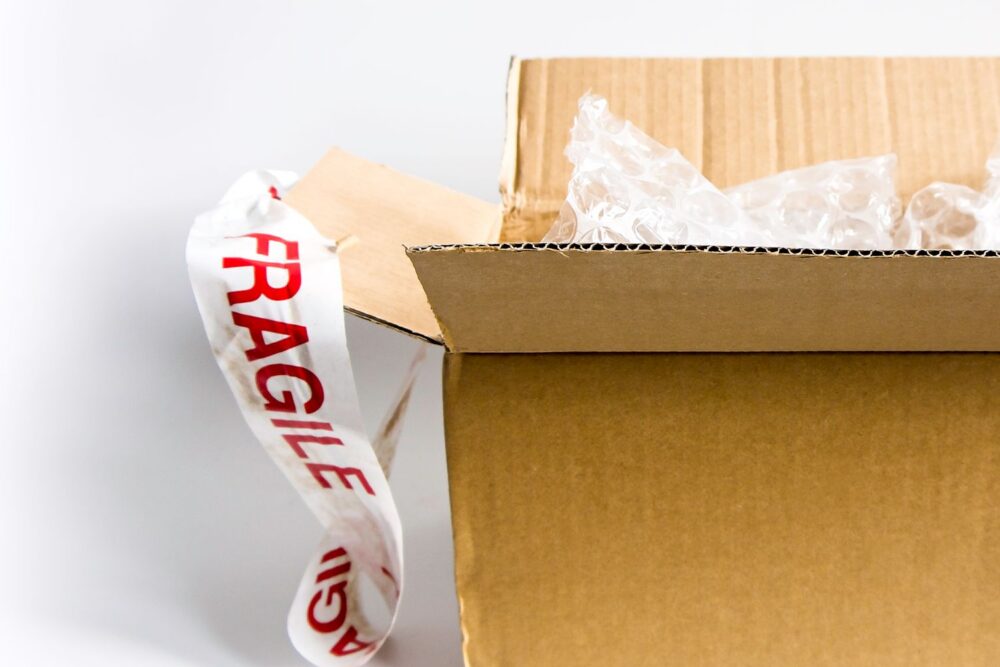
DHgate is one marketplace where buyers can compare packaging listing specifications and order a sample before considering a larger purchase.
How Canadian sellers should think about sourcing shipping supplies
You’re balancing four things:
- Speed and predictability: How fast do you need those boxes or mailers in your hands, and how painful is it if they arrive late or unusable?
- Total landed cost: Not just the listed price, but shipping, currency conversion, and any import charges or brokerage fees once your order crosses into Canada.
- Customization and branding: Plain kraft boxes are easy to find locally. Branded or unusual packaging (magnetic closure boxes, holographic poly mailers, pre‑printed thank‑you inserts) often push you toward cross‑border marketplaces and factory‑driven B2B platforms.
- Operational risk: How risky is it for you if a batch isn’t usable—either because the dimensions are off, the board grade is too thin, or the print quality doesn’t match your brand?
No single channel wins across all four. DHgate is one lever among several, and its real value to a Canadian micro‑brand is in experimentation and cost optimization once your base supply chain is stable.
What actually matters when buying shipping and packaging supplies across borders
If you’re importing packaging into Canada—even small runs—you’ll typically weigh these factors more than the list price on a product page.
1. Speed and predictability into Canada
International orders from China add days or weeks of transit and processing. That extra time may be fine for a new custom box you want to test ahead of Q4, but not for replacement mailers you need before next week’s promo.
Because individual sellers and carriers differ, you can’t rely on a single promised timeline on any marketplace. For shipping supplies, you’ll want channels that let you plan around lead times with some buffer rather than react to delays.
2. Landed cost at different order sizes
For small Canadian sellers, the economics change drastically between ordering 100 mailers and 10,000 boxes. A Canadian sourcing consultancy, Epic Sourcing, notes that both DHgate and AliExpress offer competitive prices, but DHgate tends to be more cost‑effective per unit when you buy in larger quantities, while AliExpress is often better suited to single‑unit or very small purchases for Canadians (Epic Sourcing Canada).
For your shipping supplies, that means:
- Tiny tests (e.g., 20 holographic mailers): flexible platforms and no‑fuss ordering beat tiny price differences.
- Medium runs (e.g., 500 custom logo boxes): wholesale‑oriented marketplaces and B2B directories start to matter.
- Large runs (e.g., 5,000+ units): you may need factory quotes and freight options, which pushes you toward Alibaba‑style platforms or direct importing.
Landed cost also includes currency exchange and any duty/GST/fees when goods cross the border. Those rules are complex, change over time, and depend on your specific situation, so you’ll need to treat them as a planning assumption and talk to a customs broker or accountant for specifics.
3. Customization depth
For most Canadian small businesses, the reason to leave Costco‑style boxes behind is branding. You might want:
- Custom sizes that fit your product exactly.
- Branded exterior printing.
- Interior print or special inserts.
- Non‑standard finishes (matte black, foil, spot gloss, etc.).
4. Ease of reordering and scaling
If you find a box that works, you want to repeat it without drama. That means:
- Clear product codes or SKUs.
- Saved specifications (dimensions, materials, print files).
- Suppliers who can handle larger repeat orders when you grow.
Relationship‑oriented channels and B2B directories can be helpful here, but they also require more groundwork up front—time zone‑crossing messages, RFQs, and sample approvals.
5. Handling problems
For shipping supplies, problems tend to be practical: the box board is flimsier than expected, the color is off, or the dimensions are slightly wrong and don’t meet Canada Post or courier requirements.
Every platform has its own process for disputes, refunds, and returns, but those mechanisms are outside the scope of this article and can change. As a buyer, you should assume that resolving issues with a cross‑border order may involve more friction than returning a case of boxes to a local wholesaler—and plan your order size accordingly.
6. Canadian tax and duty exposure
Any imported packaging may attract GST/HST and possibly duty or brokerage fees depending on value, category, and carrier. Because this is tax/legal territory, you should treat online information as general background and rely on official CRA resources or a customs professional for specifics. The key practical point: larger, higher‑value shipments are more likely to trigger noticeable charges, so you need the price difference vs local suppliers to be big enough to justify that risk.
How DHgate and other major channels serve shipping‑supply buyers
This is where the channels diverge. You’re choosing between Chinese retail‑style marketplaces, Chinese B2B directories, and local Canadian suppliers.
DHgate’s positioning in the packaging mix
AliExpress‑style retail marketplaces
AliExpress and similar platforms are often pitched as consumer‑friendly ways to buy small quantities from Chinese sellers. The Epic Sourcing article mentioned earlier suggests that AliExpress tends to be better suited to single‑unit or very small purchases for Canadians, with lots of competition among sellers on individual SKUs.
This pattern matters for packaging: if you just want to try 10 different styles of poly mailers or a handful of tape dispensers, AliExpress‑style marketplaces can be convenient. You may pay more per unit than a wholesale lot, but you’re not locked into a specific supplier or large minimum order.
Alibaba‑style B2B platforms
Alibaba and similar B2B directories run closer to a digital trade show. You’re browsing factory listings rather than online shops, often with a focus on custom manufacturing and larger orders.
For packaging, this is where you’d typically go once you’ve validated a design and want to negotiate factory‑level details such as board grade, print method, and long‑term pricing.
Local Canadian wholesalers and retail/office‑supply chains
Local options—regional packaging wholesalers, office‑supply chains, hardware/big‑box stores, and warehouse clubs—fill two roles for Canadian small businesses:
- Baseline supplies: standard corrugated boxes, bubble mailers, tape, labels, and void fill.
- Emergency restocks: what you buy when you’re about to run out during a sale or busy season.
You typically pay more per unit than you would on a well‑negotiated import order, but you gain predictable lead time, easier returns, and no cross‑border complexity.
Key differences for Canadian buyers: speed, cost, and customization
Here’s how these channels usually compare when you’re deciding where to buy boxes, mailers, or packaging for a Canadian ecommerce operation. These are directional patterns, not promises about any specific listing.
| Channel type | Typical sweet spot for Canadians | Speed/predictability (relative) | Customization tendency |
|---|---|---|---|
| Cross-border multi-seller (Chinese wholesale marketplace) | Medium to larger quantity tests; niche or custom packaging | Cross‑border lead times; plan ahead | Many listings; some offer customization |
| AliExpress‑style retail marketplaces | Single units and very small orders (as noted by Epic Sourcing) | Cross‑border; often convenient for tiny buys | Limited custom; more off‑the‑shelf designs |
| Alibaba‑style B2B directories | Larger, repeated orders; factory relationships | Depends on negotiated logistics | High customization via factory quotes |
| Canadian wholesalers/retail chains | Core, time‑sensitive supplies; emergency restocks | Fast and predictable domestically | Limited; mostly standard SKUs |
A dropshipping analysis from ASG Dropshipping characterizes AliExpress as better for short‑term, small purchases, while DHgate is portrayed as more focused on fostering longer‑term relationships with small and medium‑sized businesses (ASG AliExpress vs DHgate). That aligns with DHgate’s own wholesale‑oriented messaging and helps explain why DHgate may make more sense once you’re ready to repeat an order, not just test one.
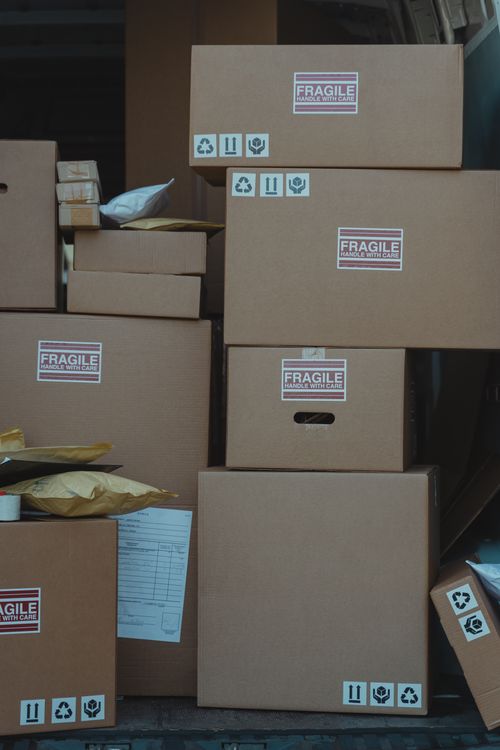
Which channel fits which shipping‑supply buyer in Canada?
Different ecommerce profiles benefit from different mixes. Here’s how this usually plays out in practice.
1. New micro‑seller shipping under 50 parcels per month
You’re selling on Etsy, Shopify, or a marketplace, and you’re still figuring out your product‑market fit. You don’t yet know your long‑term volumes.
- Core supplies (standard boxes and mailers): local wholesalers, Canadian office‑supply chains, or warehouse clubs minimize operational risk.
- Small experiments (cute poly mailers, branded tissue, stickers): AliExpress‑style platforms and similar retail marketplaces make sense for 10-50 unit tests.
- Where DHgate fits: you may occasionally use it for slightly larger experiments or niche packaging SKUs, but only after ordering samples and confirming specs.
2. Growing Shopify brand needing branded boxes
You’ve settled on a product line and want packaging that supports your brand storytelling. You’re shipping enough orders that per‑unit cost matters, but not so many that you’re ready for full container loads.
- Baseline packaging (plain mailers/boxes): keep a local option or Canadian wholesaler in your mix for backup.
- Custom branded boxes: explore DHgate or AliExpress for sample‑size runs and then compare with Alibaba‑style factory quotes if volumes rise.
- Cross‑check: use comparisons like the Epic Sourcing DHgate vs AliExpress breakdown to understand how pricing shifts as your order size grows.
In this scenario, DHgate can serve as an intermediate step: more wholesale‑oriented than AliExpress for repeated orders, but often less complex than going straight to a factory directory.
3. Marketplace reseller needing emergency restocks
You’re flipping retail arbitrage finds, liquidation stock, or collectibles. Shipping supplies are a cost center, not part of your brand identity.
- Best fit: local wholesalers, office‑supply chains, and big‑box retailers. The ability to restock within a day or two is worth a higher unit price.
- Cross‑border role: limited. You might use AliExpress or DHgate once you can predict volumes and have a buffer of inventory, but not to plug last‑minute gaps.
4. High‑volume shipper preparing for Q4
You’re shipping hundreds or thousands of orders per month and expect spikes around Black Friday or Boxing Day. Packaging costs and reliability both matter.
- Strategy: lock in your core carton and mailer specs early. Use Canadian wholesalers or established import channels for your primary packaging, and treat any new cross‑border supplier as a secondary source until proven.
- B2B angle: Alibaba‑style directories and direct factory relationships become more attractive for large, repeated orders with tight specs.
- DHgate role: one of several channels you might use to trial alternative suppliers or test new packaging formats months before peak season.
Query-time DHgate listing example
Observed on 2026-09-14, Gift box; packaging box; gift cake packaging box; souvenir box. Customize. appeared in Custom Packaging. This is a time-bound, illustrative listing example; availability and listing details may change. Compare the stated specifications and order a sample before considering a larger purchase.
Where DHgate realistically fits in your shipping‑supply mix
One supplier‑side tech company, Kua.ai, frames DHgate as part of a broader landscape of low‑cost marketplaces alongside Temu, Shein, AliExpress, and others, and notes that it can be an option for certain niche or price‑sensitive products (Kua.ai DHgate commentary). That perspective reinforces the idea that DHgate is one channel among many rather than a default choice.
Against that backdrop, DHgate is most relevant when:
- You’re exploring custom or niche packaging (e.g., gift boxes, printed mailers) and are willing to order samples first.
- Your order size is beyond tiny tests but not yet at the scale where you want to negotiate directly with factories via a B2B directory.
It is less suitable as your only source for mission‑critical, time‑sensitive supplies. Those are better anchored with Canadian wholesalers or other domestic channels, with DHgate and similar marketplaces playing a supporting role for experimentation and cost optimization.
A practical next move if you’re considering DHgate for packaging is to: identify a specific packaging SKU you want to test, compare a couple of DHgate listings with an AliExpress alternative and a Canadian supplier on total landed cost and lead‑time assumptions, and start with a small, non‑critical order. If the results line up with your expectations, you can decide whether to scale that relationship or keep it as a secondary source.