
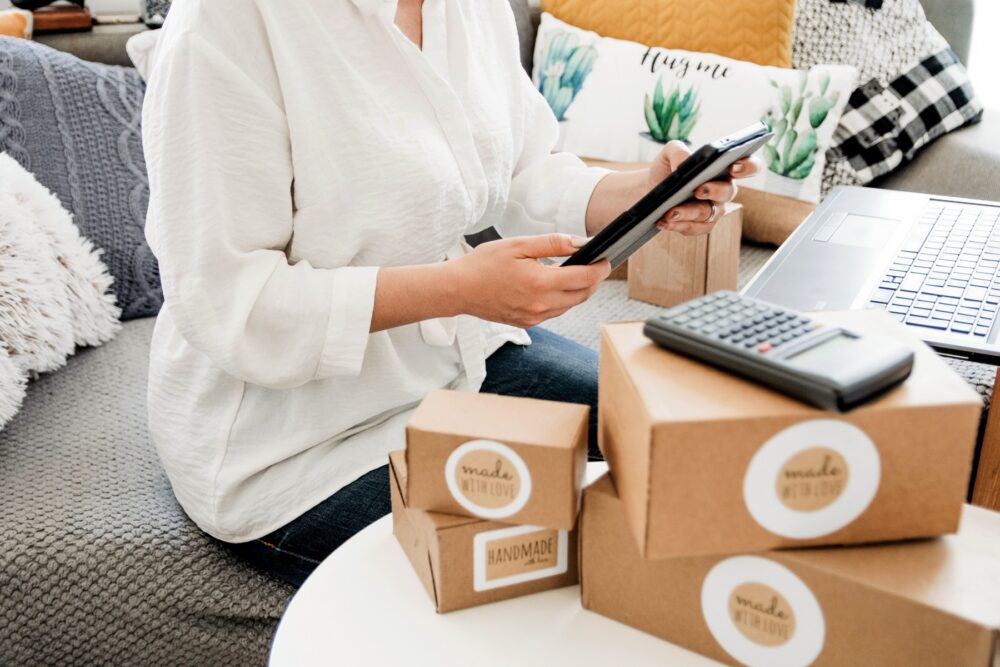
Shopify dropshipping order fulfillment means you sell products in your Shopify store without holding stock, then route each order to a supplier or fulfillment partner who picks, packs, and ships directly to your customer under your brand. For a US merchant, the real decision is which mix of partners to use: Shopify-native dropshipping apps that automate the workflow, cross-border suppliers and marketplaces that offer low-cost assortments, and domestic warehouses or 3PLs that give you faster, more controllable shipping once you know what sells.
Most profitable Shopify stores don’t stay in one model forever. They start with low-commitment dropshipping to test demand, then move proven products into bulk orders and domestic fulfillment to improve margins and customer experience. The sections below walk you through how that system actually works and how to choose partners that won’t wreck your reviews or your cash flow.
How Shopify dropshipping order fulfillment actually works
In a traditional Shopify setup, you buy inventory upfront, store it, and ship it yourself or through a warehouse. With dropshipping fulfillment, you list products on your Shopify store but don’t hold them. When a customer places an order, you forward that order to your supplier, who prepares and ships the package straight to the customer.
Shopify describes order fulfillment as a series of steps: inventory is received, a customer places an order, the fulfillment team prepares it, ships it, and handles returns. In a dropshipping model, those middle steps move from your warehouse to your supplier’s facility. Your responsibilities shift to:
- Choosing and managing suppliers.
- Making sure orders flow correctly from Shopify to those suppliers.
- Setting realistic expectations on shipping and returns.
- Handling customer service and refunds.
In practice, a single order might pass through several systems:
- Customer checkout in Shopify – The customer pays via Shopify Payments/PayPal. Shopify records the order.
- Order routing – Depending on your setup:
- A Shopify-native dropshipping app automatically sends order details to the supplier and can push tracking back.
- A marketplace or direct supplier may require you to create the order on their site or send it via CSV/email/API.
- Supplier fulfillment – The supplier picks the item, packs it (often in neutral packaging), and hands it to a carrier.
- Tracking and notifications – You or your app update the order in Shopify with tracking, triggering customer notifications.
- Returns and issues – Customers contact you, not the supplier. You then work upstream with the supplier on replacements or refunds.
Shopify’s own guides recognize dropshipping as one of several fulfillment strategies, alongside self-fulfillment and outsourced 3PLs. Their tools stop at order capture, payment, and basic fulfillment statuses. Ensuring the right product reaches the right US doorstep on time is still a joint effort between you and your suppliers. You can read more about these basics in Shopify’s dropshipping fulfillment guide.
Where your dropshipped orders are really coming from
To make good decisions, you need to know who is actually shipping your orders and from where. For most Shopify dropshippers selling into the US, the supply chain looks like this:
- Manufacturers – Often in China and broader Asia for categories like fashion, accessories, gadgets, and pet products. They may sell directly or through trading companies.
- Wholesalers and traders – Buy from factories and resell in smaller lots. Many also offer per‑order dropship service.
- Dropship supplier networks and apps – Aggregators that connect factories/wholesalers to Shopify via apps, sometimes with curated catalogs and shared warehouses.
- US/EU wholesalers and 3PLs – Buy or receive bulk inventory and ship individual orders from domestic warehouses.
For a US Shopify store, those actors usually feed into three practical fulfillment patterns:
- Pure app-based dropshipping
- You install a Shopify app that connects your store to specific suppliers.
- The app imports products, syncs inventory, and automates order push and tracking for you.
- Suppliers might hold stock in US or overseas warehouses.
- Cross-border marketplace or agent sourcing
- You find products on a global marketplace or through a sourcing agent.
- You import product data into Shopify manually or via a third-party tool.
- When orders come in, you buy from the marketplace seller or instruct your agent to ship.
- Shipping often originates from Asia with varying transit times.
- Bulk import to a US warehouse or 3PL
- Once a product proves itself, you buy in bulk from your supplier and ship to a US-based warehouse or 3PL.
- The 3PL connects to Shopify and handles fulfillment with 2–5 day domestic shipping for most customers.
This structure brings both opportunity and friction:
- You can list a wide variety of products without investing heavily upfront.
- Profit margins are often thinner because suppliers charge per order and cross-border shipping is baked into cost.
- You trade speed and control (especially over packaging and returns) for assortment and low capital requirements.
US shoppers are used to fast, trackable delivery. That doesn’t mean cross-border dropshipping is impossible; it means you need to align your catalog and messaging with realistic shipping windows and pick partners who can actually meet them.
Choosing and vetting dropshipping fulfillment partners for a Shopify store
You’re not just picking products; you’re picking operators who will represent your brand in the last mile. Use this checklist as you evaluate a supplier, agent, or warehouse.
1. Reliability and shipping performance
- Look at on-time delivery complaints in reviews on their app or marketplace profile.
- Ask for their usual processing time (order to handoff to carrier) for US orders.
- For cross-border partners, ask what shipping methods they use to the US and which ones include tracking.
- Remember that poor tracking and late deliveries can drive disputes and chargebacks through Shopify Payments and PayPal, which directly affect your risk profile.
2. Product and packaging consistency
- Request real, unedited photos of inventory and packaging.
- Order at least 2–3 test units of the same SKU to see if quality, color, and sizing are consistent.
- Check how products are labeled and if there are any surprises in the parcel (foreign marketplace flyers, invoices, or logos you don’t want customers to see).
3. Operational fit for Shopify
- Confirm if they support CSV orders, an API, or work through a Shopify app.
- Ask how they handle stock-outs: do they notify you, auto-refund, substitute items, or quietly delay?
- For 3PLs, confirm they can connect directly to Shopify and push tracking updates automatically.
4. Shipping footprint and tracking
- Ask which warehouses they ship from (only China, or also US/EU?).
- Get typical shipping windows by method (economy vs faster paid options) to the US.
- Confirm they can provide trackable methods to all US states you plan to sell to.
5. Service and dispute handling
- Send detailed pre-sales questions and see how quickly and clearly they respond.
- Ask how they handle damaged or missing items: who eats the cost, and what proof they require?
- Clarify how you’ll escalate problems (chat, email, account manager).
6. Branding and “blind” shipping
- Confirm they can ship with neutral outer packaging or your brand name as the sender.
- Ask if they can omit supplier invoices or paperwork from the parcel.
- If you plan inserts or thank-you cards later, ask about that capability.
7. Red flags to walk away from
- Only untracked shipping options for US orders.
- Refusal to ship without their own marketplace branding in the box.
- Prices dramatically below market with no explanation about materials or surplus stock.
- Pressure to pay by direct bank transfer right away instead of through a platform or method that offers some dispute leverage.
US Shopify stores face high expectations: customers want tracking links, predictable delivery, and easy returns. Treat suppliers like long-term partners and set expectations early, including target processing times, acceptable packaging, and how you’ll handle late or lost shipments.

MOQs, pricing, and lead times: building profitable offers
Dropshipping removes big upfront inventory bets, but it doesn’t remove math. Your unit economics live at the intersection of minimum order quantities, pricing tiers, sampling, and shipping speed.
How MOQs really work in a dropshipping context
- Many dropship-focused suppliers accept single-unit orders, especially when selling through dropshipping apps or B2B marketplaces. That makes testing easy.
- Those same suppliers often offer tiered discounts as quantity increases, which becomes relevant when you move to bulk buying or 3PL.
- On some cross-border marketplaces, listings don’t show a strict MOQ, but the pricing bands imply flexibility: you can buy one or a few pieces at near-wholesale pricing to test.
You should assume that per-unit costs will fall if you commit to batches once a product proves itself.
Pricing structures to expect
Across apps, marketplaces, and direct relationships, expect:
- Per-unit price tiers – Lower prices at higher quantities. For example, on 2026-09-14 one plus-size women’s two-piece set listing in a cross-border marketplace showed a price range of about $21.88–$22.92 per unit, with prices varying by options and quantity.
- Separate shipping charges – Shipping may vary by method and destination. Always calculate landed cost to the US: product + shipping + payment fees + any app fees.
- Handling or app fees – Some suppliers or apps charge per-order or monthly fees for using their dropship service or automation.
- Currency and FX spread – When you pay overseas suppliers, your payment processor’s FX rate adds a few percentage points to cost.
Use a simple spreadsheet to track: sales price – (product + shipping + app fees + payment fees + average refunds) = contribution margin. If that margin doesn’t comfortably cover your ad spend and overhead, the product isn’t viable.
Why sampling isn’t optional
Sampling costs money, but skipping it often costs more in refunds and bad reviews.
Plan to order samples for:
- Quality and fit checks – Especially for apparel and shoes, where sizing and fabric feel can make or break repeat purchases.
- Packaging review – To see exactly what the customer will experience when they open the parcel.
- Content creation – Use the actual product for photos and videos instead of stock images, which can reduce disputes (“item not as described”).
For fashion categories similar to the plus-size matching sets and tracksuits in the cross-border snapshots described earlier, use samples to validate sizing against US expectations and verify that colors and prints match listing photos.
Lead times: processing + transit + last mile
Think of lead time as three parts:
- Processing time – Supplier time to pick, pack, and hand off to the carrier.
- International transit – Cross-border leg, often from Asia.
- US last mile – Domestic carrier delivery to the customer.
In cross-border setups, it’s common to see:
- Economy shipping to the US taking roughly 8–20 days, sometimes more during peak seasons or disruptions.
- Paid expedited options occasionally reaching US customers in around 5–10 days, especially if the supplier has faster logistics partnerships or regional warehouses.
These are typical examples, not guarantees. Actual delivery times vary by supplier, carrier, route, and season. Always verify current estimates with each supplier and carrier, particularly around peak-season surcharges or disruptions.
To keep customers on your side:
- Publish realistic ranges on product pages and in order confirmation emails.
- Avoid mixing wildly different lead times in the same order where possible (e.g., US-stock item and 3-week cross-border item in one cart) unless you explain split shipments clearly.
Payment risk and safeguards
- Early on, prefer platform or app-based payment flows (marketplace checkout, app billing, PayPal, card) over wiring large amounts directly to a supplier you don’t know.
- Using mechanisms that hold funds until certain milestones or offer dispute channels often reduces risk compared with direct, unsecured transfers.
- Once a supplier proves reliable over many orders, you can discuss better pricing or partial prepayments, but always balance savings against risk concentration.
Comparing fulfillment channels for Shopify dropshipping (and where cross-border marketplaces fit)
Most US Shopify stores end up blending several channels over time. Here’s how the major options stack up.
Main fulfillment channel types
- Shopify-native dropshipping apps and networks
- Examples include supplier directories, Shopify Collective, and various dropshipping apps described in Shopify’s guides.
- These apps connect directly to Shopify, helping you import products and automate order fulfillment and tracking.
- Domestic wholesalers and 3PLs
- You buy inventory upfront and store it in US (or EU) warehouses.
- When Shopify orders come in, the 3PL picks, packs, and ships quickly.
- Cross-border B2B marketplaces
- Marketplaces where many independent suppliers list products, including apparel, accessories, and pet items.
- You source products there and either dropship per order or buy small batches.
- Direct factories or sourcing agents
- You bypass marketplaces and work with a manufacturer or agent, often in China.
- They may ship per order or in bulk to your warehouse.
How these channels compare for a US Shopify store
Here’s a compact comparison of how these options typically differ:
| Channel type | Shopify automation | Typical US shipping speed* | Capital needed | Operational complexity |
|---|---|---|---|---|
| Shopify-native dropship apps | High (product + orders + tracking) | Often faster if US/EU warehouses; variable from Asia | Low (pay per order) | Low–medium (one app, fewer suppliers) |
| Domestic wholesalers / 3PLs | High (direct Shopify–3PL links) | Generally a few days once stocked | Medium–high (bulk buys) | Medium (inventory, forecasting) |
| Cross-border B2B marketplaces | Low unless paired with a tool | Often 8–20+ days economy; faster with paid options | Low–medium (per order or small batches) | Medium–high (manual orders, vetting) |
| Direct factories / sourcing agents | Varies (often custom) | Depends on shipping setup; often cross-border | Medium (MOQs, deposits) | High (relationship management) |
\*Shipping speed ranges are examples, not guarantees; actual performance depends on each supplier and carrier.
Where a marketplace like DHgate can fit
DHgate is a cross-border sourcing marketplace where many independent suppliers list products; it is not itself a manufacturer. Around 2026-09-14, DHgate listings included, for example:
- A plus-size two-piece set (women’s tracksuit-style outfit) in the $21.88–$22.92 range per unit.
- Several other plus-size women’s matching sets and shorts sets in the roughly $19.97–$27.40 range.
- A dog wedding dress/gown (pet clothing) with a price range around $23.51–$26.80.
- A men’s tracksuit tank-top set in the $21.49–$22.51 range per unit.
These snapshots show the type of low- or flexible-MOQ apparel and pet products that can be attractive for testing a niche Shopify boutique.
How a US boutique might use a marketplace like this:
- You run a Shopify store focused on plus-size casual sets.
- You identify 3–5 designs on a marketplace like DHgate that match your aesthetic and price range.
- You order samples from multiple suppliers to check fabric, fit, and print quality.
- You list 1–2 winners in your Shopify store, then either:
- Purchase per order from the marketplace seller (dropship-style), or
- Buy in small batches and pre-position limited stock in a US 3PL once performance is proven.
Important limitations to be aware of:
- There is no native, first-party Shopify–DHgate integration. Merchants who want automation typically rely on third-party tools (for example, apps like Importify mentioned in external guides) or manual import and fulfillment. These tools are separate businesses, not official connectors.
In other words, cross-border marketplaces are best treated as sourcing channels for testing assortment and cost, not as plug-and-play fulfillment systems.
When to favor which channel
- Favor Shopify-native dropship apps if you want:
- Faster setup and deeper automation.
- Potentially better-aligned shipping options for US buyers.
- Less manual work and fewer custom workflows.
- Favor cross-border marketplaces (including DHgate-style platforms) if you need:
- Wider or more unusual assortments (e.g., niche apparel categories, specific pet outfits).
- Lower unit costs for product testing.
- Flexibility to buy one or a few units before committing.
- Favor domestic wholesalers/3PLs when:
- Products are validated and selling consistently.
- You want to bring shipping times down to a few days.
- You’re ready to invest in bulk inventory for better margins.
Most US Shopify stores end up mixing these: apps and cross-border sources for discovery and testing, then 3PLs for scaling proven winners.
A phased fulfillment plan for a small US Shopify store
To avoid over-committing too early, use a phased approach. Here’s a practical roadmap for a typical small Shopify merchant.
Phase 1: Launch with low-commitment dropshipping
- Use a Shopify-native dropship app or a carefully vetted cross-border supplier to get 10–30 products live quickly.
- Make sure each product page clearly states shipping time ranges and that you only offer tracked methods to the US.
- Place test orders to yourself and a friend in a different state to validate packaging, tracking, and delivery.
Example: A plus-size apparel boutique launches with a mix of app-sourced basics and a few bold sets sourced from a cross-border marketplace. All are dropshipped, no inventory held.
Phase 2: Narrow to reliable partners and refine offer
- Track which SKUs sell, which get returns, and which suppliers hit or miss shipping expectations.
- Cut underperforming suppliers fast, even if their products are attractive.
- Negotiate better per-unit or shipping rates with the partners that prove reliable across 20–50 orders.
Example: The boutique sees that one supplier’s two-piece sets arrive consistently within the promised window and get strong reviews; another supplier’s items arrive late and draw complaints. The second supplier is dropped.
Phase 3: Move winners into bulk and faster fulfillment
- For SKUs with stable volume and reviews, calculate whether bulk importing makes sense:
- Compare current per-order dropship cost vs. bulk price + freight + 3PL fees.
- If you gain margin and can handle the cash flow, plan a small initial batch (for example, enough for 1–2 months at current sales).
- Ship that batch to a US 3PL or small warehouse that integrates with Shopify.
- Update shipping promises on product pages for those SKUs to reflect faster domestic delivery.
Example: The boutique decides to import a limited run of its best-selling two-piece set into a US 3PL. Domestic orders now arrive in a few days, differentiating the brand from pure cross-border competitors.
Phase 4: Repeat the cycle for new products
- Keep using dropshipping (apps or cross-border sources) as your R&D channel for new SKUs.
- Graduate only the top performers into bulk/3PL.
- Regularly review supplier performance, as logistics and staff changes can affect reliability over time.
This hybrid strategy protects your cash and lets you experiment, while gradually aligning your best products with a fulfillment model that suits US shoppers’ expectations.
Sources
- Shopify – Dropshipping Fulfillment: The Complete Guide
- Shopify – Order Fulfillment: Process and Strategy Guide
- Shopify – Dropshipping on Shopify: Complete Beginner’s Guide
- Shopify – Dropshipping Suppliers Guide
- Shopify – Product Sourcing Apps Guide
- DHgate – Exploring the Benefits of Dropshipping with Dhgate