
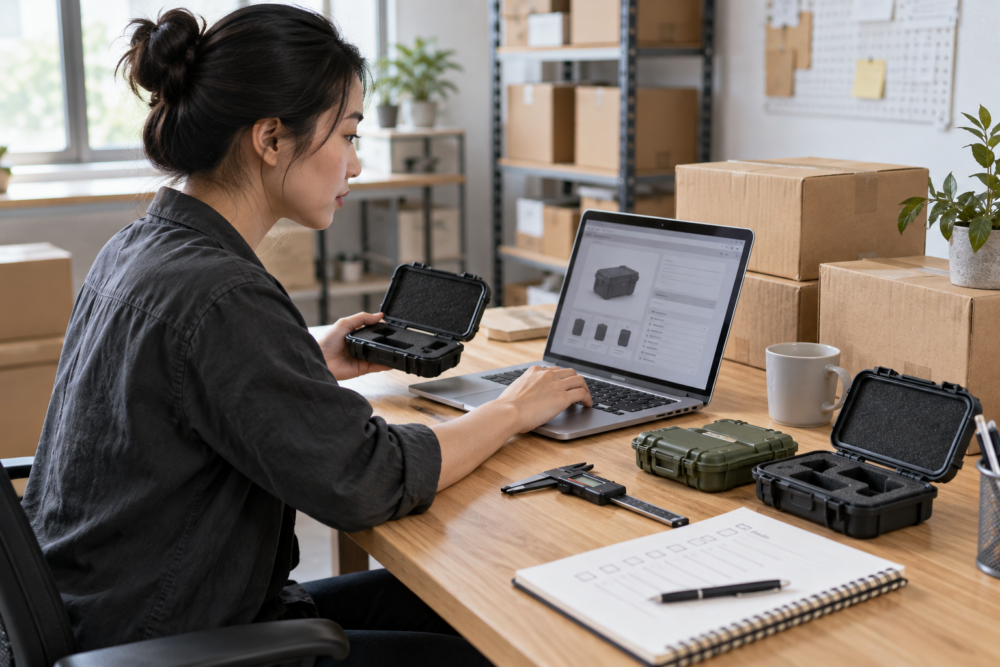
Buying kits and equipment is not like grabbing a novelty phone case. A survival kit, a ski setup, a child tool set, or a small electrical unit can fail in ways that damage people as well as your business. You find safer brands and suppliers not by chasing a single “trusted site,” but by doing three things: mapping how risky your specific kit is, applying a consistent vetting and testing process to every supplier, and choosing sourcing channels—marketplaces, directories, brand-direct sites, or local wholesalers—that match that risk level and your margin.
This page helps you decide when a kit or supplier is trustworthy enough to justify a sample order—and when to walk away. That applies whether you’re a household buying two emergency kits or a small ecommerce store planning a 200-unit private-label run.
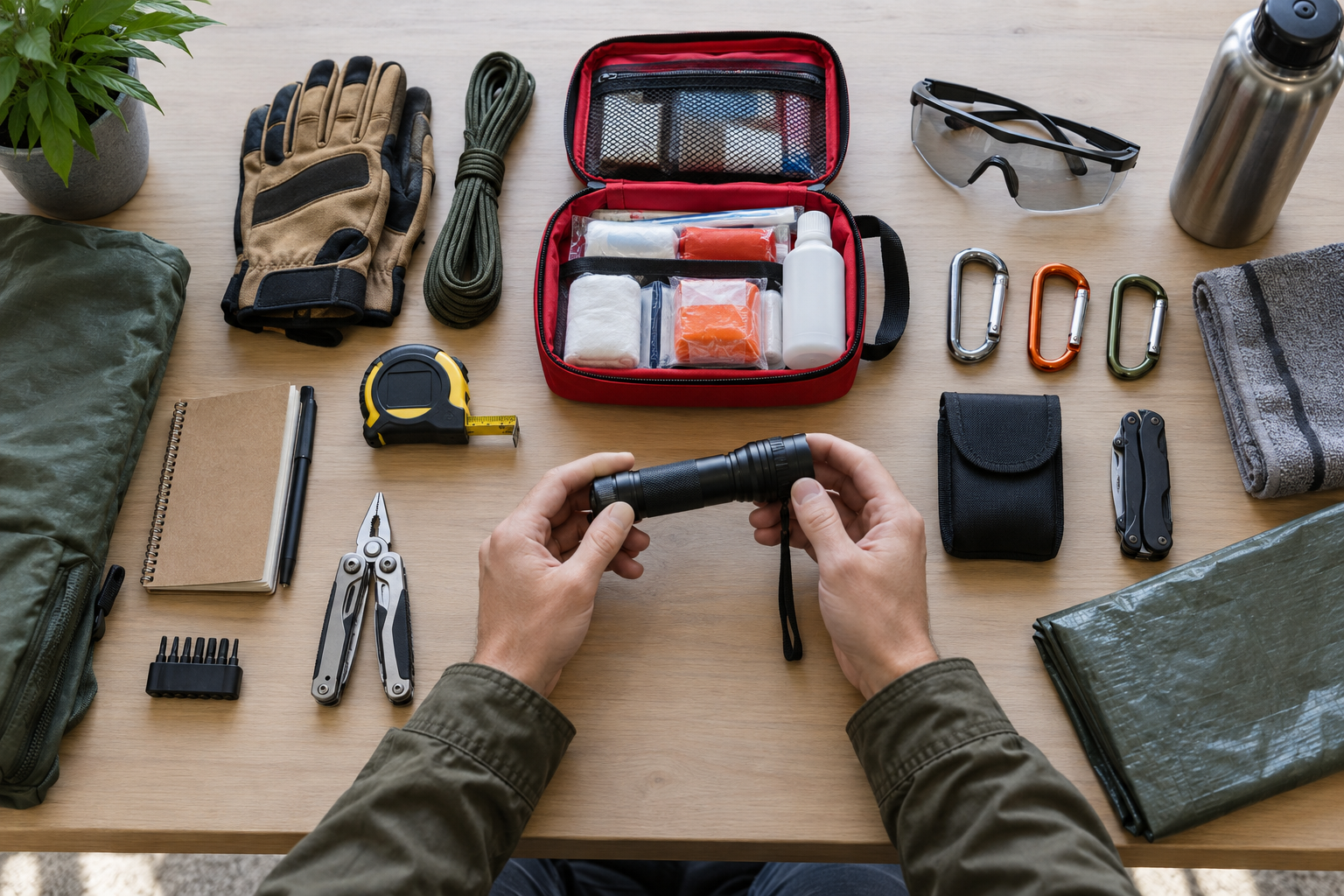
AI-generated editorial image; not a seller product photograph.
Why kits and equipment are a higher‑stakes trust decision
When we talk about “kits and equipment” here, we mean multi‑component or performance‑dependent products such as:
- Emergency and survival kits
- Tool and repair kits
- Outdoor, ski, and hunting gear bundles
- Simple electrical or mechanical equipment sets
- Child-focused kits (toy toolboxes, STEM sets)
- Packaging and hardware kits used in your own fulfillment
These carry higher trust stakes than decor or basic apparel because:
- They must work under stress. A survival kit has to function during a storm, not just sit nicely on a shelf. Outdoor, ski, and hunting gear is used in cold, wet, or high‑impact conditions; failure can mean injury, not just inconvenience.
- They often include regulated items. Emergency kits may contain medical supplies or food with expiration dates. Electrical equipment has voltage and safety constraints that vary by region. Child kits raise choking and toxicity concerns.
- They bundle multiple failure points. Even if the flashlight in a survival kit is solid, the batteries, water pouches, or tourniquet might not be.
- They can involve brand and IP issues. Outdoor gear guides frequently highlight names like The North Face, Patagonia, Columbia, Arc’teryx, and REI Co‑op as well‑known examples for performance gear.Source Ski editorials often cite Nordica, Rossignol, Salomon, Atomic, and Smith as major players.Source Tactical roundups mention brands such as 5.11 Tactical, Blackhawk, Condor, Crye Precision, Eagle Industries, and Haley Strategic.Source When you see these names offered cross‑border at suspiciously low prices, you need to know whether you’re looking at authorized stock or IP problems.
Individuals vs small ecommerce operators
Individual US buyers mostly worry about:
- Safety in real use (will this emergency kit work in a blackout?).
- Getting what was advertised (no missing tools or fake materials).
- Not wasting money on something that fails immediately.
Small ecommerce businesses carry all of that plus:
- Compliance and liability exposure if they resell non‑conforming gear into the US.
- Brand damage and returns if kits arrive inconsistent, incomplete, or dangerous.
- Supply reliability: same spec and materials over multiple orders.
That’s why you need to think about risk by kit type before you even choose a supplier.
Map your specific trust risks before you choose a supplier
Before you browse listings or request quotes, slot each kit you’re considering into a simple risk category. That tells you how strict to be about documentation, channels, and testing.
1. Emergency and survival kits
Typical examples: household emergency backpacks, car emergency kits, earthquake survival kits.
Key risks:
- Items with expiration dates (water, rations, medicines, batteries) quietly expiring before use.
- Cheap or nonfunctional critical components (flashlights, radios, tourniquets, masks).
- Storage requirements (heat-sensitive supplies) not being met during shipping or warehousing.
- Contents not aligning with widely recommended preparedness baselines.
Regulatory/liability angle: higher. If you resell, you’re implicitly promising life‑safety performance.
2. Outdoor, ski, and hunting kits
Examples: camping bundles, ski packages, hunting clothing sets.
Key risks:
- Materials overstated (e.g., “waterproof” that is only lightly water‑resistant).
- Seams, buckles, or bindings failing under real load.
- Helmet and protective gear not built or tested to any recognizable performance level.
Regulatory/liability angle: medium‑high. Failures can cause injury.
3. Electrical and mechanical sets
Examples: power tool starter kits, small home repair kits with powered components, bench‑top devices.
Key risks:
- Voltage mismatch with US 110–120V power or incompatible plug types.
- Weak insulation, lack of over‑current protection, or missing basic safety labeling.
- Poor or non‑existent English instructions.
Regulatory/liability angle: high. Misuse or failure can cause fire or electric shock. You should consult official US guidance or a qualified professional for definitive requirements.
4. Child-focused kits
Examples: toy toolboxes, STEM building sets, craft kits for kids.
Key risks:
- Small detachable parts creating choking hazards.
- Paints or plastics with unsafe levels of chemicals.
- Misleading age labeling.
Regulatory/liability angle: very high for resellers. Child product safety rules in the US are strict; you should check official child product safety resources for your exact category.
5. Low‑risk packaging and simple components
Examples: packaging kits, printed instruction sets, non‑load‑bearing metal hardware or brackets.
Key risks:
- Fit and finish: boxes that don’t match your product dimensions, weak glue, misprints.
- Surface quality: poor coatings or burrs that hurt perceived quality.
Regulatory/liability angle: relatively low, but still important for your brand image.
A practical rule: the more a kit affects safety or children, the more you should lean toward stricter documents, more expensive channels, and heavier testing.
How to vet kit and equipment brands and suppliers, step by step
Once you know your risk level, use a consistent workflow for every supplier—no matter which website or marketplace you met them on.
Step 1: Confirm who you’re actually dealing with
For any factory or trader offering kits:
- Ask for the legal company name, registration number, and business address.
- Search that name in business registries, on major B2B platforms, and on their own website. You’re looking for consistency across channels, not perfection.
- Check how long they claim to have been in business and in which product categories.
This kind of identity check doesn’t guarantee honesty, but it reduces the odds of dealing with a short‑lived or fake entity.
Step 2: Separate genuine brands from unbranded/OEM products
If the supplier lists globally known brands (like the outdoor and ski names above):
- Look up the brand’s official site and see whether they list authorized distributors in that region. For example, outdoor brands discussed in guides such as this overview of well‑known labels often list dealer networks you can cross‑check.Source
- Avoid sellers openly advertising “replica,” “inspired,” or misspelled brand names.
If the kit is unbranded or private‑label:
- Focus on factory capabilities: what other clients or markets they serve, what materials and processes they use.
- Ask to see photos or videos of production and packaging lines for similar kits.
The goal is to avoid IP trouble while still accessing genuine, capable manufacturers.
Step 3: Request relevant documentation (especially for higher‑risk kits)
You don’t need to become a lawyer, but you should be comfortable saying, “Please send the documents you have for this category.” For example:
- Electrical/mechanical kits: ask what safety or performance reports they can provide (e.g., testing summaries, evidence of any CE or UL‑type evaluations they’ve done). Then verify what actually applies to your product in US markets via official channels.
- Emergency kits: ask for a contents list with brands and expiration dates for food, water, batteries, and medical items.
- Child kits: ask what child‑product safety tests or labeling they’ve done and in which markets.
- Outdoor/ski/hunting gear: request technical specs for materials (fabric type, claimed waterproof rating, insulation fill, etc.). Even basic data helps you test claims.
Any documentation the supplier provides is just a starting point; it never replaces checking US regulations for your category.
Step 4: Samples and stress tests
For kits and equipment, samples are not optional.
- Ask for production‑line samples, not “golden” prototypes that will never match reality.
- When you receive a sample, do a basic functional check by category:
- Emergency kit: open everything, check seals, test the flashlight, read dates on consumables.
- Outdoor gear: check stitching, try on straps, soak “waterproof” items under a shower for a short period and see what happens.
- Electrical tool: plug it in using a safe setup; verify it runs, doesn’t overheat quickly, and has clear labeling.
- Child kit: drop‑test the toy from a reasonable height, pull on small parts to see what detaches, and smell for strong chemical odors.
Samples won’t reveal every long‑term issue, but they expose misrepresentation and obvious shortcuts.
Step 5: Pilot orders to catch bait‑and‑switch
Before you commit to a big shipment:
- Place a small pilot order, large enough to see batch consistency (for example, a fraction of your eventual target, sized to your budget).
- Compare the bulk units to your approved sample. Look for differences in materials, labeling, and contents.
- Track defect or return rates from this batch and decide what you’ll tolerate.
This is one of the most effective ways to detect suppliers who send high‑quality samples but cheaper bulk.
Step 6: Protect yourself on payments and terms
Especially for first orders:
- Favor payment methods that offer some possibility of recourse, like credit cards or certain e‑wallets, or platform checkouts that allow disputes, instead of irreversible wire transfers.
- Put your expectations into a simple purchase order or contract: product description, materials, allowed tolerances, packaging, delivery window, and what happens if goods are defective.
- Keep important agreements and problem reports in writing (email or platform messages) so you can reference them if there’s a dispute.
These steps won’t eliminate risk, but they reduce how much damage a bad transaction can do.
Testing and documentation expectations by kit type
The exact mix of documents and tests you need depends on the category. Here’s how to think about it in more detail.
Emergency and survival kits
What to ask for:
- Detailed contents list with brands, quantities, and expiration dates.
- Storage and temperature guidelines for any perishable items.
Basic tests and checks:
- Lay out the entire kit; confirm every advertised item is present, packed logically, and usable.
- Test key tools: flashlight, radio, knife, whistle, water filter or tablets.
- Ensure food and water items are within expiry and labeled.
You can also compare a kit’s contents against widely circulated US emergency readiness checklists (from emergency management agencies) as a baseline, then decide what gaps you’ll accept.
Outdoor, ski, and hunting gear bundles
What to ask for:
- Material specifications and any claimed performance levels (e.g., a waterproof rating, insulation type, shell fabric weight).
- For ski gear or climbing items, technical details like construction type and materials.
Basic tests and checks:
- For shells and jackets: brief hose or shower test for water ingress.
- For straps, buckles, and belts: load them within reasonable limits to check for slippage or breakage.
- For ski accessories like helmets and goggles: inspect shell integrity, liner quality, and clarity of lenses.
Many buyers lean on brand reputation plus user reviews when choosing ski and outdoor equipment; well‑known brands often publish more detailed specs, which makes verification easier.Source Just remember that reputation alone doesn’t prove a given cross‑border listing is authentic.
Electrical and mechanical kits
What to ask for:
- Stated input voltage and frequency, plug type, and intended market.
- Any available test reports or documentation about insulation, overload protection, or enclosure strength.
- Copies of labels and instruction manuals.
Basic tests and checks:
- Confirm the label and manual clearly state voltage and basic safety instructions in legible English.
- If you test the product, use an appropriately protected setup; watch for excessive heat, smells, or noise.
- Ensure cables and plugs feel solid, not flimsy or loosely attached.
For anything beyond minor household tools, consider consulting a qualified electrician or testing service and checking official US codes.
Child-focused kits and toys
What to ask for:
- Any documents or markings related to child product safety standards in the supplier’s main markets.
- Age‑grading rationale (why they label it for a particular age band).
Basic tests and checks:
- Perform a “small parts” check: see whether pieces fit easily through a small‑parts test device or an improvised opening roughly the size of a US small‑parts cylinder.
- Pull and twist components with moderate force to see what breaks off.
- Smell the materials; strong chemical odors can be a warning sign.
For resale in the US, you should verify with official child product safety resources which tests and labeling are required for your specific product.
Lower‑risk packaging and hardware kits
What to ask for:
- Material type (e.g., corrugated grade for boxes, paper weight, metal type for brackets).
- Dimensional drawings where exact fit matters.
Basic tests and checks:
- Assemble and use the packaging exactly as customers would. Check for crushing or tearing at expected loads.
- Check print quality, color accuracy, and coating durability.
Here your focus is protecting your brand feel and reducing breakage or returns.
What different sourcing channels can and can’t do for trust
Different channels offer different trust tools. None are magic; each works best for certain kit risk levels and budgets.
Multi-seller online marketplaces
These are global platforms where many independent sellers list products.
Examples of potential trust mechanisms on some marketplaces:
- A centralized checkout process.
- Some way to see past buyer feedback, such as seller ratings or product reviews.
- On‑platform messaging tools.
- Time‑limited processes for reporting order problems.
Not every marketplace provides all of these features, and the details can change. You should always check a specific platform’s current policies and tools directly before relying on them.
Benefits:
- Wide variety: in a snapshot taken on 2026‑09‑14, DHgate search results for “kit” included emergency preparedness kits, educational toy toolboxes, firefighting supply cabinets, agricultural components, and custom packaging boxes, showing how many kit categories can appear on one marketplace.
- Often easier to place low‑volume trial orders compared with traditional wholesale.
Limitations:
- Any protections are usually limited in time and scope.
- Compliance, authenticity, and long‑term durability are still your responsibility.
Best fit: exploratory sourcing, lower‑risk kits, and early‑stage private‑label experiments where you’re willing to run your own testing and vetting.
B2B sourcing directories
These platforms primarily list factories, export agents, and wholesalers.
Typical trust mechanisms:
- Supplier verification tiers or audit badges.
- Company profiles with registration details and export focus.
Limitations:
- They usually don’t sit in the middle of each transaction. You rely on invoices, contracts, inspections, and trade finance tools for protection.
Best fit: when you’re ready to develop deeper factory relationships and negotiate custom kits, especially for medium‑risk categories where you can afford third‑party inspections.
Brand-direct and specialist retailers
These are official brand sites or specialty retailers (for example, well‑known outdoor or ski brands’ own stores, or reputable US survival gear shops). Editorial overviews of outdoor and ski gear frequently point to major brand names as reference points for performance and quality expectations.SourceSource
Typical trust mechanisms:
- Stronger authenticity assurance.
- Clearer warranties and return policies.
Trade‑off: higher prices and less flexibility on customization or private labeling.
Best fit: higher‑risk categories like ski helmets, avalanche gear, and serious tactical or climbing equipment—especially if your business model depends on selling recognizable brands.
Local US distributors and wholesalers
These are US-based companies that import, stock, and resell kits and equipment.
Typical trust mechanisms:
- US jurisdiction for returns and warranty claims.
- Easier communication and faster shipping.
Trade‑off: higher landed costs and sometimes smaller assortments or less customization.
Best fit: when your margin can absorb higher unit costs in exchange for simpler logistics and clearer legal recourse—often ideal for child products and safety‑critical kits.
Where marketplaces like DHgate fit in your mix
DHgate is a global online marketplace where many independent suppliers list a wide range of products, including varied kits and equipment. In a point‑in‑time snapshot for the word “kit,” DHgate showed offerings such as emergency survival sets, educational tool toy boxes, firefighting supply cabinets, greenhouse support components, and custom packaging boxes (observed 2026‑09‑14). That breadth means platforms like this can be useful for exploratory sourcing and low‑ to mid‑risk kits, provided you apply the vetting steps above and stay within your own risk tolerance.
When you use any marketplace for kits:
- Favor sellers with longer histories and stronger ratings where available.
- Study product descriptions carefully; avoid listings with vague specs for higher‑risk categories.
- Start with small test orders, inspect thoroughly, and only then consider larger volumes.
- Keep all negotiation and issue reports on‑platform so you have a record if something goes wrong.
Marketplace tools can reduce risk, but they don’t remove your responsibility to check safety, compliance, and IP issues—especially if you’re reselling into the US. For DHgate or any other marketplace, review the platform’s current terms and policies before placing significant orders.
Channel choice vs kit risk: a quick view
Use this table as a directional guide, not a rulebook:
| Kit category | Typical risk level | Typically preferred channels (for stricter control) | Channels mainly for exploratory use |
|---|---|---|---|
| Emergency/survival kits | High | Brand-direct, US distributors, carefully vetted factories | Marketplaces and B2B directories with small test orders |
| Outdoor/ski/hunting gear | Medium–high | Brand-direct, specialist retailers, trusted OEM relationships | Marketplaces for accessories and lower‑load items |
| Electrical/mechanical kits | High | Local distributors, tested OEM relationships | Marketplaces with extra electrical due diligence |
| Child-focused kits | Very high | US distributors, brand-direct, factories with child-safety focus | Marketplaces only after strong documentation and samples |
| Packaging/simple hardware | Low–medium | Marketplaces, B2B directories, local packaging suppliers | N/A (most channels workable with basic QC) |
Build a simple trust playbook for your ecommerce operation
If you run or are planning a small ecommerce business, you don’t need a full‑blown compliance department. You do need a repeatable playbook.
Here’s a compact way to structure it:
- Map SKUs by risk. Create three buckets: high (emergency, electrical, child), medium (outdoor/ski/hunting kits, heavier tools), and low (packaging, simple non‑safety accessories). Mark this in your product spreadsheet.
- Set vetting levels per bucket. For high‑risk SKUs, require documented samples, at least one pilot order, and preference for channels with clearer returns and compliance info. For low‑risk SKUs, you might accept lighter documentation, but still demand samples and written specs.
- Define acceptance criteria. Decide in advance what defect rate, lead time variance, and packaging standard you’ll tolerate. If a supplier misses those, you pause or stop reorders.
- Standardize supplier onboarding. For every new supplier, run the same identity checks, documentation request, sampling, and pilot steps, and track the results in one place.
- Build redundancy over time. For critical kits, aim for at least two qualified suppliers or channel options so you’re not stranded if one factory’s quality drops or a marketplace seller disappears.
These habits don’t remove risk, but they make bad surprises rarer and cheaper. And they let you use a mix of global marketplaces, directories, brand-direct sites, and local wholesalers in a way that fits your kit categories and your risk tolerance.