
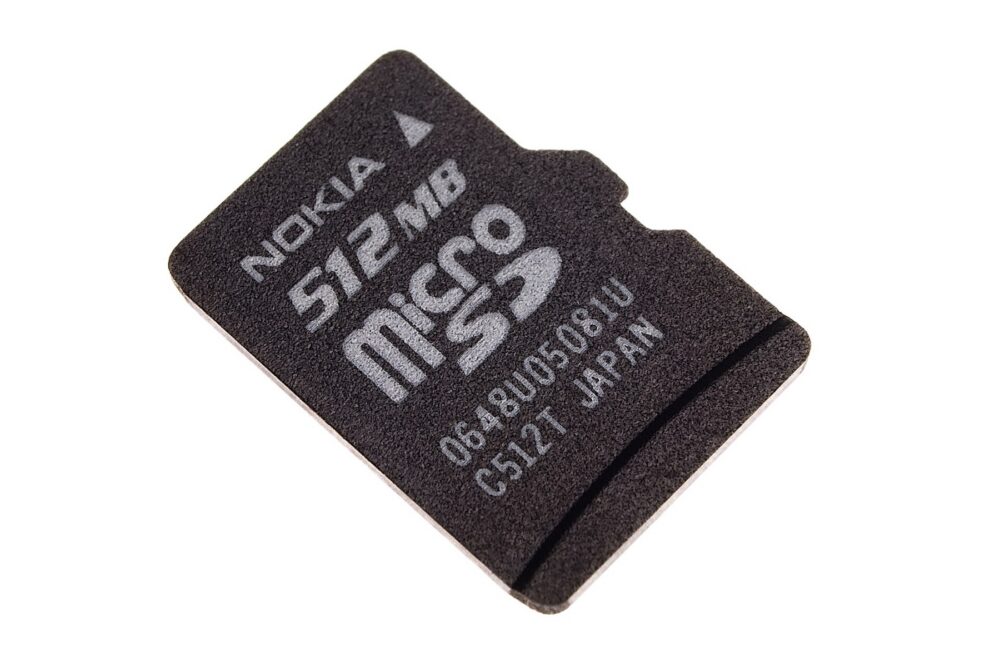
Bulk SD and microSD card buying can be attractive for a US small business, but flash memory is a high‑risk category. Counterfeit, relabeled, or simply slow cards are common in bulk lots, especially cross‑border. DHgate is one way to reach Chinese suppliers offering volume discounts, but it’s not a shortcut past those risks—you still need brand clarity, samples, and strong supplier vetting whether you source on DHgate, Alibaba, or a specialist wholesaler.
If you’re buying cards for resale, deployments, or bundling with devices, your core decisions are: which card type and speed your use case needs, which channel fits your risk tolerance, and how rigorously you’ll test before committing to a large order.
How Bulk SD and Micro SD Card Sourcing Works
Bulk SD/microSD cards simply means buying many units at once—often dozens, hundreds, or more—at a lower per‑unit price than single retail packs. Businesses and organizations that routinely need storage (schools distributing tablets, camera rental houses, IoT deployers, small e‑commerce brands) commonly buy in bulk to save on unit cost and handling.
SD (full‑size) cards still show up in cameras and some industrial gear, while microSD cards dominate phones, action cams, drones, handheld consoles, and embedded systems. In wholesale terms you’ll typically see:
- Capacity tiers like 16 GB, 32 GB, 64 GB, 128 GB, 256 GB and up.
- Speed classes (C10, U1, U3, V30, etc.) with UHS‑I being the mainstream option.
- Form factor focus – some suppliers are mostly microSD, others cover both.
Production is concentrated in Asia; many bulk listings are either OEM/unbranded cards or brand‑labeled units coming through distributors. Sites such as the SD and microSD sections of BulkMemoryCards illustrate this: they promote bulk SD and microSD cards in multiple capacities and emphasize volume pricing instead of retail blister packs.
For you, that supply chain reality means three things:
- You can usually match most mainstream specs in bulk.
- Pricing varies heavily with capacity and speed class.
- Authenticity and performance are not guaranteed just because the label looks familiar.
Choosing and Vetting Bulk SD Card Suppliers Across Channels
Flash memory has one of the highest counterfeit and quality‑drift rates in cross‑border trade. You’re not just checking “is this supplier real,” but “will this card’s actual performance match the label across hundreds of units.”
Here’s how to make that more concrete.
Match supplier type to your project
You’ll see three broad supplier types:
- Specialist bulk memory vendors – sites like BulkMemoryCards’ microSD category or Neomory’s SD card section focus on memory only and often carry multiple brands and capacities. They cater to business buyers and may offer custom labeling or pre‑loading.
- Large B2B marketplaces – Alibaba hosts many bulk SD card listings, as shown on its SD cards bulk page. DHgate is a similar global B2B marketplace connecting Chinese suppliers with overseas buyers.
- Small manufacturers and OEM houses – sometimes reachable directly, sometimes via those marketplaces.
Specialists tend to emphasize branded cards and repeat business. Marketplaces give you breadth and price competition but demand more vetting effort.
Concrete supplier checks that matter for SD/microSD
For memory cards, generic vetting is not enough. Focus on these specifics:
- Brand and grade clarity: Are they selling major brands, white‑label cards, or their own brand? Ask directly what NAND grade and controller types they use for house‑brand cards.
- Capacity honesty: Counterfeit cards often report a large capacity but corrupt data past a smaller limit. Insist on small sample batches, then run capacity and write‑speed tests (using tools like H2testw or F3) on multiple units.
- Batch consistency: Request that samples come from the same production batch you’ll be ordering, not “marketing samples.” For repeat orders, spot‑test a slice of each shipment.
- Performance vs. claim: If they advertise U3 or V30 speeds, define a minimum sustained write speed in your purchase terms, then verify during sampling.
On Alibaba, you’ll see similar surface signals (years in business, transaction volume), but memory performance still has to be proven by your own tests.
Communication tactics that reduce risk
Regardless of channel:
- Send a concise spec sheet: form factor, capacity, speed class, brand preference, and use case (e.g., 4K recording vs. low‑duty data logging).
- Ask how they handle defective units in bulk orders—not platform policies, but their stated approach.
- For branded cards, ask for documentation of sourcing (authorized distributor, etc.). You’re not verifying law, just sanity‑checking their story.
For DHgate‑specific supplier search and evaluation processes, you can dig deeper using guides such as Find DHgate suppliers and Choose a DHgate wholesale supplier.
Pricing, MOQ, Logistics, and Where DHgate Fits
Bulk SD/microSD pricing comes down to capacity, speed, brand, and how close you are to the source. Higher capacities and faster speed classes command higher prices; major brands carry a premium over house brands.
Typical wholesale realities
In practice you’ll encounter:
- MOQs (minimum order quantities) – specialist sites often set clear pack sizes or minimum units; marketplaces let each supplier define their own MOQ.
- Tiered pricing – volume discounts as you move from samples to hundreds or thousands of units.
- Sampling workflows – many business‑oriented sellers will agree to small paid sample orders before you commit.
Bulk‑oriented sites such as BulkMemoryCards prominently present bulk categories, signaling that they’re set up for exactly this volume/tiered structure, though they don’t publicize a single universal discount percentage.
DHgate’s own editorial blog describes the platform as a global B2B marketplace connecting Chinese manufacturers and suppliers with buyers worldwide, with millions of products including electronics.[²] That same blog highlights two mechanics that matter for SD/microSD sourcing:
- No platform‑wide MOQ – you can sometimes buy one or a few units; actual minimums are set per listing by each wholesaler.[³]
- Tiered pricing – suppliers often price based on quantity ordered, with larger orders getting lower per‑unit prices.[³]
For a small US buyer, those mechanics mean DHgate can be useful when:
- You want to start very small with test quantities before scaling up.
- You need access to many competing suppliers for similar card specs.
But they also mean the burden is on you to inspect each listing’s MOQ, price tiers, and supplier profile. There is no platform‑wide promise about authenticity or logistics in the available evidence—those details sit at the seller level.
DHgate, Alibaba, and specialist wholesalers compared
Here’s a compact, judgment‑based comparison of how channels tend to differ for bulk SD/microSD sourcing:
| Channel type | Typical MOQ flexibility | Branding focus | Buyer fit example |
|---|---|---|---|
| DHgate marketplace | High – some listings allow very small orders; actual MOQ is per supplier[³] | Mix of branded and house‑brand cards (depends on seller) | US reseller testing multiple Chinese suppliers before committing |
| Alibaba marketplace | Medium – many listings aimed at larger MOQs (hundreds+), though samples often possible[⁴] | Mix of OEM, house‑brand, and some major brands | OEM project needing long‑term supply at factory‑style volumes |
| Specialist bulk vendors | Defined – clear pack sizes or order minimums per product | Often emphasize major brands and consistent business supply[⁵] | School district standardizing on specific branded cards |
These aren’t rankings. DHgate and Alibaba give you breadth and negotiation room; specialist wholesalers trade that breadth for tighter focus on memory and often clearer branding.
Two quick scenarios to pressure‑test your decision
- Reseller bundling cards with phones or cameras: Your reputation rides on every card working. A specialist bulk memory vendor or a carefully vetted marketplace supplier with branded cards may be safer, even at a higher unit cost. DHgate can work if you treat the first 1-2 orders as experiments and test aggressively.
- In‑house IoT deployment with many low‑load devices: You might accept house‑brand cards if they pass your performance tests. Here, DHgate or Alibaba can be cost‑effective; you’re optimizing for a known, controlled environment rather than unknown end‑user abuse.
Micro‑checklist for sample testing and repeat orders
Before you move past samples:
- Test capacity and write speed on at least 5-10 cards from the batch.
- Run a full‑fill test (write data until the card is full) to catch fake capacity.
- Power‑cycle and re‑mount cards repeatedly to check stability.
If a supplier resists sampling or meaningful testing, that alone is a strong reason to look elsewhere.
Sources
Before choosing a DHgate supplier, use Find wholesale suppliers on DHgate.
- DHgate blog discussion of supplier ratings, reviews, and transaction history tools for evaluating vendors: How to Start an Ecommerce Business on DHgate.
- DHgate editorial positioning as a global B2B marketplace with extensive electronics coverage: Top 10 Global Wholesale Electronic Companies.
- DHgate blog explanation of no platform‑wide minimum order quantity and tiered pricing: Where To Buy Cheap Wholesale Products Online.
- Example of Alibaba listing bulk SD card suppliers: Alibaba SD cards bulk.
- Example of specialist bulk memory card supplier with multiple SD/microSD capacities and branded options: BulkMemoryCards microSD category.