
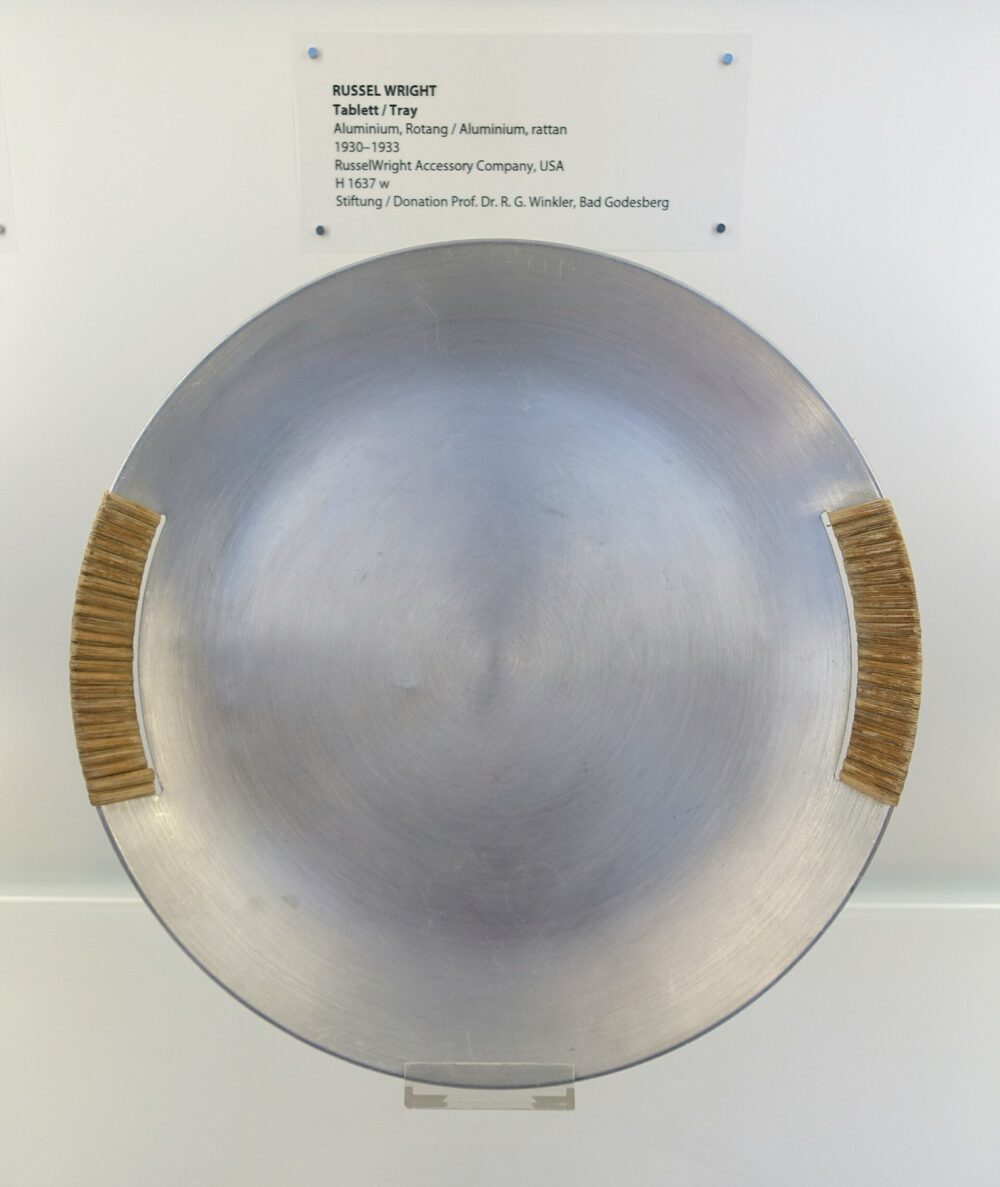
If you’re importing rattan-look storage trays for resale, the only way to know whether DHgate or any other channel is truly budget-smart is to calculate your landed cost per tray, set a realistic margin target, and test at least one small order plus a reorder with a vetted seller. DHgate can offer bulk discounts and occasional promotions on home goods, but curated B2B marketplaces and direct craft or factory suppliers often trade higher per-unit prices for lower risk and clearer standards.
Below is a numbers-first way to evaluate trays from DHgate against alternatives like a rattan tray from a supplier such as Meko Craft or Artex Naman.
Break Down Landed Cost for Rattan-Look Storage Trays
Landed cost is the full cost to bring each tray to your US shelf, ready to sell. It’s not just the factory or marketplace price.
Based on guidance from iContainers’ landed cost guide, you should include:
- Product cost (what you pay the seller)
- International freight
- Insurance (if you buy it)
- Import duties and taxes
- Customs and brokerage fees
- Handling, storage and inland delivery inside the US
A simple worked example
Say you’re a small home-goods brand testing 200 medium rattan-look trays from an overseas supplier.
Assume this hypothetical structure:
- Product subtotal: you negotiate $3.50 per tray → $700
- International shipping & insurance (small carton shipment): $260 total
- Customs, duties and brokerage fees: $120 total (generic placeholder for calculation)
- US-side trucking or parcel delivery from port to your warehouse: $80 total
Total cash outlay for the shipment:
- $700 + $260 + $120 + $80 = $1,160
Per-tray landed cost:
- $1,160 ÷ 200 trays = $5.80 landed cost per tray
If you plan to wholesale these trays to boutiques at $11.50 each, your gross margin on product would roughly be:
- Margin dollars: $11.50 − $5.80 = $5.70
- Margin %: $5.70 ÷ $11.50 ≈ 49.6%
That margin has to cover your overhead, marketing and any spoilage or defects. If hidden costs push landed cost from $5.80 to $7.00, your margin drops to about 39%, which can materially change whether the product is worth scaling.
Reuse this framework every time you get a quote: plug the product subtotal and all logistics fees into a simple spreadsheet and calculate landed cost per tray before committing.
How MOQ, Customization and Channel Choice Change Your Per-Unit Price
Wholesale rattan trays and baskets are often sold in sets and aimed at storage or serving for home and hospitality (HORECA). You can see this pattern in suppliers like Artex Naman’s metal-frame rattan tray and Meko Craft’s round rattan storage tray. Those listings typically reference wholesale supply, set configurations and multi-purpose use.
For rattan-look trays sourced cross-border, four levers move your per-unit price:
1. MOQ (minimum order quantity)
Suppliers usually quote lower prices if you meet their preferred MOQ. Going from 100 to 300 trays might drop your tray price meaningfully, but it also ties up more cash and increases risk if the style doesn’t sell.
Practical move: ask for a “test MOQ” on your first order (for example, half their normal MOQ) at a slightly higher price, and agree on a volume break for reorders if quality and sell-through are good.
2. Customization level
Many rattan or rattan-look trays can be customized: size, color, liner fabric, handles, logo tags. Each customization step usually adds cost or increases MOQ because the factory can’t reuse standard components.
Budget stance: keep your first order close to the supplier’s standard design. Once you’ve confirmed quality and demand, negotiate custom variants for larger runs where the extra cost per tray can be spread over more units.
3. Shipping method
Trays are bulky relative to their weight. Small ecommerce brands often start with carton-based air or express shipments, then move to consolidated ocean freight as they scale.
Air or express:
- Higher freight per tray
- Faster to market (useful for trend-driven styles)
Ocean or consolidated freight:
- Lower freight per tray on large volumes
- Requires more cash upfront and planning time
Even without guessing exact numbers, it’s clear that freight choice can swing your landed cost by dollars per tray, so build at least two scenarios in your spreadsheet.
4. Channel and payment terms
Channel choice shapes both the product price and how you pay:
- Marketplaces (DHgate, others): usually card-based payments, quotes and bulk discounts visible on listings or via message.
- Curated marketplaces (e.g., Faire): often net payment terms for qualified retailers but higher unit prices, since suppliers absorb platform fees and curation costs.
- Direct craft/factory suppliers (like Artex Naman or Meko Craft): pricing negotiated directly, sometimes with bank transfer; terms and discounts depend on relationship and volume.
If you’re US-based, payment terms and currency can affect your cash flow as much as pure pricing. Paying upfront in full for each shipment ties up more cash than net terms on a curated marketplace.
DHgate vs Other Wholesale Channels: When the Budget Case Works
DHgate’s own blog describes the platform as a large repository of wholesale products with bulk discounts and seasonal campaigns designed to make unit costs more attractive for buyers. Its editorial content also stresses understanding pricing structures (how the price changes with volume) and requesting samples before committing to large wholesale orders.
That frames where DHgate can make sense for rattan-look storage trays—and where it doesn’t.
Where DHgate can be cost-effective
DHgate is worth testing if:
- You’re price-sensitive and willing to put in research time comparing multiple tray listings and contacting sellers about true bulk pricing.
- You want to take advantage of bulk discounts and occasional promotions described in DHgate blog material, and you’re comfortable trading some curation for lower headline prices.
- You plan to follow good practice from DHgate’s editorial guidance: request samples, analyze tiered pricing, and build relationships with reliable sellers who may extend better terms over time.
In this scenario, your landed cost spreadsheet should include:
- Product subtotal from your negotiated DHgate price for the chosen quantity.
- Any marketplace-specific fees rolled into your cost of goods.
- Freight and import costs calculated independently, as in the earlier example.
If the resulting landed cost per tray sits significantly below comparable offers from, say, a curated marketplace listing on Faire or a direct supplier like Meko Craft, and quality from samples matches your brand standards, DHgate passes the budget test.
When curated or direct suppliers are safer despite higher prices
You may prefer a curated B2B marketplace or a direct craft/factory supplier if:
- You value stronger product storytelling, brand positioning and often clearer standards for things like material sourcing.
- You want smaller, design-led assortments and aren’t chasing rock-bottom per-unit cost.
- You’re willing to accept a higher tray price because net payment terms or lower operational friction offset part of the cost.
For example, a handcrafted tray collection from a supplier like Artex Naman may carry a higher FOB price but align better with a premium home brand’s aesthetic and marketing narrative.
Quick comparison: cost-first view
Use this compact table as a decision aid. It’s deliberately simplified and based on public examples plus editorial judgment:
| Channel type | Typical strengths for trays | Cost profile (editorial) |
|---|---|---|
| Cross-border multi-seller-style marketplace | Large product pool, visible bulk discounts, samples encouraged by editorial blog | Often lower unit prices if you do deep comparisons and negotiate; logistics and quality vetting are on you |
| Curated B2B marketplace | Brand curation, storytelling, retailer-friendly terms | Higher unit prices; softer cash-flow via terms, lower sourcing time |
| Direct craft/factory supplier | Customization flexibility, direct relationship | Prices vary; strong value at mid-high MOQs, relationship-driven discounts |
Run your landed cost and margin math for at least one option in each column. If DHgate’s best vetted offer gives you safe quality and a landed cost that supports your target margin, it’s a rational choice. If the savings are slim versus curated or direct channels—and sourcing friction is higher—you may be better off paying more per tray for a cleaner, more predictable supply chain.
For additional DHgate platform context, use Find wholesale suppliers on DHgate.
For broader marketplace context, you can also look at DHgate alongside other platforms in this comparison of DHgate, AliExpress, Alibaba and Temu. And because duties and fees can move your tray math more than you expect, it’s worth reading a neutral explainer on customs, tariffs and import charges before locking in your pricing.