
Quick answer: Do not follow an old “join DHgate affiliate” tutorial unless you can verify a current application route and program terms. As of September 9, 2026, DHgateWiki found a DHgate-branded affiliate operations guide explaining tracking links, products and coupon materials, but not a current public enrollment page, eligibility rules, commission schedule or payment terms. Treat invitations as unverified until those details are supplied through a trusted channel.
Last reviewed: September 9, 2026. Affiliate programs, networks, rates and regional availability can change without notice.
Is there a DHgate affiliate program you can join today?
There is evidence that DHgate has operated affiliate tools. A DHgate-branded three-page guide hosted on a DHgate subdomain of Glue Up explains how an approved user can create tracking links, select products and download coupon or deal materials. That document demonstrates an operating workflow, but it does not establish that public applications are currently open or state current commercial terms.
For that reason, this page does not publish a signup URL, commission percentage, cookie duration, payout threshold or approval promise. Those facts must come from the current advertiser or its authorized network account, not from an old article, video, forum post or program directory.
What must you verify before applying?
| Check | Evidence to request | Do not accept alone |
|---|---|---|
| Program owner | Advertiser identity and contact details inside a recognized network or DHgate-controlled channel | A social-media direct message |
| Application route | A live application page using HTTPS and a domain you independently verify | A shortened or forwarded link |
| Commercial terms | Eligible actions, commission basis, exclusions, currency and reversal rules | A headline rate in a blog post |
| Attribution | Tracking method, attribution window, device limits and prohibited traffic rules | A screenshot without a terms URL |
| Payment | Threshold, schedule, supported payout methods, tax documentation and fees | A promise of instant earnings |
| Promotion rules | Trademark, paid-search, coupon, email and social-media restrictions | Permission implied by access to product images |
If any of these items is missing, pause. A real affiliate relationship should give you enough written information to understand what earns commission, what can be reversed and how you may promote the advertiser.
How to validate an affiliate invitation
- Do not use the message link first. Open a new browser tab and navigate independently to the named affiliate network or DHgate’s official site.
- Verify the advertiser record. Confirm that the network account names DHgate and provides current terms. A directory entry or third-party review is not the same as an active advertiser contract.
- Compare domains. Check the full hostname before entering credentials. Lookalike spelling, unrelated form hosts and shortened links need additional verification.
- Read the complete agreement. Save the version and date of the commission, attribution, content and payment rules you accept.
- Confirm support. Use the contact route shown inside the verified network or official account, not a personal address supplied in an unsolicited message.
- Protect your account. Never send a password, one-time code, card security code or remote-access session to an affiliate recruiter.
For broader domain and marketplace checks, use DHgate legitimacy and buyer-safety guidance. If an invitation asks you to pay through an external channel, review the payment safety checklist before doing anything.
What happens after approval?
Only after approval should you rely on the dashboard made available to your account. The DHgate-branded affiliate guide shows two general link workflows: customizing a DHgate landing-page URL and selecting product links inside the platform. It also refers to product feeds and coupon or deal materials.
Those functions are useful context, not a promise that every publisher receives the same tools. Record the landing page, tracking link, campaign name and date for each placement. Test links in a private browser window and verify that they reach the intended DHgate page without an unexplained redirect.
How to disclose affiliate links
The U.S. Federal Trade Commission says a material connection between an endorser and a retailer should be disclosed clearly and conspicuously. For an affiliate article, the disclosure should be close enough to the recommendation and link that a reader can see the relationship before acting.
A practical disclosure is: “I may earn a commission if you buy through links in this article.” The FTC warns that “affiliate link” by itself may not tell consumers that the publisher receives payment. Adapt disclosure language to the audience and the laws that apply where you operate.
- Put the disclosure before or beside the first commissionable recommendation.
- Use the same language as the surrounding content.
- Repeat it where links appear in content that can be viewed separately, such as video or social posts.
- Do not hide it in an About page, terms page, collapsed section or group of hashtags.
- Do not claim personal use, testing, savings or earnings that you cannot substantiate.
How to evaluate products without misleading readers
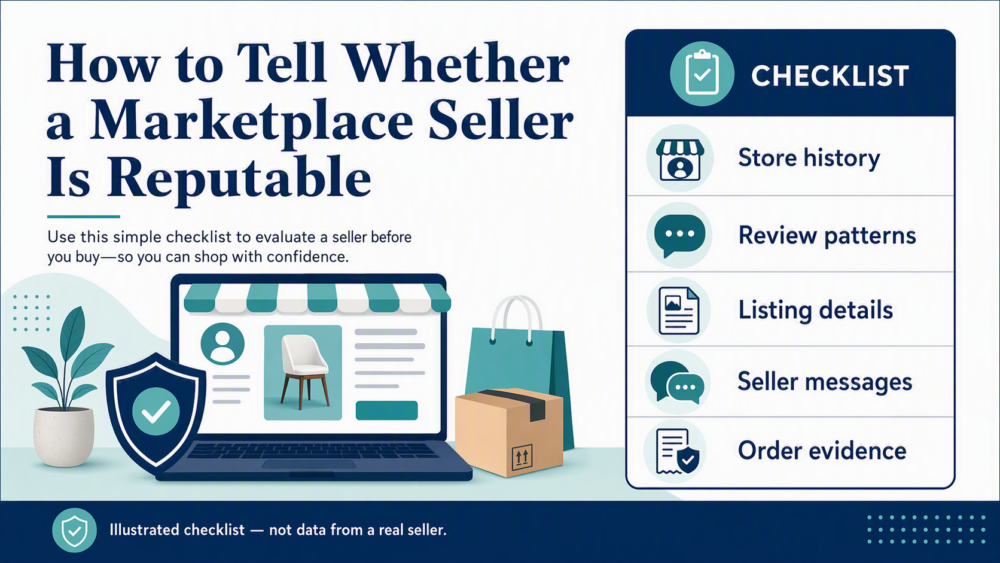
An affiliate relationship does not verify a seller or product. Check each listing independently and distinguish what the listing states from what you personally observed. Use the reliable seller checklist, the DHgate review-reading guide and the trusted-seller evidence workflow.
Avoid promoting listings that depend on counterfeit branding, unverifiable safety marks, medical claims or compatibility promises you cannot confirm. Commission does not justify removing risk disclosures or presenting a marketplace listing as proof of authenticity.
When should you walk away?
- The recruiter cannot provide current written terms.
- You must pay a fee, buy inventory or send funds to activate an account.
- The application collects credentials outside a verified network or official account.
- The offer promises guaranteed income or unusually high returns without conditions.
- You are encouraged to hide disclosures, impersonate the brand or bid on restricted trademarks.
- The only evidence is an old video, forum post or unauthenticated screenshot.
Bottom line
DHgate has documented affiliate link tools, but that does not prove that a public program is open to every applicant today. Verify the current application route, advertiser identity and complete terms before joining. If those cannot be confirmed, do not submit credentials or publish commission claims; wait for a verifiable program page or authorized network offer.