
Quick answer: You can use DHgate to research or buy inventory for an eBay business, but do not assume you may list an item on eBay and then buy it from a DHgate marketplace seller only after it sells. eBay allows fulfillment from a wholesale supplier, while its current policy prohibits buying from another retailer or marketplace to ship directly to your eBay customer.
Last reviewed: September 7, 2026. eBay policies, DHgate listings, import rules and supplier terms can change.
The policy line eBay sellers need to understand
eBay defines dropshipping as sourcing stock from a supplier and having that supplier ship to the buyer. Its current dropshipping policy allows this when fulfillment is through a wholesale supplier. The same policy says that listing an item on eBay and then purchasing it from another retailer or marketplace that ships directly to the customer is not allowed.
| DHgate-to-eBay model | Policy and operating assessment |
|---|---|
| Buy inventory before listing, inspect it, then fulfill eBay orders yourself | Generally the clearest model because you control product evidence, stock and shipping |
| Use a documented wholesale-supplier agreement with direct fulfillment | Potentially compatible with eBay’s dropshipping policy if the arrangement and every listing comply |
| List first, then buy from a DHgate marketplace listing and send it directly to the eBay buyer | Do not use this model; eBay says marketplace-to-customer retail arbitrage is not allowed |
| Resell branded goods whose authenticity you cannot prove | Do not list; eBay permits only items you are certain are genuine |
DHgate is a marketplace containing independent sellers. A product page by itself does not prove that the seller is your wholesale supplier, that inventory is stable, or that you have a compliant fulfillment agreement. Treat each supplier relationship as something to document, not something inferred from a low price or a “wholesale” label.
A safer sourcing workflow
- Define the exact product and destination. Record materials, dimensions, required certifications, packaging, target cost and the countries where you plan to sell.
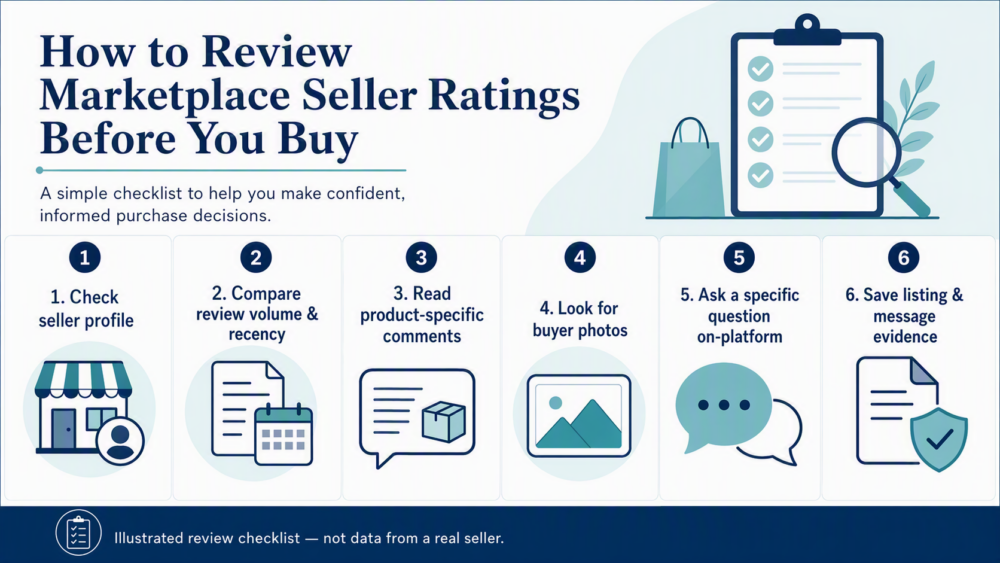
- Screen the DHgate seller and listing. Compare listing age, order history, recent review evidence, variations, shipping terms and the seller’s answers. Use our DHgate seller-check guide before relying on one store.
- Ask for commercial evidence. Request a current invoice format, supplier identity, product specifications, lead times, packaging details and a written description of the fulfillment relationship. Do not treat chat promises as proof of authorization to sell a branded item.
- Order a sample to yourself. Inspect the actual product, packaging, markings and consistency. Photograph the sample yourself and keep the invoice and correspondence.
- Check eBay category and intellectual-property rules. Confirm the item is allowed, the listing will be accurate and you have evidence for authenticity or compatibility claims.
- Model the full cost. Include product price, shipping, duties and taxes, payment costs, eBay fees, returns, defects, customer support and replacement inventory.
- Choose fulfillment deliberately. Hold inspected inventory or establish a documented wholesale-supplier arrangement. Do not use an ad hoc marketplace purchase after each eBay sale.
Our DHgate small-business sourcing risk gate provides a broader supplier, landed-cost and test-order framework. Before committing, also apply the DHgate order-readiness checklist to the actual listing you plan to sample.
Authenticity and listing-content risks
eBay’s counterfeit policy says counterfeit or fake goods are not allowed and that a seller may list an item only when certain it is genuine. Its intellectual-property policy also makes sellers responsible for the authenticity of the item and for ensuring that the product and listing do not infringe another party’s rights.
That responsibility includes more than the physical product. Do not copy a DHgate seller’s product photos or description into an eBay listing unless you have permission to use them. eBay’s policy identifies copied website images and text as possible copyright infringement. Create your own photos and description from the inspected item, and make only claims you can support.
Do not list branded, logo-bearing, “replica,” “dupe” or “inspired-by” goods when authorization or authenticity is uncertain. A seller’s assurance, listing badge or product photo is not enough. If you cannot obtain reliable invoices and product evidence, choose a generic, non-infringing product or do not list the item.
Delivery, returns and customer responsibility
Even when a wholesale dropshipping arrangement is allowed, eBay says the seller remains responsible for safe delivery within the time stated in the listing and for the buyer’s overall satisfaction. You therefore need supplier performance evidence before promising a delivery window.
- Use a conservative handling and delivery estimate based on tracked test orders.
- Know who handles lost parcels, defects, returns and replacement shipments.
- Make sure packaging and invoices do not confuse the buyer about the seller of record.
- Keep enough margin and reserve stock to resolve a failure without waiting on a cross-border dispute.
- Review eBay business policies for payment, shipping and returns before publishing the listing.
When DHgate is and is not a good sourcing fit
DHgate can be useful for discovery, sample orders and comparing independent suppliers. It is a poor fit when you need guaranteed brand authorization, highly consistent regulated products, immediate domestic replenishment or a supplier that will not provide commercial documentation.
A sensible first test is small: choose one generic product with low safety and intellectual-property risk, order samples from more than one seller, inspect them, calculate the true landed and after-sale cost, and confirm your eBay listing and fulfillment model comply before scaling.
Bottom line
Use DHgate as a sourcing marketplace, not as an automatic permission slip for eBay dropshipping. The safest model is to buy and inspect inventory before listing. A direct-fulfillment model requires a genuine wholesale-supplier relationship and still leaves you responsible for delivery, returns, listing accuracy and authenticity. Do not list first and then purchase from a DHgate marketplace seller to ship directly to the eBay buyer.