
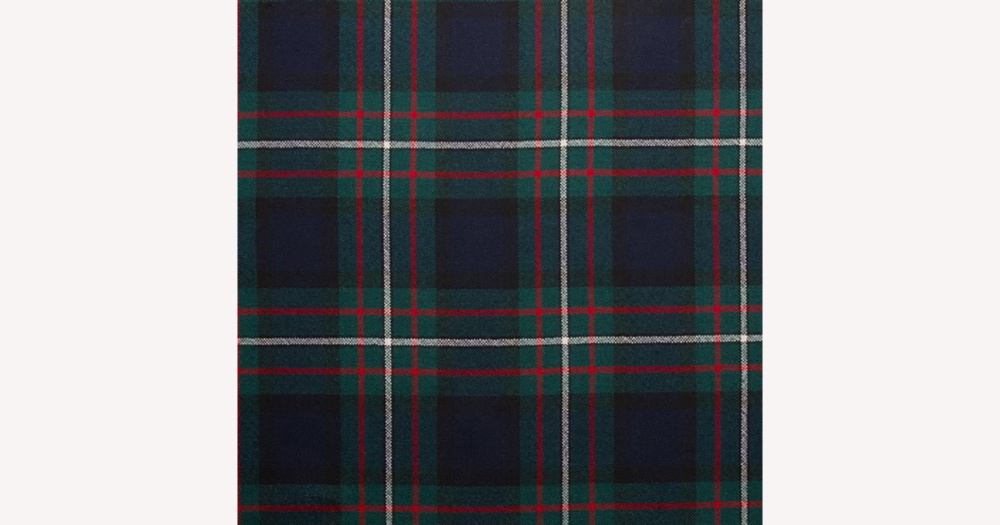
If you search for Ferguson tartan on DHgate, you’re usually seeing pattern-themed fabrics inspired by the Ferguson sett rather than officially registered clan cloth from Scottish mills. That means prices tend to follow textile basics—fibre content, weight, and whether the design is printed or woven—more than clan branding, so understanding those fabric categories is the key to judging value and deciding whether a listing suits your project and budget.
What does “Ferguson tartan” usually mean on DHgate compared with official clan fabric?
On DHgate, a listing that mentions “Ferguson tartan” is usually offering a tartan-style pattern inspired by the Ferguson sett rather than officially registered clan cloth woven by a Scottish mill. Official Ferguson tartan from specialist tartan retailers is typically 100% wool, medium to heavyweight, sold by the metre or yard, and comes with clear information about the mill and pattern registration. Marketplace fabric may echo the same colours and broad layout but rarely includes that level of provenance or certification.
Because of that, DHgate prices tend to track textile and construction details more than clan status. Fibre content is a major driver: lightweight polyester or other synthetics usually sit at the budget end, cotton and blends somewhere in the middle, and heavier wool-like or blend fabrics higher up. Weight or thickness also matters—thinner fabrics marketed for lining, costumes, or decor often cost less than sturdier cloth for skirts or outerwear. Another big difference is whether the pattern is simply printed on the surface or woven in as coloured yarns, with printed plaids usually cheaper than true woven tartans at a similar weight.
Two listings can both use “Ferguson tartan” in the title yet be priced very differently if, for example, one is a lightweight printed polyester suitable for party decor and the other a denser, yarn-dyed blend meant for garments. I would treat DHgate Ferguson-style fabric as visually themed cloth for casual wear, crafts, or home projects unless a seller clearly names a recognised mill and certification, which is uncommon. For buyers who do need stronger assurances about fibre type and behaviour in sewing, it helps to understand the main fabric categories DHgate sellers draw from and how those typically feel and sew.
Common fabric types for Ferguson-style tartan on DHgate and what they’re like to sew
- Budget polyester or other synthetic tartan-style fabrics: These are often the lowest-priced Ferguson-style options, with a crisper or sometimes slippery feel. They can work well for decorations, costumes, tablecloths, and casual garments where low cost matters more than how the fabric breathes or ages.
- Cotton or cotton-blend tartan prints: These usually feel softer and more breathable than straight synthetics and are common choices for shirts, quilting projects, cushions, tote bags, and other crafts. The pattern is typically printed onto the fabric rather than woven in, which keeps costs moderate.
- Poly-viscose blends: These blends aim to mimic the look of wool while being easier to care for and generally cheaper. They’re often used for casual kilts, skirts, school-style uniforms, and everyday wear where you want some drape and movement without the cost of pure wool.
- Wool and wool-like synthetics: Heavier and more structured fabrics, whether real wool or synthetic “wool-feel” mixes, are chosen for garments and projects that benefit from extra body and warmth, such as kilts, tailored skirts, or winter accessories. They usually sit at the higher end of DHgate-style pricing for Ferguson-themed cloth.
- Vague or mixed labels: DHgate sellers may describe the same kind of fabric as “wool material”, “polyester plaid”, “fashion fabric”, or similar, without a clear breakdown. To map a listing into one of these categories you’ll often need to read the fibre content, any mention of weight or GSM, and notes about suggested uses. I personally prefer listings that spell out fibre content, approximate weight, and intended use—such as “suitable for skirts” or “for home decor”—because those signals make how the fabric will behave when I sew it much more predictable.
Typical price tiers for tartan-style fabrics and how to benchmark DHgate offers
For Ferguson-style tartan, pure-wool cloth from specialist Scottish mills usually sits at the high end of the price spectrum, while printed cotton tartans and polyester or other synthetics occupy noticeably lower bands, with poly-viscose somewhere in the middle. That’s why official Ferguson wool from a recognised mill often costs far more per metre than mass-market tartan-style fabric, even when the patterns look similar at a glance.
Thinking in tiers can make DHgate offers easier to judge. Very low prices almost always signal budget synthetics, very lightweight fabric, or a digitally printed pattern rather than a woven wool from a known mill at an incredible discount. Mid-range prices can be reasonable when the listing clearly describes cotton prints or poly-viscose blends and gives basic specs, while any higher-end price should be backed by detailed information on fibre content, weight or GSM, width, and close-up photos that suggest denser or more premium material.
I would personally rather pay a bit more for a listing that spells out fibre content, weight, and width so I can match the fabric to my project than chase the absolute lowest price where those details are missing. For Australian buyers, currency conversion and shipping can nudge the final total up or down, but the key is still where the base fabric price sits in these low, mid-range, or high-end bands compared with the material the seller claims to offer.
How to read a DHgate listing for Ferguson-style tartan fabric
- Start by finding the fibre content or material description. Translate vague terms such as “polyester”, “wool-like”, or “blended fabric” into a broad category—budget synthetic, cotton print, poly-viscose, or wool/wool-like—so you can compare the listing with the price tier you expect for that type.
- Next, look for fabric weight or GSM, or at least descriptors like lightweight, medium, or heavy. Use these clues to decide whether the fabric is better suited to garments, accessories, or lighter crafts, and to check that the claimed weight fits the price level.
- Confirm the fabric width, in centimetres or inches, so you can estimate how many units you need for your pattern pieces or project dimensions. Wider cloth can make a higher price more reasonable, while very narrow fabric may mean you need to buy more units than you first assumed.
- Study the pattern scale in the photos. Look at the size of the squares or stripes relative to any ruler, mannequin, or hand shown so the Ferguson-style sett isn’t so large or small that it overwhelms or disappears on your finished project.
- Check the minimum order quantity, the unit type (metre, yard, piece), and whether multiple units are sent as one continuous length or separate cuts. This affects how you lay out pattern pieces and whether a seemingly cheap price per unit actually covers all the fabric you need.
- Read any care instructions, such as washing temperatures, ironing guidance, or dry-clean recommendations, to confirm that the fabric’s care needs match how you plan to use and maintain the finished item.
- I tend to prioritise listings that clearly state fibre content, width, and weight; if key details like weight or width are missing, I’d be very cautious about choosing that fabric for fitted or structured garments and would treat it more as an option for low-stakes or flexible projects instead.
DHgate-specific checks to judge seller reliability and order terms
- Check the seller’s overall rating and the number of completed orders or reviews, and try to avoid very new or poorly rated sellers for Ferguson-style tartan fabric when you have other options.
- Open buyer reviews and photos to see how the real fabric’s colours, weight, and pattern compare with the listing images, paying attention to any comments about colour shifts, thin fabric, or off-pattern designs.
- Scan all product photos for a consistent Ferguson-style pattern and be cautious of listings that mix multiple tartans or show designs that don’t match the title and description.
- Confirm shipping costs, estimated delivery time to Australia, and whether tracking is provided so you can judge the total cost and timing realistically rather than just the fabric price per unit.
- Look for information on returns or refunds, including how the seller and DHgate handle problems if the fabric arrives different from the description or photos.
- Briefly familiarise yourself with DHgate’s standard order, payment, and dispute processes, including the platform’s habit of holding payment until you confirm receipt and your ability to open a dispute if the goods are not as described.
- I would personally favour DHgate sellers with higher ratings, plenty of fabric-specific reviews, and clear shipping and refund terms, even if their prices are slightly higher than very new or poorly reviewed alternatives.
Trading off DHgate tartan fabric savings against specialist-mill authenticity
| Option | Typical price level | Authenticity and provenance | Best suited projects | Main trade-offs |
|---|---|---|---|---|
| DHgate Ferguson-style tartan fabrics | Generally lower per-unit prices, especially for synthetics and cotton or mixed-material cloth | Usually tartan-style patterns inspired by Ferguson colours and layout without formal clan certification or detailed mill origin | Everyday clothing, costumes, crafts, cushions, table linens, and decor where pattern accuracy and long-term provenance are less critical | You save money and get easy access to Ferguson-style designs, but you accept looser control over exact sett accuracy, fibre content, and long-term durability compared with official clan cloth. |
| Specialist-mill official Ferguson tartan cloth | Higher per-metre prices, particularly for pure-wool fabric in defined weights | Emphasis on recognised Ferguson clan patterns, often pure wool from named mills, with clear information about weave, weight, and origin | Formal kilts, clan events, uniforms, heirloom garments, and projects where pattern authenticity, fabric origin, and longevity matter most | You pay more and may need to order from overseas specialists, but you gain verified pattern accuracy, provenance, and traditional wear standards; I’d personally choose this route for clan wear or long-term formal use, and lean on DHgate only for budget-friendly, low-stakes projects where a compromise on authenticity is acceptable. |
Common pitfalls when buying Ferguson-style tartan fabric on DHgate
- Marketplace Ferguson-style patterns may differ from traditional Ferguson setts. Stripe spacing, colour balance, or the way the lines intersect can be slightly off, which matters for formal clan wear or projects that rely on reference images. Reduce this risk by comparing all listing photos carefully, zooming in on the pattern repeat, and checking buyer pictures to see how closely the fabric actually matches the Ferguson layout you expect.
- Colours can shift between on‑screen images and the printed fabric, especially with budget synthetics or digitally printed tartans. Greens may lean more blue or yellow, reds may be duller or brighter, and contrast can change under different lighting. Treat the main product photo as approximate, read reviews for comments on colour, and look for buyer-uploaded photos taken in everyday light before deciding whether the shade will suit your project.
- Fabric often arrives lighter, thinner, or stiffer than you imagined when the material description and GSM or weight were vague. A listing that only says “polyester tartan” or “wool-like fabric” can cover very different qualities, from floaty costume cloth to rigid decorative fabric. Check fibre content, any stated GSM or weight, and the way the fabric hangs in photos; if those details are missing, assume the cloth is at the lighter or cheaper end and budget for that rather than expecting kilting-grade wool.
- Units and cut lengths can be confusing. It’s easy to mix up metres and yards, overlook that dimensions refer to pre-cut pieces, or assume that ordering multiple units will arrive as one continuous length when the seller actually cuts separate panels. Read the unit description closely, confirm whether the price is per metre, yard, or piece, and look for a clear statement about how multiple units are cut; if it isn’t obvious, use the Q&A or messaging tools to ask before you order.
- Each of these pitfalls usually traces back to an avoidable oversight: not checking fibre content and weight, skimming over pattern details and scale, assuming colour accuracy from a single image, or skipping unit and measurement checks. Slow down at those points in the listing, and compare what’s written to what you see in photos and buyer images so the fabric behaves more like you expect when you sew it.
- Treat extremely cheap offers or very sparse listings as higher-risk choices. When a price sits well below what you’d expect for that fabric type, and the description barely mentions material, weight, units, or pattern accuracy, you’re trading clarity for savings. I personally avoid listings with mixed pattern photos, unclear unit descriptions, or no real-life buyer pictures unless I only need the fabric for a low-stakes craft where a rough match on colour and feel is acceptable.
If you need highly authentic Ferguson tartan, is DHgate enough?
If I need highly authentic Ferguson tartan for formal clan wear, is buying from DHgate enough?
DHgate is usually best treated as a source of Ferguson-style tartan for budget, casual, or decorative projects rather than for highly authentic clan wear. Most DHgate listings can’t reliably guarantee that the pattern is a registered Ferguson sett, that the cloth comes from a specific Scottish mill, or that it meets the traditional wool weights and standards expected for ceremonial kilts and long-term clan garments.
By contrast, specialist tartan retailers and clan-focused shops typically highlight officially branded Ferguson tartan fabrics and accessories, often in pure wool with defined weights and documented provenance. Those options cost more, but they’re designed for formal wear, uniforms, and heirloom pieces where pattern accuracy and mill origin matter.
A practical way to decide is to match the source to your project:
– For casual clothing, costumes, crafts, or home decor where you mainly want a Ferguson-style look at a lower price, DHgate can be a sensible choice—provided you still follow the earlier listing checks on fibre content, weight, width, pattern photos, and seller ratings.
– For formal clan events, ceremonial kilts, or garments you intend as long-term heirlooms, treat DHgate as unlikely to meet strict authenticity expectations and plan separate research into specialist tartan retailers or clan shops instead.
I personally reserve DHgate for lower-stakes projects where a close-enough Ferguson-style pattern is acceptable and I’m prioritising budget. When authenticity, pattern registration, and fabric origin sit at the centre of the project, I’d rather pay more and order from a specialist tartan supplier than rely on a marketplace listing.