
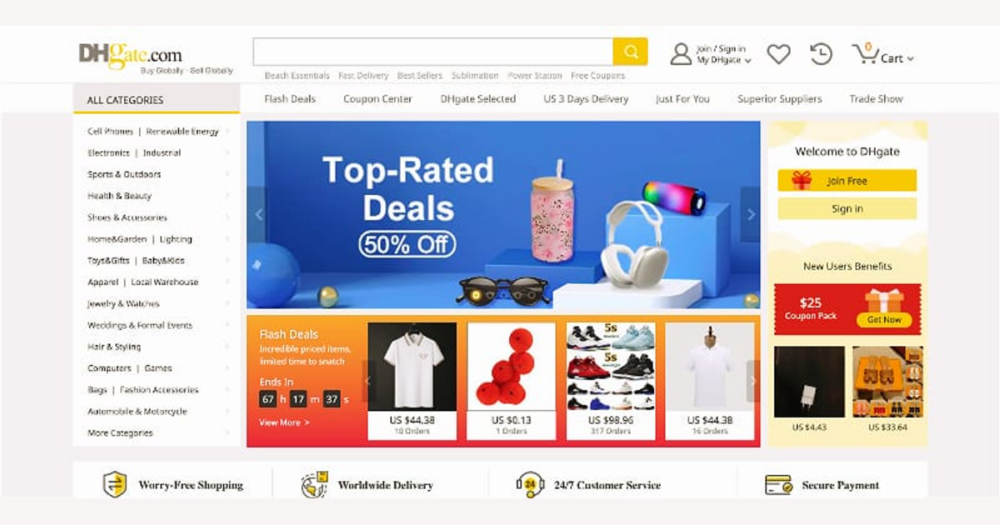
On DHgate, a real deal on auto accessories isn’t just the cheapest listing—it’s the right part for your vehicle from a seller with clear terms and acceptable shipping and refund conditions. This guide shows you how to start with precise vehicle details, search and shortlist smarter, then read specifications, materials, seller records, and protections so you can weigh total cost against risk instead of chasing discounts alone.
Start with the right search workflow on DHgate
- Confirm your exact vehicle details and accessory requirements before you open DHgate: write down make, model, year, trim, and any relevant OEM part numbers or dimensions so you can spot true matches and ignore vague results.
- On DHgate’s search bar, enter specific queries such as “2015 Honda Civic floor mats” rather than just “floor mats,” then use category filters, price ranges, and sort options to hide obviously irrelevant or suspiciously under-described listings.
- From the filtered results, open several promising listings in new tabs and quickly note each one’s headline specs, compatibility claims, photos, and total cost including shipping so you end up with a small shortlist that appears to fit your vehicle instead of grabbing the first item with a flashy discount.
Read specifications and compatibility details carefully
Once you have a few candidate listings open on DHgate, focus first on the concrete specs that determine whether an accessory actually fits your vehicle. For physical parts, look for a clear dimensions section (length, width, height or diameter), mounting points or bolt patterns, and an explicit fitment list that names supported vehicle makes, models, years, and sometimes trims. This information may appear in a bullet-style specification list, a fitment table, or near the product description; what matters is that you can match the listed vehicles and measurements to your own car rather than assuming similar-looking parts will fit.
For electrical accessories such as lights, chargers, or dash cams, check that the listing specifies the operating voltage (commonly 12V for passenger cars), wattage or current draw, connector type, and any notes about fuses or polarity. These specs must line up with your vehicle’s power system and connection points; an accessory that draws more current than a circuit can safely handle, or uses the wrong plug type, may not work properly and could be unsafe. Treat labels like “universal fit” with caution: they can be acceptable for genuinely generic items such as seat-back organizers, but they are not enough for parts that depend on specific vehicle geometry, wiring, or mounting hardware.
When the specs and compatibility details are vague, incomplete, contradictory, or look like a generic copy-paste from other listings, that uncertainty becomes part of the deal—low price but unknown fit. In those cases, a cautious approach is to message the seller with precise questions about your make, model, year, and any key dimensions, and only proceed if they provide clear, consistent answers. If they cannot, or the listing remains unclear, it is usually better to skip that offer and choose a slightly higher-priced listing with explicit, verifiable specs and compatibility information. I would rather pay a bit more for a DHgate listing that lets me confirm fit and basic technical requirements upfront than risk saving a few dollars on an accessory that may arrive unusable.
Example layout of a DHgate-style product page where specification bullets, compatibility notes, and technical details are grouped near the main description and images—these regions are where you should verify dimensions, supported vehicle models/years, and electrical requirements before buying.
Use materials and build clues to gauge basic quality
After confirming that an accessory’s specs and fitment look right, consider whether it is made well enough for everyday use. On DHgate, clear material descriptions are one of the most useful clues. Listings that name specific materials—such as ABS plastic for trim pieces, stainless steel for exhaust tips or fasteners, TPR or silicone rubber for mats and seals, and named fabrics for seat covers—tell you more than vague phrases like “high-quality material” or “premium plastic.” Specific material names let you judge whether the part is likely to feel rigid or flexible, resist corrosion, and handle heat or UV exposure in the areas of your car where it will sit.
Photos matter just as much as text. I pay close attention to close, well-lit images that show seams, stitching, joints, and mounting hardware. Consistent stitching, clean edges, and solid-looking brackets or clips suggest more careful construction; uneven seams, thin metal, rough plastic flashing, or hardware that looks flimsy are warning signs. Zoom in on areas that will carry weight or stress—mounting points, buckle attachments, hinges, and clips—and ask yourself whether they look sturdy enough for how you plan to use the accessory.
Usage descriptions can add context, but bold promises deserve caution. Claims like “lasts 10 years,” “never fades,” or “improves horsepower” are marketing unless you can back them up with independent reviews or tests. Treat those lines as sales language, not guaranteed outcomes, and focus instead on the grounded details you can actually see and verify: materials, construction, and realistic notes about how and where the accessory is meant to be used.
For accessories that mostly change appearance—such as decorative trims, stickers, or simple interior accents—I’m willing to accept a bit more uncertainty about materials as long as compatibility and basic safety aren’t compromised. If an item will affect comfort, carry load, or live near safety-critical systems, I treat clear materials and honest-looking photos as worth paying a little extra for, rather than chasing the cheapest, most aggressively advertised option.

A close, well-lit view of automotive parts being measured and inspected highlights the kind of detail you should look for in DHgate listing photos—edges, surfaces, and hardware that reveal whether materials and construction appear consistent and reasonably sturdy.
Check seller track record and policies
Even a well-made accessory can turn into a frustrating purchase if the seller is unreliable, so I treat DHgate seller indicators as part of the deal. Start with the basics: overall rating score, the number of completed transactions or followers, and how many reviews the seller has across their products. A higher rating backed by substantial, recent feedback generally signals a more established operation than a similar score built on only a handful of orders.
Don’t stop at the numbers—read the review content. Scan comments for concrete experiences: whether the accessory actually fit the buyer’s vehicle, how the materials and build quality felt in use, how long delivery took, and how the seller handled questions or problems. One very positive or very negative review can be an outlier; patterns across many orders are more useful. If multiple buyers mention poor fit, fragile parts, or slow, unresponsive communication, I treat that as added risk, even if the headline rating looks acceptable.
Policy sections on shipping, returns, and communication are another important clue. On DHgate, sellers vary in how much detail they provide; I’m more comfortable with listings that spell out shipping methods, estimated handling times, return or replacement conditions, and how quickly they aim to respond to messages, rather than short, generic assurances like “we will solve any problem.” Clear, specific policies make it easier to understand what will happen if something goes wrong and suggest the seller has thought through their processes.
Because no rating system or policy text can guarantee a perfect outcome, I use these signals as risk indicators, not promises. In practice, that means I often choose a listing with a slightly higher total price if the seller has robust, recent feedback and well-defined policies, instead of chasing the cheapest offer from a near-anonymous account. For auto accessories—especially anything that affects daily use or sits near safety-related parts—that trade-off in favor of stronger seller records is usually worth it.
Review order details and payment protections
- Confirm that the order form on DHgate still matches the research you’ve done: the correct vehicle-specific variant is selected, along with the right size, color, and quantity. If you’ve checked OEM part numbers or fitment details, make sure the chosen option explicitly matches those specs before you move on.
- Review the shipping line carefully. Check that the method (economy, standard, or faster) is the one you expect, note its cost, and compare the estimated delivery window with what you’re willing to wait for this accessory. Then look at the order total, including any displayed taxes or extra fees, so you’re judging the real price rather than just the item cost.
- Choose a payment method that keeps the transaction inside DHgate’s system and offers typical card or wallet protections, and avoid any request from the seller to pay via off-platform channels such as direct bank transfer, separate apps, or direct crypto. I’m willing to pass on a small discount or a seller’s “special price” if it means sticking to platform-supported payment flows that leave a clearer record and standard protections in place.
Factor shipping and delivery into the real deal price
With the order details and payment settled, treat shipping as part of the auto accessory’s real price on DHgate, not an afterthought. Listings can offer different methods—economy, standard, or faster options—at different rates, and the true cost of the deal is the item price plus the shipping you actually select. A very cheap accessory with high shipping can end up costing more overall than a slightly pricier item with moderate shipping.
Delivery time and tracking are risk indicators as much as convenience factors. Estimated delivery windows are only approximate and can stretch or shrink depending on your location, customs, and the carrier, but they still show whether you’re waiting a week or a month. Lack of tracking, or very long windows with vague status updates, adds uncertainty: if the accessory is something you’ll use regularly or that touches minor safety, that uncertainty can make a low headline price less attractive.
In practice, I often treat transparent, trackable shipping with moderate speed as part of a good deal, even if it isn’t the absolute cheapest option. A listing that clearly explains the shipping method, gives a reasonable delivery estimate, and offers usable tracking usually beats one that pairs a rock-bottom item price with slow, opaque shipping and minimal tracking. When you compare DHgate auto accessory listings, weigh those shipping and delivery details alongside specs, materials, and seller record before calling any offer a true bargain.
Prepare for disputes, returns, and refunds
Good deal vs. risky bargain: how to weigh the trade-offs
| Factor | Good deal characteristics | Risky bargain characteristics |
|---|---|---|
| Specs and compatibility | Specific fitment details that match your vehicle (make, model, year, trim) and clear dimensions, connector types, or ratings that align with what your car requires. | Generic or “universal” claims for clearly specific parts, vague or missing dimensions, and copy-pasted specs that don’t clearly match your vehicle. |
| Materials and photos | Named materials (such as ABS plastic, stainless steel, silicone), consistent close-up photos showing how the part is built, and realistic usage descriptions. | Only buzzwords like “premium quality” without material details, few or low-quality photos, or images that look inconsistent across variations. |
| Seller ratings and feedback | Solid overall rating backed by substantial, recent feedback across multiple products, with reviews that mention delivery and item matching the description, plus clear policies on shipping and returns. | Thin or very mixed feedback, long gaps in reviews, complaints about non-delivery or misdescribed items, and vague or missing information about shipping, returns, or communication. |
| Shipping cost and speed | Moderate, clearly stated shipping cost, reasonable estimated delivery window, and usable tracking that lets you follow the package—especially for regularly used or safety-adjacent accessories. | Very cheap item price paired with high or unclear shipping, very long or vague delivery estimates, or no meaningful tracking, making delays or non-delivery harder to spot and prove. |
| Disputes, returns, and protections | Listings and seller pages that spell out return or replacement conditions, mention a return window, and stay within DHgate’s normal dispute processes, giving you a clear path if something goes wrong. | No mention of returns or replacements, unclear or restrictive conditions, or suggestions to handle problems through private arrangements or off-platform payments that sit outside DHgate’s protections. |
| Overall trade-off | Total price (item plus shipping) is slightly higher but most factors fall into the good-deal column, reducing compatibility and non-delivery risk—ideal for functional or safety-touching accessories. | Headline price is very low but multiple red flags appear in specs, materials, feedback, shipping, or protections; you might only accept this risk for non-critical decorative items after confirming basic fitment and seller legitimacy. |
Your next steps on DHgate, in plain terms
- Confirm your exact vehicle details and accessory requirements (make, model, year, trim, and any key specs or part numbers) so you know what a true match looks like.
- Search DHgate with specific, vehicle-based keywords and use categories or basic filters to remove obviously irrelevant or generic listings.
- Open several promising listings and compare their specs and explicit compatibility information, keeping only those that clearly fit your vehicle.
- Scan each remaining listing for stated materials and clear photos that show how the accessory is built, treating bold performance claims as marketing unless they’re well supported.
- Check the seller’s ratings, feedback volume, review patterns, and policy clarity, preferring sellers with stronger records even if their price is slightly higher.
- Before paying, verify that the order form reflects the correct variation and total cost (item plus shipping and any taxes), and use payment methods processed through DHgate rather than off-platform requests.
- Include shipping cost, delivery time, and tracking in your value judgment, glance at the stated return and dispute terms, and then choose the listing that balances clear fitment, materials, and protections against price—accepting rock-bottom deals mainly for low-stakes decorative accessories that still pass the basic checks above.
Common questions when comparing DHgate auto accessory listings
How many DHgate listings should I compare before deciding on an auto accessory?
You don’t need to compare everything, but it’s wise to look at at least a handful of listings—often three to five—for the same accessory. Make sure each candidate has clear specs and compatibility information, then compare materials, photos, seller ratings, shipping cost and speed, and stated return or dispute terms. If one listing looks much cheaper but is weaker on these points, treat that as added risk rather than an automatic win on price.
What should I do if the compatibility information only lists some vehicle variants or feels incomplete?
Treat partial fitment details as a real uncertainty. If your exact make, model, year, or trim isn’t clearly listed, or the dimensions and connector types don’t fully match what you know about your vehicle, message the seller with specific questions and ask them to confirm fit for your car. If they can’t give a clear, consistent answer—or don’t respond—it’s usually safer to skip that listing and choose one with explicit fitment and technical details, especially for functional or safety-touching accessories.
How should I interpret mixed or conflicting reviews on a DHgate auto accessory listing?
Look for patterns over time rather than focusing on one glowing or one very negative comment. If most recent reviews agree that the accessory fits as described, arrives in acceptable condition, and the seller responds to issues, mixed feedback may simply reflect individual expectations. If you see recurring complaints about poor fit, fragile materials, misleading photos, slow shipping, or unhelpful communication, treat that pattern as a warning sign—even if the overall rating isn’t terrible—and consider choosing a listing or seller with more consistently positive, detailed feedback.
When is it worth paying more for a better-rated DHgate seller or clearer listing instead of choosing the cheapest option?
For any accessory you’ll use regularly or that sits near safety-related parts—such as lighting, mounts, covers, or items that affect visibility or comfort—I would usually accept a slightly higher total price in exchange for precise specs, explicit compatibility, solid materials, strong seller ratings, and clear return and dispute terms. The cheapest option is easier to justify only for low-stakes decorative items, and even then it should still pass basic checks: your vehicle fitment is reasonably clear, the seller looks legitimate, and the shipping and protections stay within DHgate’s normal processes.