
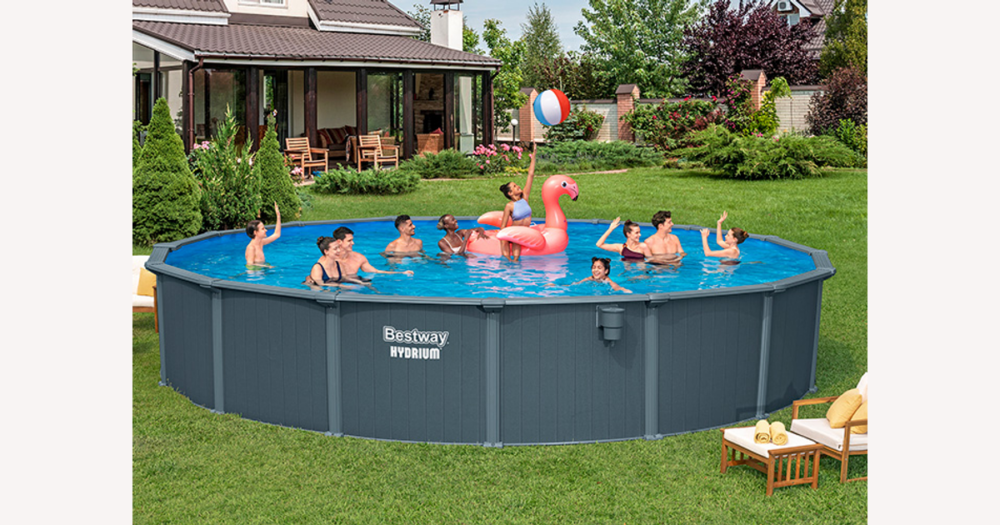
For Bestway Hydrium pools in Canada, you should not assume Costco or Walmart will reliably stock the specific replacement parts you’ll need over the life of the pool; they focus on kits and generic supplies, so critical Hydrium components will often have to come from brand sites or marketplaces like DHgate where you must check seller terms and landed cost carefully.
How reliably can you get Hydrium-specific replacement parts from Costco or Walmart in Canada?
For Bestway Hydrium pools in Canada, Costco and Walmart are not dependable long-term sources for brand-specific replacement parts like custom liners, branded fittings, caps, or wall sections. Big-box retailers tend to focus on selling complete pool kits and generic supplies, and any Hydrium-specific hardware they carry usually appears only while those kits are actively promoted before fading as assortments change.
You can usually count on these stores for generic consumables and common accessories—chemicals, test kits, standard hoses and clamps, and simple adapters that follow broad pool-industry sizing—and you may occasionally find compatible parts that happen to fit a Hydrium setup. But stock varies by season, store, and region, and you cannot count on reliable, Canada-wide availability for model-specific Hydrium components over the life of the pool.
If I were buying a Hydrium pool and planning to keep it for several years, I would treat Costco and Walmart as convenient sources for everyday consumables, not as my safety net for critical replacements. I would plan from the start to mix channels: check Bestway and other brand sites for structural parts, and use DHgate or similar marketplaces when I need compatible components, while paying close attention to seller terms, shipping costs, and dispute protections so the total landed cost of keeping the pool running stays predictable. For a one-season, near-disposable use, that multi-channel planning matters less, but for a multi-year asset it is essential.
Which Hydrium parts are likely to be generic versus brand-specific?
Most Hydrium owners will face two very different categories of replacement needs. On one side are generic consumables and accessories: chlorine tablets and other chemicals, shock products, test kits, standard 1.5-inch hoses and clamps, and simple adapters that follow broad industry standards. These items are designed to work across many above-ground pool brands, including Hydrium, because they rely on common diameters, threaded connections, and chemistry rather than model-specific shapes.
On the other side are Hydrium-specific structural components: custom-fit liners sized to particular pool dimensions, steel wall panels, top caps and decorative rails that match a specific profile, and proprietary connection hardware that ties the frame, walls, and plumbing together for a given Bestway Hydrium model and production run. These parts are engineered as a system, so small differences in design can make an aftermarket or cross-brand piece unusable even if it looks similar.
- Treat generic supplies and standard-sized accessories as “locally easy”: they are the kind of products Costco, Walmart, and local pool shops routinely stock, so it is reasonable to plan on buying chemicals, test kits, and common hoses or clamps from nearby retailers when you need them.
- Assume Hydrium-specific structural hardware will be “online or brand-channel” territory: custom liners, wall panels, top caps, and proprietary fittings are far less likely to appear consistently in big-box assortments, so you should budget and plan to source them through Bestway, specialized pool parts sites, or marketplaces like DHgate instead.
- Model your long-term Hydrium ownership costs using this split: everyday consumables are covered locally with relatively predictable pricing, while any major structural repair or replacement should include the possibility of ordering from brand or marketplace channels, with extra attention to shipping, duties, and the risk that a key part may become harder to find over time.
A simple sequence to plan Hydrium replacement sourcing (including DHgate)
- List the Hydrium components that would be most disruptive or expensive to replace if they failed—liners, pumps, filter elements, hoses, fittings, caps, and wall sections—so you know which parts drive your long-term cost and risk.
- Use the Hydrium manual or Bestway documentation to record exact measurements, connection types, model numbers, and any compatibility notes for each critical component; treat these specs as your reference when comparing options.
- Check local options first by matching those specs against generic items at Costco, Walmart, and Canadian pool shops, identifying which needs can be met with standard sizes or broadly compatible parts and which clearly cannot.
- For parts that look brand-specific or uncommon, review offers on DHgate and other marketplaces, but evaluate total landed cost—item price plus shipping, duties, and taxes—alongside estimated delivery time and how that timing fits your swimming season.
- Before relying on a marketplace listing as your main backup for a critical part, review DHgate’s platform protections and the specific seller’s policies; if replacement sourcing at reasonable landed cost looks shaky, treat the pool as closer to a one- or two-season purchase rather than a long-term asset.
Cost and risk trade-offs: local retailers versus DHgate for Hydrium parts
| Channel | Typical strengths for Hydrium-related buying | Cost pattern (conceptual) | Speed and availability pattern | Returns, refunds, and dispute handling | Best use in a Hydrium parts plan |
|---|---|---|---|---|---|
| Big-box retailers (Costco, Walmart, local chains) | Reliable access to generic supplies and standard-sized accessories; convenient for routine chemicals, test kits, and common hoses or clamps. | Often higher per-item prices than marketplaces, but costs are clearer up front and easier to predict over time. | Fast, in-season availability from local stock with minimal shipping delays; good for urgent fixes and day-to-day needs. | Straightforward store or mail-back returns under retailer policies; issues are resolved directly with the retailer rather than through a separate platform system. | Use for routine, time-sensitive, and generic items where predictable access and simple returns matter more than chasing the lowest possible price. |
| Marketplaces (DHgate and similar) | Broad variety of Hydrium-compatible or aftermarket components, including harder-to-find parts that may not be stocked locally. | Potentially lower upfront prices, but total landed cost depends on international shipping, duties, taxes, and currency, which can narrow or erase savings. | Slower delivery with variable shipping times; risky for mid-season emergencies unless you pre-buy spares and plan around lead times. | Issues go through platform dispute mechanisms and seller policies, which can be effective but more complex and time-consuming than local store returns. | Use for brand-specific or uncommon parts once you’ve checked specs carefully and confirmed that landed cost and DHgate protections are strong enough to keep long-term ownership costs predictable. |
Why discontinued or hard-to-match Hydrium parts make DHgate terms critical
How to verify compatibility and reliability when ordering Hydrium parts via DHgate
- Start with the Hydrium manual or product documentation and capture exact specifications for any part you might replace: diameters, lengths, wall height, thread type, and connection style, plus any stated compatibility notes.
- Match those specifications carefully against DHgate listings. Look for explicit measurements and connection types that align with your manual, and ignore product titles or photos that don’t back up the fit with clear technical detail.
- Check more than one listing for the same type of part. When several sellers describe a component with consistent dimensions and terminology, the risk of a one-off, poorly documented item is lower than if only a single vague listing exists.
- Keep cross-brand substitutions to lower-risk, non-structural pieces such as hoses, clamps, and simple adapters, where standard sizes are common and a mismatch is more likely to be an annoyance than a safety issue.
- Avoid using unverified alternatives for structural or safety-critical components—wall panels, load-bearing fittings, or liners designed for a specific wall height—unless you have clear, authoritative confirmation that the part is meant for your exact Hydrium model.
- I would be comfortable mixing brands for straightforward parts like hoses and adapters once the specs line up across multiple listings, but I’d be very cautious about substituting cheaper structural components just to save money; with those, a poor fit or failure can shorten the pool’s lifespan or introduce avoidable risk.
FAQ: Do Costco or Walmart purchases affect DHgate protections for Hydrium parts?
If I buy a Hydrium pool from Costco or Walmart, does that change DHgate’s refund or dispute options when I later buy replacement parts there?
No. Costco, Walmart, and similar retailers only stand behind items bought through their own channels, under their own return and warranty policies. DHgate’s buyer protections and dispute mechanisms apply only to transactions completed on DHgate.
If a replacement liner, fitting, or other Hydrium part sourced from DHgate fails, you would normally resolve the issue through DHgate’s platform dispute and refund process, not through Costco or Walmart—even if the original pool kit came from a big-box store. The retailer will not usually accept returns or provide coverage for marketplace purchases.
When you plan long-term Hydrium ownership, treat each channel separately: evaluate Costco or Walmart’s coverage for the original pool kit on its own terms, and evaluate DHgate’s protections, seller policies, and evidence requirements for each aftermarket part independently. Don’t assume one platform’s policy will backstop problems with purchases made on another platform.