
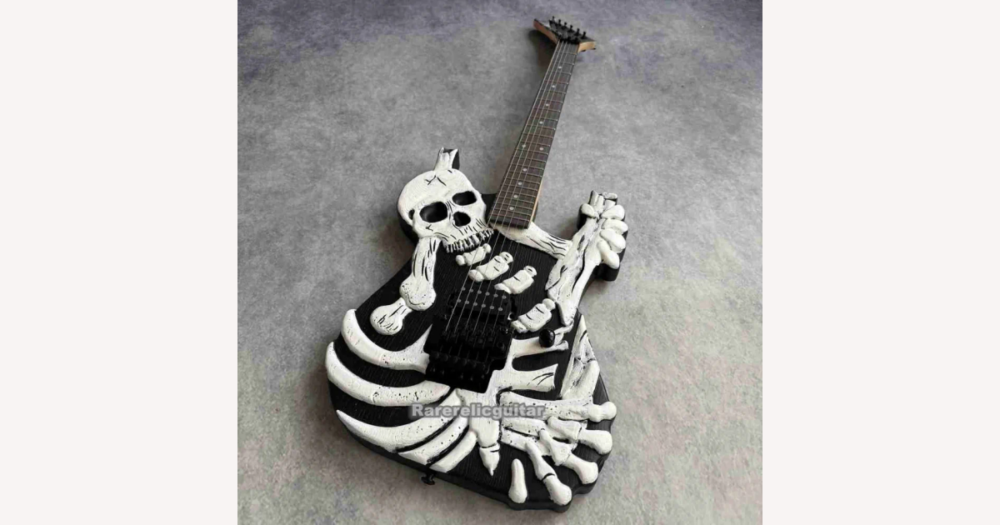
DHgate is a useful place to explore skull-themed electric guitars, but it doesn’t offer a neat “custom skull” category or guaranteed one-off builds. You’ll get better results by combining specific search keywords with careful reading of each listing’s photos, specs, and customization notes, then matching what you find to the design styles and build quality you actually care about. This guide focuses on those details so you can enjoy bold skull artwork without overlooking the practical checks—materials, hardware, seller reliability, and refund terms—that prevent a striking guitar from turning into a regret.
How to search for skull-themed electric guitars on DHgate
On DHgate, there isn’t a dedicated category for “custom skull electric guitars,” so you’ll mainly rely on search keywords and careful browsing. Start with phrases like “skull electric guitar,” “skull design guitar,” “skull body guitar,” “skull inlay,” or “skull graphic guitar,” and try related terms such as “bones,” “skeleton,” or “flame skull.” This helps surface a mix of full guitars, replacement bodies, and sometimes decorative pieces that use skull imagery.
Once you run a search, nudge the results toward actual instruments. Where filters are available, move into musical instruments and guitar categories, and skim the thumbnails for clear photos of full guitars rather than generic skull artwork or random decor. If a thumbnail looks like a mockup or a flat graphic with no visible hardware or neck, treat it as a sign that you might be looking at a skin, decal, or art item rather than a complete, playable guitar.
On DHgate, words like “custom,” “DIY,” or “personalized” usually point to selectable options, not a one-off luthier build. In many skull guitar listings, “custom” means you can choose among preset colors or graphics, pick different hardware configurations, or add small personal touches like a name or logo. A completely new body shape or original skull artwork created just for you is not the default and typically won’t be spelled out as a standard service in the listing.
Because of that, it’s important to click into promising listings and immediately read how the seller defines those options. Look for clear menus, color charts, pattern choices, and any notes about what you can and can’t change—sometimes in sections that mention leaving a note with your order. I’d personally rather start with listings that are upfront about what “custom” includes and show multiple example photos than chase vague claims like “any design available” with no details. As you browse, save or favorite a few listings that closely match your visual idea of a skull guitar; you can then bring those short-listed options into the deeper spec and seller checks described later in the guide.
Common skull design styles you’ll see
When skull-themed guitars start appearing in search, the next task is identifying the design each listing actually uses. The most common approach on DHgate is printed or UV graphic tops: large skull images applied to the body or pickguard, often as decals or printed films under a clear coat. These can deliver bold, high-contrast visuals at relatively accessible prices, but the long-term look depends on how well that clear coat was applied—thin or uneven finishing is more likely to chip or fade around edges and high-contact areas.
You’ll also find listings that describe hand-painted or airbrushed skull finishes. These tend to be more individual and may sit higher on the price and uniqueness spectrum, because the seller or artist isn’t just applying a standard print. The trade-off is that your satisfaction hangs heavily on the painter’s skill and on how honest and detailed the photos are. If the listing shows close-up shots from multiple angles and consistent lighting, it’s easier to judge the quality of the lines and shading than when you only get one glossy, heavily edited hero image.
A smaller but striking category is sculpted or skull-shaped bodies, where the guitar’s outline or carved top mimics skulls or bones. These designs can be visually extreme and feel like display pieces or stage props as much as instruments. Sculpted bodies may be heavier or less ergonomic than standard shapes, and cutaways or horn designs can change how the guitar balances on a strap or in your hands. Availability is usually more niche, and while they may look more unique than printed graphics, they still follow repeatable patterns rather than being carved anew for each buyer.
At the subtler end, some guitars use skulls as accents: fretboard inlays, headstock logos, skull-shaped control knobs, or themed hardware. This approach adds character without dominating the entire instrument, and it’s often easier to treat these guitars like mainstream models when you evaluate specs and playability. Because the skull element is smaller, any cosmetic wear or minor finish issues tend to be less noticeable than on a full-body graphic.
Before you go deeper into specs and seller checks, decide whether you’re really looking for a pure display piece, an eye-catching stage guitar, or a more discreet accent instrument. That choice affects how much weight you give cost, durability, and build details. I’d lean toward designs where the skull treatment doesn’t completely obscure practical information about the guitar—where you can still clearly see the body shape, control layout, and neck access—especially if you plan to play it regularly rather than just hang it on a wall.
What to check in the guitar’s materials and build
After choosing a skull style you like, evaluate the guitar underneath as you would any other electric: the visuals are the hook, but the basic build still decides whether it feels like an instrument or a prop. In DHgate listings, start with the body or base material. When a seller names specific woods such as basswood or mahogany, you have a clearer sense that it’s built like a typical solid-body guitar. Vague phrases like “wood,” “composite,” or “alloy” suggest you might be looking at a decorative shell or mixed materials where weight, resonance, and durability are harder to predict.
Next, look closely at the neck. Good listings say whether it’s bolt-on, set neck, or through-body, and name both the neck and fingerboard materials. If the entire neck section is silent—no construction type, no mention of fretboard wood—that’s a caution sign if you plan to play regularly, because the neck is where stability, feel, and basic playability live. For a stage or practice guitar, I’d rather accept slightly less extreme skull sculpting in exchange for a listing that is upfront about neck specs.
Hardware and electronics are the other big clues. Check whether the bridge is fixed or has a tremolo, what kind of tuners are used, and how the pickups are described—single-coil, humbucker, or just “pickup.” Many skull-themed guitars sit in the budget-to-midrange space and use generic hardware unless the seller clearly upgrades or brands it, so it’s safer to assume middle-of-the-road quality unless the listing gives you a reason not to. A simple, clear control layout (volume, tone, selector switch) also makes day-to-day use more predictable.
The finish and artwork method matter both for looks and for how the surface might age. Listings may mention printed wraps, UV graphics, hand-painting, spray finishes, or carved tops. Notes about clear coat or protective lacquer help you guess how resistant the design will be to chips, scratches, and fading, especially around edges and high-contact areas. When a seller shows close-up photos and names the finish steps, it’s easier to judge what you’ll actually hold than when the skull artwork is just described in one line.
Finally, check any sizing and fit details: scale length, overall dimensions, and stated weight. Sculpted skull bodies or unusually shaped outlines can be heavier, more front-heavy, or less balanced on a strap than standard designs. If those numbers aren’t listed, look carefully at photos of the guitar on a person or hanging on a wall to get at least a rough sense of how big it is.
If you mostly want a wall display or photo prop, you might accept sparse specs as long as the skull design looks right and the size roughly fits your space. If you plan to gig, practice, or record with the guitar, it’s worth prioritizing listings that spell out body material, neck construction, hardware, finish, and basic sizing. I’d personally trade some wild skeletal carving or novelty details for clearer specs and better-described hardware, because that lowers the chance of regretting the purchase once you plug in and play.
Non-custom vs semi-custom skull guitars on DHgate
- Non-custom or standard skull designs: These are factory-finished guitars where the skull artwork is fixed—often a single graphic or set of inlays repeated across many instruments. You may be able to choose options like overall color or pickup configuration, but the skull image itself doesn’t change. They’re the most common and predictable on DHgate, and the photos usually show the exact design you can expect to receive.
- Semi-custom skull designs: Here, listings let you choose among several skull patterns, background colors, or finish types, and sometimes add a short name or logo on the body or headstock. The base guitar model and most specs stay the same; you’re mainly customizing the surface look or small hardware details. This tier is where “custom” most often appears in DHgate titles, and it balances a sense of individuality with the reliability of a repeatable build.
- Higher-end or bespoke-like offerings: Some sellers describe hand-painted, carved, or UV-printed skull designs and mention working from buyer ideas or modifying the artwork. In practice, these offers usually still rely on an existing body shape and template, with the custom work happening on top of that base. Full one-off builds—new body geometry plus complex art from scratch—are not guaranteed just because the listing uses words like “unique” or “fully custom.”
- For a distinctive look with lower risk, it’s often sensible to focus on semi-custom listings where the seller shows multiple real example photos of similar skull designs applied to the same base model. That pattern of repeat work makes it easier to trust both the visuals and the underlying specs, especially if you’re planning to play the guitar rather than only display it.
- Treat vague promises of “fully custom” skull guitars without clear boundaries, past examples, or detailed photos carefully. Those offers may involve more back-and-forth messaging, longer timelines, and higher uncertainty about the final result than many buyers expect. I’d usually prefer a well-documented semi-custom option over an open-ended claim of total customization, unless a seller can show specific prior pieces that match the level of uniqueness you’re aiming for.
Step-by-step: researching a skull guitar listing on DHgate
- Scan all listing photos. Make sure you can see the entire guitar, close-ups of the skull design, hardware, and neck. Treat listings that rely only on generic renders or art mockups as higher risk and note them for closer scrutiny later.
- Read the description and spec section carefully. Look for body material, neck construction, hardware and electronics details, and how the finish is applied. Use this to confirm which skull style and customization tier the listing represents and whether it looks like a playable instrument or mainly a decorative piece.
- Review option menus and customization notes. Check which colors, patterns, skull graphics, or name engravings are explicitly supported and how you’re expected to communicate choices (drop-downs, text fields, messages). Don’t assume extra customization is included if it isn’t clearly stated.
- Open the seller profile. Check overall ratings, order volume, and any feedback on similar guitars or instruments. Skim reviews for recurring comments about build quality, accuracy of the skull artwork, finish durability, shipping reliability, and communication with buyers.
- Message the seller with focused questions. Ask about the exact body and neck materials, finish method, what “custom” covers in this listing, and request simple phone photos of actual guitars if the images look polished or generic. Pay attention to how quickly and clearly the seller responds; slow or evasive replies are a meaningful warning sign.
- Confirm shipping, payment, and refund terms before ordering. Read estimated shipping times, packaging notes if available, and return/refund policies—especially for customized items. Remember that DHgate has platform-level protections, but if seller terms are unclear or very restrictive, only proceed if you’re genuinely comfortable with that level of risk, particularly for a guitar you plan to play regularly.
Risks and red flags with custom-looking skull guitars
- Vague or contradictory customization claims. Listings that promise “any design” or “fully custom” without examples, limits, or clear descriptions are risky. Ask the seller to explain what’s actually possible and to show sample photos of previous skull designs. If they can’t answer in plain, concrete terms, treat that as a stop signal rather than a minor concern.
- Incomplete or generic specs. When body, neck, hardware, and electronics details are missing or reduced to phrases like “good quality material,” the risk is higher—especially if you want a playable guitar. If you’re buying mainly for display, you may accept that uncertainty; if you plan to play it, favor listings with clear, specific specs instead of hoping vague descriptions will work out.
- Over-edited or stock-looking photos. Heavily filtered images, obvious computer renders, or identical photos appearing across multiple sellers make it harder to trust the real finish and skull artwork. Ask for simple, real-life phone photos of actual guitars and compare those with any buyer-uploaded photos in reviews where available. If the seller won’t provide them, assume the visual result may differ from the listing images.
- Unclear or restrictive return/refund terms. Policies that are missing, confusing, or heavily restrict returns on “custom” items increase the chance you’ll be stuck with a disappointing guitar. Assume returning a heavily customized piece may be difficult, and only move forward if you’re genuinely prepared to accept that outcome given the price and your expectations.
- Communication problems. Slow, inconsistent, or evasive replies to basic questions about materials, finish, or customization are a strong sign to look for another seller, even if the design looks perfect. I’d rather pass on an amazing-looking skull guitar than gamble on a seller who won’t clarify specs or policies—especially for an instrument I intend to play, not just hang on the wall.
How to read reviews and buyer photos as evidence
On DHgate, treat reviews and buyer photos as clues rather than proof. Start by scanning the feedback for patterns: repeated comments about paint quality, carving detail, hardware sturdiness, or whether the skull design looked like the listing photos matter more than one-off praise or complaints. Pay close attention to buyer-uploaded images where they exist—compare the skull artwork, body shape, and headstock in those photos with the official pictures, noting any obvious differences in color, detail, or finish gloss.
A handful of recent, detailed reviews usually tells you more than a long history of very short or very old ratings, especially for custom-looking guitars where newer batches may differ from earlier ones. Read comments with an eye for what they’re actually about: some focus on the instrument itself, while others talk mainly about shipping time, packaging, or customs. Both kinds of feedback are useful, but don’t let smooth logistics distract you from weak build quality—or vice versa.
If a listing has little or no feedback, don’t assume it’s automatically bad, but treat the evidence gap as a reason to lean harder on direct communication: ask the seller for clear photos and answers about materials, finish, and customization, or favor better-documented alternatives if you’re unsure. Overall, let reviews and photos sit alongside your other checks on specs, design clarity, and policies; if buyer feedback or seller replies clearly contradict the listing’s promises on important points, that’s a strong sign to move on to another skull guitar.
A quick shortlist for narrowing your options
- Clear skull design: The listing shows the skull artwork from multiple angles, with enough usable photos for you to confirm style, placement, and the overall look.
- Basic playable specs: Body, neck, and hardware are described at least at a basic level—especially important if you plan to play the guitar, not just display it.
- Customization match: The advertised level of customization (standard, semi-custom, or more bespoke) lines up with how unique you expect the guitar to be and how much uncertainty you’re willing to accept.
- Solid seller signals: Ratings, number of orders, and the seller’s replies to your questions together suggest they’re responsive and reasonably reliable—I’d only keep a listing on my shortlist if this feels non-negotiably strong for anything custom-looking.
- Workable logistics and policies: Shipping estimates, production time, and refund or return terms feel acceptable for how personalized the guitar will be, so you’re not taking on more risk than you’re comfortable with.
Can I commission a fully custom skull design from my own art?
Can I ask a DHgate seller to build a completely custom skull guitar from my own artwork or ideas?
It’s sometimes possible to work from your own skull-themed art on DHgate, but it’s not a standard, guaranteed service and usually doesn’t mean a from-scratch luthier build.
Most realistic options are extensions of semi-custom work:
– A seller prints or UV-transfers your artwork file onto an existing guitar model.
– An artist hand-paints or airbrushes your design on top of a body they already use.
– The seller tweaks an existing skull graphic—changing colors, backgrounds, or adding small elements like your name or logo.
In most cases, the underlying guitar—body shape, neck construction, hardware, and scale length—stays the same. Many sellers will not redesign the body geometry, change structural features, or engineer a one-off build, even if they use the word “custom” in the title.
Anything beyond the options listed on the page depends on private messaging and clear agreement. You’ll need to:
– Ask directly whether they can work from your art and what format they require (for example, a high-resolution image file).
– Confirm exactly which parts of the design are changeable and which are fixed.
– Agree on price, timelines, and how they’ll show you progress or proofs.
These bespoke-style arrangements carry extra risk:
– More uncertainty about how closely the final guitar will match your concept.
– Longer production times, especially for hand-painted or complex finishes.
– Tighter or more limited return options, because personalized items are harder to refund.
If you want to pursue this route, treat it as higher-risk and art-first. I’d only consider it for a guitar that’s mainly a display piece or visual statement, and I’d insist on seeing clear examples of similar custom work from the same seller—detail photos, buyer images, or past projects—before committing. If the seller can’t provide that evidence or clear answers, it’s safer to stick with well-documented standard or semi-custom skull designs instead of betting on a fully custom build.