
If you’re buying precision scales in Canada, your best value comes from matching the accuracy you actually need (for example 0.1 g vs 0.01 g) to the right scale category, then comparing total landed cost across Canadian retail, liquidation/wholesale and cross-border marketplaces. For light kitchen or pocket use, cheaper scales may be fine; for jewelry or lab work, the real cost jumps sharply as you push toward milligram-level readability. The smartest move is to decide how precise you truly need to be, then see which channel delivers that spec plus shipping and taxes at the lowest realistic total.
What Precision Scales Cost in Canada: Price Ranges by Use Case
“Precision scales” covers several very different products, and that’s the starting point for budgeting. Canadian distributors like Miliem break their lines into jewelry, pocket, kitchen, tabletop, and shipping scales, each with its own typical capacity and accuracy.
Most buyers in this budget segment are looking at three broad tiers:
- Kitchen / tabletop food scales (home and small cafe use)
These usually offer readability around 1 g or 0.1 g and a capacity of a few kilograms. A Canadian kitchen scale like Backyard Grills’ Gravitas precision kitchen scale is marketed for accurate recipe measurements, but it’s still a consumer product rather than lab equipment.Gravitas precision kitchen scale example For casual cooking or portion control, this tier is often the lowest-cost option.
- Pocket and jewelry scales (small ecommerce brands, hobbyists)
Pocket scales sold through Canadian retailers and marketplaces frequently advertise readability in the 0.01 g range and capacities from 100-200 g. On Amazon.ca’s best-sellers in Scales & Balances, popular pocket models highlight “high precision” and portable size for weighing small items, making them a common choice for jewelry sellers and collectibles resellers.
- Lab-grade precision balances (pharmacy, R&D, quality control)
Precision balances move into 0.001 g readability and beyond. The distinction between accuracy and precision is formalized in sources like Accuracy and precision on Wikipedia, and lab balances are designed to hit strict repeatability requirements. Canadian and global suppliers such as Ohaus and others list these as professional instruments with advanced features. They sit in a much higher price tier than kitchen or pocket scales due to sensitivity, construction, and sometimes regulatory use.
Across these tiers, prices trend from relatively inexpensive consumer kitchen scales up to significantly higher-cost lab balances and specialized industrial scales. You don’t need exact dollar figures to make a good decision: just expect a step change in price every time you jump to finer readability (for example 1 g → 0.1 g → 0.01 g → 0.001 g) or much higher capacity.
Why Some Precision Scales Cost More: Key Price Drivers and Tradeoffs
Once you’ve placed your use case, the price spread within that category comes from a handful of technical and buying factors.
Precision and capacity levels
Two specs drive most of the base cost:
- Readability / resolution: Scales that can reliably display 0.001 g or finer are far more complex than those that stop at 0.1 g. Editorial material from industrial makers such as Arlyn Scales shows how ultra-precision models require sophisticated sensors and design. That technology dramatically increases cost relative to mid-range consumer devices.
- Maximum capacity: The higher the weight a scale can handle while still being precise, the more robust its load cell and mechanical structure have to be. That adds materials and engineering cost.
If you don’t actually need milligram-level precision or to weigh heavy parcels, you can keep costs down by capping both specs at what your workflow truly requires.
Technology and certification
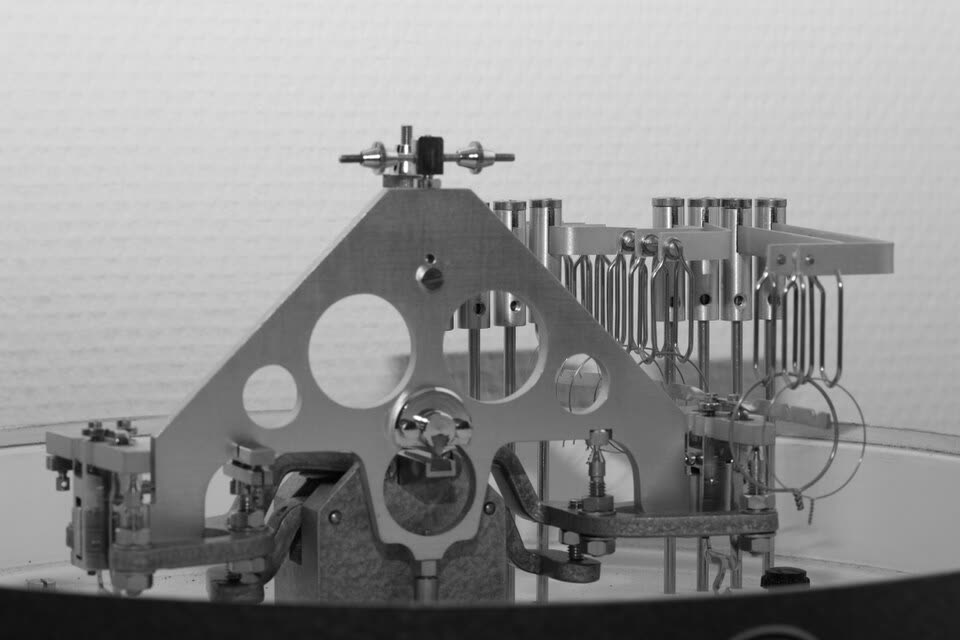
Some professional and industrial scales use advanced sensing technologies such as surface acoustic wave (SAW) systems, which aim for super-sensitivity and stability under varying conditions.Ultra-precision SAW scale context These models tend to sit at the top of the price range because they’re engineered for demanding metrology and fitness-for-intended-use requirements, as discussed in technical pieces like ISPE’s overview of balances and scales.Metrology and fitness discussion
Legal-for-trade or regulated applications (pharmacy, cannabis dispensing, postal) often require specific certifications and periodic calibration. The instrument itself may be more expensive and you’ll need to budget for calibration services over time.
Buying conditions: MOQ, customization and shipping
For small ecommerce businesses sourcing multiple units, the purchase model matters:
- MOQ (minimum order quantity): Some wholesale or cross-border suppliers ask for multi-unit orders. The unit price may drop, but your cash outlay rises.
- Customization (branding, special housings, different capacity/readability): Anything off the shelf is cheaper. Private labeling or custom firmware will push price up and often extend lead time.
- Shipping method: Heavy tabletop or bench scales cost more to ship than tiny pocket scales. Express services are faster but add to total landed cost.
For budget-focused buyers, the tradeoff is clear: standard specs, modest precision, and slower but cheaper shipping will usually give the lowest overall cost as long as they meet your accuracy needs.
Choosing the Right Online Channel and Cutting Landed Cost
You can buy precision scales from three broad online channels in Canada: domestic retail, liquidation/wholesale, and cross-border marketplaces. The “cheapest” option changes once you include FX, shipping, duty, and returns.
Here’s a compact comparison in editorial terms:
| Channel type | Typical use case | Cost profile | Effort / risk profile |
|---|---|---|---|
| Canadian retail & distributors | Single kitchen, pocket, jewelry, shipping or small bench scale | Higher unit prices for brand-name gear; transparent CAD pricing | Low effort, clear returns; good fit for one-off purchases and regulated uses |
| Liquidation / wholesale sites | Budget buyers and resellers willing to handle mixed or surplus stock | Lower prices on limited lots; models may be older or inconsistent | Moderate effort to check condition and specs; returns may be tighter |
| Cross-border marketplaces | Multi-unit pocket or kitchen scales for ecommerce bundles | Often lower sticker prices per unit, especially for simple consumer scales | Higher complexity: FX, overseas shipping, duties, and more friction on returns |
Domestic retail and liquidation in practice
Canadian specialty shops and distributors (for example, Miliem and other local resellers) provide dedicated lines for jewelry, pocket, kitchen, tabletop and shipping scales. Browsing a local distributor’s precision section lets you filter by capacity and readability in CAD and see where prices start to jump.Canadian distributor category example
Liquidation outlets such as Liquidation Center’s scales category occasionally list office and shipping scales at reduced prices. Selection is smaller and variable, but if you only need a basic unit and aren’t chasing a specific model, this channel can cut upfront cost.
On the marketplace side, Amazon.ca’s Scales & Balances best-sellers page shows what typical Canadian buyers are paying for pocket and bench scales. Use that as a rough “market price” checkpoint when evaluating any deal.
Where cross-border marketplaces fit (including DHgate)
Cross-border marketplaces can be attractive for inexpensive categories like pocket and kitchen scales, where unit prices are often lower than domestic retail. Platforms such as DHgate fall into this bucket—they list many pocket and consumer scales and, per their editorial blog content on pocket scales, emphasize affordability as a selling point.DHgate pocket scale editorial context
However, Canadian buyers need to treat these prices as just one component of landed cost. You still have to factor in:
- Currency conversion fees
- Any applicable import duties or taxes
- The practical difficulty and cost of returning or exchanging a miscalibrated or damaged scale
If you’re seriously considering DHgate or peers for scale sourcing and want a broader marketplace comparison, you can step back and look at how DHgate stacks up against AliExpress, Alibaba and Temu using this marketplace comparison overview. And if you need to understand how customs and import fees work in more detail, there’s separate guidance on customs, tariffs and import fees.
Practical ways to lower landed cost without losing accuracy
For budget-conscious Canadian buyers, a few tactics help keep spend down while still getting reliable measurements:
- Lock in the accuracy band you need before shopping. If kitchen work is fine at 1 g or 0.1 g, avoid lab balances entirely. If you’re weighing jewelry or micro-ingredients, look for reputable pocket scales around 0.01 g rather than leaping to milligram lab gear unless your use case truly demands it.
Treat those tools as a quick market check: if a scale’s price is dramatically below the cluster of similar models, dig into specs and reviews to be sure it’s not cutting precision or build quality.
- Bundle purchases where it makes sense. A small ecommerce brand sourcing pocket scales for product bundles might buy a test unit locally to validate accuracy, then place a multi-unit order through the lowest-cost channel (domestic wholesale or cross-border) once the model proves reliable.
- Favor clear specs and reputable distributors for higher-risk applications. For anything tied to regulated dosing, legal-for-trade sales, or formal QA records, prioritize Canadian distributors or recognized international brands that document accuracy, calibration procedures, and compliance.