
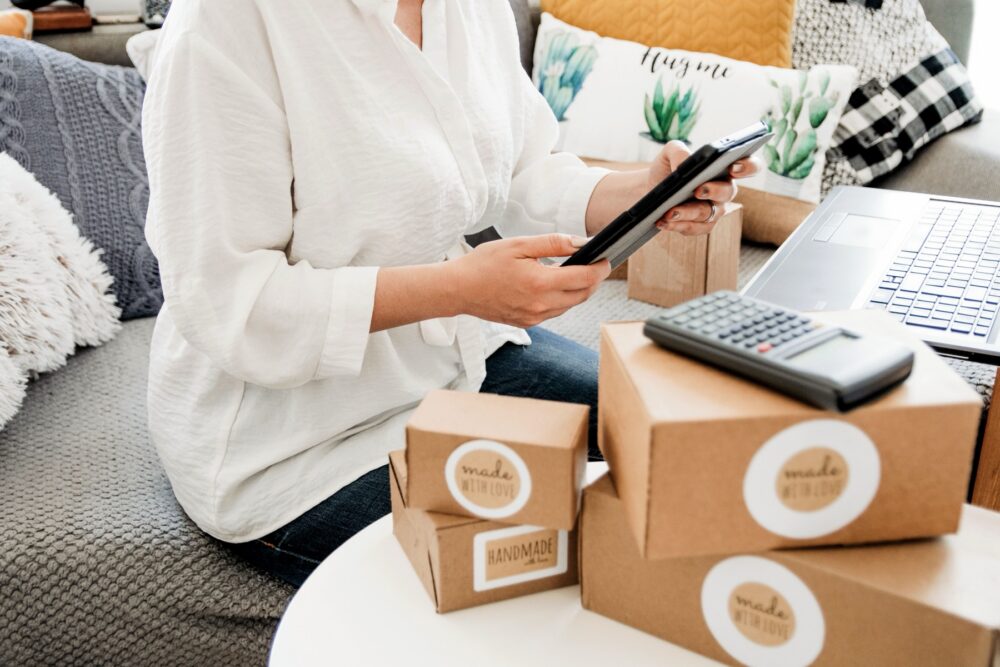
ZQ Dropshipping (marketed as ZQ Solution) is best understood as a China-based sourcing and fulfillment agent, not a retail marketplace. It sits between your US-facing store and Chinese suppliers on platforms like 1688, consolidating sourcing, inspection, branding, warehousing, and shipping into one service. That can make sense if you want to test multiple products with low upfront inventory and don’t want to manage several factories or freight forwarders yourself. It’s a worse fit if you need direct factory control, strict compliance, or domestic warehousing.
This guide explains how ZQ’s model actually works, how that changes your costs and risks, and what to check before you build your Shopify, TikTok Shop, or marketplace business around a single agent.
What ZQ Dropshipping Actually Is in the E‑commerce Supply Chain
ZQ Solution describes itself as the customer-facing brand of Hong Kong–registered ZQ Technology Co., Limited, aimed at cross-border e-commerce sellers, on its site at zqsolution.com. According to its own marketing, it specializes in sourcing from Chinese wholesale marketplaces such as 1688 and then handling the rest of the chain: receiving products, inspecting them, labeling, packing, and shipping orders from China to your buyers.
In the supply chain, that makes ZQ a middle layer:
- Upstream: factories, wholesalers, and traders you’d typically find on 1688 or other China platforms.
- Middle: ZQ acting as your agent—finding products, placing supplier orders, combining shipments, storing stock, and handling returns back into China when needed.
- Downstream: your store on Shopify, WooCommerce, Etsy, TikTok Shop, eBay, Shopee, or other platforms that ZQ says it supports.

ZQ’s own marketing also calls it a dropshipping agent, which is a useful distinction. A marketplace connects you directly to many independent sellers. ZQ, by contrast, aims to be your single operational partner in China: you usually interact with ZQ’s team and platform, not each factory. That makes life simpler but concentrates both power and risk in one company.
How ZQ’s Full-Chain Sourcing and Fulfillment Model Works
ZQ promotes an “end-to-end” or full-chain model. Here’s what that looks like in practice if you’re running, say, a TikTok Shop or Shopify store.
1. Product search and sourcing
You identify products—often from 1688 listings or ZQ’s suggestions—that fit your niche: for example, K-beauty items, home decor, or simple apparel sets. You share links, specs, and target price ranges with ZQ.
Based on its site, ZQ then:
- Contacts the Chinese suppliers behind those listings.
- Confirms availability, basic quality, and packaging.
- Negotiates and places the domestic orders on your behalf.
In its own TikTok Shop guide at zqdropshipping.com, ZQ describes this specifically as 1688-based sourcing to fuel TikTok content and storefronts.
2. Receiving and consolidating multi-supplier inventory
Once suppliers ship domestically, goods go to ZQ’s warehouse in China. This is where the “full-chain” angle matters.
ZQ says it can:
- Receive parcels from many different suppliers.
- Consolidate those into your dedicated stock or into a pooled dropshipping inventory.
- Store items for ongoing orders, acting as a 3PL.
For a small seller, this means you don’t have to manage multiple Chinese warehouse addresses or juggle differing domestic shipping schedules. The tradeoff is that you depend on ZQ’s warehouse processes for everything—from SKU accuracy to stock counts.
3. Quality inspection and basic prep
On its site, ZQ lists quality inspection as a core service. In practical terms, that usually means spot-checking:
- Visible defects (scratches, misprints, poor stitching).
- Correct colors, sizes, and variants versus your order list.
- Very basic functional checks for simple items.
You need to clarify in advance how deep this inspection goes. Marketing phrasing like “quality inspection” can cover anything from a quick visual check of a sample to more detailed testing. For commodity items (T-shirts, simple gadgets), a lighter inspection may be enough; for higher-risk products (electronics, skincare), you’ll likely need stricter SOPs or third-party lab tests.
4. Branding and custom packaging
ZQ lists branding & custom packaging as part of its stack. In real terms, this can include:
- Adding your logo to polybags, boxes, or inserts.
- Using customized thank-you cards or QR codes.
- Labeling SKUs with your internal codes or barcodes.
For TikTok Shop or social-commerce brands, this is a key advantage over pure marketplace dropshipping, where items often ship in generic factory packaging. Just remember: custom packaging adds per-unit cost and handling time. Confirm minimums, unit surcharges, and whether ZQ manages the packaging supply or expects you to ship in materials.
5. Automated order fulfillment
ZQ promotes automated order fulfillment, and its main site highlights compatibility with major platforms like Shopify, WooCommerce, Etsy, TikTok, eBay, and Shopee.
The typical workflow:
- A customer orders from your Shopify store or TikTok Shop.
- That order data reaches ZQ via app integration, CSV upload, or API.
- ZQ’s warehouse picks, packs, labels, and hands the parcel to a shipping carrier.
The exact tech integration (native app vs. manual upload) and sync speed are things you should test with low-risk orders. Automation is valuable only if the mapping between your SKUs and their stock is rock-solid.
6. Shipping and freight options
ZQ also markets freight forwarding and China freight services. For you, that can take two forms:
- Classic dropshipping: ship each order individually from China to your end customer.
- Bulk forwarding: ship a larger batch (for example, winning SKUs) to a local warehouse, 3PL, or Amazon FBA, then fulfill domestically.
Their marketing positions this as an alternative to piecing together separate suppliers, forwarders, and warehouses. In reality, you should treat each lane (e.g., China–US air, sea plus last mile) as a different cost and risk profile, and get explicit quotations for any significant volume.
How to Evaluate ZQ and Similar Dropshipping Agents
Because ZQ is an all-in-one agent, your vetting process is different from vetting a single factory. You’re choosing a long-term operating partner.

1. Clarify the service scope you actually need
- Do you want them only for 1688 sourcing, or also for warehousing and freight forwarding?
- Are you planning TikTok Shop-only, or multiple channels (Shopify + Etsy + TikTok)?
- Do you need branding and custom packaging from day one, or after you validate winners?
Match ZQ’s advertised services to a concrete scope so you can get a clear quote and avoid paying for extras you won’t use.
2. Test communication and responsiveness
Because you don’t talk directly to most Chinese suppliers, ZQ becomes your translator and project manager. Before committing, you can:
- Run a small test project: one or two SKUs from 1688, basic packaging, and a handful of sample orders.
- Track response times for key questions (pricing changes, stock issues, shipping delays).
- Ask them to explain a problem in detail—for example, a stock-out on 1688—and see how transparent the explanation is.
Consistent, clear communication is more important here than rock-bottom unit cost.
3. Get fee structures and pricing layers in writing
ZQ’s marketing emphasizes all-in-one convenience, but it doesn’t spell out your exact cost structure. You should ask for written detail on:
- How they add their margin on top of 1688 prices (flat percentage, per-order fee, tiered pricing by volume).
- Extra charges for inspection, storage beyond a certain period, special handling, return processing, and branding.
- Minimum monthly volume (if any) to keep an account active or access specific service tiers.
Treat this as a supplier contract discussion, not a casual app signup.
4. Inspect how they handle multi-supplier orders
Because one of ZQ’s selling points is consolidating many small supplier orders, ask them to walk you through:
- How they track which supplier sourced each unit (for returns or quality issues).
- How they handle mismatched SKUs or partial shipments from suppliers.
- Whether they can provide simple supplier-level performance summaries if you request them.
You don’t need full factory details for every SKU, but you do want enough information to spot chronic supplier issues and switch vendors when necessary.
5. Build a backup plan
Relying entirely on one agent is a structural risk. While vetting ZQ, identify at least one backup option:
- A second China-based agent with overlapping capabilities, or
- A marketplace-based setup for your core SKUs, or
- Direct factory relationships for your most critical products.
You don’t need to operate two channels from day one, but you should know how you would pivot if ZQ has a service disruption or changes terms.
Key Purchasing Factors When You Source Via ZQ
Working through an agent changes how your purchasing levers behave. You’re no longer negotiating directly with factories; you’re negotiating through ZQ and paying for their operations.
MOQ and assortment flexibility
One of the largest advantages of an agent model like ZQ’s is MOQ flexibility:
- They can place multiple small orders across suppliers on 1688, then consolidate those into one outbound flow to your customers.
- That makes it easier to test 10-20 SKUs in low quantities without paying international shipping for each micro-order.
The hidden lever: suppliers still have their own MOQs. ZQ’s value is in aggregating those constraints across many clients, then offering you smaller minimums. Ask explicitly what their practical minimums are for your category.
Pricing and layered margins
Your cost per unit will generally include three layers:
- The supplier’s domestic price (often the 1688 price or a negotiated variant).
- ZQ’s sourcing and handling margin.
- International logistics and last-mile delivery.
Because ZQ advertises affordable sourcing from 1688, there’s a temptation to benchmark only against AliExpress prices. Instead, think in landed cost with service attached: 1688 base price + ZQ fees vs. whatever you’d pay to manage sourcing, QC, and logistics separately.
You should also:
- Compare all-inclusive per-unit prices they quote for a given lane (e.g., China–US economy) against alternatives for the same lane.
- Ask how pricing changes as your volume grows—do you get lower handling or storage fees after a certain order count?
Sampling and product iteration
With an agent, sampling can be more efficient if you use their warehouse strategically:
- Combine samples from multiple 1688 suppliers into a single outbound shipment to you.
- Have ZQ do a basic visual comparison, then send only shortlisted samples to your US office.
This reduces international shipping for duds and speeds up product iteration, especially for creators building TikTok Shop assortments from many micro-trends.
Lead times: combining supplier, agent, and freight
Lead time is no longer just “factory to customer.” Your timeline includes:
- Supplier production or picking time.
- Domestic shipping to ZQ’s warehouse.
- ZQ’s inbound processing, inspection, and storage.
- Outbound shipping (individual dropship or bulk forwarding).
For planning purposes, ask ZQ to give you conservative estimates by category and lane, but treat them as planning inputs, not guarantees. For example, you might assume a longer lead time for heavy items versus simple apparel dropshipping.
Choosing Between ZQ, Marketplaces, and Direct Sourcing
To decide if ZQ is the right backbone for your store, it helps to compare three broad channels: a full-chain agent like ZQ, a marketplace, and direct factory relationships.
The table below focuses on who you work with, best-fit scenarios, and the main tradeoff.
| Channel type | Who you deal with day to day | Best for | Main tradeoff |
|---|---|---|---|
| Agent like ZQ Solution | One agent team and their platform | Multi-supplier testing, branding, consolidated logistics | Higher dependency on one intermediary and layered margins |
| Marketplace (e.g., DHgate) | Many independent marketplace sellers | Product variety, small trial orders, light services per supplier | Must vet each seller individually; services differ by supplier |
| Direct factories | Factory sales or engineering team | Stable, higher-volume SKUs needing direct control | Higher MOQs and more buyer-managed QC, logistics, and compliance |
An agent-centered model like ZQ’s tends to be strongest when:
- You want one team to coordinate 1688 sourcing, inspection, branding, and shipping.
- Your catalog draws from many small suppliers, and you can’t justify your own China operations.
- Your channels—especially Shopify and TikTok Shop—depend on rapid product testing with modest volume per SKU.
It’s less attractive if:
- You’re building a brand that needs direct control over factory relationships, compliance, and long-term exclusivity.
- You already have domestic warehouses or 3PLs and need only occasional China sourcing, not a full-chain partner.
- You’re highly sensitive to adding an extra margin layer and are prepared to manage more complexity yourself.
Framed this way, using ZQ Dropshipping as an e-commerce resource is not just adopting a tool—it’s choosing an operating model. The decision is whether that model matches your store’s size, risk tolerance, and appetite for hands-on supply chain work.