
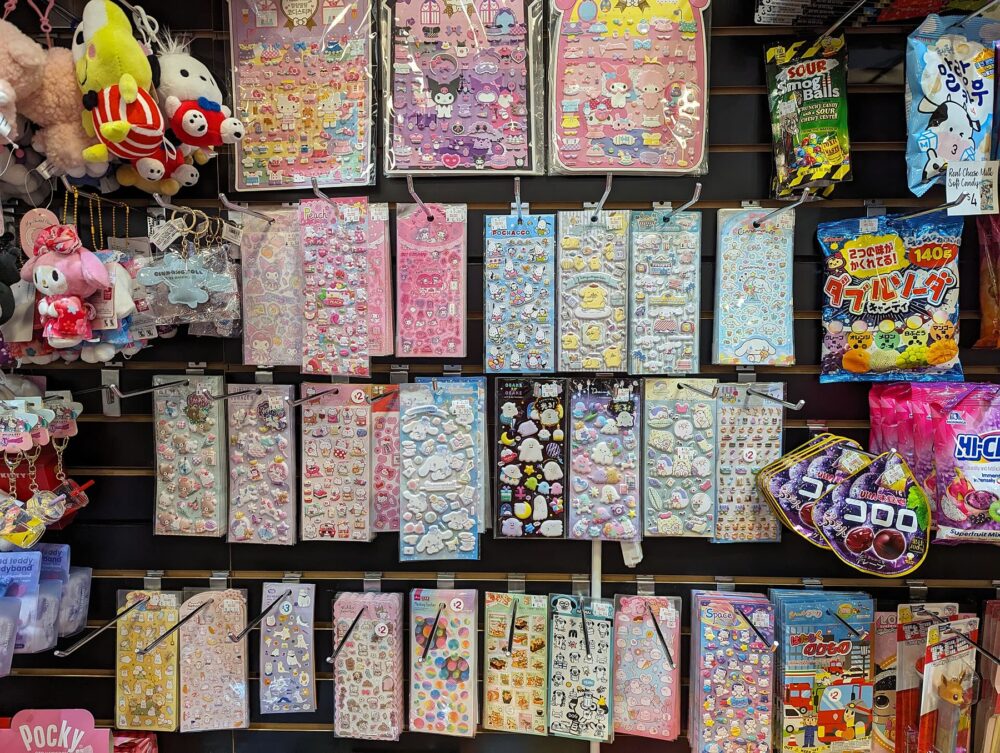
Yes, you can absolutely buy Japanese cat stickers and art in bulk for crafts, gifts, or small ecommerce inventory—but you’ll need to be specific about style, origin, and licensing before you choose suppliers. In practice, buyers usually pick between three routes: licensed kawaii brands and traditional motifs imported from Japan, independent artists who offer wholesale or print-on-demand, and mass-market “Japanese style” cat graphics from global marketplaces. Each option comes with different minimum order quantities (MOQs), unit costs, and IP risks.
If you’re a US crafter buying a few hundred stickers, you’ll likely lean on Japanese stationery shops, intermediaries, or print-on-demand. If you’re building a subscription box or store collection, you may combine smaller wholesale from true Japanese brands with higher-volume, generic cat designs from marketplaces. The rest of this guide walks through how this niche is structured and how to choose the right sourcing channel.
Understanding the Japanese Cat Stickers and Art Supply Landscape
Japanese cat imagery is not just cute—it taps into cultural themes of luck and protection. The famous maneki-neko (beckoning cat), for example, is widely associated with good fortune and prosperity in Japan and appears in countless designs on stickers, posters, and decor.Source
From a sourcing standpoint, most “Japanese cat” products you’ll encounter fall into a few buckets:
- Kawaii stationery brands (true Japanese origin)
Brands and artist labels in Japan produce small flake-style packs and sheets for domestic stationery stores and online shops. For instance, Kumohana sells Japanese retro cat stickers in its “Nekorobi Stories” series—small, retro-themed cats in a flake pack format that mirrors what you see across Japanese stationery brands.Source These are typically printed on paper with soft colors, packaged in small envelopes, and sold retail in Japan.
- Independent artists and boutique shops
Shops such as Cute Things From Japan carry cat flake stickers like Nodoka Miyashita’s “Happy Cat” set—small paper flakes with an illustrator’s branding on the packaging.Source These often start as artist-led designs, then are printed and distributed via small studios. For wholesale, you either work directly with the artist or via shops that offer case-pack pricing on popular sets.
- Traditional art and ukiyo-e-inspired cats
Cat imagery has a long history in Japanese art, and modern products riff on this. An example is the growth of “Japanese art cat” visuals on stock platforms like Shutterstock, which hosts tens of thousands of Japanese-style cat illustrations in various poses and color palettes.Source These visuals become sticker packs, posters, and decor through printers and merch companies worldwide.
- Mass-market “Japanese style” cat graphics
Global retail and marketplaces (Amazon, Etsy, Redbubble) offer waterproof vinyl packs with Japanese-style cats—think “ukiyo-e floral tattoo cat” sticker sets on Amazon that are sold as 50-piece waterproof vinyl packs for laptops and water bottles.Source Many of these are produced outside Japan, using Japanese-inspired art or stock designs.
- Domestic Japanese retail that feeds wholesale via intermediaries
Platforms like Rakuten Japan list branded cat sticker products—for example, cat-themed Japanese sticker sheets marketed for planners and scrapbooking.Source Some international wholesalers buy from these domestic channels and resell to overseas buyers at a markup, effectively acting as intermediaries when direct B2B isn’t available.
For US buyers, the key distinction is authentically Japanese vs Japanese-style. Authentic Japanese stationery and art often mean higher per-unit cost, smaller pack sizes, and stronger artist branding. Japanese-style mass-market designs are usually cheaper per piece and easier to scale, but they may lack the cultural specificity your brand promises.
Choosing and Vetting Suppliers for Japanese Cat Stickers and Art
Because this niche mixes cute characters, traditional motifs, and stock art, vetting suppliers is as much about design rights and print quality as it is about price.
Know which supplier type fits your use case
- Japanese stationery brands / boutiques – Ideal for curated boxes, gift sets, and premium journaling kits. Expect smaller MOQs and higher cost per sticker. Examples of product formats include Kumohana’s retro cat flakes and Happy Cat flake stickers from Cute Things From Japan.SourceSource
- Independent artists (Etsy, Redbubble, artist websites) – Good for unique designs and co-branded drops. On Etsy, you’ll find Japanese cat sticker sheets—eight cats on a matte sticker sheet at roughly postcard size.Source On platforms like Redbubble, “Japanese cat” stickers are offered as individual die-cuts and small sheets printed on demand by a global network.Source
- Mass-market producers & marketplaces – Best for large, low-cost vinyl packs and generic Japanese-style cats (e.g., the 50-piece ukiyo-e cat pack on Amazon). Quality and artwork origins vary widely.
Mini checklist: how to judge print and material quality
When you’re requesting samples or evaluating listings, look for:
- Material type
Paper flakes (like Happy Cat) will feel delicate and are great for journaling and scrapbooking.Source Vinyl sets (as seen on Amazon’s waterproof cat packs) suit water bottles, laptops, and outdoor use.Source
- Finish
Matte sticker paper (common on Etsy cat sheets) gives a soft, writable surface.Source Glossy or laminated vinyl gives stronger color and durability.
- Color and line clarity
Retro or ukiyo-e-inspired cats often use textured backgrounds; ask for close-up photos to confirm there’s no banding or blurry linework.
- Pack structure
Japanese brand-style flake packs tend to have 20-40 small pieces per envelope. Vinyl packs from mass suppliers can run 30-50 pieces. Make sure the pack composition matches your product promise.
Red flags specific to Japanese cat designs
- Unclear licensing on famous characters
If a sticker set uses recognizable characters (Hello Kitty, Rilakkuma, etc.) but the seller can’t explain their relationship to the brand or show licensing, treat it as high risk for resale.
- Vague origin labeling
Listings that say “Japanese style” but offer no detail on whether the design is original, stock-based, or copied from vintage art deserve extra scrutiny.
- No proof of original artwork for traditional motifs
For ukiyo-e-style cats, ask whether the artwork is an original interpretation or uses public-domain source material. Stock image platforms like Shutterstock can be legitimate artwork sources, but your supplier should be able to tell you that.Source
A short, direct message asking, “Who created this cat artwork, and how is it licensed for commercial resale?” will quickly separate professional suppliers from opportunistic ones.
Order Size, Pricing, and Channel Choices for Bulk Buying
Bulk buyers land in very different places depending on whether they need dozens, hundreds, or thousands of pieces. Here’s how typical channels line up.
How MOQs and pricing usually break down
While exact MOQs and prices vary by supplier, you can use this rough channel map:
| Channel / source type | Typical order size use-case | Design control & licensing | Material / format examples |
|---|---|---|---|
| Japanese stationery shops & boutiques | 20-200 packs for curated boxes, gifts | High—brand or artist clearly labeled | Paper flake packs (Kumohana “Nekorobi Stories”, Happy Cat)SourceSource |
| Independent artists (Etsy, Redbubble, own sites) | 50-500 pieces via wholesale or print-on-demand | Medium–high—direct relationship with artist | Matte sticker sheets (Etsy Japanese cats), die-cut POD stickersSourceSource |
| Mass-market retail / Amazon-style packs | 100-1,000+ vinyl stickers at low per-unit cost | Variable—often generic or stock-based | 50-piece waterproof vinyl “ukiyo-e” cat sets on AmazonSource |
| Domestic Japanese retail via intermediaries | 20-200 packs imported to US from Rakuten etc. | High for authenticity; licensing varies | Branded Japanese cat sheets sourced from Rakuten JapanSource |
| Stock-art based printers and merch producers | 200-5,000+ units for ecommerce SKUs | Depends on stock license terms | Stickers/posters based on Japanese art cat visuals from ShutterstockSource |
| Marketplaces like DHgate | Highly variable; often 50-500 pcs per design | Must be checked seller-by-seller | Vinyl decals such as “Japan Lucky Cat” traditional culture stickersSource |
Where DHgate and similar marketplaces fit
Marketplaces are useful when you need volume without full custom art and are comfortable doing your own vetting. On 2026-10-14, for example, DHgate listed a product titled “Japan Lucky Cat Vinyl Car Window Sticker Laptop Cup Decals Decorative Decals, Japanese Traditional Culture Cat Wall Stickers” in its wall stickers category, with a price band around $18.10–$19.30 USD and no public MOQ data.Source
For a US buyer, a listing like that could work for:
- A mid-size run of maneki-neko-style decals for gift bundles or laptop skins.
- Testing demand for “Japanese traditional culture” cat imagery before investing in custom art.
However, you should treat each listing as its own supplier relationship: read all photos and descriptions, ask the seller about vinyl thickness, print method, and artwork origin, and confirm that you have the right to resell in your market. Because DHgate operates as a marketplace, those checks are between you and the seller, not guaranteed platform-wide.
If you’re considering a marketplace option and want a broader approach, DHgateWiki also covers finding wholesale suppliers on DHgate and how to evaluate individual DHgate sellers in more detail for general sourcing decisions: Find wholesale suppliers on DHgate and Find DHgate suppliers.
Matching your order size to the right route
- For small craft batches and gifts (50-300 stickers)
Japanese stationery shops, intermediaries pulling from Rakuten Japan, and direct artist wholesale are usually the best fit. You get authentic designs, manageable MOQs, and packaging that feels “gift-ready.”
- For subscription boxes and boutique ecommerce (300-2,000 stickers)
Combine artist-led designs (for premium tiers) with one or two mass-market vinyl packs or marketplace listings for lower-priced add-ons. This mix balances originality with margin.
- For large-scale resale (2,000+ units across SKUs)
Work with merch printers who can license or commission Japanese-style cat art—either via stock platforms like Shutterstock or via Japanese illustrators—and lock in ongoing production. Marketplaces like Amazon and DHgate can supplement, but they’re better for testing than building your core catalog.
If you’re unsure which route can realistically serve your volume, start with samples from two different channels—for example, a true Japanese flake pack and a generic vinyl set—then compare how your audience responds. The right source for Japanese cat stickers and art is the one that matches your brand story and unit economics, not just the lowest price per pack.