
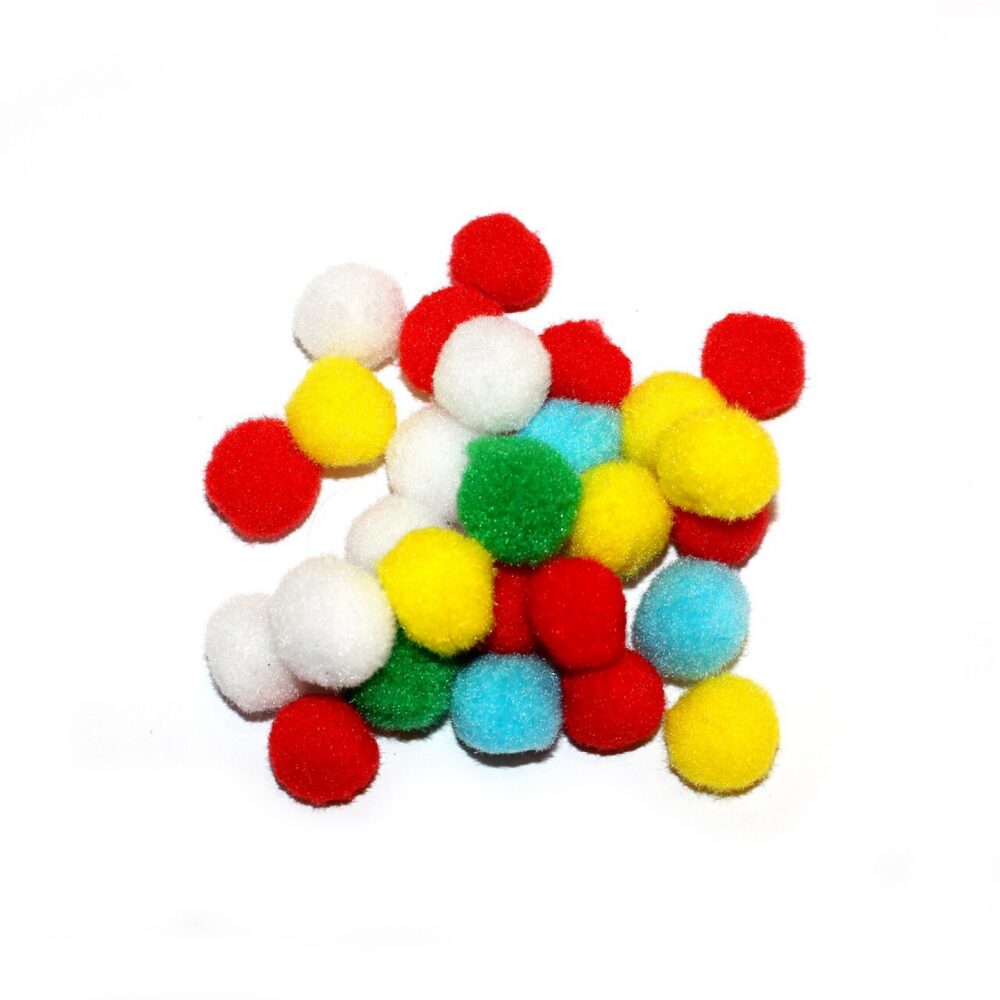
Large red pom poms look simple, but bulk buying is not. To get predictable quality and landed cost, you first need to decide whether you actually need cheerleading-style red pom poms (big handles and long streamers) or large craft/holiday pom balls (2″ fluffy spheres), then pick a supplier channel that fits that spec. For US buyers, the most reliable mix of price and availability usually comes from specialized cheer or craft wholesalers and larger marketplaces, backed by very specific checks on material, size, colorfastness, and minimum order quantities.
If you’re buying for a school or pep rally, “large” typically means full-size cheer poms — long plastic or metallic streamers with a baton-style or dowel handle. These are sold by the dozen for teams on sites like Windy City Novelties, where a red cheer pom example is 16″ long, about 40 grams, and advertised at 400-500 streamers per pom, sold in a 12-piece set. If you’re an ecommerce craft seller or event decorator, “large” usually means 1-2″ red pom balls or faux-fur Christmas poms in multi-piece packs, like the 2″ acrylic faux-fur red poms sold in 50-piece sets on Amazon.
The sections below split those use cases, show you how wholesale supply works, and spell out the supplier checks and channel choices that matter before you wire money or commit to a big PO.
How Wholesale Red Pom Poms Are Made and Sold
In wholesale, “red pom poms” covers three distinct product families, each with its own typical specs and supply chain:
- Cheerleading-style red pom poms
These are the classic sideline and pep-rally poms. They’re usually made from thin plastic or metallic streamers tied into a core and attached to a handle. A concrete example: the red cheer poms at Windy City Novelties list a 16″ length, roughly 40 grams weight, and 400-500 streamers per pom, sold by the dozen. That kind of spec — length, strand count, weight — drives both visual impact and cost.
Upstream, most cheer poms are produced by specialized manufacturers and then distributed by event/novelty wholesalers. You’ll see options in plastic, metallic foil, holographic film, and glitter finishes, which DHgate’s cheer pom editorial guide also calls out as common cheer materials (plastic, metallic, holographic, glitter) with different trade-offs in durability and shine.
- Craft-style red pom balls
These are the small fuzzy balls used in kids’ crafts, DIY kits, and costume details. The red pom balls on Craft Warehouse illustrate typical specs: about 1″ diameter, soft fiber construction, and 80 pieces per pack. Across craft chains, sizes commonly run around 0.5-2″. In wholesale, these are fiber-made and bagged by size and color, then sold in multi-pack formats to craft distributors and retailers.
- Holiday/faux-fur red pom poms
Holiday products sit between craft and fashion accessories. A 2″ faux-fur acrylic red pom set on Amazon comes as 50 pieces, marketed for sewing, costume decoration, and party crafts. Wholesale listings in this category often emphasize “Christmas” or “holiday” styling, plus compatibility with sewing/glue, and ship in polybags or small boxes.
Retail sites like Hobby Lobby show how these upstream styles surface downstream: assorted size packs of red/green/white craft pom balls with domestic ship windows typically quoted as a few business days. That gives you a baseline for what “standard” product looks like before you move to bulk.
For wholesale sourcing, think of the market structure like this:
| Use case | Typical product spec | Common pack format | Supplier type |
|---|---|---|---|
| Cheer squads | 12-16″ plastic/metallic streamers, handle | Sold by the dozen | Cheer/event wholesalers |
| Craft kits | 0.5-2″ fiber pom balls | 50-100+ pieces per bag | Craft suppliers, general importers |
| Holiday decor | 2″ faux-fur acrylic balls | 20-50+ pieces per bag | Seasonal/holiday product makers |
If your spec doesn’t match one of these rows, your first task is to tighten the definition before you start contacting suppliers.
Choosing and Vetting Red Pom Pom Suppliers
Once your use case is clear, the next risk is quality: red dye, shedding, and handles are where bulk buyers get burned. You want a supplier who can prove their pom poms match your spec and hold up in real use.
Lock in the specs that actually matter
For cheer poms, ask suppliers to spell out:
- Material: plastic vs metallic vs holographic vs glitter. Editorial guidance from DHgate’s cheer pom article notes metallic and holographic are more visually striking but heavier and sometimes less durable; plastic is lighter and cheaper. Push the supplier to say exactly which film or plastic they use.
- Size and strand count: total length (e.g., ~16″ like the Windy City example), approximate weight, and streamers per pom (hundreds vs “full” look claims). These numbers affect crowd impact and how tiring they are to hold.
- Handle type: baton, dowel, or no rigid handle. Ask for handle material and grip texture; low-grade plastic can snap under repeated use.
For craft or holiday pom balls, nail down:
- Diameter: around 0.5-2″ is typical; if your product listing says “2 inch” like the faux-fur set on Amazon, insist that samples match that size.
- Fiber type: acrylic, polyester, cotton, wool, or faux fur, since softness and shed depend on this.
- Pack size and mix: single-size red-only packs like Craft Warehouse’s 80-pack versus assorted color/size mixes like Hobby Lobby’s Christmas set.
Sample, then stress-test for color and shedding
Before any serious PO, order a sample lot – even if it’s a standard pack size:
- Colorfastness: gently rub a damp white cloth on a few red poms and check for dye transfer. For cheer poms, do this on the streamers; for fiber balls, on the surface.
- Shedding: shake the pom over a dark surface and look for loose fibers or streamers. For faux-fur holiday poms, tug the fibers lightly to see if they pull out.
- Durability: for cheer poms, simulate practice — wave and snap for a few minutes, then inspect for broken streamers, cracked handles, or misshapen cores.
Ask the supplier to confirm whether they perform any of these checks in-house, but treat their answers as claims, not guarantees. Your own quick tests are cheap insurance.
Use photos and packaging details to catch problems early
For cross-border or marketplace sourcing, you often start with listings, not people. Make the photos work for you:
- Request close-up photos of the core/handle connection and of a pom parted so you can count or estimate strand density.
- For craft and holiday poms, ask for a photo of the actual bag with a ruler in frame to validate the stated size.
- Clarify packaging: are the poms compressed in transit? Do they need fluffing on arrival? Over-compressed metallic or holographic streamers can kink permanently.
Communication style is a soft but useful signal. Suppliers who respond with measured claims, extra photos, and specific spec sheets tend to be easier to work with on reorders and QC issues than those who only send marketing images.
MOQ, Pricing, and Channel Choices for Bulk Red Pom Poms
Large red pom poms are light but bulky. Your landed cost is driven by three things: MOQ, material/size, and shipping volume. You won’t get exact price tiers without live quotes, but you can set expectations and choose a sourcing channel that fits your volume.
How MOQs and pricing usually behave
Across cheer, craft, and holiday categories, these patterns are common editorial heuristics:
- Cheerleading poms: suppliers often quote minimums tied to team orders or case packs (e.g., in multiples of a dozen, as seen in the Windy City Novelties product). Larger sizes, metallic or holographic materials, and custom color mixes push the unit price up.
- Craft pom balls: MOQs can start at a few hundred pieces for generic red 1″ balls and climb into the thousands for custom mixes. Bigger, fluffier balls (2″) and faux-fur textures usually cost more per piece than simple acrylic craft poms, as implied by the positioning of premium faux-fur sets on Amazon.
- Holiday poms: seasonal demand may drive higher minimums ahead of Christmas or Halloween runs; expect suppliers to want commitments for full carton quantities of 20-50 piece sets.
A quick landed-cost heuristic: doubling pom diameter or shifting from plastic to metallic/holographic typically raises material cost and shipping volume per pom. You’re trading higher per-unit cost for a more dramatic look.
A simple landed-cost check for a US buyer
Imagine you’re importing 500 large 2″ red craft pom balls for ecommerce kits:
- Product: similar in size to the 2″ faux-fur red poms (50-piece bags) on Amazon, but sourced wholesale.
- Suppose your supplier quotes you carton packing of 10 bags x 50 pieces = 500 poms. Each bag is light, but the carton is bulky.
- Your landed cost per pom becomes:
(Total product charge + international freight + customs/fees + domestic last-mile) ÷ 500.
Even without exact numbers, this reminds you to ask for:
- Gross weight and carton dimensions, so your freight quote is realistic.
- Pack count per carton, so you’re not surprised by receiving more or fewer bags than expected.
If the landed cost per pom creeps too close to US retail levels seen at Hobby Lobby or Amazon, switching to a US distributor or domestic wholesale pack may be smarter.
Choosing the right channel (including where DHgate can fit)
You have three practical sourcing routes for bulk red pom poms:
- General marketplaces (Amazon, etc.) for test runs and small bulk: Useful for quick trials of faux-fur or specialized pom styles, as with the 50-piece 2″ faux-fur red pom sets on Amazon. You can validate demand and product specs before hunting deeper wholesale options.
For event buyers with tight dates, domestic cheer wholesalers usually win. For ecommerce craft sellers who can plan ahead and hit higher volumes, vetted cross-border suppliers can make sense once you’ve done the sampling and landed-cost math.