
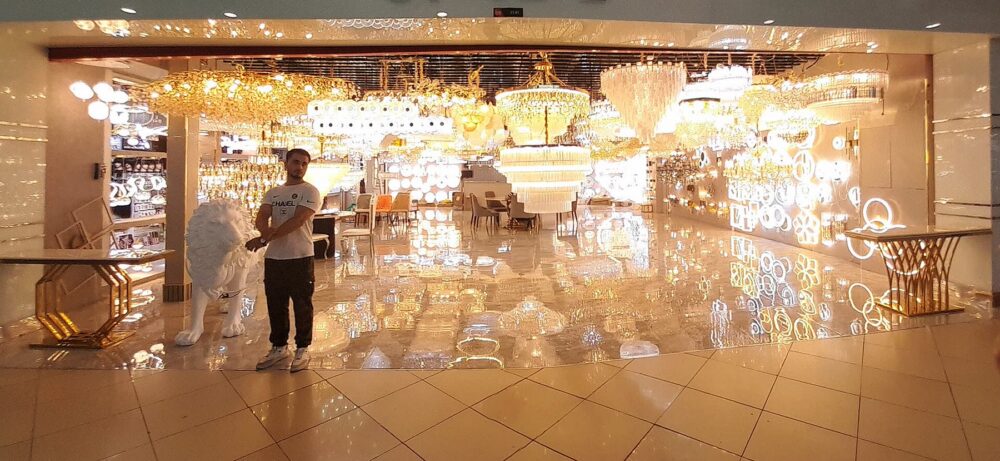
Wholesale chandeliers are best sourced by matching your order size and customization needs to the right channel—US distributors, event/lighting wholesalers, direct factories overseas, or online marketplaces—then vetting each supplier on quality, UL/CSA safety, and logistics before you commit. For most small US businesses, that means starting with a few samples from a short list of vetted suppliers and only scaling into factory-direct or cross‑border marketplace orders once you trust the product and communication.
How Wholesale Chandelier Sourcing Works for US Buyers
Wholesale chandeliers sit in a pretty specific supply chain. Most decorative fixtures are designed and manufactured in specialist lighting clusters (for example, parts of southern China are heavily focused on lighting), then exported through trading companies or sold via global marketplaces and US distributors.
You’ll see that structure reflected online:
- Export manufacturers. K&Y Lighting presents itself as a professional glass chandelier maker that both custom-produces and wholesales chandeliers to overseas clients, showing the factory‑direct route many designers and retailers use for unique pieces and bulk orders (K&Y Lighting).
- US-based wholesalers and distributors. A quick search for wholesale lighting in New York surfaces multiple businesses on Yelp’s wholesale lighting listing for New York, illustrating that you can buy chandeliers at scale through domestic distributors who import and handle compliance.
- Retail/wholesale hybrids. Sites like AffordableLamps.com’s chandelier section market discounted chandeliers with promotions and advertised free shipping/returns, blurring the line between retail and wholesale for smaller buyers.
For a US buyer, your real choice is not “which website is best” so much as which role in the chain you want to buy from:
- US distributor/wholesaler: higher per‑unit price, lower risk and simpler logistics.
- Export factory or trading company: lower per‑unit price at volume, but you own QC, import, and communication.
- Marketplace seller (including cross‑border platforms): flexible quantities and lots of designs, but quality and safety vary seller by seller.
Start by being brutally honest about your scale and risk tolerance. A decor boutique buying 10-40 chandeliers a year has very different needs from an event company installing dozens a month.
Choosing and Vetting Wholesale Chandelier Suppliers
Once you know you need wholesale chandeliers, your next job is to filter suppliers aggressively. Because chandeliers are both decorative and electrical, you’re vetting design, build quality, and safety.
What to look at on the fixture itself
When you receive samples or visit a showroom, focus on how the fixture is built, not just how it looks in marketing photos.
- Materials. Is the “crystal” actually glass, K9 crystal, or acrylic? Are arms solid or hollow metal? Affordable models from discount sites like AffordableLamps.com show how wide the material range can be, which directly drives perceived quality and durability.
- Finish quality. Check for uneven plating, rough edges on metal arms, misaligned crystal holes, or cloudy glass. These are early warnings of inconsistent production.
- Wiring and connections. Look inside the canopy: are conductors neatly terminated, with strain relief and proper wire nuts or connectors? Sloppy wiring is both a safety risk and a sign of poor factory process.
- Weight and hanging hardware. Heavy fixtures need appropriate mounting brackets and hardware. If the sample feels heavier than typical for its size, push the supplier on how they expect it to be supported.
UL/CSA and electrical safety
DHgate’s own chandelier buying advice emphasizes looking for UL (Underwriters Laboratories) or CSA (Canadian Standards Association) certification marks on electrical fixtures, and that guidance applies regardless of where you source. These marks indicate the product has been tested against specific safety standards, which matters for US installations.
For each model you consider, ask for:
- Clear photos of the rating label on the fixture.
- A copy of any UL/CSA certificate or test report tied to that exact model number.
- Confirmation of voltage and frequency (120 V, 60 Hz for standard US residential use).
If the supplier dodges certification questions or sends documents that don’t match the product code you’re buying, treat that as a serious red flag. In many US venues, especially commercial spaces, uncertified fixtures can create inspection and liability headaches later.
Supplier signals beyond the product
Whether you’re looking at a US distributor, a factory like K&Y Lighting, or a marketplace seller, apply the same discipline:
Micro-checklist for supplier selection
- Can they clearly explain their main markets (US, EU, etc.) and show examples of past chandelier projects?
- Do they provide reference customers or case studies at your scale (small shop, event planner, etc.)?
- Are their quotes specific—listing materials, finish, dimensions, bulb type (LED vs. others), and packing details?
- Do they propose sampling without pushing you straight into a large order?
- On marketplaces, do they have meaningful ratings and reviews on lighting products, not just generic shop feedback?
Spend most of your early time on a short list of 3-5 suppliers and compare their samples side‑by‑side. With chandeliers, seeing the fixtures in person is worth far more than another hour scrolling through catalogs.
Order Terms, Logistics, and Online Channel Choices (Including Marketplaces)
Once you’ve narrowed suppliers, you need to structure the actual purchase: quantities, price, customization, and how the chandeliers get to the US.
Core order decisions
- MOQ and batches. Direct factories and trading companies often prefer higher minimum order quantities, while US distributors and marketplace sellers may allow very small batches. Decide what you can realistically move in one design—ordering 50 of a risky style can be a costly mistake.
- Sampling plan. Negotiate 1-3 samples of each candidate design. For cross‑border orders, budget the time for those samples to ship, arrive, and be inspected before issuing a larger PO.
- Customization vs. standard designs. Custom arm counts, finish colors, or crystal shapes are common with export manufacturers like K&Y Lighting, but each customization can extend lead times and complicate reorders.
- Freight and Incoterms. Clarify whether prices include shipping to your location or just to a port. Even if you don’t use technical Incoterms language, be explicit about who arranges freight, who handles customs clearance, and where risk transfers.
Scenario-based channel choices
Here’s how different channels typically line up for US chandelier buyers:
| Buyer scenario | US distributor / wholesaler | Export factory / trading company | Online marketplace seller |
|---|---|---|---|
| Small decor shop needing 5-15 fixtures a year | Easy ordering, higher unit cost, stock styles | Often overkill unless planning custom lines | Flexible quantities, wide design range, vet sellers carefully |
| Event planner needing portable acrylic or lighter chandeliers | Can source reliable, code-compliant fixtures via US wholesale listings (search via Yelp in major cities) | Useful for custom statement pieces for specific venues | Event-focused sites and marketplace shops can work if you test durability and wiring via samples |
| Online reseller testing multiple styles | Distributor dropship programs or bulk buys, less margin | Best once you’ve proven volume; supports private-label | Marketplaces allow small test buys; needs strict quality and certification checks |
The right answer shifts over time. Many small buyers start with US-based distributors for their first year, then move some volume to factories or marketplaces once they understand what sells and have a feel for fixture quality.
Where marketplaces like DHgate fit
DHgate’s blog describes the platform as B2B/B2C, connecting international buyers directly with factories and suppliers in China across many categories, including lighting. That model can suit buyers who:
- Want to test a design in very small quantities before committing to a factory contract.
- Are comfortable doing their own due diligence on each listing and seller.
- Need access to a wide range of modern LED and crystal chandelier styles.
For example, on 2026-10-14 a DHgate search surfaced a small crystal LED ceiling chandelier listed in the “Ceiling Lights” category with a price range around $29.84–$64.16 (Crystal LED chandelier aisle lights). Larger or more elaborate fixtures on the same platform showed much higher ranges—one luxury crystal chandelier listing ranged roughly $457–$1,357 (Luxury crystal chandeliers home decoration). Prices and availability change over time, but these snapshots illustrate how marketplace sourcing can span both low-cost small fixtures and high‑ticket statement pieces.
If you consider DHgate or a similar marketplace for wholesale chandeliers:
- Treat every listing as unverified until you’ve checked seller history, asked direct questions, and reviewed close-up photos of wiring, rating labels, and materials.
- Use marketplace reviews and ratings as just one signal; combine them with your own sample inspection.
- Ask explicitly about UL/CSA certification and US voltage compatibility. Do not assume compliance just because the fixture looks similar to models sold in US stores.
For more marketplace-specific supplier screening, you can combine this chandelier-focused guide with broader DHgate sourcing advice such as finding wholesale suppliers on DHgate, searching for DHgate suppliers, and choosing a DHgate wholesale supplier.
The most reliable chandelier sourcing setups are built step by step: start with modest, well‑documented orders, insist on samples and certification evidence, and only escalate quantity once a supplier has proven they can ship fixtures that look good, hang safely, and keep your customers and venues out of trouble.