
You can absolutely buy Japanese-style cat stickers and art in bulk, but the best route depends on whether you need them truly made in Japan, how customized they must be, and how much time you want to spend managing suppliers. DHgate is useful for low‑MOQ, Japan‑inspired cat designs at wholesale‑ish prices, while Japan-based stationery shops and pop‑culture suppliers are better for authentic Japan-made stickers, and custom printers are the right choice for original branded art.
For a small craft run or gift program, DHgate’s ready-made sets and prints can get you hundreds of Japan-themed cat pieces quickly without a big design or production workload. If you’re building an ecommerce brand around “made in Japan” stationery or named artists, you’ll likely need Japan-based shops or distributors. And if you want your own logo cats or original characters, you’re looking at custom printing in China, North America, or occasionally Japan.
How Japanese Cat Stickers and Art Move Through the Supply Chain
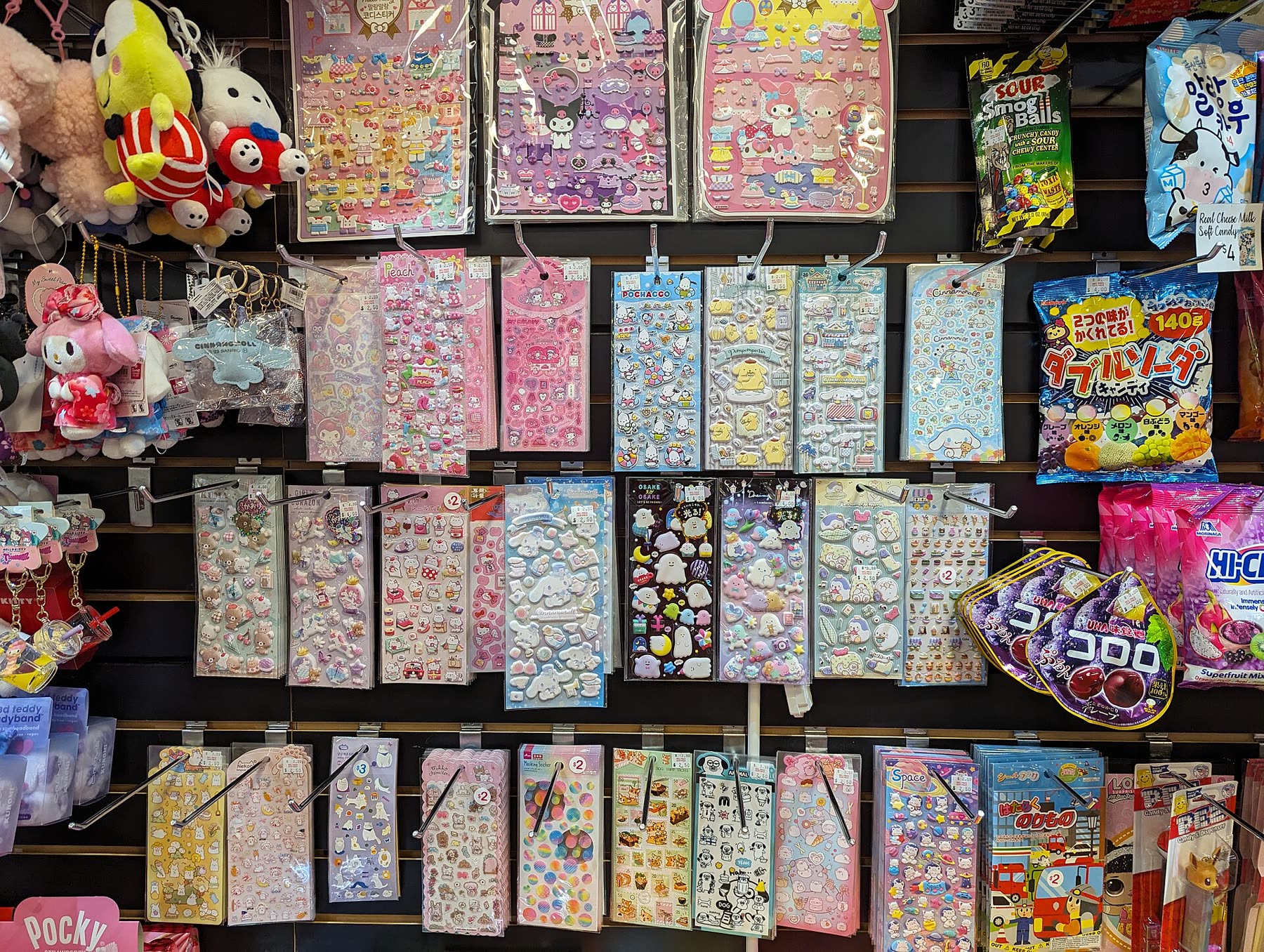
Japanese cat stickers and art reach US buyers through a mix of Japan-made products and Japan-inspired designs produced elsewhere.
Broadly, you’re dealing with three producer types:
- Japan-made stationery brands and artists. These are the folks behind flake stickers, washi-style label sheets, and art prints you see in Japanese bookstores. Shops like CocoaStars say they sell “stickers, key chains, stationery, other item made in Japan,” which is the kind of wording you want if your store promises genuine Japan-made goods. Retailers like Cute Things from Japan showcase named artists (for example, Nodoka Miyashita’s Happy Cat flake stickers), which signals licensed, artist-backed designs.
- China-based and other overseas manufacturers making Japan-inspired art. A large portion of “Japanese cat” merchandise in global marketplaces is actually produced in China with Japanese-style themes—samurai cats, kawaii cats, retro anime cats. DHgate’s own editorial blog describes the platform as a large B2B marketplace with tens of millions of products and over a million suppliers, positioned for small and medium businesses that want Chinese-made goods at relatively low minimum order quantities and tiered pricing.
- Custom sticker and print shops. These are printers that turn your own cat art into stickers or prints (vinyl, paper, washi, etc.). Many are in China, North America, or Europe rather than Japan, but you control the design and brand. They’re the main route if you want a proprietary cat IP rather than just “Japanese-style” themes.
For cross-border sourcing, most bulk buyers either:
- import Japan-made goods through specialty retailers or distributors, or
- source Japan-inspired goods from Chinese platforms like DHgate or from custom printers.
Understanding which bucket you’re in—authentic Japan-made vs Japan-inspired vs original brand—will drive which suppliers even make sense.
Picking Suppliers: Authenticity, Customization, and Risk
Decide your authenticity bar
The biggest fork in the road is whether “made in Japan” genuinely matters to your customers.
- If you market your store as “authentic Japanese stationery” and use that as a price and brand lever, then you should prioritize suppliers that clearly state Japan-made production: language such as “made in Japan” on CocoaStars or artist-focused listings on Cute Things from Japan are good signals.
- If your buyers mostly care about the aesthetic—kawaii, anime, traditional woodblock-style cats—then Chinese-made Japan-inspired designs can be fine, and you’ll have more options and lower effective MOQs on platforms like DHgate.
Be brutally honest with yourself here. Calling something “Japanese cat art” while it’s mass-produced in China is acceptable if you are transparent (e.g., “Japanese-style cat stickers, made in China”). It’s risky if you promise “authentic Japanese imports.”
Match customization level to supplier type
Think about how much you need to control the design:
- No customization (ready-made designs): Low workload. DHgate-style sellers, Japan-based retailers, and pop‑culture distributors like BuzzGacha all fall here. You pick from their catalog; you don’t tweak art.
- Light customization (logo, text, color tweaks): Some marketplace sellers will edit templates, but you’ll need good communication and clear files. This is more common with custom printers than with brand-focused Japanese stationery shops.
- Full custom art: You or your hired artist create the cat designs; a printer produces them. This shifts the risk from copyright to print quality and timeline.
Avoid promising collectors “limited edition Japanese artist cats” if your actual supplier is a generic overseas manufacturer editing clipart.
DHgate-specific vetting and risk context
Independent guides like China Electronics’ DHgate overview describe DHgate as a marketplace connecting global buyers and sellers with mixed buyer experiences, which is a polite way of saying you need to vet each supplier.
On DHgate, that means:
- Comparing multiple listings for similar Japan-style cat themes, rather than trusting the first one.
- Reading reviews and checking past order volumes when visible.
- Favoring sellers that specialize in stickers, stationery, or art (not a random general store with thousands of unrelated SKUs).
DHgate Listing Snapshot: What’s Actually Available (2026-10-14)
To ground the comparison, here’s a snapshot of actual DHgate listings related to Japanese-style stickers and cat art retrieved on 2026-10-14. Availability, pricing, and details can change.
- Anime sticker bundle: A seller named `pokemoncustom` offers a “200-Piece Set Of Japanese Anime Pokemon Car Luggage Stickers, And Graffiti Stickers Wholesale Hot Sell” in the “Other Decorative Stickers” category. The observed price range is about $3.45–$3.85 for the 200-piece pack, suggesting very low unit cost per sticker and likely low practical MOQ.
- Alternative anime sticker listing: A similar 200-piece set from a seller `pokemon_store` appears at this listing with a slightly higher observed range around $4.38–$5.15, showing how prices vary among near-identical products.
- Japanese-style black cat art prints: Supplier `cordian` lists a “Set of 6 Japanese-style prints, black cat canvas posters, minimalist Japanese decor” in “Paintings” with an observed range roughly $17.16–$52.52, depending on options. This fits more as wall art than stickers but still targets Japanese-style cat decor.
- Vintage Japanese animal posters: Seller `fabiano5468` offers “Vintage Japanese Animal Posters Tiger Cat Fish Cow Crow Poster Picture Canvas Print Painting Room Wall Decor Home Mural” with pricing observed between $9.78–$20.07.
- Sticker-adjacent stationery: A listing titled “6 Pieces/SET Paper Stickers for Japanese Students Diy Hand Account Stickers Stationery 2025 Store Small Gifts new Cartoon Stickers” from seller `ddmyperfect` shows a price range around $20.77–$22.57, which seems more like a bulk stationery set than a cheap sticker bundle.
These examples support two practical points:
- DHgate does have low per-pack prices for anime-style sticker bundles and Japan-style cat artwork, which suits small gift or merch runs.
If you plan to use DHgate heavily, it’s worth reading dhgatewiki’s general guides to find wholesale suppliers on DHgate and choose a DHgate wholesale supplier so you have a consistent vetting process.
Mapping Sourcing Routes to Order Size and Workload
You probably don’t want the same supplier mix for 100 sticker packs as you do for a long-running ecommerce brand. Here’s how the main routes stack up by scenario.
Small runs: gifts, craft clubs, one-off events
If you’re buying 50-300 packs of Japanese cat stickers or a modest batch of wall art for:
- office gifts
- craft meetups
- convention swag bags
DHgate and similar marketplaces are usually the lowest-work option. The anime sticker bundles and Japan-style cat prints in the snapshot above can give you themed inventory quickly without file prep or artist licensing conversations.
To keep this low-risk:
- Treat these items as “Japan-style” in your marketing, not as Japan-made.
- Order a small test batch first to physically check print quality and packaging.
Japan-based retailers are workable at this size for high-end gifts (like named artist flake stickers) but you’ll usually pay closer to retail, not wholesale.
Mid-size ecommerce launch: testing demand
For an online store testing a new Japanese cat theme category with a few hundred to a few thousand units across SKUs, you’re balancing:
- Margin
- Brand positioning
- Your time
A simple way to structure it:
| Scenario | Best-fit channel | Why it works | Key trade-off |
|---|---|---|---|
| “Cute Japan-inspired cats” at low price | Cross-border multi-seller-like marketplaces | Ready-made anime/cat bundles, low effective MOQ, variety of styles | Authenticity is stylistic only; quality varies by seller |
| “Authentic Japanese stationery” brand | Japan-based shops / distributors (e.g., CocoaStars, artist-focused retailers) | Clear Japan-made positioning; artist names and licenses | Higher per-unit cost; more fragile supply if items are seasonal or limited |
| “My own cat IP” launch | Custom printers (China, US, etc.) | Full control over art and branding; scalable if demand grows | Requires artwork, file prep, and print QA; longer lead time |
If you start with DHgate to validate demand, treat it as a first phase. If your audience proves willing to pay more for Japan-made goods or original art, you can later introduce higher-tier Japan-sourced stickers or custom-printed lines.
Growing wholesale and repeat orders
Once you’re placing repeat bulk orders and care about long-term brand equity, you’ll want to simplify your supply chain.
- If your brand promise is authentic Japanese stationery and art, try to consolidate with one or two Japan-focused suppliers (e.g., distributors that source from multiple Japanese brands). Shops like BuzzGacha pitch themselves as authentic Japanese pop-culture sources; while they may not publish wholesale terms openly, that’s the type of partner you’d seek or approach for B2B.
- If your brand promise is unique cat designs rather than origin, invest in your own art and move more of your volume to custom printers, even if you still top up with DHgate-style products for lower-price tiers.
For long-term wholesale, your main workload trade-offs are:
- fewer suppliers and SKUs vs more complexity
- higher unit cost vs stronger brand story
- dealing with cross-border logistics once vs for every fragmented micro-order
Query-time DHgate listing example
Observed on 2026-10-14, Samurai T-Shirt Japanese Art Cat Lover Graphic T Shirts Retro Streetwear High-quality Crew-neck Short-sleeved Men’s T-shirt appeared in Hockey Jerseys. This is a time-bound, illustrative listing example, not an endorsement; availability and listing details may change. Verify the specifications, seller evidence, applicable compliance, and any intellectual-property or commercial-use rights required for the intended use. A sample can test the physical product, but it cannot establish legal permission or licensing.
Sampling and MOQ: Practical Moves Before You Commit
Regardless of route, a few concrete steps will save you money and headache:
- Sample across channels. Order a couple of DHgate anime sticker packs, a few Japan-made cat sticker sets from a retailer like Cute Things from Japan, and one run from a custom printer. Compare print sharpness, adhesive strength, paper/film feel, and customer reaction.
- Treat DHgate’s low-MOQ position as a testing tool. DHgate’s own blog presents the platform as notable for relatively low minimum order quantities and tiered pricing; use that to test themes cheaply before committing to larger, more authentic or custom runs.
- Lock your messaging early. Decide exactly how you’ll describe origin and authenticity in product pages (“made in Japan,” “Japan-inspired design,” “original artwork printed in China,” etc.) and source only from suppliers who fit that story.
If you’re leaning toward DHgate as a major supplier for Japanese cat stickers and art, pair this article with dhgatewiki’s guides on finding DHgate suppliers so your initial test orders teach you about both product fit and supplier reliability before you scale.