
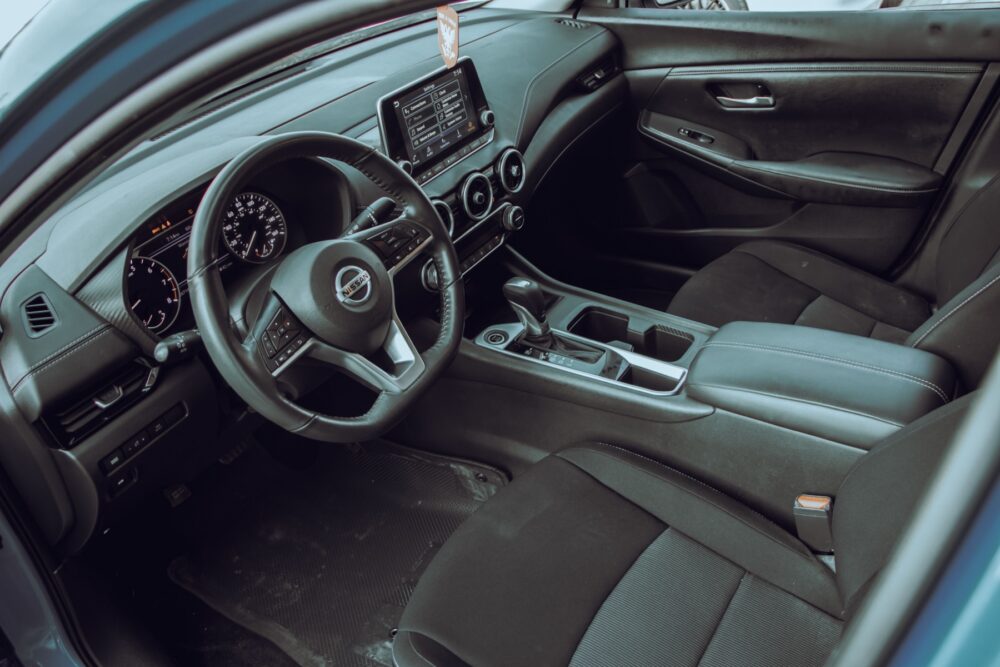
If you want “Nissan Sentra leather seats,” start with the owner’s manual for your exact model year—not a marketplace compatibility claim. Nissan’s 2024 Sentra owner’s manual warns against installing additional trim material, including seat covers, around the side air bags. That makes dealer or qualified upholstery guidance the first filter for any front-seat upgrade; price and appearance come later.
Below, we break down what people actually mean by “Sentra leather seats,” how the supply side works, which option fits your use case, and what to check before you wire money to a supplier.
What people mean by “Nissan Sentra leather seats” today
In real-world shopping, “Nissan Sentra leather seats” can mean four very different things:
- Factory leather or leather-appointed seats
Newer Sentra trims marketed in the U.S. emphasize a more premium interior, including leather-look or leather-appointed seating on higher trims rather than cloth across the board. Nissan’s own materials highlight features like TailorFit-style seating and premium interior finishes on current Sentra models, but the exact material varies by year and trim.
- Full leather upholstery kits (OEM-style)
These are replacement upholstery packages cut for specific Sentra generations. Companies such as LeatherSeats.com sell complete leather interior kits designed to either replace or tightly cover factory cloth for an OEM-like appearance. They typically use real leather (often with vinyl sides) and require removing the original seat covers, usually by a professional trimmer.
- Custom-fit leatherette seat covers for Sentra
Brands like EKR sell custom-fit leather or leatherette covers marketed for specific Sentra model ranges (for example, 2013-2025). These covers wrap over your existing seats to mimic leather without altering the factory upholstery. They’re often sold per-vehicle set, aimed at owners who want a leather look and protection with DIY-friendly installation.
- Universal leather/PU leather seat-cover sets
Cross-border sellers list universal leather and PU leather sets advertised as suitable for most 5-seat cars. These don’t follow Sentra’s exact seat pattern; instead, they rely on straps and elastic panels to fit a wide range of compact sedans. A listing that names Sentra does not override Nissan’s instructions. Do not put a universal cover on a front seatback when the applicable owner’s manual warns against it; ask a Nissan dealer or qualified installer what, if anything, is permitted for your model year.
If you’re an individual owner, your main choice is usually between a Sentra-specific upholstery kit, a custom-fit leatherette cover set, or a reasonably high-end universal kit. For small ecommerce sellers, universal kits and a few Sentra-focused SKUs are typically the most practical starting point.
Industry landscape for Sentra leather seat upgrades and wholesale supply
The supply chain for “Sentra leather seats” is fragmented. Different product types come from different parts of the industry:
- Automaker/OEM ecosystem – Nissan and its tier-1 suppliers handle factory seat frames and original upholstery (cloth, leather, leather-look materials). Dealers may sell OEM replacement seat covers, but these are usually expensive and not structured for small wholesale.
- Specialist upholstery houses – Companies like LeatherSeats.com design and cut Sentra-specific leather interior packages. They operate more like made-to-order manufacturers than mass wholesalers. Their kits give you an OEM-like look and often support color/insert customization (e.g., contrast stitching, perforated inserts), but they assume either a professional installer or a savvy DIYer.
- Vehicle-specific seat-cover brands – EKR and similar brands focus on custom-fit covers for popular models. These are often produced in upholstery factories in Asia or Mexico, then distributed through brand websites and retail marketplaces. They’re closer to consumer packaged goods than bespoke upholstery and are not always set up for private-label wholesale unless you negotiate.
- Universal seat-cover manufacturers – A lot of the volume lives here. Factories in China and neighboring manufacturing hubs produce universal leather, Nappa-style leather, and PU leather seat-cover sets in large runs. These feed into cross-border marketplaces, regional distributors, and private-label brands.
Many universal kits are marketed as “fits most 5-seat cars,” and some listings mention Nissan models like Sentra among their example vehicles. The same factories often produce related interior accessories—neck pillows, lumbar cushions, organizers—which is relevant if you want to offer complete interior bundles.
For US small businesses, this means:
- OEM-style upholstery is usually semi-custom and low-volume, priced like a premium upgrade.
- Custom-fit covers are mid-volume, higher unit cost but easier to sell on fit/appearance.
- Universal kits are high-volume, lowest per-set cost, and dominate cross-border sourcing.
Matching product type to your Sentra and use case
Here’s a concise comparison to help you choose. The cost and complexity cells are editorial ranges based on typical market behavior; expect variation by supplier.
| Product type | Best for | Fit & look (Sentra) | Install difficulty | Typical unit cost band* |
|---|---|---|---|---|
| Used OEM leather/leather-look seats | Owners wanting factory look & features | Exact OEM fit, OEM material | High (seat swap) | High vs covers |
| Full leather upholstery kit | Owners/builders wanting upscale interior | Very close to OEM; fully tailored | High (upholstery work) | High |
| Custom-fit leatherette covers | Daily drivers; side hustle resellers | Model-specific, close visual match | Medium (DIY possible) | Medium |
| Universal leather/PU cover set | Budget-conscious owners; small wholesalers | Generic; depends on pattern | Low–medium | Low–medium |
*Cost band is relative: used OEM and full upholstery typically cost more per seating row than most leatherette or universal cover sets.
Scenario: single Sentra owner
- If your car already has leather or TailorFit-style seats but they’re worn:
– Consider a Sentra-specific upholstery kit from a specialist, or sourcing used OEM seats from salvage or a used-parts marketplace. Used Sentras with leather interiors show up on sites like CarMax, which implies a flow of take-off or salvage seats in the parts market. – Have a Nissan dealer or qualified installer confirm that the exact part and installation preserve the vehicle’s restraint systems.
- If your Sentra currently has cloth:
– Mid-budget, OEM-like look: Sentra-specific leather upholstery kit plus professional install. – Budget-focused with solid appearance: custom-fit leatherette covers marketed for your Sentra generation (e.g., EKR for model years 2013-2025). – Cheapest non-front-seat refresh: consider rear-seat or accessory options only where the exact owner’s manual permits them. Do not treat “airbag-friendly stitching” in a listing as permission to cover a Sentra front seatback.
Scenario: small ecommerce or detail shop
- Goal: flip or detail Sentras for resale
– Custom-fit covers per generation give you a repeatable SKU with high perceived value and faster installs than full upholstery. – Limited SKUs: one or two colors that match common Sentra interiors.
- Goal: online store selling seat covers
– Universal leather/PU sets make sense as your base product, since they serve Sentra owners and many other compact sedans. – You can add a smaller line of “Sentra-specific” covers by working with factories that already cut patterns for similar Nissan seats, but expect higher MOQs or development fees.
How to evaluate and communicate with seat and cover suppliers
Sentra seats vary by generation and trim, and the front seatbacks can contain side air bags. That makes the vehicle manual and qualified installation—not supplier messaging—the controlling safety check.
Fitment details to confirm
Before you pay a deposit or place a batch order, send suppliers this specific info:
- Model year and generation (e.g., 2020 Sentra vs 2016) – the seat frames and headrests are different.
- Trim level and current seat material – some trims already use leather-look or TailorFit-style seats, which affects how covers sit.
- Front seat features – seat-mounted side airbags, adjustable lumbar, seatback pockets, integrated headrests. Ask how their design handles each feature.
- Rear seat layout – 60/40 split, armrest pass-through, fixed bench, or child-seat anchors that must remain accessible.
Ask vendors of Sentra-specific upholstery or covers (like those selling through sites such as EKR or LeatherSeats.com) what model years their pattern covers and what happens if your car falls outside that range.
Safety gate before supplier questions
The 2024 Nissan Sentra manual says not to install additional trim material, such as seat covers, around the side air bag and recommends Nissan dealer involvement for work around the side-air-bag system. Check the manual for your exact year. A seller’s “airbag compatible” label, seam photo, or reassurance is not equivalent to Nissan authorization or a vehicle-specific safety test. If the manual prohibits the intended installation, reject the product for that application.
Material and durability specifics
Use materials language that maps to your customers’ expectations:
- Is the material full leather, top-grain leather, or PU leather (synthetic)?
- Which surfaces are genuine leather vs vinyl or PU (e.g., contact areas leather, sides vinyl)?
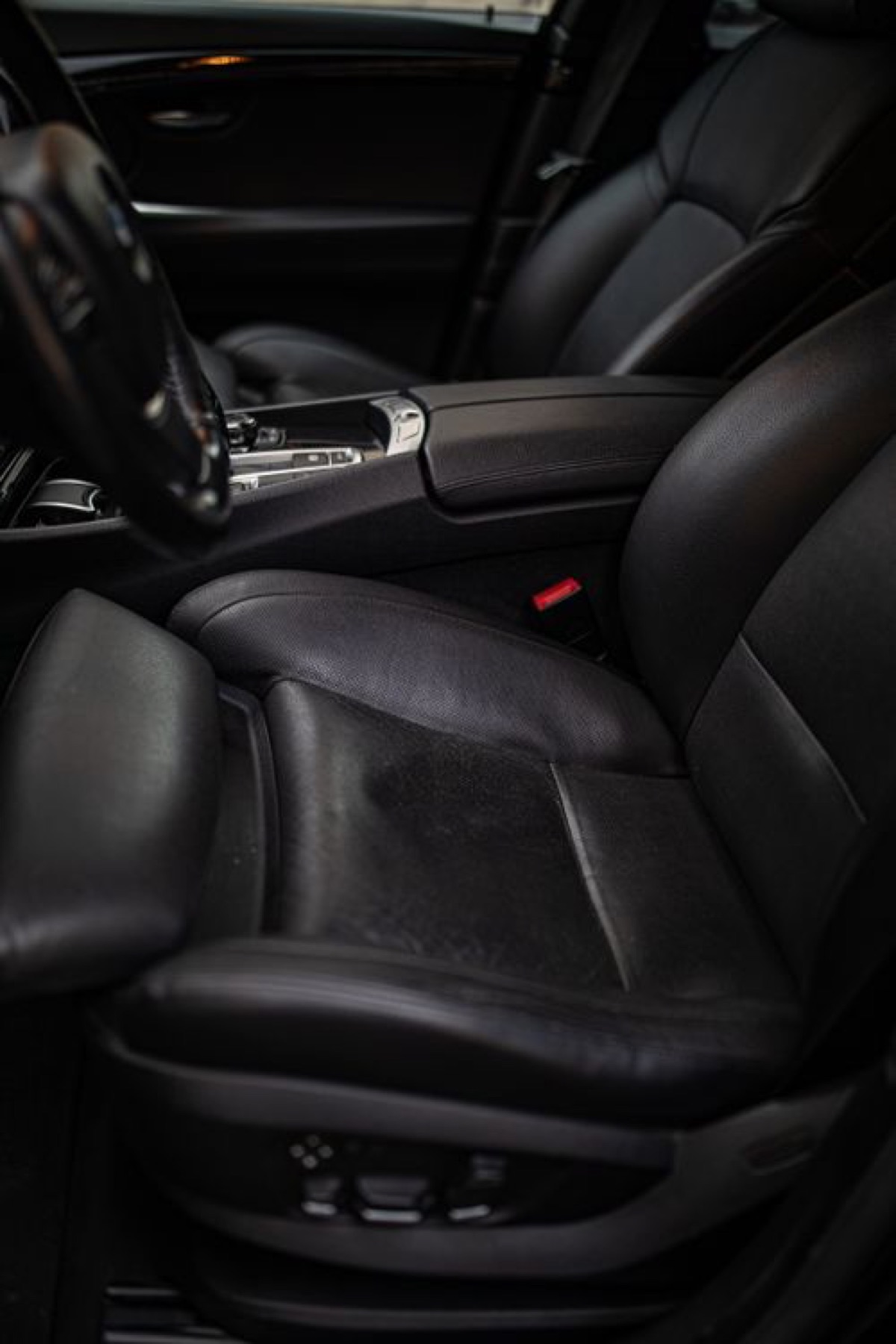
- What cleaning and care routine do they recommend? Many leather and leatherette covers stay in better shape with regular cleaning and, for real leather, occasional conditioning.
Editorially, leather and higher-end leatherette are often marketed as easier to wipe clean than cloth and as more durable with proper care. That resonates with buyers worried about stains and resale appeal.
Communication habits that help both sides
For cross-border suppliers especially, keep messages structured:
- Send photos of your existing Seats (front/rear) with the seatback partially reclined so stitching lines and airbag tags are visible.
- Use simple bullet lists in your message: Car: 2018 Nissan Sentra SV; Seats: cloth, manual, 60/40 rear; Features: side airbags, rear armrest.
- For wholesale, ask for a test order of 1-3 sets before committing to larger quantities so you can check real-world fit on a Sentra.
MOQ, pricing, and logistics when importing leather seat covers
Cross-border universal leather and PU leather kits are one of the few ways to get small-batch pricing without signing a brand contract. Listings often have no explicit MOQ beyond “1 set,” which lets US buyers test the waters.
Around the 2026-09-15 research date, DHgate product snapshots showed:
- Low-cost PU leather sets – A universal 5-seat PU leather cover set such as “PU Leather Seat Covers For 5 Inteior Accessories Seats Protectors Cushions for Car SUV Universal” was listed in the roughly mid-$30s to mid-$40s per set range (example listing).
- Mid-range leather/PU sets – A “Luxury PU Leather Seat Covers Complete Set…For Most Car Models” carried a higher band, roughly around the $160–$190 range per set (example listing).
- Premium-feel Nappa-style kits – A 5-seat Nappa leather/ice silk universal set, such as “5-Seat Car Seat Cover, New Nappa Leather Ice Silk Fixed Lumbar Support, Four-Season Universal, Suitable For Most Cars”, showed prices around the mid-$140s to mid-$150s per set (example listing).
- Mixed-accessory bundles – Some universal leather interior bundles (seat covers plus mats or cushions), like “Luxury Car Seat Cover Leather Interior Automobiles Seat Covers Mats Universal SEAMETAL Seat-Cover Protector Pad Auto Accessories”, were in the ballpark of roughly $110–$200 per package (example listing).
Listings and prices can change, but this snapshot suggests a typical small-wholesale pattern:
- Single-set friendly: Many listings let you buy 1 set at retail-like prices, with informal price breaks if you message the seller about multiple sets.
- Wide price spread: Under roughly $50 per set for budget PU, up into the mid-$100s and beyond for more complex or thicker Nappa-style designs.
- Accessory upsell potential: Vendors often also carry neck pillows, lumbar cushions, and organizers in matching leather or PU materials (for example, Nappa leather neck pillows and faux-leather bone-shaped headrest cushions), which can be bundled into higher-margin kits.
Logistics expectations
For small US buyers:
- Lead times: Plan for manufacturing plus international shipping. Even off-the-shelf universal kits can take multiple weeks door-to-door, especially in peak seasons.
- Shipping modes: Single sets often go via parcel carriers. Larger quantities may shift to economy air or sea consolidation, which affects landed cost per set.
- Landed cost structure: At 5-20 sets, shipping and duties can be a big share of your per-set cost. It usually makes sense to calculate a per-unit cost that includes product, shipping, customs fees, and any packaging or labeling you add stateside.
If you’re reselling, test the price ceiling in your market before you over-order; a $40 landed-cost PU set has very different retail expectations than a $170 Nappa-style kit.
Comparing sourcing channels for Sentra leather seat upgrades
You have four main sourcing paths: local upholstery, OEM/used, brand-specific covers, and cross-border universal kits. Each suits a different risk and budget profile.
1. Local upholstery and trim shops
Strengths
- Can install full leather upholstery kits (like those from LeatherSeats.com) and fine-tune fit on your actual Sentra.
- You get face-to-face discussion of stitching, colors, and any work around airbags and sensors.
- Good for single-vehicle projects, high-end builds, or customers who want a specific color combo.
Limits
- Labor cost is significant, and shops may prefer their own material suppliers.
- Not scalable if you want to stock inventory for resale.
2. OEM and used parts channels
Strengths
- Higher fitment confidence when the part is confirmed by VIN and installed through an appropriate Nissan or qualified repair channel.
- You maintain the original design cues that buyers expect on higher trims.
- Salvage and used parts channels often have leather or leather-appointed Sentra seats pulled from donor cars, especially since used Sentras with leather are common in retail listings.
Limits
- Availability is variable by year and color.
- Whole-seat swaps can be heavy, costly to ship, and may require reprogramming or pairing sensors in newer cars.
3. Brand-specific custom-fit seat-cover vendors
Strengths
- Products marketed specifically for Nissan Sentra ranges may offer a more tailored look than universal kits, but marketing language does not establish safe use around side air bags.
- Installation is usually DIY-capable, and you don’t have to strip the original upholstery.
- Attractive for detailing shops or flippers who want a consistent upgrade across multiple Sentras.
Limits
- Higher unit cost than budget universal kits.
- Some brands aren’t set up for private-label or large wholesale without negotiation.
4. Cross-border universal leather and PU cover kits (including DHgate)
Cross-border marketplaces host many universal leather/PU kits positioned for most 5-seat cars. Around the 2026-09-15 research date, DHgate listings such as the universal Nappa leather and PU sets linked above show a broad range from roughly the low tens of dollars into the low hundreds per set, with many sellers allowing one-set test purchases.
Where this path fits
- Single Sentra owner on a tight budget: use DHgate to compare materials or non-safety-critical accessories, but do not install a universal cover on a front seatback where the applicable Nissan manual warns against it.
- Small resellers: these kits let you serve multiple compact-sedan owners (Sentra, Corolla, Civic, etc.) with one SKU family, and you can layer in matching pillows or organizers from the same supplier.
Caveats
- Listings that mention “Nissan Sentra” are often still universal. Confirm dimensions and rear-seat layout, but treat the owner’s manual as the safety authority for front-seat use.
- Product photos and seam labels can help assess construction, but they cannot prove safe air-bag deployment for a specific Sentra year and trim.
If you’re primarily a Nissan-focused shop or reseller, a blended approach often works best: OEM or upholstery for high-end builds, custom-fit Sentra covers for mid-tier customers, and universal leather/PU kits (possibly sourced via a marketplace like DHgate) as your entry-price option.