
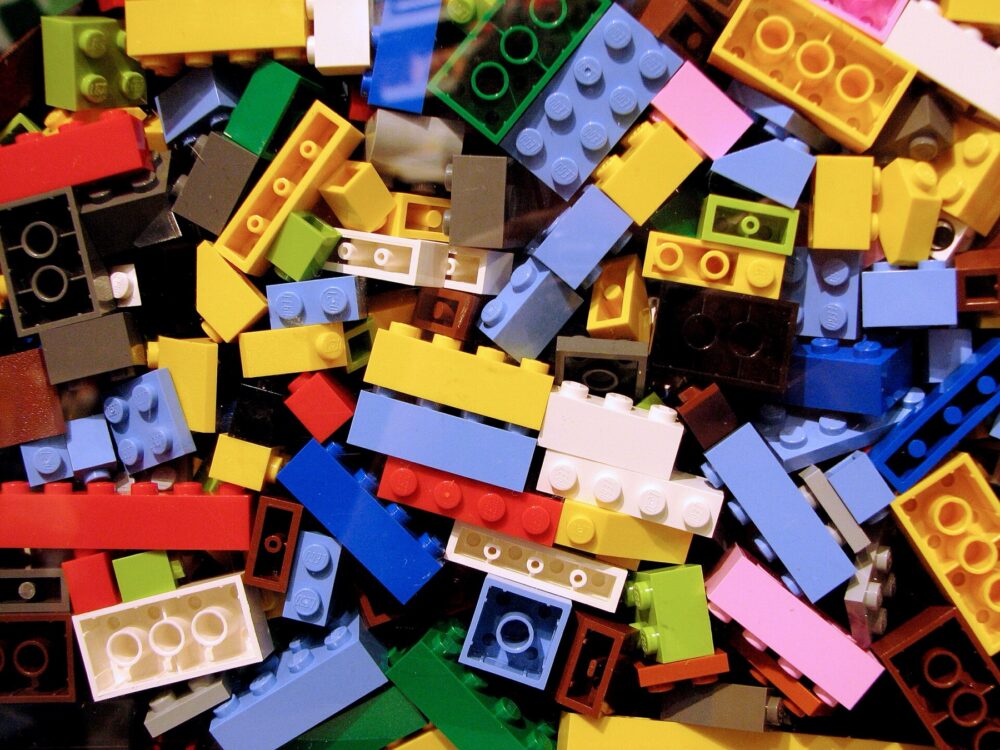
Official Lego wholesale in the US runs through a closed network of partner distributors, and most small retailers never buy directly from Lego. If you’re a small shop or online seller, your realistic paths are: apply with a specialty distributor like ToyHouse LLC, buy secondary Lego inventory through liquidators, or source Lego-compatible bricks and sets through general marketplaces or import channels. DHgate, for example, is a China-based B2B marketplace that connects buyers with toy and brick-compatible manufacturers, but it is not an authorized Lego source.
For many small US businesses, the decision is less “How do I buy Lego wholesale?” and more “Do I fight to join the official Lego channel, or use alternative inventory that behaves like Lego on the shelf?” This guide walks through how Lego distribution actually works, and what that means for your sourcing strategy.
How Lego Wholesale and Distribution Actually Work in the US
Lego doesn’t run a loose, open-door wholesale program. Stock flows from Lego factories and regional hubs through a controlled distributor network to major chains and selected partners, who then serve retailers of different sizes.
A high-level description of this structure comes from independent sourcing resources and Lego-focused sites: Lego wholesale and distribution is the set of processes and partners that move Lego products from the manufacturer to retailers and resellers, covering physical stores and ecommerce channels in a structured way rather than via open cash-and-carry wholesalers.Source
For smaller US specialty and independent retailers, one key gateway is ToyHouse LLC. ToyHouse describes itself as the exclusive wholesale partner distributor for LEGO Systems, Inc., serving smaller specialty and independent retailers across the U.S. and Canada.Source That “exclusive” language matters: it signals that if you’re a small brick-and-mortar toy shop or hobby store, ToyHouse (or a similar named partner) is likely your only path into official, brand-new Lego sets at wholesale.
On top of this partner structure, Lego has been investing heavily in North American infrastructure. The company announced a new regional distribution center in Virginia to support a US Lego factory that is under construction.Source This doesn’t open wholesale to everyone, but it shows that Lego is tightening its own supply chain rather than decentralizing it.
Independent sources that track Lego wholesale options in the USA list multiple authorized distributors, reinforcing that Lego relies on a selective, partner-driven wholesale model rather than letting every reseller open an account.Source The list is short enough that many small sellers won’t qualify or won’t get the terms they hope for.
In practice, that leaves you with three very different Lego-related inventory paths:
- Authorized Lego distribution – Apply to distributors like ToyHouse and any other listed partners that serve your store profile. This is the only route to official, current Lego sets with full branding and marketing support.
- Secondary Lego inventory – Buy bulk lots of Lego from B2B liquidators and closeout platforms. Sites like 888lots show Lego-branded items in bulk; availability, mix, and condition fluctuate and are not controlled by Lego.Source
- Lego-compatible imports – Source brick-compatible toys from manufacturers, often overseas, that fit together and look similar but are not Lego. This can include cross-border marketplaces (DHgate, Alibaba, etc.), direct factory relationships, or US importers.
For a small US seller, the choice among these three paths is the core business decision.

Evaluating Lego and Lego-Compatible Suppliers Across Channels
Once you start looking at potential suppliers, the risk shifts from “Can I get inventory?” to “Are these bricks what they claim to be, and will they resell well?” The checks differ depending on whether you’re dealing with authorized Lego distributors, secondary Lego lots, or compatible imports.
1. Authorized distributors (ToyHouse and peers)
With distributors like ToyHouse, your primary job is proving that your business fits their profile and understanding their terms:
- Account eligibility: Their role is to serve smaller specialty and independent retailers,Source not casual flippers. Expect to provide business registration details, store information, and potentially purchase projections.
- Brand and channel rules: Authorized Lego distributors often enforce brand guidelines—things like MAP (minimum advertised price) and channel restrictions (e.g., limits on selling on marketplaces). Clarify these before you bank your model on Lego.
- Assortment control: You may not be able to cherry-pick only hyped sets. Some partners push balanced assortments across themes and age ranges, which affects your cash flow.
These are high-friction relationships but give you clean, official product if you qualify.
2. Liquidation and secondary Lego inventory
Platforms like 888lots and other B2B liquidators sell Lego-branded inventory in bulk lots.Source This channel feels easier to access but demands more due diligence:
- Lot composition: You’re often buying mixed sets, overstock, or returns. Ask for manifest detail (SKU counts, themes, age ranges) and how much is new vs. opened box.
- Condition grading: Clarify how the seller grades items (e.g., “new,” “shelf-pull,” “customer returns”). A Lego set missing bags or instructions can kill margin.
- Authenticity signals: Most liquidators source from mainstream retailers, which reduces counterfeit risk but doesn’t eliminate it. Look for retail-box photos, retail source description, and buyer reviews specific to Lego lots.
- Resale channel fit: Overstock of last season’s sets might be perfect for a local toy shop, but less attractive if you’re chasing current-theme traffic on Amazon.
Liquidation works best if you’re comfortable sorting, re-boxing, or parting out bricks and can live with inconsistent supply.
3. Lego-compatible imports and marketplaces
For compatible bricks and sets, you’re evaluating factories, importers, or marketplace sellers instead of Lego’s ecosystem. On broad marketplaces, the key filters become:
- Technical compatibility: Look for explicit claims that bricks fit standard Lego dimensions and stud spacing. Ask for small sample orders to physically test clutch power and fit before any large purchase.
- Material and safety: Request basic material descriptions (ABS vs. other plastics) and, for US sales, any safety documentation suppliers are willing to share. You’re responsible for not importing toys that fail local regulations.
- Brand/IP risk: Anything using Lego’s logo, set numbers, or trademarked look-and-feel crosses into IP trouble. Stick to clearly distinct, non-Lego-branded products if you’re not working through Lego’s official channels.
On DHgate and similar platforms, you’re not evaluating Lego; you’re evaluating anonymous factories and trading companies. That’s higher flexibility with higher responsibility. Guides like this sourcing-focused overview of DHgate suppliers can help you structure those checks.
Cost, MOQ, and Channel Trade-Offs (Including DHgate)
Each sourcing path has its own cost shape, minimum order realities, and operational headaches. You won’t get precise numbers until you request quotes, but you can plan around typical patterns.
Here’s a compact view of how the three main Lego-related channels tend to compare:
| Channel type | Access & MOQ (editorial judgment) | Cost dynamics (editorial judgment) | Key risks |
|---|---|---|---|
| Authorized Lego distributor | Account-based; MOQs by case/theme common | Stable wholesale margins; MAP or price rules likely | Hard to qualify; brand rules limit marketplaces; commitment to assortments |
| Liquidation / secondary Lego | Lot-based; MOQs per pallet/lot | Deep discounts on mixed, often older inventory | Condition variance; inconsistent supply; manifest gaps |
| Lego-compatible imports (incl. Cross-border multi-seller) | Often low stated MOQs; small test orders possible | Wide price spread; tiered pricing as volume growsSource | Authenticity/IP issues if branding is wrong; quality variation; logistics complexity |
- Authorized distributors give the cleanest pricing structure—formal wholesale with predictable case quantities. But you may need to commit to broad assortments and stick to pricing rules that cap your upside on hot sets.
- Liquidation lots can produce very attractive per-unit costs, especially if you’re willing to part out sets or mix themes. Your true cost of goods includes labor to sort, test, and repackage, plus the risk that some items are unsellable.
Where DHgate-style sourcing is actually useful
For brand-pure Lego sets, DHgate is not the channel—you should be working through authorized distributors or legitimate liquidators. Where DHgate and similar marketplaces can make sense is if your business model is:
- Selling unbranded or clearly distinct brick-compatible toys,
- Running a custom kit or MOC (My Own Creation) business where the design is yours but the bricks don’t need the Lego logo, or
- Testing low-cost brick bundles for craft, education, or bulk play use.
In these scenarios, low stated MOQs, tiered pricing, and access to manufacturers can justify the extra work of supplier vetting. To go deeper on how to pick marketplace suppliers, you can read focused guides such as Find wholesale suppliers on DHgate and Choose a DHgate wholesale supplier.
If your brand positioning depends heavily on the Lego name and official boxes, though, your time is better spent pursuing authorization through Lego’s distributor network and supplementing with secondary lots when the numbers line up.