
At a Glance
Launching a wholesale hip hop jewelry business means buying urban-style jewelry in bulk at low cost, then reselling to retailers, online brands, or event vendors at a margin. Your success depends on:
- Choosing the right sourcing platforms (marketplaces, directories, and direct factories)
- Structuring a low-risk path from small samples to scalable inventory
- Staying legally compliant and commercially realistic on pricing and quality
This guide focuses on platforms—how to use DHgate and other routes—to build a wholesale operation that can grow without locking you into risky stock or unreliable suppliers.
What the Platform Type Means
Before picking suppliers, clarify what kind of business you’re building and how platforms fit into it.
Wholesale hip hop jewelry business: definition
- Core activity: Buy hip hop-style jewelry (chains, pendants, rings, grills, bracelets, earrings) in bulk and resell to other businesses or bulk-buying consumers.
- Customer types: Boutique owners, online store operators, pop-up vendors, event organizers, and sometimes influencers or stylists buying in volume.
- Product profile: Fashion jewelry rather than fine jewelry—plated metals, cubic zirconia, stainless steel, brass, and alloy pieces with bold, urban aesthetics.
Platform role in your business
Platforms are tools that connect you to suppliers. They differ in:
- How much control you have over the relationship (direct vs intermediated)
- How much verification you must do yourself (factory checks, samples, contracts)
- How quickly you can test and scale (small MOQs vs large factory runs)
You’re not just “buying from a website”—you’re choosing a sourcing model that affects:
- Your risk (quality, delivery, legal issues)
- Your margins (price, shipping, duties)
- Your scalability (can you reorder reliably and grow?)
The Main Platform Types
Most wholesale hip hop jewelry sellers mix several platform types. Here’s what each route typically offers.
1. Cross-Border B2B Marketplaces (e.g., DHgate, AliExpress, Alibaba.com)
- What they are: Online marketplaces listing many suppliers, mostly in manufacturing hubs (often Asia), offering bulk quantities at competitive prices.
- Strengths:
- Huge assortment of hip hop styles
- Easy price comparison across suppliers
- Low MOQs for testing designs
- Tradeoffs:
- Quality and consistency vary by seller
- You must verify suppliers and listings carefully
- Cross-border shipping times and import duties to manage
2. Domestic Wholesale Marketplaces & B2B Platforms
- Examples: Regional B2B marketplaces, local wholesale portals, trade-center websites.
- Strengths:
- Faster shipping and easier returns
- Better alignment with local regulations and standards
- Easier communication and time zones
- Tradeoffs:
- Higher prices than cross-border options
- Smaller assortment, especially for niche hip hop styles
- MOQs may be higher for certain categories
3. Manufacturer Direct (Factory Relationships)
- What it is: Working directly with factories that produce hip hop jewelry.
- Strengths:
- Best per-unit pricing at scale
- Custom designs, branding, and packaging
- Long-term supply stability if managed well
- Tradeoffs:
- Requires larger orders and more capital
- More complex logistics and quality control
- Contracts, compliance, and communication overhead
4. Trade Shows and Physical Wholesale Markets
- Examples: Jewelry trade shows, urban fashion expos, wholesale districts in major cities.
- Strengths:
- See and handle products in person
- Build relationships and negotiate directly
- Spot trends and new styles early
- Tradeoffs:
- Travel and time costs
- Limited frequency (events, seasonal shows)
- Harder to systematically compare prices and suppliers
5. Brand-Authorized Distributors
- What they are: Official distributors for specific branded hip hop jewelry lines.
- Strengths:
- Clear brand authorization and marketing support
- Consistent quality and packaging
- Easier to position as “premium” or “official” in your market
- Tradeoffs:
- Higher wholesale prices
- Strict rules on territories, pricing, and branding
- Less flexibility in product mix
Comparison Matrix
Use this matrix to see how platform types differ for a hip hop jewelry wholesaler.
| Platform Type | Assortment Breadth | Typical MOQ | Price Level | Customization Potential | Risk Profile (Quality/Delivery) | Best Use Case |
|---|---|---|---|---|---|---|
| Cross-Border B2B Marketplaces | Very high | Very low to medium | Low to very low | Moderate (some custom) | Medium–high (varies by seller) | Testing styles, price benchmarking, early scaling |
| Domestic Wholesale Marketplaces | Medium | Low to medium | Medium | Low–moderate | Medium (local standards) | Faster restock, lower complexity |
| Manufacturer Direct | Medium–high | High | Very low at scale | High | Medium (if vetted) | Scaling proven designs, private label |
| Trade Shows / Physical Markets | Medium | Low to high | Medium | Low–moderate | Medium (you inspect in person) | Trend discovery, relationship building |
| Brand-Authorized Distributors | Low–medium | Medium | High | Low | Low (brand-controlled) | Premium positioning, official branded lines |
Decision Framework
To choose platforms and structure your business, walk through these decisions step by step.
Step 1: Define Your Business Model
Decide who you’re selling to and how:
- Reseller to small retailers: You need variety, small MOQs, and fast restocks.
- Bulk supplier to larger chains or online brands: You need stable, scalable supply and consistent quality.
- Hybrid (retail + wholesale): You need both trend testing and reliable core lines.
Step 2: Clarify Your Risk Tolerance and Budget
Ask yourself:
- How much capital can you tie up in inventory?
- How much quality variation can your customers tolerate?
- How comfortable are you with cross-border logistics?
Low capital and high flexibility usually favor marketplaces and small MOQs. Higher capital and a need for consistency push you toward manufacturer direct and brand-authorized routes.
Step 3: Map Platforms to Your Growth Stages
Think in three stages: Sample → Validate → Scale
-
Sample Stage (Idea Testing)
- Use cross-border marketplaces and domestic wholesalers.
- Order small batches of multiple styles (e.g., 10–50 units per SKU).
- Test quality, plating durability, stone setting, and customer response.
-
Validate Stage (Early Sales)
- Track which SKUs sell and which don’t.
- Reorder from the same suppliers in slightly larger quantities.
- Start negotiating better pricing and terms.
-
Scale Stage (Core Lines and Volume)
- Move your best-performing SKUs to more stable supply:
- Manufacturer direct for custom or high-volume items.
- Brand-authorized distributors for premium lines.
- Keep marketplaces for trend testing and limited drops.
- Move your best-performing SKUs to more stable supply:
Step 4: Decide Your Platform Mix
Use this scenario table to align your situation with platform choices.
| Scenario | Recommended Primary Platforms | Notes |
|---|---|---|
| Very low budget, testing many styles | Cross-border marketplaces + domestic wholesalers | Focus on low MOQs, wide variety, strict supplier vetting |
| Moderate budget, building a stable catalog | Mix of marketplaces + manufacturer direct | Gradually shift proven SKUs to factory relationships |
| Premium positioning, brand-conscious customers | Brand-authorized distributors + domestic B2B | Use marketplaces only for non-branded accessories |
| Fast local delivery is critical (events, pop-ups) | Domestic wholesalers + physical wholesale markets | Prioritize local stock and short lead times |
| Long-term private label brand (your own logo, boxes) | Manufacturer direct + selected marketplaces | Use marketplaces for trend scouting and backup supply |
Where DHgate Fits Naturally
DHgate is one of several cross-border B2B marketplaces that can be useful for hip hop jewelry wholesalers, especially in the early and mid stages of your business.
Natural Use Cases for DHgate
-
Assortment Exploration
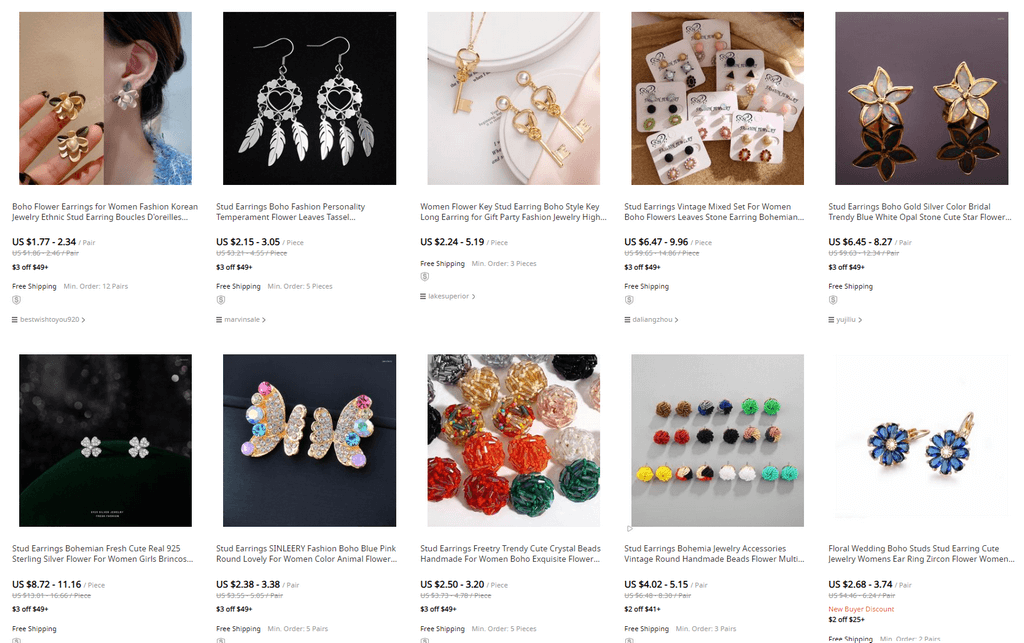
- Browse a wide range of hip hop chains, pendants, rings, and sets.
- Compare styles and price points across multiple sellers.
-
Price Benchmarking
- Check how per-unit prices vary by material (stainless steel vs brass), plating thickness, and stone type.
- Use DHgate listings to understand the global price floor before negotiating with other suppliers.
-
Low-MOQ Sampling
- Many sellers offer small minimum order quantities.
- This helps you test multiple designs without committing to large runs.
-
Backup and Secondary Suppliers
- Once you have a core line from a factory or domestic wholesaler, DHgate can serve as:
- A backup source for similar styles
- A way to quickly add complementary pieces (e.g., matching bracelets or earrings)
- Once you have a core line from a factory or domestic wholesaler, DHgate can serve as:
When DHgate Is Less Suitable
DHgate is less likely to be your primary route when:
- You need official brand-authorized products with strict warranties.
- Your customers expect local after-sales support and standardized returns.
- You’re dealing with regulated or high-value fine jewelry where certification and local compliance are central.
In those cases, domestic wholesalers, brand-authorized distributors, or local manufacturers are usually more appropriate.
What to Verify Before Using It
Whether you use DHgate or any other marketplace, verification is critical. Focus on three layers: legal setup, supplier vetting, and product testing.
1. Legal and Compliance Basics
Before placing wholesale orders:
-
Register your business
- Choose a legal structure (sole proprietorship, LLC, corporation) based on your country’s rules.
- Obtain necessary tax IDs or business numbers.
-
Understand import rules
- Check customs regulations for jewelry and fashion accessories.
- Learn how duties, VAT, or sales tax apply to your shipments.
-
Check labeling and safety requirements
- Some regions regulate nickel content, lead, cadmium, and other materials in jewelry.
- Ensure your products meet local standards, especially for items worn on skin.
2. Supplier and Listing Evaluation on Marketplaces
When browsing DHgate or similar platforms:
-
Review seller history
- Look at how long the seller has been active.
- Check the number of completed transactions and repeat buyers where visible.
-
Study product details
- Materials (stainless steel, brass, alloy, plating type and thickness)
- Stone type (cubic zirconia, glass, synthetic stones)
- Weight and dimensions (important for chains and pendants)
-
Read buyer feedback
- Focus on comments about:
- Plating durability (does it fade quickly?)
- Stone setting quality (stones falling out?)
- Color accuracy and finish
- Focus on comments about:
-
Communicate directly
- Ask for:
- Real photos or videos of the actual product
- Clarification on MOQs, lead times, and packaging
- Whether they can keep the design consistent across reorders
- Ask for:
3. Sample-to-Scale Inventory Workflow
Use a structured process to minimize risk:
-
Sample Order
- Order a small quantity of each style from 2–3 different suppliers.
- Inspect items for:
- Finish quality and plating
- Clasp strength and chain links
- Stone alignment and setting
-
Test in Market
- Offer samples to a small group of customers or retailers.
- Track:
- Sell-through speed
- Returns or complaints
- Feedback on style and perceived quality
-
Refine Supplier List
- Keep suppliers whose products:
- Match your quality expectations
- Arrive on time and as described
- Drop suppliers with inconsistent quality or communication issues.
- Keep suppliers whose products:
-
Scale Orders Gradually
- Increase quantities for proven SKUs.
- Negotiate better pricing for larger orders.
- Consider moving high-volume items to manufacturer direct relationships while keeping marketplaces for new styles.
4. Pricing, MOQs, and Bundles
To stay commercially viable:
- Calculate landed cost per unit
- Product price + shipping + duties/taxes + packaging.
- Set wholesale pricing
- Commonly 1.5–3x landed cost, depending on your market and positioning.
- Use bundles
- Offer sets (chain + bracelet + ring) to retailers at a slight discount.
- Bundles help move inventory faster and increase average order value.
FAQ
What is a wholesale hip hop jewelry business, in simple terms?
It’s a business that buys hip hop-style jewelry in bulk at low prices and resells it to other businesses or bulk buyers at a markup. You’re a link between manufacturers/wholesalers and retailers or large-volume customers.
Do I need to be a member of any special jewelry association to start?
In most regions, you don’t need to join a specific association to start a fashion jewelry wholesale business. However, joining local trade or jewelry associations can help with networking, credibility, and staying informed about regulations.
Should I start with DHgate or look for local suppliers first?
If your priority is low-cost sampling and wide variety, cross-border marketplaces like DHgate can be useful early on. If you need fast delivery, easier returns, and simpler compliance, starting with local or domestic wholesalers may be better. Many successful wholesalers use both: marketplaces for trend testing and local suppliers for core lines.
How do I handle returns and refunds in a wholesale model?
You’ll need two policies:
-
Your policy with suppliers:
- Check each supplier’s terms on returns, defects, and order issues.
- Clarify how quickly you must report problems and what evidence is required.
-
Your policy with customers (retailers, vendors):
- Define what counts as a defect vs normal variation.
- Set time limits for returns and conditions (unused, original packaging).
- Decide whether you offer refunds, replacements, or credits.
Align your customer policy with what you can realistically recover or absorb from suppliers.
How do I compete with other hip hop jewelry wholesalers?
- Specialize in a niche (e.g., iced-out pendants, stainless steel chains, themed sets).
- Offer reliable quality and consistent reorders.
- Provide strong customer service and clear communication.
- Use platforms to spot trends early and refresh your catalog regularly.
- Consider value-added services: custom packaging, curated bundles, or style recommendations for retailers.
Is a membership in a buying club or wholesale network necessary?
Not strictly. Some wholesale networks or buying clubs offer negotiated pricing, shared logistics, or access to vetted suppliers. They can be helpful but are optional. Evaluate membership fees against the concrete benefits (discounts, access, support).
How much inventory should I start with?
Start lean. For a new wholesale hip hop jewelry business:
- Test 10–30 SKUs with small quantities (e.g., 10–50 units per SKU).
- Scale up only for designs that sell consistently.
- Avoid overcommitting to untested styles, even if the unit price is attractive.
Evidence & Official References
Use these reference types to ground your decisions and stay compliant:
What to Do Next
Use this as a quick launch checklist:
| Step | Action | Why it Matters |
|---|---|---|
| 1 | Define your target buyers (local shops, online resellers, event vendors) | Clarifies which platforms and product types to prioritize. |
| 2 | Choose 1–2 sourcing platforms (e.g., DHgate plus a domestic wholesaler) | Balances variety, cost, and delivery speed. |
| 3 | Build a test catalog of 10–30 SKUs | Lets you validate demand without overstocking. |
| 4 | Order samples and stress-test quality | Prevents returns and protects your reputation. |
| 5 | Calculate landed costs and set wholesale pricing tiers | Ensures every sale is profitable. |
| 6 | Create simple terms: MOQs, payment, shipping, returns | Makes you look professional and reduces disputes. |
| 7 | Launch on your chosen sales channels (B2B marketplace, direct outreach, social) | Starts the feedback loop and cash flow. |
| 8 | Track best-sellers and reorder from proven suppliers | Gradually shift volume to your most reliable partners. |
Start small, move fast, and document everything—suppliers, SKUs, margins, and customer feedback. With consistent testing and smart use of platforms like DHgate for variety and sampling, you can grow from a side hustle into a stable wholesale hip hop jewelry operation.