
At a Glance
Finding reliable wholesale jewelry suppliers is mostly about two things:
- Choosing the right platform type for the kind of jewelry you sell.
- Applying a consistent vetting process before you commit to any supplier.
Use this simple sequence:
- Define your jewelry category
- Fine jewelry (precious metals, gemstones)
- Demi-fine (gold vermeil, sterling silver, semi-precious stones)
- Fashion jewelry (plated metals, synthetic stones, trend-led designs)
- Match it to a platform type
- B2B marketplaces (DHgate, Alibaba, Global Sources)
- Curated wholesale platforms (Faire, Tundra, etc.)
- Trade shows and industry events
- Local distributors and manufacturers
- Vet each supplier
- Business legitimacy and track record
- Product quality and compliance
- Communication, MOQs, pricing, and terms
- Sample-first testing before large orders
DHgate fits naturally when you need small-batch, trend-driven fashion jewelry at competitive prices and want to compare multiple cross-border suppliers in one place. It’s one option among several, best used with a clear vetting and sampling workflow.
What the Platform Type Means
Before you pick suppliers, it helps to understand what “platform type” actually means in wholesale sourcing.
A platform is simply the route or environment where you find and interact with suppliers. Different platform types shape:
- How much control you have over quality and compliance
- How easy it is to compare prices and designs
- How much risk you take on with cross-border orders
- How quickly you can test new styles or categories
In wholesale jewelry, the main platform types are:
- Open B2B marketplaces – large, global sites where many suppliers list products.
- Curated wholesale platforms – more selective marketplaces focused on brands and retailers.
- Trade shows – physical events where you meet suppliers and see products in person.
- Local distributors / manufacturers – domestic companies you work with directly.
Your goal is not to find “the one best platform,” but to:
- Pick the platform type that fits your jewelry category and business stage.
- Use a repeatable vetting checklist across all platforms.
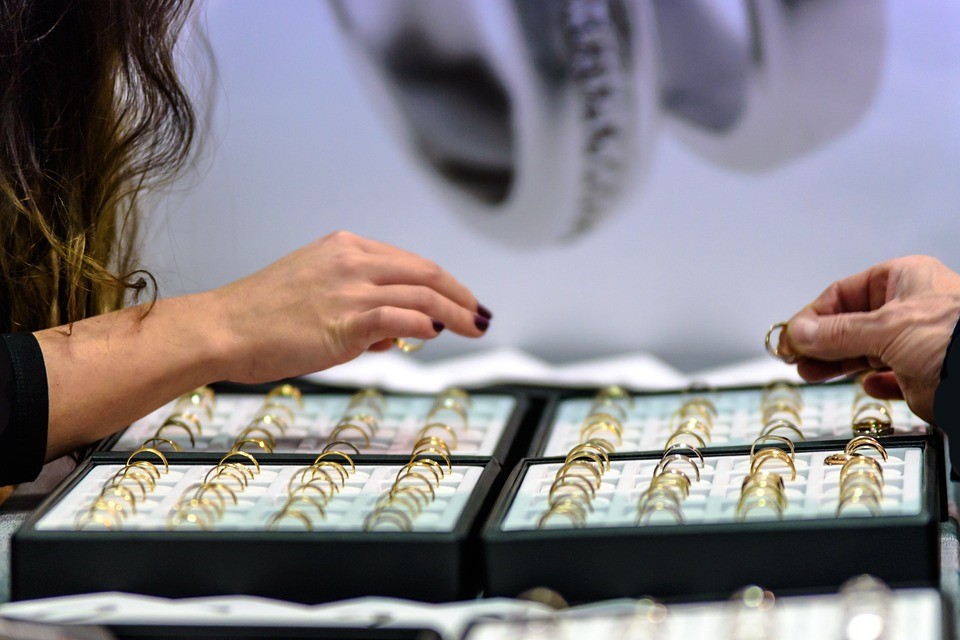
The Main Platform Types
1. Open B2B Marketplaces
Examples: DHgate, Alibaba, Global Sources
What they are: Large online marketplaces where thousands of suppliers list jewelry for wholesale buyers worldwide.
Best for:
- Fashion jewelry and trend-led designs
- Price-sensitive, small-batch testing
- Broad assortment and cross-supplier comparison
Key upsides:
- Huge variety of styles and materials
- Easy to compare prices and MOQs
- Good for testing new categories without long-term contracts
Key trade-offs:
- Quality and compliance vary widely
- Requires strong vetting and sample-first ordering
- Cross-border logistics and duties to manage
DHgate sits in this group: a global marketplace where you can browse many fashion jewelry suppliers, compare designs and prices, and place small to mid-sized orders once you’ve vetted sellers.
2. Curated Wholesale Platforms
Examples: Faire, Tundra, Abound
What they are: Online wholesale platforms that curate brands and suppliers, often focusing on independent labels and boutique retailers.
Best for:
- Demi-fine and branded fashion jewelry
- Retailers wanting ready-to-sell branded collections
- Stores that value brand storytelling and packaging
Key upsides:
- More curated supplier base
- Often clearer minimums and wholesale terms
- Easier to discover brands that fit a specific aesthetic
Key trade-offs:
- Higher price points than open marketplaces
- Less flexibility for custom designs
- Assortment may be narrower for certain niche styles
3. Trade Shows and Industry Events
Examples: JCK Las Vegas, Hong Kong Jewellery & Gem Fair, local jewelry expos
What they are: Physical events where manufacturers, brands, and distributors exhibit jewelry collections.
Best for:
- Fine and demi-fine jewelry
- Long-term supplier relationships
- Seeing quality and craftsmanship in person
Key upsides:
- Direct inspection of products
- Face-to-face negotiation and relationship building
- Often better insight into production capabilities
Key trade-offs:
- Travel and attendance costs
- Limited to event dates and locations
- Slower to “browse” than online marketplaces
4. Local Distributors and Manufacturers
Examples: Domestic wholesalers, local workshops, regional jewelry hubs
What they are: Suppliers based in your own country or region, often with showrooms or sales reps.
Best for:
- Fine jewelry with strict compliance needs
- Retailers needing local warranties and after-sales support
- Faster replenishment and simpler logistics
Key upsides:
- Easier communication and returns
- Clearer regulatory compliance and hallmarking
- Shorter shipping times and fewer customs issues
Key trade-offs:
- Often higher costs than cross-border sourcing
- Smaller style range compared to global marketplaces
- Less flexibility for very low MOQs
Comparison Matrix
Use this matrix to see how the main platform types differ across key dimensions.
| Platform Type | Who It Suits Best | Typical Price Level | Assortment & Features | Trust / Reviews & Policies |
|---|---|---|---|---|
| Open B2B Marketplaces | Online sellers, boutiques testing fashion lines | Low–medium | Huge assortment, many suppliers, custom options | Trust varies by seller; rely on ratings, order history, and clear listing details |
| Curated Wholesale Platforms | Boutiques, concept stores, lifestyle retailers | Medium | Branded collections, cohesive aesthetics | Platform-level reviews; clearer wholesale terms and return policies per brand |
| Trade Shows | Established jewelers, fine jewelry retailers | Medium–high | High-quality, fine and demi-fine collections | Trust built via in-person meetings; contracts and invoices define policies |
| Local Distributors / Makers | Jewelers needing local support and compliance | Medium–high | Focused assortment; often strong core lines | Domestic consumer law applies; clearer warranties and return processes |
Decision Framework
Use this step-by-step framework to choose platforms and suppliers systematically.
Step 1: Define Your Jewelry Category
Clarify what you’re actually sourcing:
- Fine jewelry
- Solid gold, platinum, diamonds, natural gemstones
- High ticket prices, strict compliance and hallmarking
- Demi-fine
- Gold vermeil, sterling silver, semi-precious stones
- Mid-range pricing, quality-conscious customers
- Fashion jewelry
- Plated metals, synthetic stones, acrylic, mixed materials
- Trend-driven, lower price points, high style turnover
Your category strongly influences which platform types make sense.
Step 2: Match Category to Platform Type
General guidance:
- Fine jewelry
- Primary: Trade shows, local manufacturers, specialized fine jewelry wholesalers
- Secondary: Highly vetted suppliers on curated platforms
- Demi-fine
- Primary: Curated wholesale platforms, trade shows
- Secondary: Selected suppliers on open marketplaces with strong documentation and samples
- Fashion jewelry
- Primary: Open B2B marketplaces (including DHgate), curated platforms for branded fashion lines
- Secondary: Local distributors for core basics
Step 3: Shortlist Platforms
Create a shortlist based on your needs:
- Need lowest cost and variety → include open marketplaces.
- Need brand stories and packaging → include curated platforms.
- Need strict compliance and local support → include local distributors and trade shows.
Step 4: Shortlist Suppliers on Each Platform
Within each platform:
- Filter by material (e.g., stainless steel, brass, sterling silver).
- Filter by MOQs that match your budget.
- Check ratings, reviews, and years in business where available.
- Look for consistent product photography and descriptions.
Aim for a shortlist of 3–5 suppliers per category.
Step 5: Sample-First Sourcing Workflow
Before any large order, run a sample-first process:
- Request or order samples
- Include multiple styles and finishes.
- Test different plating colors and stone settings.
- Inspect quality
- Check weight, finish, clasps, soldering, stone setting.
- Wear-test for tarnish and skin reactions where relevant.
- Verify materials
- For silver or gold, ask for basic documentation (e.g., alloy details, plating thickness).
- For fine jewelry, seek certificates from recognized labs where applicable.
- Evaluate packaging and labeling
- Check for care instructions, branding options, and any compliance marks.
- Assess communication
- Note response speed, clarity, and willingness to answer detailed questions.
Only move to larger orders once samples meet your standards.
Step 6: Negotiate Terms and Risk Controls
For your chosen supplier(s):
- Clarify pricing tiers for different quantities.
- Confirm lead times and production capacity.
- Agree on defect handling (e.g., replacement or credit for faulty items).
- Decide on payment structure (deposit vs. full payment, timing).
Where DHgate Fits Naturally
DHgate is one of several global B2B marketplaces that can be useful in specific scenarios, especially for fashion jewelry and small-batch testing.
It fits naturally when:
- You sell trend-led fashion jewelry online or in boutiques.
- You want to compare multiple cross-border suppliers in one place.
- You need small to medium MOQs to test new styles without overcommitting.
- You’re price-sensitive and want to benchmark costs against other platforms.
Typical use cases:
- A new online store testing 20–50 pieces of several fashion earring designs.
- A boutique adding seasonal fashion jewelry to complement higher-end lines.
- A seller comparing plating quality and design variety across multiple suppliers before choosing one.
In these scenarios, DHgate can sit alongside other marketplaces (like Alibaba) and curated platforms (like Faire) in your sourcing mix. You use it as a comparison and discovery tool, then apply the same vetting and sampling process you would anywhere else.
What to Verify Before Using It
When you use DHgate or any similar open B2B marketplace, treat supplier vetting as non-negotiable. Focus on these checks:
1. Supplier Profile and Track Record
- Years active on the platform
- Number of listed products and whether they look consistent in style and quality
- Ratings and reviews from other buyers
- Any indication of specialization (e.g., “stainless steel fashion jewelry,” “bridal sets”)
2. Product Details
For each item you consider:
- Clear material descriptions (e.g., “316L stainless steel,” “brass with 18K gold plating”)
- Plating thickness or finish details where relevant
- Size, weight, and closure type (especially for earrings and necklaces)
- High-quality, consistent photos (avoid listings with mismatched or obviously copied images)
3. Communication Quality
Before ordering:
- Ask specific questions about materials, plating, and lead times.
- Request clarification on MOQs and price breaks.
- Note how quickly and clearly the supplier responds.
Suppliers who answer detailed questions well are usually easier to work with long-term.
4. Sample and Small Test Orders
Start with:
- Sample orders or the smallest available batch.
- A mix of styles to test consistency across their catalog.
Evaluate:
- Actual product quality vs. listing photos.
- Consistency of plating color and finish.
- Any issues with missing items or mislabeling.
5. Basic Risk Checks and Red Flags
Be cautious if you see:
- Very low prices compared to similar items with no clear explanation.
- Vague or inconsistent material descriptions.
- Poor communication or reluctance to answer questions.
- A pattern of negative reviews mentioning quality or delivery issues.
If multiple red flags appear, move on to another supplier—even if the prices look attractive.
FAQ
How do I know if a wholesale jewelry supplier is trustworthy?
Look for a combination of:
- Documented track record (reviews, years in business, references).
- Clear, consistent product information and materials.
- Willingness to provide samples and answer detailed questions.
- Reasonable, transparent terms on pricing, lead times, and defect handling.
Trust is built over time, but these signals help you avoid obvious risks early.
Should I always start with samples?
Yes. For jewelry, small differences in plating, weight, and finishing can dramatically affect customer satisfaction. Samples let you:
- Confirm quality and comfort.
- Check color accuracy and finish.
- Test packaging and presentation.
Treat sample orders as a standard step, not an exception.
Are online marketplaces safe for fine jewelry sourcing?
They can be used, but fine jewelry requires stricter controls:
- You need reliable certification for precious metals and gemstones.
- You may prefer trade shows and local suppliers where you can inspect items in person.
- For high-value pieces, prioritize compliance, documentation, and local legal protections over lowest price.
Online marketplaces are more commonly used for fashion and demi-fine jewelry, where unit values are lower and sampling is easier.
What if a supplier blocks me or stops responding?
Common reasons include:
- Platform-level security triggers.
- Miscommunication or perceived risk.
- Internal changes at the supplier.
You can:
- Try contacting them through alternative official channels if available.
- Shortlist other suppliers on the same platform.
- Avoid relying on a single supplier; always have backups.
How many suppliers should I work with?
For most small to mid-sized jewelry businesses:
- 1–2 core suppliers per main category (e.g., fashion earrings, sterling silver rings).
- 1–2 backup suppliers you’ve already sampled, in case of delays or issues.
This balance gives you stability without overcomplicating operations.
Do I need to join industry associations?
Membership in jewelry trade associations or compliance bodies can help if you:
- Sell fine or demi-fine jewelry.
- Need guidance on competition, advertising, and consumer law.
- Want access to education and dispute resolution resources.
It’s not mandatory for fashion jewelry, but can be useful as you grow.
Evidence & Official References
Use these types of sources to deepen your understanding and verify supplier claims:
| Resource Type | What It Helps With | Where to Look |
|---|---|---|
| Trade show organizers (e.g., JCK) | Event dates, exhibitor lists, sourcing best practices | Official event websites and exhibitor directories |
| National jewelry associations | Compliance, hallmarking, advertising and competition | Official association sites and guidance documents |
| Consumer protection agencies | Returns, warranties, cross-border buying rules | Government consumer law portals |
| Certification bodies (gem labs, etc.) | Gemstone and metal certification standards | Official lab websites and verification tools |
| Platform help centers (marketplaces) | Account rules, communication guidelines, dispute steps | Each platform’s official help or support pages |
Check these sources when:
- You’re unsure about legal requirements for selling jewelry in your market.
- You need to verify claims about materials or certifications.
- You want official guidance on competition and advertising practices.