
Factory direct wholesale means buying bulk goods directly from the factory that makes them, instead of through a traditional wholesaler or distributor. You’re paying the manufacturer’s price, not a marked-up reseller price, and in many cases you can tweak designs, materials, or branding. That can be a real win for a US ecommerce business, but it also shifts more responsibility to you: vetting the factory, handling import and logistics, and often committing to larger orders.
What Factory Direct Wholesale Is and Where It Shows Up in the Supply Chain
In a typical supply chain, products move factory → exporter → importer/distributor → retailer. Factory direct wholesale collapses that chain so you buy from the factory itself.
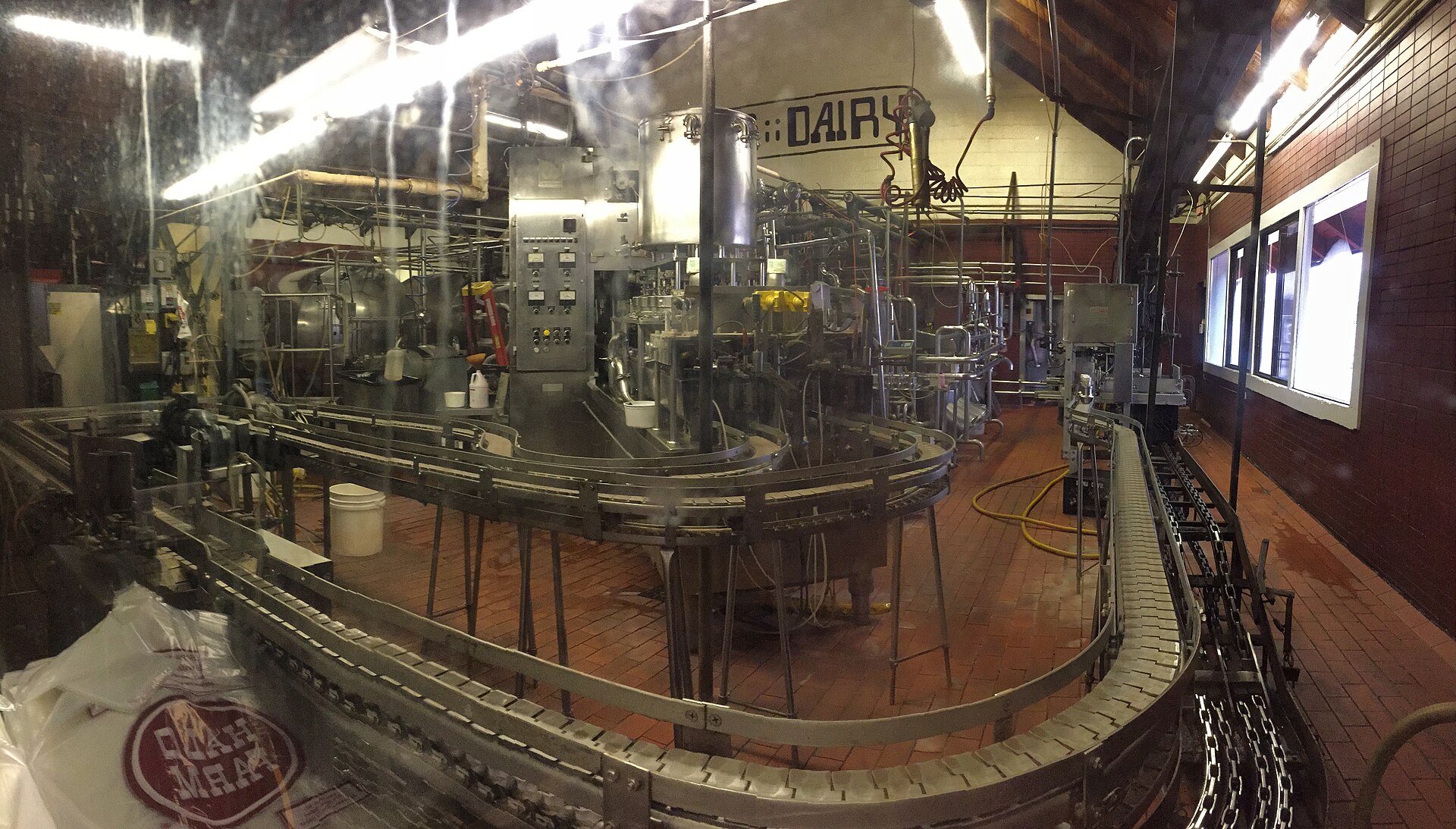
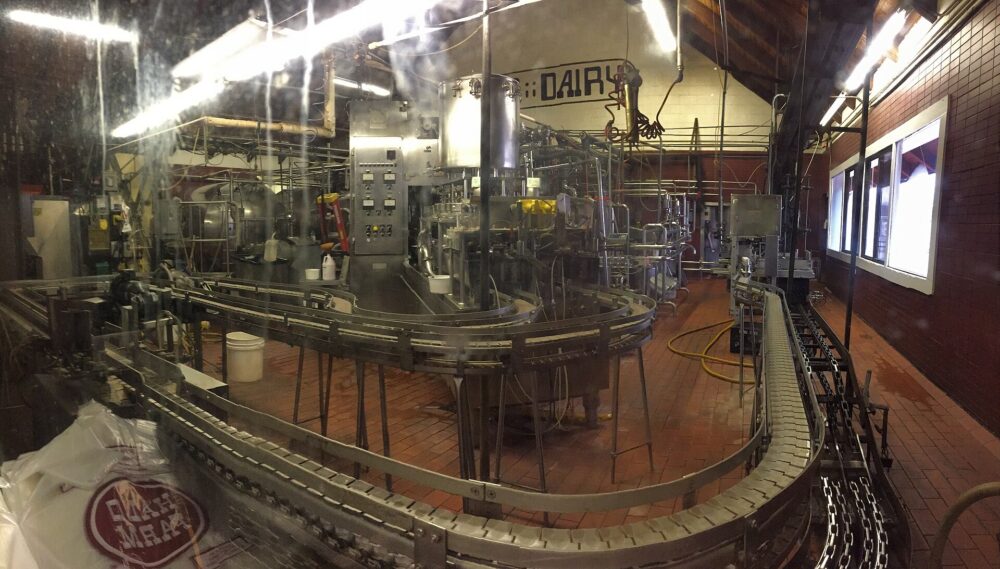
Product packaging machinery in a working facility shows the kind of production capability buyers should verify when evaluating factory-direct suppliers; photo by Famartin, CC BY-SA 4.0, via Wikimedia Commons.
A direct factory isn’t a legal category; it’s simply a manufacturer that sells in bulk under its own name instead of only through intermediaries. Chinese export factories, for example, often hold export licenses and ship under their own company name rather than an agent’s. Editorial guidance from a DHgate blog piece suggests buyers can sometimes save on the order of 25-60% by cutting middlemen in China-based deals, but that’s indicative, not guaranteed for every product or buyer.
This model is common across a wide range of product types:
- Clothing and fashion basics. Sites like Howell Wholesale promote factory-direct apparel from China—T‑shirts, hoodies, leggings and other basics—aimed at boutiques and online sellers.
- Doors and building materials. Manufacturers such as LIUNOVA sell MDF and wooden interior doors directly, with veneered, painted and laminate finishes and OEM options for projects or resellers.
- Filters and consumables. Factory Direct Filters offers air filters wholesale straight from its US plant, targeting property managers and HVAC companies.
- Machinery and industrial parts. Kompass listings for businesses like Factory Direct Worldwide LLC show factory-direct trade in industrial machinery and equipment.
- Custom merch and printed goods. Companies like Merch Factory Direct focus on large-volume screen printing and embroidery, letting brands order 100,000+ units directly from the production facility.
Across these examples, the pattern is the same: the factory offers bulk pricing, often supports custom specs or private label, and expects you to handle more of the business-side decisions than a conventional wholesaler would.
Spotting Real Factory-Direct Suppliers and Working With Them
One challenge for US buyers is telling a true manufacturer from a trading company that uses “factory direct” purely as marketing. You won’t always get a clean distinction, but there are practical signals:
- Manufacturing footprint. Real factories usually show production lines, machines, or technical processes on their site or catalog. LIUNOVA, for instance, details door construction and finishes rather than just reselling a catalog.
- Technical customization. Direct factories often discuss OEM/private label or custom specs (door sizes, filter dimensions, printed logos) in their product pages. That’s common on sites like LIUNOVA and Merch Factory Direct.
DHgate’s own editorial blog has called out a set of myths that often scare buyers away from factories: that direct manufacturers always have poor quality, tiny product ranges, or hard communication. In reality, many factories have multilingual sales staff or translators, especially if they focus on export markets, and are able to produce varied product lines—everything from apparel to electronics and furniture—if you give clear specs. You still need to confirm that’s true for the specific factory you’re considering.
A few concrete ways to reduce risk when dealing factory-direct:
- Ask production-specific questions. Instead of “Can you supply T‑shirts?” ask about fabric weight, knitting method, dye process, and QC checks. A real factory can usually answer in detail.
- Request documentation and samples. For doors and filters, request spec sheets and a small sample batch before committing. Factory Direct Filters positions its wholesale program around consistent sizing and performance; your job is to verify that with test orders.
- Plan around language and time zones. Many Chinese factories have English-speaking staff but may be slow to respond during US business hours. Build that lag into your sourcing process and keep communication in simple written English so it can be translated accurately.
Price, MOQs, Customization and Where Direct Factories Fit vs Other Channels
You’ll usually see three big differences when you move from domestic wholesale to factory direct:
- Pricing. A Warrior Forum discussion on factory direct vs wholesale captures a common reality: factory prices tend to be lower because they don’t include distributor margins, while wholesale distributors layer on their own markup. For US resellers, the question is whether the savings offset higher freight costs, longer lead times, and your added workload.
- Minimum order quantities (MOQs). True factories often prefer higher MOQs—thousands of units for apparel, or full pallets/container loads for doors or filters—because they’re setting up production runs. Some will negotiate lower runs, especially for repeat buyers or simple items.
- Customization and lead times. Direct factories can adjust dimensions, materials, colors, printing, and packaging. That’s a major upside but adds lead time and complexity compared with buying standard stock from a wholesaler.
Here’s an illustrative comparison for a small US apparel brand thinking about basic T‑shirts:
| Route | Typical offer (apparel example) | Pros (editorial judgment) | Trade‑offs (editorial judgment) |
|---|---|---|---|
| US domestic wholesaler | Pre-stocked blanks, limited colors | Fast delivery; simple communication | Higher unit cost; little customization |
| Factory direct apparel | Custom fabric, colors, labeling | Lower unit cost; true private label | Larger MOQs; longer lead times; import logistics |
| Marketplace sourcing | Mix of factory and trading-company offers | Easier discovery; messaging tools | Quality varies by seller; vetting still on the buyer |
Marketplace access, including DHgate
If you don’t have the contacts or bandwidth to search for factories one by one, you may prefer to access them through a marketplace. DHgate describes itself in its editorial content as a B2B trading website that connects buyers with factories in China, including factory-direct sellers.
A quick snapshot of DHgate listings tagged or described as factory-direct (retrieved 2026-10-08; prices and availability can change) shows the variety:
- Custom apparel:
- Factory Direct Sales Custom wholesale cotton printed T-shirt in the Men’s Polos category, priced around $4.03 per unit in the snapshot.
- Factory Direct Sales 100% cotton boys’ T-shirt, traditional tie-dye also listed under Men’s Polos at about $4.53 per unit.
- Packaging and printed materials:
- High-end custom packaging boxes for toys, underwear and cosmetics, in Packaging Boxes, shown at roughly $0.21–$0.22 per box.
- Manufacturer direct sale practice notebook / promotional brochure in Packaging & Printing Service, around $0.41–$0.44 per piece.
- Industrial/consumable products:
- Customized industrial air filters, factory direct sales in Other Janitorial Supplies, with a range near $5.04–$27.22 reflecting different specs.
- Suspended dry powder fire extinguishing devices in Firefighting Supply, around $7.54–$7.74 per device.
These listings underline two points: first, that “factory direct” covers everything from fashion basics to packaging and safety equipment; second, that even on a marketplace, you still need to evaluate each seller individually. Check whether the supplier presents itself as a manufacturer, review product specs, ask for samples, and confirm they can meet US regulatory requirements for categories like fire equipment or filters. DHgate is one route to find such suppliers; it doesn’t remove the need for your own vetting.