
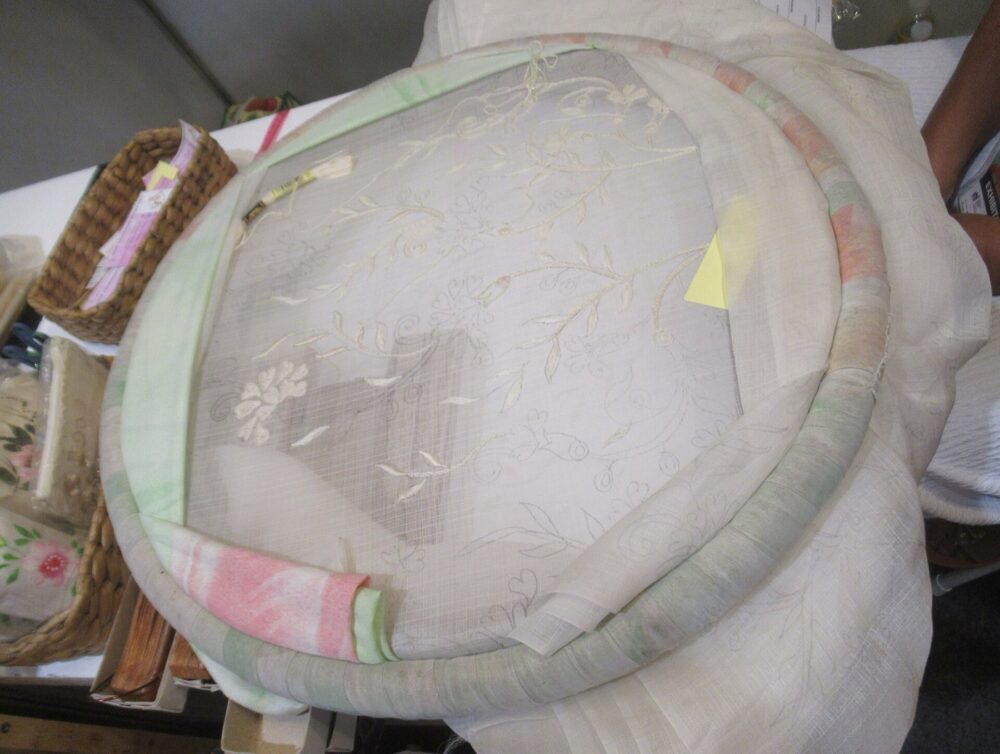
Wholesale embroidery hoop buying is about more than getting the lowest per‑unit price. You need tight specs (material, size, hardware), supplier checks, sample tests, and a clear landed-cost target before you decide whether to source from a domestic wholesaler or a cross‑border marketplace like DHgate. DHgate can work well for small US craft or ecommerce businesses that want variety and flexible MOQs, but only if you use its ratings, reviews and sample orders to validate hoop quality and reliability first.
How the Wholesale Embroidery Hoop Market Works and What You Must Specify
Embroidery hoops are basic needlework tools that hold fabric taut for hand or machine embroidery. Wholesale buying simply means purchasing them in bulk for business use—typically at a discounted unit price compared with retail, as seen on craft wholesalers like Panda Crafty’s embroidery hoop wholesale page and Art Cove’s bulk wooden hoop listings.
Suppliers usually offer multiple sizes and materials designed for bulk craft use. Browsing Panda Crafty and Art Cove, you’ll see:
- Small to large diameters (mini hoops for ornaments up through large wall art hoops).
- Wooden hoops (often birch or beech) for a traditional look.
- Plastic hoops, including faux-wood finishes, for lower cost and more consistent dimensions.
For cross‑border sourcing, you need to turn your preferences into a simple spec sheet you can send to any supplier. A practical spec template for embroidery hoops includes:
1. Material and finish
- Type: “solid wood” (specify species if important) or “ABS plastic”.
- Finish: clear-coated, painted color, or faux wood grain.
- Wood tolerance: for premium hoops, note that the inner ring should be smoothly sanded with no splinters; for budget hoops you might accept light roughness.
2. Sizes and dimensions
- Nominal diameter: list exact sizes you want (e.g., 4″, 6″, 8″, 10″). Many wholesalers organize SKUs by diameter, as shown on Art Cove’s wooden embroidery hoops.
- Width and thickness of rings: narrow for delicate work, wider for wall art; specify if you care.
- Size tolerance: for machine embroidery or tight framing, request that actual inner diameter not vary by more than a small margin from the nominal (you can phrase this qualitatively, e.g., “sizes must be consistent enough that fabric tension feels the same between hoops”).
3. Hardware and clamping
- Screw type: metal screw vs. plastic tightening mechanism.
- Clamp performance: the hoop must hold fabric taut without slipping while stitching; ask the factory what testing they do for clamp strength.
- Corrosion expectations: if you sell finished art, you may want plated screws that won’t rust over time.
4. Use case and quality level
- Use: beginner craft kits, kids’ projects, or premium decor pieces.
- Defect tolerance: for kit use you may accept cosmetic minor marks; for finished decor, specify that visible defects and warping are not acceptable.
5. Packaging and branding
- Unit pack: individual polybag, bundle of 3-5 hoops, or bulk box.
- Labeling: blank vs. sticker with your brand (OEM options are common on marketplaces like DHgate, but you’ll need to ask sellers directly).
Sending this spec in writing—along with a few photos or links to comparable products—greatly reduces miscommunication with overseas suppliers.
Evaluating Cross-Border Hoop Suppliers and Listings, Including DHgate
Once your spec is set, the next decision is who can reliably produce it. On DHgate and similar marketplaces, you don’t have factory tours, so you rely on listing evidence, communication, and samples.
DHgate’s own editorial guidance suggests using search filters to narrow by material and dimensions, then checking seller ratings, reviews and transaction history to judge reliability, and ordering samples before committing to larger orders. That’s a good starting point, but you should tailor those checks specifically to embroidery hoops.
Here’s how to evaluate a hoop listing step by step:
Look at listing photos and descriptions through your spec lens
- Does the seller clearly show close‑ups of the ring surfaces and the screw area, not just a distant product shot? Rough wood, poor molding, or misaligned screws are common hoop problems.
- Are sizes listed with actual diameters and counts per pack, similar to the detail you see on domestic sites like Panda Crafty’s bulk hoop offerings?
- For plastic hoops, check if the description mentions the plastic type and whether it imitates wood.
Use ratings and reviews in a targeted way
- Focus on reviews that mention quality: “holds fabric tightly,” “no splinters,” “true to size.” Generic “good seller” reviews are less helpful.
- Check for photos from buyers showing actual hoops in use. Do the hoops look round, or are they visibly warped? Is the screw straight?
- Cross‑reference different listings that appear to be the same product. If one seller has more detailed feedback on the same style of hoop, that feedback applies to the product even if you buy from another supplier.
Message the seller with specific questions Use DHgate’s messaging to ask:
- What wood species or plastic material is used?
- How do they test hoop roundness and clamp strength?
- Can they confirm that the inner ring is smoothly sanded, suitable for direct display as wall art?
- Whether they can send mixed-size packs that match your catalog (for example, 4″, 6″ and 8″ sets).
Suppliers who answer with concrete details (process, materials, tolerances) are lower risk than those who reply with generic “high quality” phrases.
Order samples before bulk DHgate’s bulk-buying blog explicitly recommends starting with small orders or samples to test product quality before committing to larger purchases. For hoops, make your sample order intentionally varied:
- Include several sizes and both wood and plastic if you plan to sell a range.
- Test each sample by mounting fabric, stitching a small piece, then checking for slippage and warping.
- Record which supplier and listing each hoop came from so you can trace failures back.
If samples show inconsistent sizes, rough hardware, or weak clamping, treat that as a red flag and move on—even if pricing looks attractive.
MOQ, Pricing, Landed Cost and When DHgate Beats Other Channels
Wholesale embroidery hoop suppliers, especially in China, usually set minimum order quantities (MOQs) to keep production economical. Industry guidance on MOQs for China factory sourcing explains that suppliers define a minimum where setup costs and expected profit balance; if you can’t reach it, they may decline or raise the per‑unit price. Agents or negotiation sometimes lower MOQs, but you still need a realistic starting number in mind.
For a small US craft or ecommerce business, the practical questions are: how much inventory can you turn, what MOQ you can afford, and whether DHgate or a domestic wholesaler gives you the better landed cost.
A simple landed cost calculation for hoops looks like this:
| Scenario | Channel type | Strengths for hoops | Weak points |
|---|---|---|---|
| Small test run (100-300 hoops, mixed sizes) | Cross-border multi-seller or other cross‑border marketplace | Access to multiple factories, ability to start with small bulk orders, good for testing variety via samples | Longer shipping times; more work to validate quality remotely |
| Mid‑size order (500-1,500 hoops per quarter) | DHgate or factory-direct via marketplaces | Better pricing per unit, OEM branding potential, wide material/size selection | Need to manage MOQs and inspect samples carefully; import duties and freight add complexity |
| Quick replenishment (100-500 hoops needed fast) | US domestic wholesalers or Faire/Etsy wholesale | Shorter transit time and simpler logistics; easier returns and communication | Higher unit cost; fewer customization options |
To decide if DHgate beats other channels for you, run a basic comparison:
- Unit price and MOQ
Ask DHgate sellers for bulk pricing tiers and corresponding MOQs, as its bulk-buying blog suggests. Then compare those numbers (even if rough) with domestic wholesalers like Art Cove or Panda Crafty, where you can see how unit prices change with pack size.
- Quality risk and repeatability
If your business depends on consistent hoop quality for brand perception, prioritize suppliers—on DHgate or domestically—where samples and reviews already prove stability. DHgate’s own advice is to start with small orders to reduce risk; follow that even if MOQs are tempting.
- Customization and branding
If you want custom colors, engraved screws, or branded packaging, DHgate’s access to OEM factories (noted in its ecommerce sourcing blog) may give you more options than domestic wholesalers. Make sure customization doesn’t force MOQs beyond what you can sell in a reasonable time.
In practice, many small US craft businesses use a mix: domestic wholesalers for fast, predictable stock, and DHgate for experimental designs, kit components, or private‑label hoops once a supplier proves itself by samples and a few successful orders.
If you decide DHgate is part of your sourcing strategy, it’s worth strengthening your marketplace skills. Guides such as finding wholesale suppliers on DHgate, finding DHgate suppliers and choosing a DHgate wholesale supplier can help you combine product‑level hoop specs with smarter supplier selection.