
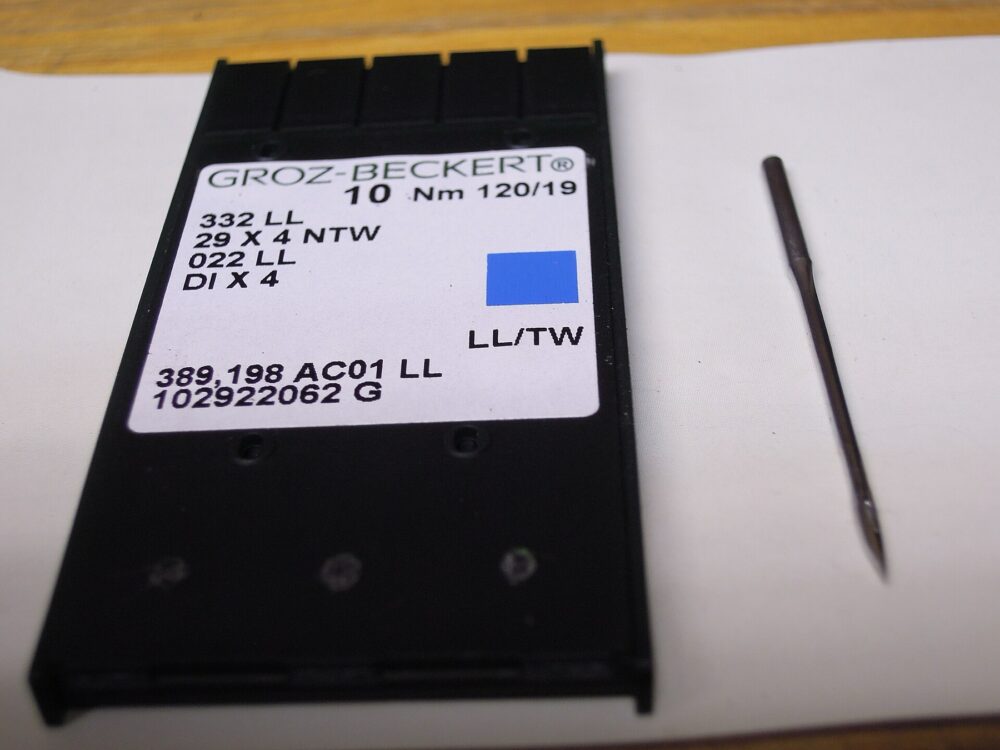
If you sew heavy fabrics like denim, canvas, or leather and you’re tired of running out of needles mid-project, the most reliable bulk option is brand-name heavy-duty or denim/leather needles bought in boxes of around 100, matched exactly to your machine’s needle system and fabric weight. For a small US studio, that often means a 100-count box of household-size jeans or topstitch needles from a brand such as SCHMETZ; for an industrial shop, it may mean 100-piece lots of DBX1 or other industrial needles from a specialist distributor or vetted cross-border marketplace seller, ordered only after sample testing.
The key is to decide your needle type (denim vs leather vs heavy universal), size range (e.g., 90/14 vs 100/16), and machine system (like 130/705 H vs DBX1) before you think about price or channel. Once those three are locked in, bulk sourcing gets much simpler.
Heavy-Fabric Sewing Machine Needles in Bulk: What You’re Actually Buying
For bulk, you’re generally looking at cartons or boxes of about 100 machine needles, not the 5-10 packs you see in craft stores. Brand suppliers like SCHMETZ, for example, sell multiple bulk lines — universal, chrome, ELx705 for sergers, embroidery, jeans/denim, topstitch, and nonstick — in 100-count formats aimed at home and industrial use. You can see those formats on the SCHMETZ bulk collection page, which lists items such as Universal Bulk Needles, Topstitch Bulk Sewing Machine Needles, and Nonstick Bulk Sewing Machine Needles in consistent box quantities.
Heavy fabrics need more than just “more needles.” They need the right geometry:
- Denim/jeans needles for heavyweight woven fabrics like denim and canvas have a strong, sharp point and thicker shaft to penetrate multiple layers.
- Leather needles (often with a wedge or chisel point) are designed to cut cleanly through leather and similar materials.
- Heavy-duty or large-size universal needles can work for some heavier wovens, especially in sizes 90/14, 100/16, or higher.
A DHgate editorial blog on fabric-specific needles highlights that denim, leather, and canvas respond best to heavy-duty needles with thicker shafts, sharp points, and sometimes larger eyes to accommodate heavier threads. That aligns with conventional sewing guidance: use smaller sizes like 80/12 for lighter denim, and move up to 100/16 or beyond for very thick canvas or heavy leather.
In bulk, those specs translate into practical box choices, such as:
- A 100-count box of SCHMETZ Universal 90/14 for general heavy woven work.
- A 100-count box of SCHMETZ Jeans/Denim needles in 100/16 if you primarily sew heavy jeans or canvas.
- A 100-count box of Topstitch needles in size 100/16 if you do a lot of visible topstitching with thick thread.
Retail platforms like Amazon illustrate the “small bulk” format for home machines. For instance, an Amazon listing for SCHMETZ Universal Sewing Machine Needles – Size 80/12, Box of 100 Needles shows a single 100-count box designed for household machines; swap the type and size for a heavier fabric, and you have the same basic bulk model, just tuned for heavy work.
Matching bulk boxes to your actual use
A quick working example:
- A small studio sewing 50-100 pairs of jeans a year might buy one 100-count jeans-needle box in size 100/16. Assuming you change needles every project or every few hours of sewing, that single box can easily cover a year of heavy-fabric output.
- A small industrial shop running a lockstitch machine all day might go through that same 100-piece lot in a few months and need multiple boxes, or industrial systems like DBX1 ordered in 100-piece bags.
The decision isn’t just “bulk or not.” It’s which needle type, size, and system will actually survive your fabric and throughput.
Choosing and Vetting Suppliers for Bulk Heavy-Fabric Needles
Buying heavy-fabric needles in bulk amplifies any mistake. If you pick the wrong system or a poor-quality batch, you’ll live with broken needles and skipped stitches for months. So supplier vetting needs to be specific.
Step 1: Lock in your needle system and fabric profile
Before you consider suppliers, confirm:
- Your machine’s needle system code (e.g., 130/705 H for most home machines, DBX1 or similar for many industrial lockstitch machines). This is in the machine manual from brands like Brother or Bernette and is non-negotiable.
- Your core fabric types: primarily heavy denim, canvas, leather, or a mix.
- Your thread weight and whether you often topstitch with heavy or specialty threads.
If you bulk-order 100 needles in the wrong system, they’re effectively dead stock.
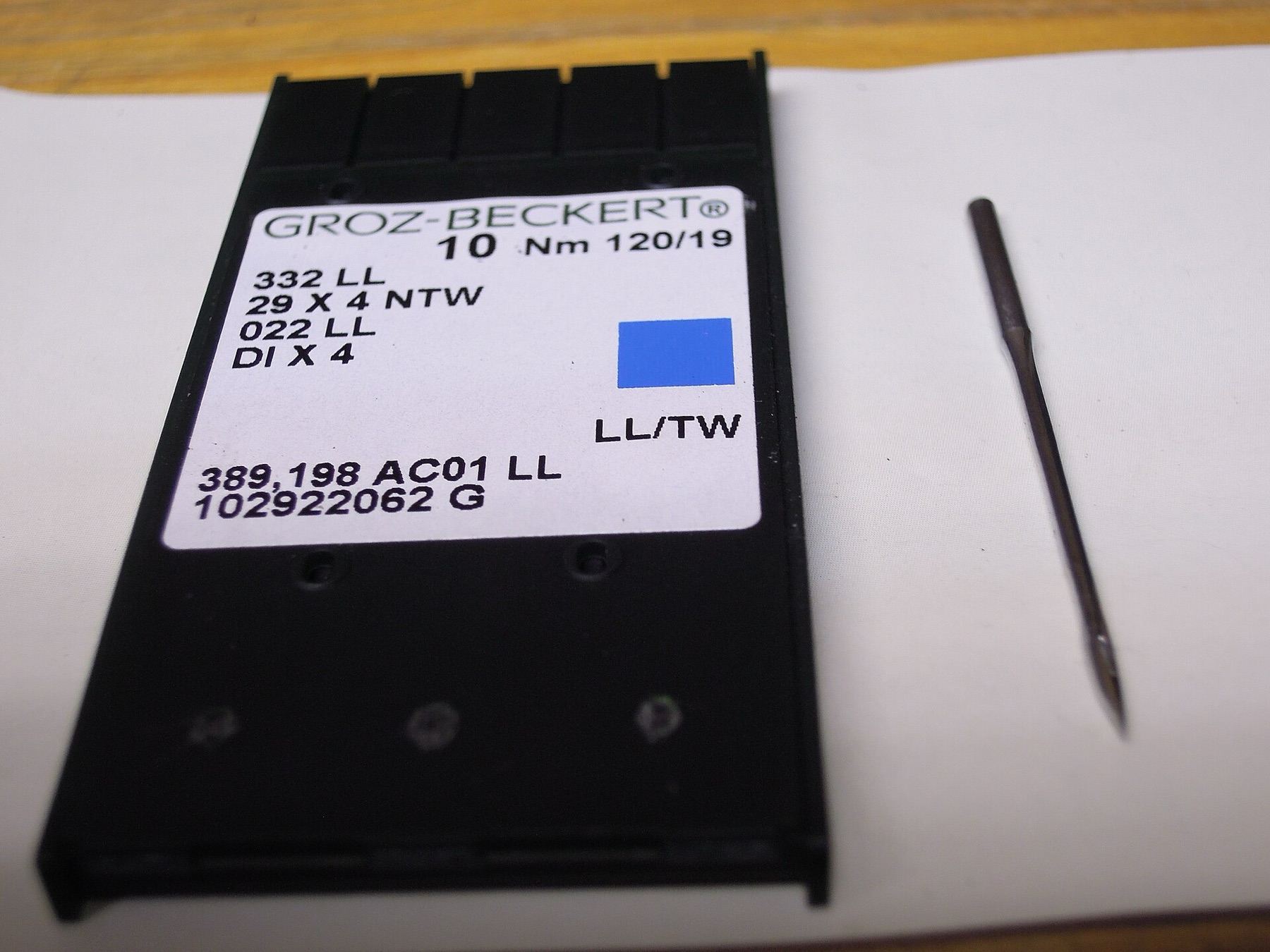
Step 2: Decide brand vs generic
Bulk needles come from two broad supplier types:
- Brand-name manufacturers and distributors (e.g., SCHMETZ bulk lines for universal, jeans, topstitch, nonstick). Their sites and authorized dealers usually publish clear type/size data, fabric suitability, and sometimes chrome or nonstick coatings for performance. The SCHMETZ universal bulk page is a good reference for how these specs are laid out.
- Generic or private-label suppliers, common on marketplaces and some wholesalers. Listings may simply say “universal” or “jeans” with less detail. Here you rely heavily on the system code (e.g., HAX1, DBX1), size range, and buyer feedback.
For heavy fabrics, most small businesses start with brand bulk for critical seams and experiment with generics only after careful sampling.
Step 3: Use targeted quality and verification signals
Instead of generic “check reviews,” focus on details that matter for needles:
- System and size clarity: Does the listing or spec sheet state the exact system (130/705 H, DBX1, HAX1) and sizes (e.g., 90/14-110/18) in a way that matches your manual?
- Specialized lines: For heavy fabrics, prioritize suppliers that explicitly offer “Jeans/Denim,” “Leather,” “Topstitch,” or “Heavy Duty” ranges rather than only all-purpose universal.
- Bulk format description: Look for whether the needles are shipped loose in a box (common with 100-count industrial and home bulk) or in smaller inner packs. SCHMETZ bulk boxes and similar listings often specify this.
- Sampling options: A retailer that sells both 5-10-packs and 100-count boxes lets you test a small pack before buying a carton.
Domestic suppliers often handle this through retail platforms; for example, Amazon’s 100-count SCHMETZ listing effectively doubles as a test case for whether that needle type works for your fabric before you move to more specialized bulk sources.
Bulk Ordering Terms and Channel Tradeoffs for Small US Buyers
Once you know what you need, you still have to decide where to buy and how much to commit. Needle orders are small and light, but the wrong channel can add weeks of delay or quality uncertainty.
Typical quantities, MOQs, and cost drivers
For heavy-fabric needles, small bulk generally means:
- 100-count boxes for home/industrial needles from brand distributors and multi-brand retailers.
- Multi-pack assortments of 10-50 pieces for lower-commitment home use.
- Industrial lots of 100 pieces for systems like DBX1 used in lockstitch machines.
Your landed cost per needle depends on:
- Unit price at your chosen channel.
- Shipping — domestic vs cross-border, speed, and method.
- Import overhead on larger cross-border orders (duties, brokerage, etc., once orders get beyond small parcels).
Because needles are compact, the big decision is less about freight cost and more about lead time and risk: can you afford to wait several weeks and potentially troubleshoot compatibility if a cross-border batch isn’t perfect?
Comparing channels: brand sites, retail platforms, and marketplaces
For US small buyers, three broad routes are common:
| Channel type | Heavy-fabric buying decision |
|---|---|
| Brand sites / authorized dealers | Usually 100-count boxes in fabric-specific lines such as jeans or topstitch needles. Specifications are easier to compare, but pricing may be higher and mixed assortments less flexible. |
| Retail platforms (Amazon, etc.) | Useful for sampling brand needles in small packs or 100-count boxes with domestic delivery. Industrial systems may be limited, and marketplace sellers still need verification. |
| Cross-border marketplaces | Often offer 10-50-piece home-machine packs or 50-100-piece industrial lots, including systems such as DBX1. Lower MOQs come with longer lead times and more listing and seller checks. |
DHgate is one example of a cross-border marketplace where buyers can find small bulk and industrial needle lots. On 2026-10-13, DHgate listings included:
- A 100pcs DBX1 Sewing Needles For All Brand Industrial Lockstitch Sewing Machine Needles 9-21# lot, showing the kind of 100-piece industrial pack an export-focused seller might offer (DHgate DBX1 listing).
- Several Singer/HAX1 household assortments around 50 pieces, such as a “50pcs/5bags Mix Size Singer Needles” pack for domestic machines (Singer mix-size pack).
- Smaller 10-30-piece universal packs for home machines (for example, a “10PCS/Pack HAX1 Universal Sewing Needles” listing) that can function as low-commitment tests before bulk (HAX1 universal pack).
Listings and prices can change, and these examples are not endorsements. If you use DHgate or a similar marketplace for heavy-fabric needles, treat every listing as a mini sourcing project:
- Cross-check the needle system code and size range against your machine manual.
- Look for sellers that offer multiple needle types (universal, jeans, leather) and detailed titles or descriptions in English.
- Keep your first order small enough that, if the batch doesn’t perform well, you’re not locked into months of problematic stock.
If you want to go deeper on picking individual DHgate suppliers, DHgateWiki has broader sourcing guidance, such as how to find wholesale suppliers on DHgate and choose a DHgate wholesale supplier. Use those frameworks when applying marketplace checks to needle listings.
Pulling it together for a small US business
For most small US operations that sew heavy fabrics:
- Start by testing brand-name heavy-fabric needles (jeans, leather, topstitch) in small packs or a single 100-count box from domestic channels.
- Once you’ve proven a type/size/system combination on your machines, decide whether your volume justifies ongoing 100-count boxes from brand distributors or a mix of domestic retail and selective cross-border lots.
If you treat bulk heavy-fabric needles as a strategic input rather than a commodity, you’ll spend slightly more time on specs and supplier selection up front and far less time dealing with broken needles and ruined seams later.