
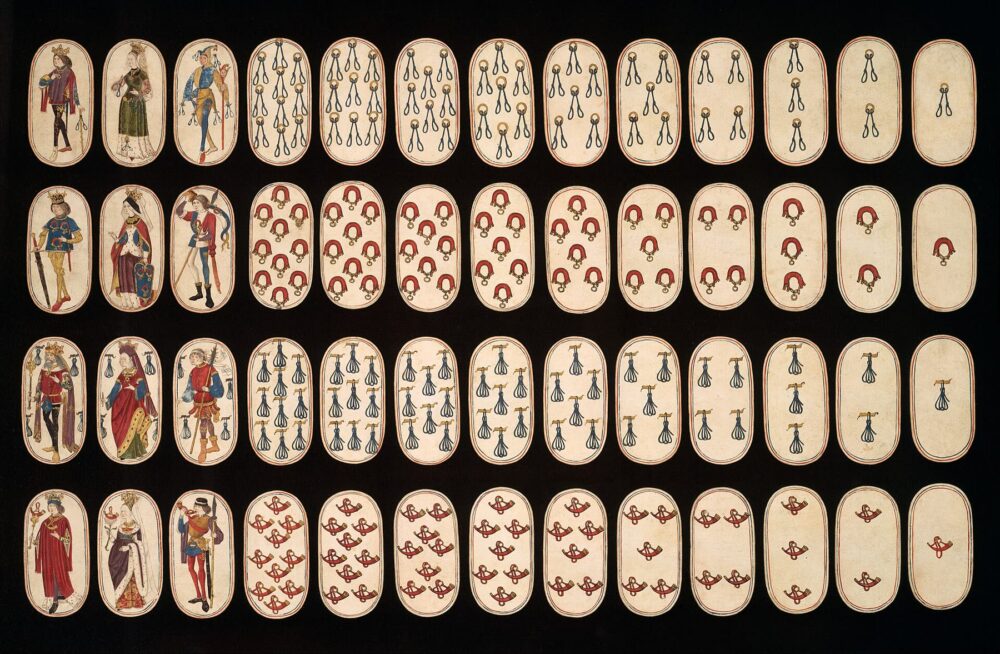
Bulk playing card sourcing is a mature, global category. For a small US ecommerce business or event buyer, the right route depends on what you’re buying (stock vs custom decks), how many you need, and how much control you want over quality and logistics. Small “bricks” of 6-12 decks might come from domestic bulk resellers, while branded promo or game decks usually require a specialist printer or a factory run. Cross-border marketplaces can make sense for generic PVC or paper decks in mid-size lots, as long as you vet the seller carefully.
How Bulk Deck Orders Work in the Playing Card Supply Chain
Bulk playing cards generally means buying multiple decks at once rather than single retail packs. In practice, bulk bands often range from:
- Small bricks: about 6-12 decks (common for hobbyists, magicians, or small events)
- Retail multipacks: 12-50 decks (schools, nonprofits, party planners)
- Case quantities: 72-144+ decks (stores, casinos, larger ecommerce runs)
US-based sites like ClassicDecks illustrate this structure with bulk packs marketed as bricks and larger assortments, mostly standard poker-size decks with familiar faces and backs.
Behind those bulk offers are three main production and distribution paths:
- Stock decks from brands and wholesalers
Established brands (e.g., SIGMA, Theory11, Maverick, often visible via Google Maps brand listings) print large runs of standard decks on coated paper stock, then sell cases to distributors. Bulk resellers and general wholesalers break those cases into smaller units for stores and event buyers.
- Custom-printed decks from specialist printers
Printers such as GetCustomPlayingCards focus on made-to-order decks where you supply the art for card faces, backs, and tuck boxes. These runs sit on top of industrial printing and finishing equipment; setup and design time mean you typically need higher minimum order quantities and pay more per deck than for off-the-shelf bricks.
- Generic decks from discount and cross-border suppliers
General distributors like DollarDays offer low-cost, unbranded or novelty decks aimed at events and budget buyers. Cross-border factories and marketplace sellers produce everything from plain paper poker decks to PVC waterproof cards and gold-foil novelty packs, often with flexible branding and packaging.
Understanding which of these paths you’re tapping helps you predict minimums, quality, and how repeatable a product will be for your business.
Vetting Bulk Playing Card Suppliers: Quality, Reliability, and Red Flags
Cards are simple on the surface, but materials and print quality vary a lot. Before you commit to a bulk order, focus on three areas: what the deck is made of, how consistently it’s printed and cut, and whether the supplier communicates like a partner.
1. Materials and finish you should ask about
Playing cards in bulk tend to be:
- Coated paper stock: The classic feel for poker and bridge. Ask the supplier to describe card thickness and coating (e.g., “smooth finish for easy shuffling”). Better paper stock resists edge wear and bending.
- PVC or plastic stock: Often marketed as waterproof, washable, and durable. PVC decks are common for poolside or bar use but can feel stiffer or more slippery. A DHgate listing like “Premium Playing Cards, Decks of Cards Bulk Standard Size Perfect for Blackjack Euchre & Canasta Games Durable PVC Paper Material” highlights that some bulk offers are explicitly PVC-based.
- Specialty finishes: Matte coatings reduce reflection (useful under bright lights or cameras), while glossy or foil finishes (like rose-gold or gold foil decks found in marketplace listings) emphasize appearance over handling.
Ask for a clear spec sheet or description: material, thickness, finish, and intended use (e.g., “casino-grade dealing,” “party novelty,” “magic cardistry”). If the seller can’t explain their own stock, treat that as a warning.
2. Print, cut, and packaging quality
For standard decks, you’re looking for consistency, not artistry. Practical checks include:
- Registration and color: Request photos or a sample showing close-ups of indices and pips. Misaligned or fuzzy printing suggests poor quality control.
- Cut accuracy: Uneven edges make shuffling and dealing awkward. Ask whether cards are “traditionally cut” or “laser cut” and look at sample edges for chipping.
- Box and wrap options: For resale, tuck box strength matters. General distributors like DollarDays often sell decks in simple cardboard boxes; custom printers may offer upgraded boxes, cellophane wrapping, or hang tabs. Confirm how decks arrive so you can plan your merchandising.
For custom runs, insist on a printed proof or prototype deck before authorizing the full run. That lets you confirm your logos, colors, and typography under real lighting instead of on a screen.
3. Supplier behavior and reliability signals
For small-business buyers, how a supplier communicates often predicts how they’ll handle a bulk order. Use this quick checklist:
- Response time to your first inquiry and follow-up questions
- Willingness to discuss specs, use cases (e.g., casino night vs festival giveaway), and realistic timelines
- Clarity about MOQs and per-deck cost breaks
- Ability to reference repeat buyers or show product photos from past runs
If a seller dodges questions on material, can’t articulate minimums, or pushes you to “just order” without a sample or proof, you’re taking on more risk than you need.
Pricing, MOQs, Customization, and Channel Choices for Bulk Decks
For bulk decks, three levers drive your economics: how many you buy, how customized they are, and which channel you use.
How quantity and customization drive cost
Industry-wide, there’s a clear pattern:
- Stock decks (generic or branded)
Bulk bricks of standard decks from sites like ClassicDecks or general distributors are priced based on how many full decks you buy. MOQs can be low—sometimes just a few bricks—because they’re drawing from existing inventory.
- Custom-printed decks
Specialist printers such as GetCustomPlayingCards have to set up plates, align art, and often help with design. That setup work is mostly fixed, so they usually need higher minimums and charge more per deck than generic stock. You’re paying for uniqueness and control.
- Generic imports and novelty decks
Discount distributors and cross-border sellers often offer lower per-deck pricing on simple PVC or paper decks, plus themed or foil designs. You may see packaging described for party games, magic props, or casual poker rather than formal casino use.
Which sourcing channel fits your scenario?
Here’s a compact view of how different routes line up against common needs (editorial judgment based on the sources above):
| Scenario / Need | Domestic stock wholesaler (e.g., ClassicDecks, DollarDays) | Custom printer (e.g., GetCustomPlayingCards) | Cross-border marketplace (incl. DHgate) |
|---|---|---|---|
| Small event (20-50 decks) | Strong fit: low MOQs, fast shipping, familiar designs | Possible but expensive per deck | Possible with generic decks; check lead times and seller detail |
| Growing online store, standard decks | Strong fit for branded or known decks | Limited fit unless you want your own design | Fit for low-cost generics or niche designs, with added vetting |
| Branded promo / corporate giveaway | Weak fit unless logo is on outer packaging only | Best fit: full-face and back customization | Possible for generic decks; custom art requires careful review |
| Casino night / cardist performance | Fit if quality stock and known brands available | Fit for custom but need handling tests | Riskier: focus on material/finish specs and samples |
Where a marketplace like DHgate can be relevant
On 2026-10-14, DHgate listed bulk-standard poker decks such as “Premium Playing Cards, Decks of Cards Bulk Standard Size Perfect for Blackjack Euchre & Canasta Games Durable PVC Paper Material” (listing example). The title alone tells you a few things buyers can use:
- The decks are marketed for familiar games (Blackjack, Euchre, Canasta), implying standard poker sizing.
- Material is described as “Durable PVC Paper,” signaling a plastic-style deck with a particular feel and durability profile.
- Compare title and photos against your needs (size, suit layout, language on indices).
- Ask the seller for detailed specs and, if the quantity justifies it, a sample or small test order.
- Cross-check any similar listings to see if this is a factory-standard product or a one-off.
For help thinking through DHgate supplier checks in general, you can look at DHgateWiki’s guides on finding wholesale suppliers on DHgate, locating DHgate sellers, and choosing a DHgate wholesale supplier. These focus on seller evaluation rather than cards specifically.
Practical negotiation and sampling tips
For US small-business buyers, a few disciplined steps often pay for themselves:
- Start with your use case and target deck count: e.g., “I need 60 decks for a fundraising casino night” or “300 custom decks for a Kickstarter game.” Share that upfront.
- Ask each supplier for 2-3 options: one lower-cost, one mid-range, one higher-quality. That quickly exposes how pricing changes with material and finish.
- Insist on samples where possible: For stock decks, a single retail deck may be enough. For custom runs, a physical proof (even a short test run) is worth the extra time.
- Clarify replenishment: If a deck sells well, can you reorder the same print or stock, or was it a limited run? That matters for ecommerce listings and repeat events.
Approaching bulk playing cards this way turns a commodity product into a predictable part of your business: you know what you’re getting, who’s making it, and how the economics work over multiple orders.