
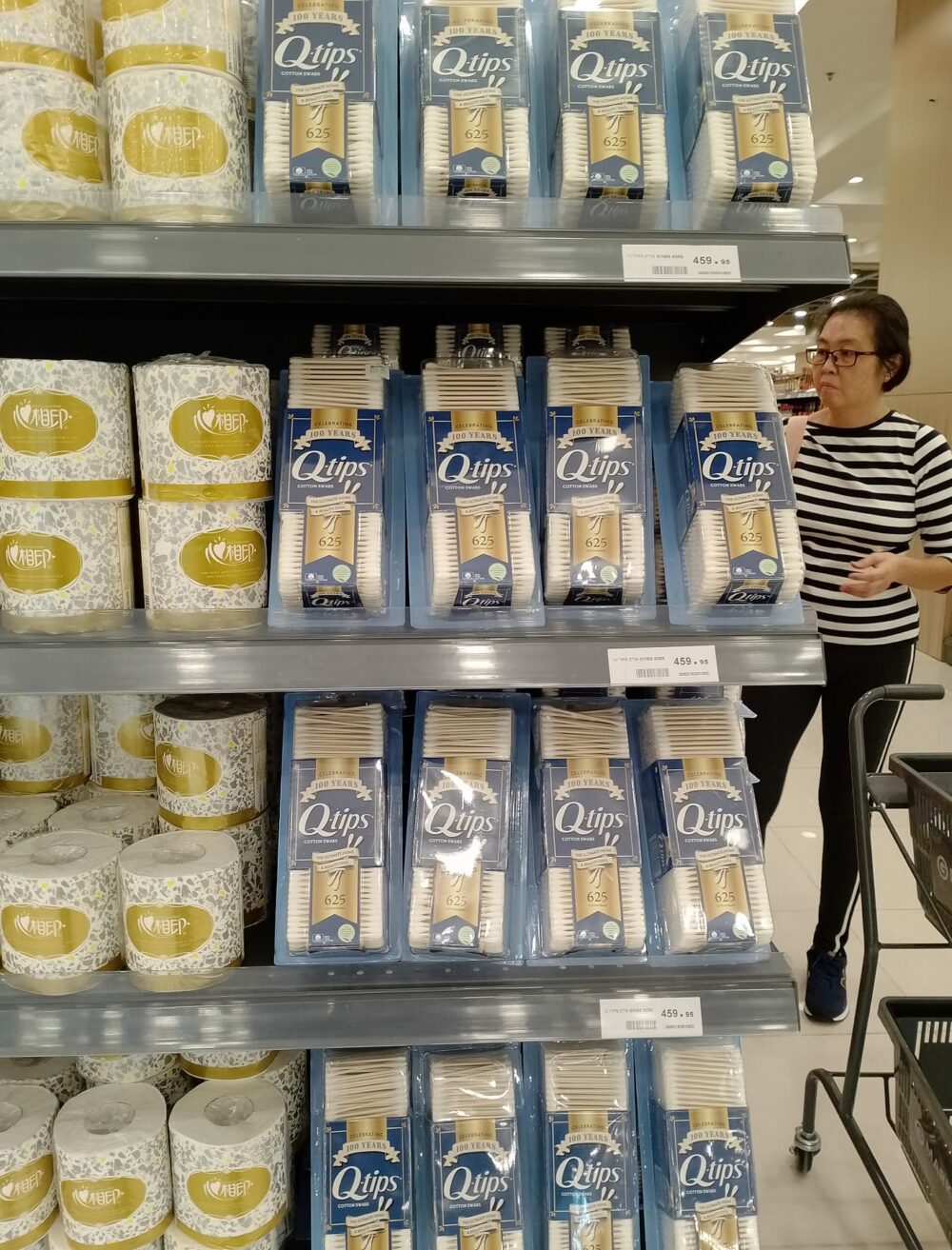
Bulk cotton swabs and Q-tips look simple, but they behave like any other consumable in wholesale: you need clear specs, consistent quality, and a channel that fits your volume and risk tolerance. For many US buyers, brand-name Q-tips in club-size packs cover everyday needs with minimal hassle. Cross-border bulk swabs start to make sense when you need very specific variants (extra-long, pointed, baby-sized) or private-label packaging and can stomach more logistics and vetting work.
How Bulk Cotton Swabs and Q Tips Are Made and Sold
Most cotton swabs (including Q-tips) are cotton-tipped applicators attached to sticks made of wood, paper, or plastic. They’re widely used for beauty and skincare (makeup removal, eyeliner cleanup), nail care, small-area cleaning (keyboards, jewelry), first aid, crafts, and pet care.
Key construction choices you’ll see in bulk sourcing:
- Shaft material
- Paper: common in brand-name Q-tips; flexible, feels safer for personal use.
- Wood: stiffer; popular for long-handle swabs used in cleaning or precise cosmetic work.
- Plastic: smooth and rigid; often seen in disposable applicators.
- Tip shape
- Standard rounded: general household and beauty use.
- Fine pointed: for nail art, eyeliner correction, electronics cleaning.
- Baby/safety designs: smaller heads or special shapes marketed for infant care.
- Ends and length
- Double-ended vs single-ended: double-ended for commodity household use; single-ended often for more specialized or sterile-packed applicators.
- Short (typical bathroom Q-tips) vs long: long-handle swabs for cleaning, lash work, or reaching small spaces.
On the market side, you’ll see two broad patterns:
- Branded bulk Q-tips: sold through mainstream retail and wholesale/club channels. For example, Costco lists multi-pack Q-tips cotton swabs in total counts well over 1,000 per bundle, aimed at households and businesses that want brand consistency and don’t care about customization.
- Generic bulk swabs: sold unbranded or under small brands, in high counts (hundreds to thousands) via office-supply wholesalers like Quill, online retailers, and cross-border marketplaces. These often cover variants that big brands don’t emphasize: pointed tips, extra-long shafts, baby-specific or industry cleaning swabs.
For a US buyer, your first decision is whether you just need reliable, standard Q-tips in large packs or customized variants and branding. That choice determines which part of the supply chain you actually need to enter.
Choosing and Vetting Cotton Swab Suppliers
Because cotton swabs touch skin and sometimes superficial wounds, you want consistent materials, clean production, and stable dimensions. For non-medical business use (salons, barbershops, lash studios, household resale), a practical vetting approach is:
Build a simple specs checklist
Before you contact any supplier, write down:
- Use case: e.g., “eyeliner and lash clean-up in a beauty studio” vs “general household cleaning and crafts.” This affects shaft stiffness and tip shape.
- Shaft material and length: paper vs wood vs plastic; standard bathroom length or longer (many cross-border listings show 15 cm wooden swabs for household and cleaning use).
- Tip type: rounded, pointed, or mixed; single vs double-ended.
- Cotton quality claims: 100% cotton, lint-resistant, organic. For cross-border unbranded stock, treat these as claims to verify, not guarantees.
- Packaging: boxed/bottled packs, shrink-wrapped bundles, or retail-ready blister packs. Decide if you need consumer-facing design or pure bulk.
- Hygiene level: non-sterile for beauty and household vs explicitly sterile for any light medical application. Most generic bulk swabs are non-sterile unless the supplier states otherwise.
What to ask a potential supplier
Whether you’re talking to a domestic wholesaler or a small factory overseas, make your first message specific. A concise email might look like:
“We are a US-based lash and brow studio looking for long-handle, double-ended cotton swabs with pointed tips on one end and rounded on the other. Paper or wooden shafts, 12-15 cm length. We expect regular orders of several thousand pieces at a time. Can you share product specs (materials, length tolerance, tip shape), photos of current production, and your standard pack sizes? Do you have any test reports related to lint shedding or basic safety?”
For salon, household, and light first-aid use, focus on:
- Photos of real production: zoom in on tips for density and symmetry; look for loose fibers.
- Dimensional consistency: ask for tolerance ranges on length and tip size; inconsistent swabs are frustrating in precise beauty work.
- Shedding and strength: if possible, request a small sample batch to test: does the cotton fray, and do paper/wood shafts bend or snap under normal use?
Signals and red flags
Positive signals:
- Supplier can quickly provide clear product descriptions and photos matching your checklist (e.g., pointed double-ended swabs, baby-sized heads, long wooden shafts).
- They offer reasonable sample options and don’t dodge questions about materials.
Red flags:
- Vague descriptions like “good quality” with no detail on cotton content or shaft material.
- Mixed or mismatched photos (e.g., standard bathroom swabs shown for a listing claiming industrial cleaning sticks).
- Reluctance to send samples for anything beyond extremely small orders.
If you’re exploring cross-border marketplaces, the same questions apply; you just need to ask them clearly in platform messaging before you commit to a large carton.
MOQs, Pricing, and Channel Choices for Bulk Swabs
Bulk cotton swabs are a low-price, high-volume product. The way you buy them matters more than the unit price you see on a screen.
Typical volume tiers and use cases
While exact MOQs vary, you can think in broad tiers:
- Household / micro-business (hundreds to low-thousands of swabs): club-store Q-tips packs or domestic office/beauty wholesalers often make more sense, because you get brand consistency and simple logistics.
- Salons, studios, small ecommerce sellers (multi-thousand lots, recurring): generic bulk can be viable if you lock in a spec and test samples; packaging and branding start to matter.
- Factories, large resellers (tens of thousands+): direct factory or high-volume distributors are usually necessary, with more formal contracts and quality controls.
Channel pros and cons: quick view
Here’s a compact comparison of common sourcing routes for US buyers:
| Channel | Good fit for | Main upsides | Main downsides |
|---|---|---|---|
| Club retail (e.g., Costco) | Households, small shops | Brand-name Q-tips, large packs, easy returns | Limited variants, no customization |
| Domestic wholesalers (e.g., Quill) | Offices, clinics, salons | Bulk cartons, familiar brands, simpler compliance | Higher landed cost than generic imports |
| Cross-border marketplaces | Beauty studios, online resellers | Wide variety (pointed, baby, long-handle, etc.) | More QC work, shipping complexity, longer lead time |
| Direct overseas factories | Larger buyers needing private label | Lowest unit cost potential, custom branding/specs | MOQs, negotiation, and QC burden on you |
Domestic wholesale and club retail options selling branded Q-tips can reduce uncertainty around quality and basic regulatory fit, especially for everyday household and office use. For instance, Costco’s multi-pack Q-tips listing reflects this “buy a lot, don’t think too hard” approach: fixed brand, large count, simple purchase.
Cross-border routes trade some of that simplicity for variety and control. Looking at bulk cotton swabs on DHgate (snapshot retrieved 2026-10-14), you can see the range on offer:
- 100/200/500/1000PCS Double-Ended Cotton Swabs Disposable Fine Pointed Tips For Nail Art Makeup Eyeliner Correction Beauty Tools – pointed double-ended swabs in beauty-focused packs, showing how buyers can choose different count options.
- 500PCS Double Head Wooden Cotton Swabs – Multi-Purpose for Makeup Cleaning Pet Care Daily Use – long wooden, double-headed swabs marketed for makeup, cleaning, and pet care.
- Small Cotton Home Childrens Double-head Cotton Swabs Disposable Baby Cotton Swabs born Small Head Cotton Swabs – baby-targeted, small-head swabs, disposable and double-headed.
- Boxed Two-headed Cotton Swabs Disposable Cotton Swabs Ear Swabs Baby Swabs Makeup Remover Clean Cotton Swabs – boxed consumer-style packaging geared toward baby and makeup-removal use.
- 100/1000Pcs Disposable Pointed Cotton Swabs Multi-purpose Beauty Dust-proof Double/single Headed Soft Comfortable Cotton Swabs – dust-proof beauty swabs in pointed, double/single-headed variants.
Listings like these illustrate why cross-border marketplaces can appeal: micro-variants (pointed vs rounded, baby vs beauty, wood vs paper) and flexible pack sizes from around 100 up to 1,000+ per SKU. Prices in the snapshot span a wide range and are usually quoted per pack, not per swab; both prices and availability can change frequently.
If you decide this route is worth exploring, treat marketplace sellers like any other small overseas supplier:
- Message the seller with your spec checklist and ask for clarification on materials, dimensions, and intended use.
- Request photos and, ideally, samples before committing to large bulk orders.
- Plan for shipping, customs, and lead time in your landed-cost calculation; low unit prices can be offset by freight and delays.
For higher-stakes or large orders, it can be helpful to pair marketplace research with more structured supplier work, such as using guides like Find wholesale suppliers on DHgate, Find DHgate suppliers, or Choose a DHgate wholesale supplier and applying the same discipline across any platform.
For many US buyers, the practical split is:
- Stick with domestic brand-name Q-tips in bulk if you care most about simplicity and basic risk control.
- Move to generic cross-border bulk swabs when you need specialized shapes, longer handles, or private-label packaging and can commit to more active supplier vetting.
Neither route is universally “better”—they just serve different levels of control, volume, and risk appetite. Define your use case first, then choose the channel that makes that spec easiest to hit consistently.