
Quick answer
If a refund-related problem is not resolved through the seller or the initial after-sales request, open the specific DHgate order and review the support or escalation options currently available for that transaction. Keep your messages, listing details, delivery information, and evidence inside the platform so the order record clearly shows what you bought, what happened, and what solution you are requesting.
Do not assume that every order can be escalated, that every refund request will be approved, or that the same steps apply to every buyer. Available options, response periods, evidence requirements, return instructions, and outcomes can depend on the order status, the issue reported, the product, the destination, and DHgate’s current terms.
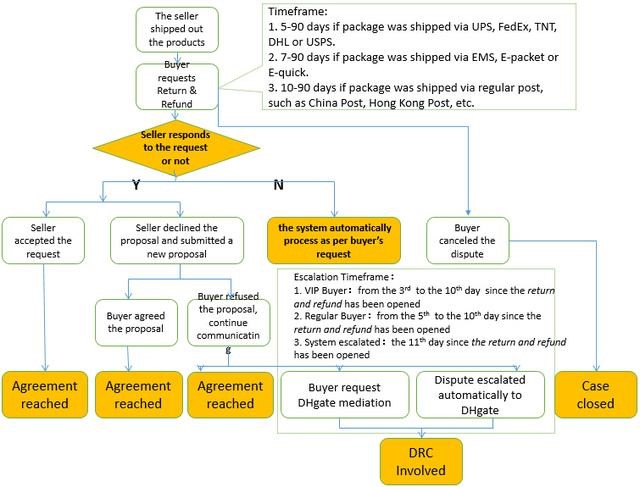
Bottom line: Ask for further help when you have a clear order-related issue, have provided relevant evidence, and the seller or initial request has not produced a workable solution. Use the options displayed in the specific order record rather than relying on an old flowchart or a generic timeline.
When it makes sense to request further help with a refund
A request for additional platform support is most useful when the issue is tied to a specific order and the facts can be documented. Before taking that step, distinguish between a normal seller conversation and an unresolved order-related problem.
You may need to review the escalation or support options shown in your order when:
- the item did not arrive and the order record or tracking information does not resolve the issue;
- the item arrived damaged, incomplete, incorrect, or materially different from the listing;
- you submitted an after-sales request but the seller’s proposal does not address the documented problem;
- the seller does not provide a clear response through the order record;
- you and the seller disagree about what was ordered, what arrived, or what solution is appropriate; or
- the order page shows an available dispute, escalation, support, return, or refund option that you need to review.
A change-of-mind request may not be handled in the same way as an item-not-as-described, damaged-item, missing-item, or delivery-related issue. Choose the reason that accurately reflects what happened rather than selecting a reason that sounds more likely to produce a refund.
Before requesting help: define the problem clearly
A strong request is specific and easy to verify. Before using an escalation or support option, write one or two factual sentences that answer three questions:
- What did the listing say you would receive?
- What actually happened with the order?
- What evidence shows the difference or problem?
For example, instead of writing “The item is bad,” explain the issue precisely:
- “The order shows blue, size 39, but the item received is black, size 38.”
- “The listing states that two items are included; the package contains one item.”
- “The product photo and description show a leather upper, but the received item has a different material and appearance.”
- “The item arrived with a broken component, shown in the attached photos of the package and product.”
A factual explanation is more useful than an accusation. Focus on the difference between the saved listing information and the item, delivery status, or communication record.
What evidence to prepare
Collect your evidence before packaging is discarded, the item is used, or the listing changes. Keep the material connected to the exact order.
- the product title, full description, photos, selected variation, price, and shipping information;
- the size chart, measurements, material details, or included-items list where relevant;
- the seller profile and messages exchanged through DHgate;
- the order confirmation, tracking history, and delivery notices;
- photos of the outer package, shipping label, internal packaging, and the item received; and
- clear photos or video of damage, a missing item, a wrong variation, or any material difference from the listing.
When uploading evidence, make it easy for a reviewer to understand. Include one image that shows the complete item and additional close-ups that show the specific issue. Where helpful, add a screenshot of the relevant listing detail next to a photo of the received product.
How to request further help from the order record
Start from the specific order in your DHgate account. The exact labels, buttons, and available actions can vary by order status, device, destination, and current platform interface. Use the options displayed for your transaction rather than relying on a guide written for another order.
- Open the correct order. Confirm the seller, product, selected variation, delivery details, and order number before taking action.
- Review the current after-sales status. Check whether you already have an open request, seller proposal, message thread, refund option, return option, dispute path, or support option.
- Choose the reason that matches the issue. Select a factual reason such as damaged item, missing item, wrong item, item materially different from the listing, or delivery-related problem.
- State the requested solution clearly. Explain what outcome you are seeking based on the issue shown in the evidence. Do not request a solution that conflicts with the facts or the available order options.
- Upload only relevant evidence. Use photos, video, listing screenshots, tracking information, and platform messages that directly support your explanation.
- Keep communication inside the order record. This preserves a connected history of your request, the seller’s response, and any later support review.
- Review the order page for the next available option. If the seller’s response does not resolve the issue, check whether the order currently displays an escalation, dispute, or further-support option.
Practical rule: Do not rely on private promises, off-platform payment arrangements, or verbal assurances. Keep the evidence and requested solution connected to the original order.
How to respond to a seller proposal
A seller may propose a solution through the order process. Read the proposal carefully before agreeing. Make sure you understand whether it involves a partial refund, a return, additional evidence, another shipment, or another step.
Before accepting a proposal, check:
- whether the proposal addresses the actual issue shown in your evidence;
- whether it requires you to return the item and, if so, whether approved instructions are provided;
- whether you understand any shipping, tracking, or evidence requirements shown in the order record;
- whether the proposed solution is recorded inside the platform; and
- whether the order page displays any relevant deadline or action you need to complete.
If the proposal does not resolve the documented problem, explain why in concise, factual language and review the options shown for the order. Do not agree to a resolution you do not understand simply to close the conversation.
When a return may be part of the refund process
A physical return may be required in some situations, but it is not always the first or only possible outcome. Do not send an item back until the return arrangement is clear in the order record or you have received instructions through the approved process.
Before shipping anything, confirm:
- whether a return is required for the proposed solution;
- the approved return address and recipient information for that specific order;
- the shipping method, tracking requirement, and any labeling instructions;
- whether return shipping responsibility is stated in the order process;
- any dispatch deadline shown for the approved return; and
- what tracking receipt or shipment evidence you need to upload afterward.
Keep the shipping receipt and tracking information until the case is closed. If the order process provides an upload field for tracking or proof of shipment, use it and retain a copy for your records.
Common evidence mistakes to avoid
- Using only a general complaint. Explain the exact listing detail, delivery event, or product difference that supports your request.
- Uploading unclear or unrelated images. Use well-lit photos that show both the full item and the relevant issue.
- Discarding packaging too soon. The outer package, label, and internal packaging can help document shipping damage, missing items, or delivery details.
- Moving messages outside DHgate. Important promises or explanations should remain connected to the order record.
- Sending an item back without approved instructions. An unapproved shipment can create avoidable problems with address verification, tracking, and proof of delivery.
- Assuming a fixed deadline applies to every order. Check the order page and current help information for the transaction you are handling.
What to do while you wait for an outcome
After submitting a request, monitor the order page and message history for updates. Respond to any request for additional evidence using the platform record, and keep a copy of everything you upload.
While the case is open:
- do not delete messages, photos, screenshots, or tracking information;
- do not alter, repair, resell, or heavily use the item before documenting the problem;
- do not send the item to an address that has not been confirmed through the order process; and
- check the order page regularly for any action, message, or deadline displayed for your transaction.
Important: A request for help creates an opportunity for the order to be reviewed. It does not guarantee a refund, return, mediation result, or any particular outcome.
How to reduce refund disputes before you buy
The best way to make a refund issue easier to review is to create a clear record before checkout. Save the information that influenced your purchase decision and ask questions before payment if important details are unclear.
- Read the full listing, not only the product title or first image.
- Compare photos, product specifications, measurements, selected variations, materials, colors, and included items for consistency.
- Review recent buyer feedback and buyer-uploaded photos where available.
- Ask specific questions through the platform about size, materials, package contents, selected variations, or shipping information.
- Save screenshots of the listing, price, shipping details, seller information, and relevant messages before checkout.
- Keep payment and important communication inside DHgate so the transaction record remains complete.
For a broader guide to preserving evidence and starting an order-based after-sales request, see How to Start a Return on DHgate.
FAQ
When should I ask DHgate for more help with a refund?
Review the support or escalation options shown in the specific order when you have a documented order-related problem and the seller or initial after-sales request has not provided a workable solution.
Do I need to contact the seller first?
Use the communication and after-sales options available in the order record. Keeping messages inside the platform preserves a clear history. If the issue remains unresolved, review the current order page for any further support, dispute, or escalation option.
What evidence should I include in a refund request?
Use evidence that directly matches the issue: listing screenshots, selected variation details, seller messages, package photos, product photos or video, shipping labels, tracking updates, and a concise factual explanation.
Can DHgate guarantee that I will receive a refund?
No. A refund outcome can depend on the order status, the issue reported, the evidence available, any applicable return instructions, and DHgate’s current terms. Do not assume that a particular result is guaranteed.
Should I ship the item back before asking for help?
No. Do not send an item back until the return arrangement is clear through the order record or approved instructions. Return addresses, tracking requirements, timing, and shipping responsibility can vary by transaction.
What if the seller does not respond or makes an unacceptable proposal?
Keep your evidence and explanation in the order record, then review the current options displayed for that order. If an escalation, dispute, or support option is available, use the platform process shown for your transaction.
Can I request help because I changed my mind?
Personal-reason requests may be handled differently from damaged-item, missing-item, delivery-related, or item-not-as-described cases. Check the listing, order terms, and available options shown for the specific order.
Sources and further reading
- Can You Get Your Money Back From DHgate? Refund Tips — DHgate Blog.
- How to Check the Status of Your Dispute on DHgate — DHgate Blog.
- How to Cancel a DHgate Order Before Shipping — DHgate Blog.
Editorial note: These sources provide general marketplace guidance. Available support options, escalation paths, evidence requirements, deadlines, return instructions, and outcomes may change and can vary by order. Review the information displayed in your specific order record before taking action.