
At a Glance
If you care about trust when buying sneakers online, you’re really asking three questions:
- How do I avoid obvious fakes and scams?
- Where are the safest places to buy authentic sneakers?
- If I’m curious about “reps,” how do I keep the risk and stakes low?
TL;DR: Safest Ways to Buy Sneakers Online Today
-
For guaranteed authenticity and warranty:
Buy from brand sites (Nike, adidas, New Balance, etc.) or authorized retailers (Foot Locker, JD Sports, Finish Line, etc.). -
For resale and limited releases with authentication checks:
Use GOAT, StockX, eBay Authenticity Guarantee, Stadium Goods, Flight Club and similar platforms that inspect pairs before they reach you. -
For budget or style-first, authenticity-not-critical purchases:
Use broad marketplaces (DHgate, AliExpress, Taobao, etc.) cautiously, treating them as places for non-authenticity-critical footwear and “inspired” looks, not as guaranteed sources of real branded sneakers. -
For “rep sneakers” culture:
Understand that “reps” are unauthorized copies. They can be illegal to sell in many regions and may violate brand IP. If you explore this space, keep it low-stakes, personal-use, and eyes-open about the risks.
What the Trust Question Really Means
When people search for “authentic repsneakers” or “best place to buy reps,” they’re usually trying to balance:
- Authenticity – Is this pair actually made by the brand?
- Price – Can I get the look without paying full retail or resale?
- Risk – What are the chances of getting scammed, seized, or disappointed?
- Ethics & legality – Am I okay with how this product is made and sold?
To navigate that, you need clear definitions.
What People Mean by “Rep Sneakers” vs Authentic Sneakers
-
Authentic sneakers
- Produced by the brand or its licensed factories.
- Sold via brand sites, official apps, authorized retailers, or vetted resale platforms.
- Covered by brand warranties and consumer law protections in most regions.
-
Replica (“rep”) sneakers
- Unofficial copies that imitate branded designs, logos, and colorways.
- Not made or approved by the original brand.
- Quality ranges from poor to surprisingly high, but they remain unauthorized.
- In many countries, selling them as branded goods is illegal; importing them can be risky.
-
“Inspired” or unbranded fashion sneakers
- May borrow design cues (chunky sole, color blocking) but avoid logos and exact trademarks.
- Often sold on broad marketplaces at low prices.
- Legally safer than direct counterfeits, but quality and comfort vary widely.
When you see “authentic repsneakers,” it’s usually a contradiction in terms. A “rep” by definition is not authentic; what people often mean is “high-quality replica that looks close to the real thing.”
What to Check First
Before you decide where to buy, clarify your own priorities. Three quick questions:
-
Is authenticity non‑negotiable?
- If yes, you should stick to brand channels, authorized retailers, and reputable resale platforms.
- If no, you’re open to inspired designs or reps, but you accept more risk.
-
What’s your risk tolerance?
- Low: You want clear return policies, local consumer protection, and minimal customs risk.
- Medium: You’ll accept some shipping delays, cross‑border returns, and resale platform fees.
- High: You’re willing to experiment with cross‑border marketplaces and rep sellers, knowing there’s no guarantee.
-
What’s the job of this sneaker?
- Daily wear, performance, or work: prioritize comfort, durability, and warranty.
- Fashion experiment or occasional wear: you might accept lower price and higher risk.
- Collectible or investment: you need verifiable authenticity and strong resale reputation.
Once you know your own answers, you can compare platforms more clearly.
Comparison Matrix
Main Places to Buy Sneakers Online and How They Handle Authenticity
| Channel / Platform Type | Typical Use Case | Authenticity Handling | Price Level | Shipping & Delivery | Returns / Policies (Typical) |
|---|---|---|---|---|---|
| Brand websites & apps (Nike, adidas, etc.) | New releases, GRs, performance shoes | Direct from brand; highest authenticity trust | Retail (sometimes sales) | Usually fast, regional warehouses | Clear policies, brand-backed, local consumer law |
| Authorized retailers (Foot Locker, etc.) | General releases, some limited drops | Sourced from brands; strong authenticity trust | Retail, occasional discounts | Fast, local or regional shipping | Store + online returns, established processes |
| Boutique retailers (Kith, END., etc.) | Limited collabs, fashion-forward releases | Direct brand relationships; high trust | Retail to premium | Reliable, often global shipping | Clear policies; may have stricter return windows |
| Resale platforms (GOAT, StockX, etc.) | Sold-out pairs, hype releases, older models | Authentication checks before shipment | Above retail, market-driven | Varies; often 1–3 weeks including verification | Returns limited; often only for issues, not “change of mind” |
| eBay with Authenticity Guarantee | New & used sneakers, wide range | Third-party authentication on eligible listings | Market-driven | Varies by seller; extra time for authentication | Returns depend on seller + eBay policies |
| Local P2P (Facebook, in-person, consignment) | Local deals, used pairs, quick pickups | Trust depends on seller; manual legit checks | Negotiable | In-person or local shipping | Informal; depends on seller or shop |
| Broad marketplaces (DHgate, AliExpress, etc.) | Budget fashion, “inspired” looks, generic sneakers | Mixed; not designed as authenticity platforms | Low to moderate | Cross-border; longer times, customs possible | Policies vary by marketplace and seller |
Use this matrix as a starting point: if authenticity is critical, stay in the top half; if you’re exploring budget or style-first options, the bottom rows become relevant—with more caution.
Decision Framework
Which Route Makes Sense for Your Budget and Risk Level?
Use this simple framework to choose a channel based on your situation.
| Scenario / Priority | Recommended Primary Route | Why It Fits |
|---|---|---|
| “I want guaranteed real sneakers with warranty.” | Brand sites, apps, and authorized retailers | Direct supply, strong consumer protection, easy returns |
| “I missed a limited drop but still want authentic pairs.” | GOAT, StockX, eBay Authenticity Guarantee, reputable consignment | Authentication checks, market access to sold-out pairs |
| “I want a stylish pair under a tight budget; authenticity isn’t critical.” | Broad marketplaces (DHgate, etc.), fast-fashion retailers | Low prices, wide variety; treat as fashion, not collectibles |
| “I’m curious about rep culture but don’t want legal or customs headaches.” | Low-stakes, personal-use purchases; avoid bulk or resale | Minimizes exposure; you’re not building a business on reps |
| “I want investment-grade sneakers I might resell later.” | Brand drops + authenticated resale platforms | Clear provenance, easier to resell, stronger buyer trust |
| “I need performance shoes for running, training, or work.” | Brand sites, authorized sports retailers | Verified materials, safety standards, and fit guidance |
| “I like browsing lots of designs and comparing prices globally.” | Mix of brand sites, resale platforms, and broad marketplaces | Lets you benchmark prices and quality across channels |
Think of it this way:
- Authenticity + performance + resale value → brand & authenticated resale.
- Style + budget + experimentation → broad marketplaces and fashion retailers, with realistic expectations.
- Rep curiosity → keep it small, personal, and informed.
Where DHgate Fits Naturally
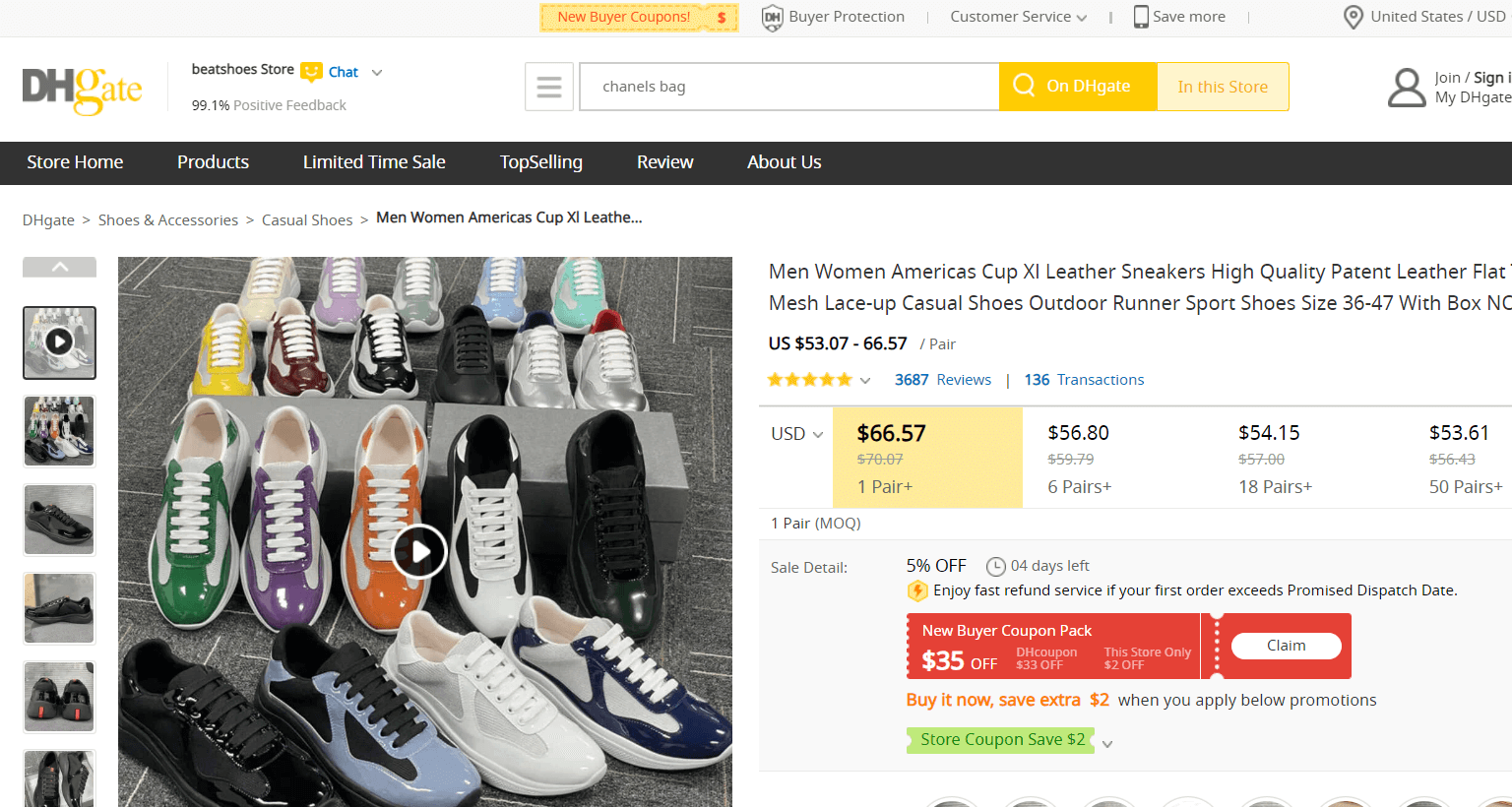
DHgate is a cross‑border marketplace that connects buyers with many independent sellers, especially from manufacturing hubs. It’s not a sneaker‑only platform, and it’s not designed as an official authenticity‑guarantee channel for big brands.
When DHgate Makes Sense in Your Sneaker Strategy
-
Budget, non‑critical sneakers
- You want a pair for casual wear, travel, or occasional outfits.
- You care more about look and price than brand warranty or resale value.
- You’re okay with a pair that’s “inspired by” popular silhouettes rather than officially branded.
-
Exploring styles before committing
- You’re not sure if a chunky runner, platform sole, or certain colorway fits your wardrobe.
- You might try a low‑cost alternative first, then buy authentic from a brand or resale platform if you love it.
-
Cross‑border price and style comparison
- You use DHgate alongside brand sites and resale platforms to see:
- What styles are trending globally.
- How much similar-looking pairs cost at different quality levels.
- You use DHgate alongside brand sites and resale platforms to see:
Important Boundaries
- Treat DHgate and similar marketplaces as fashion and price‑discovery tools, not as guaranteed sources of authentic branded sneakers.
- Avoid assuming that a listing using brand names or logos is legitimate; many such listings are unauthorized.
- If you care about authenticity, use DHgate for unbranded or clearly generic sneakers, and buy your branded pairs from official or authenticated channels.
Verification Checklist
How to Evaluate Sneaker Listings for Trust
Use this checklist whenever you’re about to buy sneakers online, especially outside brand sites.
1. Platform and seller credibility
- Is the platform known for authentication (GOAT, StockX, eBay Authenticity Guarantee)?
- On marketplaces:
- Check seller ratings and number of completed sales.
- Read recent reviews and look for photos from buyers.
- Be wary of new accounts with high‑value listings and few reviews.
2. Photos and description
- Look for:
- Multiple angles: side, top, heel, outsole, insole, tags, box label.
- Close‑ups of stitching, logos, and materials.
- Clear, original photos (not just stock images from brand sites).
- Red flags:
- Only one or two blurry photos.
- Obvious stock photos with no real‑life shots.
- Vague descriptions like “high quality shoes” with no details.
3. Price realism
- Compare the price to:
- Brand retail price.
- Current resale prices on GOAT, StockX, or eBay.
- If a pair that resells for $400 is listed for $60 and claimed “100% authentic,” assume it’s not authentic.
- Deep discounts on brand‑new, hyped releases are almost always a sign of reps or fakes.
4. Product details and sizing
- Check:
- Size charts and region (US, EU, UK).
- Material descriptions (leather, mesh, knit, etc.).
- Weight and intended use (running, lifestyle, basketball).
- Authentic and serious sellers usually provide specific details; vague listings suggest low effort and low accountability.
5. Return and refund options
- On brand and retailer sites:
- Confirm return window and whether worn shoes can be returned.
- On resale platforms:
- Understand that returns may be limited to wrong item, damage, or failed authentication, not “I changed my mind.”
- On broad marketplaces:
- Read the marketplace policy and the individual seller’s terms.
- Factor in the cost and complexity of cross‑border returns.
6. Payment and communication
- Use secure payment methods (credit card, reputable payment services).
- Avoid direct bank transfers or off‑platform deals.
- If a seller pushes you to move the transaction off the platform, that’s a major red flag.
7. For rep‑curious buyers
If you knowingly explore rep sneakers:
- Keep purchases small and personal; avoid bulk orders or resale.
- Understand that:
- Customs inspections can seize counterfeit goods in some regions.
- There is no brand warranty or official support.
- Treat these pairs as disposable fashion, not as long‑term investments or performance gear.
FAQ
Are “rep sneakers” illegal?
- Buying a pair for personal use is treated differently across countries; in many places, enforcement focuses more on commercial sellers than individual buyers.
- Selling counterfeit branded goods is widely illegal and can lead to serious penalties.
- Always check your local laws and remember that customs can seize counterfeit items.
What is an authenticity guarantee?
On platforms like GOAT, StockX, or eBay Authenticity Guarantee, “authenticity guarantee” usually means:
- The seller ships the sneakers to an inspection center.
- Specialists check the pair against known authentic standards (materials, tags, box, smell, stitching, etc.).
- If the pair passes, it’s forwarded to you; if not, the order is canceled or refunded.
Each platform has its own process and terms, so read their official documentation before relying on it.
Will I be charged a fee for authenticity checks?
- Some platforms build the cost into seller fees or buyer premiums.
- Others may show a separate processing or authentication fee.
- Check the checkout breakdown and the platform’s fee page so you know what you’re paying for.
What kinds of sneakers are sold on StockX, GOAT, and similar platforms?
Typically:
- Limited releases and collabs.
- Popular general releases that sell out quickly.
- Older models that are no longer available at retail.
- Both new and sometimes used pairs (depending on the platform and listing type).
They are not general discount stores; they are marketplaces where prices move based on supply and demand.
Is DHgate a good place to buy authentic sneakers?
DHgate is a general marketplace, not an official channel for big sneaker brands. You may find:
- Generic and unbranded sneakers.
- Fashion‑focused designs at low prices.
- Listings that reference popular brands or models, which may be unauthorized.
If you care about guaranteed authenticity, prioritize brand sites, authorized retailers, and authenticated resale platforms. Use DHgate and similar marketplaces for budget, non‑authenticity‑critical footwear and style exploration, not as your main source of “real” branded sneakers.
How can I tell if a sneaker is fake once it arrives?
- Compare it to:
- Official product photos on the brand’s site.
- Legit check guides from reputable sneaker communities.
- Look for:
- Inconsistent stitching or glue marks.
- Wrong fonts or spacing on logos and size tags.
- Off colors or unusual smells.
- If you’re unsure, some communities and apps offer legit checks based on detailed photos.
What’s the safest way to buy used sneakers?
- Use platforms with clear condition grading and, ideally, authentication (e.g., GOAT used section, eBay with Authenticity Guarantee).
- Ask for:
- Photos of soles, insoles, and any flaws.
- Close‑ups of tags and box labels.
- Avoid deals that feel rushed or where the seller resists providing more photos.
What to Do Next
Use this as a simple roadmap the next time you’re about to buy:
| Goal | Best Move | What to Check |
|---|---|---|
| Guaranteed authentic pairs | Brand sites, authorized retailers, authenticated resale (GOAT, StockX, eBay AG, etc.) | Return policy, fees, authenticity terms |
| Budget / casual pairs | General marketplaces like DHgate, outlet sites, in‑store sales | Seller ratings, reviews with photos, clear product descriptions |
| Rep‑curious, personal use only | Low‑risk, small orders; never for resale | Local laws, customs risk, platform buyer protection |
Before you click “buy”:
- Decide your priority: authenticity guarantee, price, or experimentation.
- Match the platform to that priority: official channels for real pairs, marketplaces like DHgate for budget fashion where authenticity isn’t critical.
- Run a quick safety check: seller history, reviews, payment protection, and refund options.
- Inspect on arrival: legit‑check the pair, document issues immediately, and use platform support if something’s wrong.
Treat every purchase as a small “trust test.” Start with lower‑risk buys, learn how each marketplace works, and scale up only when you’re confident in both the platform and the seller.