
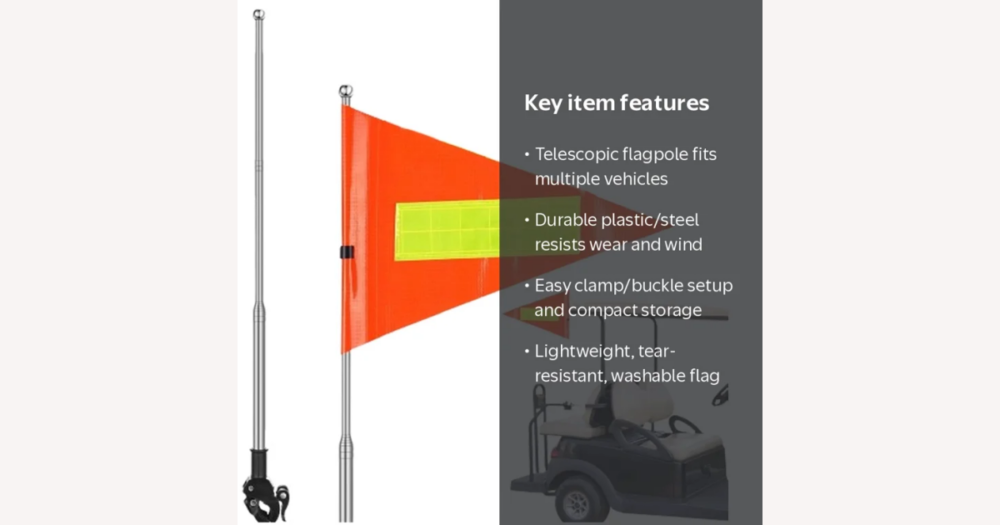
If you’re browsing DHgate for a flag to make your mobility scooter or wheelchair stand out, focus less on brand names and more on clear, visible features: a tall pole that rises above car roofs, a bright high-contrast flag, a sensible flag size, and a mount that holds the pole securely. Once you understand how these basics affect visibility, it becomes much easier to judge listings, compare options, and avoid flimsy or poorly fitting setups.
Key features that make a scooter or wheelchair flag truly visible
On DHgate, the flags that genuinely improve mobility scooter or wheelchair visibility all follow the same basic recipe: a pole that rises clearly above your head and typical car roofs, a bright high-contrast flag color, a flag that’s big enough to catch the eye, and a mount that holds the pole firmly to the frame. In practice, poles are often around 4–5 feet off the ground, which is tall enough for the flag to be seen over parked cars and crowds without claiming a strict standard. Fluorescent orange, bright red, or lime green fabric is easier to pick out than dark, pastel, or camouflage-style designs, and a modestly sized flag that moves in the air without overwhelming the scooter is usually more practical than a tiny decorative triangle. I would choose a tall, bright, securely mounted flag on DHgate even if it looks less stylish or costs a little more than shorter or purely decorative options, because the point is to be noticed quickly. Later sections go into how height, color, size, and reflectivity behave in different environments and how to check those details in DHgate listings before you order.
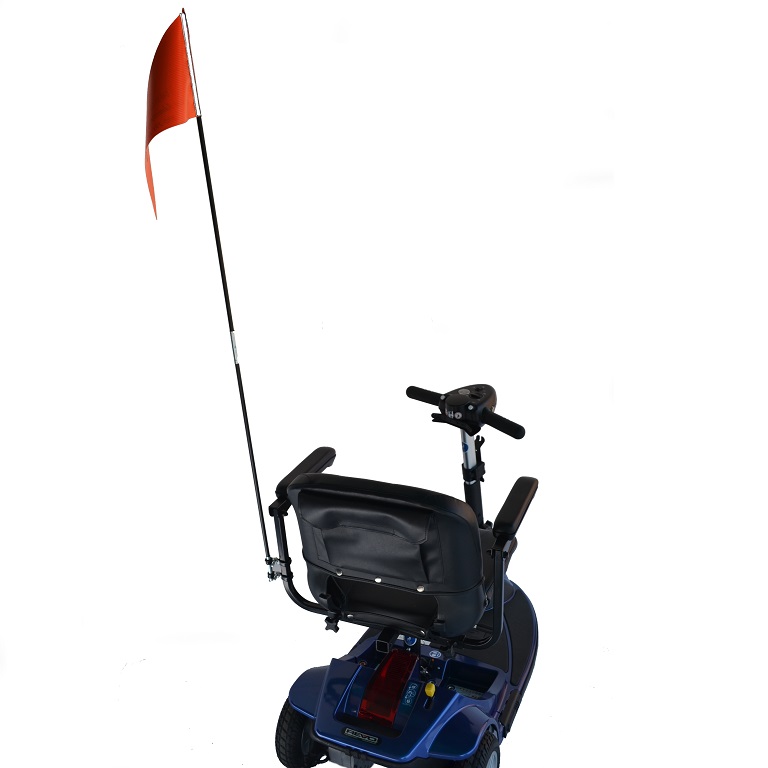
A mobility scooter with a tall, bright safety flag securely mounted at the rear shows how height, color, and solid mounting work together for visibility.
How height, color, size, and reflectivity affect visibility in real-world use
Height matters most wherever cars or crowds can hide the scooter itself. A pole that extends well above your head and typical car roofs keeps the flag visible even when the base of the scooter is behind parked vehicles or street furniture, which is especially helpful in parking lots and near roadways. Color has more impact in daylight: fluorescent orange, bright red, lime green, and similar high-contrast tones stand out against asphalt, concrete, grass, and trees, while dark, pastel, or camouflage-like colors can blend into the background and be harder to notice at a glance.
Flag size is a balance between visibility and practicality. Very small flags may disappear at a distance, especially in busy environments, but very large panels can flap heavily, make more noise, or catch on branches and doorways. Many riders find a moderate size—large enough to be obvious without feeling like a sail—works best for everyday use. Reflective strips and small lights mainly help when headlights or streetlights are present, such as at dawn, dusk, or in rain and fog; they add low-light visibility but don’t replace separate lighting, careful speed, or local road-safety rules.
Which feature matters most depends on where you use your scooter. In crowded parking lots or on mixed-use paths near traffic, pole height and a bright color usually deserve the most attention. In open parks and slower shared paths, a moderate height with a bold color and sensible flag size may be enough. For mostly indoor or campus use, riders sometimes trade down on height or brightness to keep the flag from feeling intrusive, accepting that visibility at a distance will be lower. There is no single universal standard for flag height or a guaranteed ‘best’ color, so treat these points as qualitative guidelines for choosing a flag that stands out in your own surroundings.
Flag and pole materials: durability, flexibility, and noise
For flag fabric, polyester and nylon are the two materials you’ll most often see in DHgate listings. Both are widely used for outdoor flags because they cope reasonably well with weather, but they behave a little differently. Polyester tends to handle sun and rain without fading as quickly, and it usually feels slightly heavier, which can help the flag keep its shape in wind. Nylon is lighter and quick-drying, so it can lift and flutter easily, but very light nylon may wear faster in harsh, gusty conditions. Because actual lifespan depends on how often you ride and local weather, treat any precise durability promises as unverified and focus instead on whether the listing clearly names the fabric and describes it realistically.
Fiberglass is a common choice for scooter and wheelchair flag poles because it flexes under load and springs back rather than permanently bending. That flexibility lets the pole sway over bumps instead of snapping, and it can soften some vibration, which often makes the flag’s movement feel smoother. A well-made fiberglass or similarly flexible pole also tends to be quieter than a hard metal pole when the scooter is moving, which can be more comfortable if you ride frequently outdoors.
Metal poles—often steel or aluminum when specified—are strong and rigid. A metal pole can hold the flag very steadily, but the same rigidity means it’s more likely to transmit vibration and rattling noises through the mount if the hardware isn’t tight. Steel can be comparatively heavy; aluminum is lighter but still stiffer than fiberglass. If a listing on DHgate highlights a metal pole, I would look closely at how the mount is designed and whether buyers mention any noise or harshness in reviews, especially if you’re sensitive to constant rattling.
Some visibility poles are sectional or foldable, with pieces that screw together or a hinge that lets you fold the pole down. This mainly affects convenience: it can make the flag easier to remove or lower for transport, storage, or going through low doorways, but it doesn’t change basic visibility as long as the assembled height is similar. The trade-off is that each joint is a potential point that can loosen over time, so it’s worth checking how the sections connect and whether the listing mentions tightening or maintenance.
Personally, for regular outdoor use I would lean toward a well-made fiberglass or other flexible pole paired with a clearly specified polyester or nylon flag. That combination usually balances durability, comfort, and noise better than very rigid metal. Whatever you choose, be cautious with broad marketing phrases in DHgate listings like “weatherproof”, “heavy duty”, or “unbreakable” unless they’re backed by named materials, sensible descriptions, and consistent buyer feedback. Treat those words as advertising first and base your decision on the stated fabric type, pole material, and how the hardware is actually built.
Mounting options and checking fit on your scooter or wheelchair
Mobility scooter and wheelchair flags usually attach using one of three broad mounting styles: clamp-on, bolt-on, or quick-release. Clamp-on mounts wrap around a piece of tubing or a frame bar and tighten using screws or a lever. They’re popular because you can often add them without drilling new holes or doing major DIY, but they only hold well if the clamp range matches your scooter’s tube diameter and the gripping surface is solid, not plastic trim or a curved panel.
Bolt-on mounts use existing holes or hardware on the frame, such as accessory points, seat brackets, or rear frame bolts. When you find a good match, bolt-on mounts can be very secure and less likely to shift over time, which is ideal for keeping a visibility flag stable. The trade-off is that they rely on having compatible mounting points, and fitting them may require basic tools or a willingness to adjust or replace bolts. If you’re not comfortable with small mechanical jobs, factor that into your choice.
Quick-release systems separate the flag pole from a fixed base. The base stays attached to the scooter or wheelchair, while the pole slots in and out using a pin, latch, or sleeve. This is convenient if you often fold the scooter, transport it in a car, or store it in tight spaces, because you can remove the pole quickly. However, that convenience adds a moving part that must be kept properly tightened and checked occasionally; if the quick-release is loose or worn, the pole may wobble or even detach unexpectedly.
On DHgate, I would prioritize whichever mount grips a sturdy part of the frame or a designated accessory point securely over a cheaper option with vague or missing dimensions. A clamp that clearly states its diameter range or a bolt-on bracket that shows the hardware and hole spacing in photos is easier to match to your scooter or wheelchair than a generic “fits most” mount with no measurements.
- Measure the tubing, bracket, or mounting point on your scooter or wheelchair where you plan to attach the flag. Note tube diameters, bolt sizes, and available space so you have concrete numbers to compare with DHgate listings.
- Study the listing photos to see where and how the mount is shown attached. Check whether it appears to clamp around vertical or horizontal tubing, bolt to a flat plate, or connect to a specific accessory point similar to those on your own scooter or wheelchair.
- Look for specific measurements in the listing, such as clamp range (for example, “fits 20–25 mm tubing”), bolt length and diameter, or phrases like “for 1 inch tubing” or “for wheelchairs and scooters”. Compare those figures to your own measurements rather than relying on generic fit claims.
- Confirm that the stated mounting style—clamp-on, bolt-on, or quick-release—matches what your frame can accept. Avoid mounts that clearly need a type of tubing, bracket, or hole pattern you don’t have, or that would block folding or seat adjustment.
- When key details like clamp size, bolt spacing, or base dimensions are missing, use DHgate’s messaging to ask the seller for clarification and, if possible, extra photos. If the response stays vague or you receive no reply, treat that as a signal to be cautious and look for a listing with clearer information.
- Favor flags whose mounts show close-up hardware photos and precise dimensions over cheaper options that provide little compatibility detail. Clear specs make it much easier to judge fit and avoid a mount that feels loose, rattles, or simply can’t be installed on your scooter or wheelchair.
DHgate pre-purchase checklist for visibility flags
- Check the listed pole height and estimate how far it will sit above your head or scooter seat, favoring taller poles for outdoor routes that pass near traffic or parked cars.
- Confirm that the flag color shown in photos is bright and high-contrast, not muted or camouflage-like, and that any decorative design does not reduce overall visibility.
- Look for flag size and fabric type such as polyester or nylon, and note whether the listing includes reflective strips or lights if you often ride at dawn, dusk, or in dim conditions.
- Review the mounting type and measurements, comparing clamp ranges or bolt sizes with your scooter or wheelchair frame so you avoid hardware that will be too loose or too tight.
- Scan seller ratings, number of orders, and buyer reviews, giving preference to listings with clear real-life photos that show the flag and mount in actual use.
- Read shipping time estimates, return and refund terms, and who pays return shipping so you understand your options if the flag arrives damaged or the mount doesn’t fit.
- Favor DHgate listings that provide detailed specs and real photos over very cheap options with vague descriptions, even if this means paying a bit more.
Common pitfalls and risks when choosing a visibility flag
- Choosing a pole that is too short to rise above parked cars or crowds may leave the flag barely more noticeable than the scooter itself.
- Flags in dull, dark, or camouflage-like colors, or very small “mini” flags, can blend into surroundings and offer limited visibility at a distance.
- Mounts without stated sizes or clear photos may end up too loose, too tight, or unable to hold the pole firmly, increasing the risk of wobbling, unscrewing, or complete detachment.
- Bold claims like “maximum safety” or “super visible” are risky to trust when the listing does not provide supporting dimensions, material details, or honest photos.
- A flag can help people notice a scooter sooner but does not guarantee safety; a poorly chosen or badly mounted flag may not meaningfully improve visibility at all.
- It is better to skip products with missing or confusing specs and choose flags with solid measurements and consistent buyer feedback, even if they cost slightly more.
Basic flags vs reflective and lighted options
For most DHgate buyers who ride mainly in daylight, a tall, bright fabric flag on a secure pole is the most practical starting point. Basic flags in fluorescent orange, red, or lime green are usually affordable, simple to mount, and effective when they sit well above your head and typical car roofs. There are fewer parts to go wrong, and you only need to confirm the pole height, flag size, and mounting style in the listing.
Flags that build in reflective tape or panels add an extra layer of visibility when headlights or streetlights hit them. They can make the scooter easier to notice at dawn, dusk, or in rainy conditions where light levels drop but vehicles still use lights. However, they do very little in complete darkness if there is no external light source, so you should treat reflective elements as a helpful upgrade rather than a substitute for a light.
Flag-plus-light systems go further by adding dedicated LEDs or beacon-style lights to the pole. These are more visible in low light and can help the scooter stand out in poorly lit streets, paths, or car parks, but they introduce more complexity: batteries or charging, possible wiring, and extra components that may fail over time. On DHgate, it is important to check whether lights are built in, detachable, or need separate power, and to consider how often you are willing to recharge or replace them.
I would choose a tall, bright basic fabric flag first for mostly daytime routes, because it keeps things simple while still improving visibility. If you regularly ride at dawn, dusk, or in dim areas, it is reasonable to step up to a reflective or lighted option as long as you are comfortable managing the extra cost, maintenance, and potential troubleshooting. No design is proven universally best; the right choice depends on when and where you use your scooter or wheelchair and how much complexity you want to deal with.
How to trust (or question) visibility claims in DHgate listings
On DHgate, the most trustworthy parts of a visibility flag listing are the measurable specs. Pole height, flag dimensions, named materials such as polyester fabric or a fiberglass pole, and mounting measurements you can compare to your scooter frame are concrete details. These numbers and material descriptions tell you how tall the flag may sit, how large the fabric surface is, and whether the mount is likely to fit your tubing or brackets.
Broad phrases like “maximum safety”, “100% safe”, “ultimate visibility”, or suggestions that a flag will prevent accidents or provide health or therapeutic benefits go beyond what a listing can realistically prove. Treat this language as marketing, not as a guarantee. A flag can help people notice a scooter sooner, but it does not replace careful riding or other safety measures, and no single product can promise specific outcomes.
Buyer reviews and photos are useful as a reality check. They can confirm that the delivered flag looks roughly like the listing photos, give a sense of approximate size on an actual scooter, and expose obvious issues such as flimsy mounts or poles that bend too easily. At the same time, reviews represent individual experiences, so even repeated positive comments do not guarantee performance or safety for every rider.
When reading DHgate listings, compare the seller’s photos with buyer-uploaded images to see whether the product appears consistent. Look for repeated comments about durability, fit, or how secure the mount feels; patterns are more informative than single opinions. Sparse reviews, missing photos, or feedback that contradicts the listing’s claims should prompt extra caution and may justify choosing a better-documented alternative instead.
My own recommendations focus on visible, measurable attributes—height, flag size, color, materials, and clear mounting details—rather than promises of safety or health benefits. If you apply the same approach, you can make a more grounded judgment about which flag is likely to improve visibility on your scooter or wheelchair, and rely on reviews as supporting evidence rather than proof of guaranteed safety.
Everyday-use and DHgate-order FAQs about visibility flags
Can I leave my scooter or wheelchair flag mounted during car or van transport?
Many riders remove or fold long poles before putting a scooter or wheelchair into a car or van to avoid bending the pole or hitting the roof. Whether you can leave the flag on depends on your vehicle’s clearance and where the mount sits on the frame. If the pole comes close to the roof or doors, it’s safer to remove it or fold it down rather than risk damage.
Are multiple flags more effective than a single flag?
Using more than one bright flag can improve visibility from different directions, but extra poles also add clutter and more things that can catch on doorways, branches, or other obstacles. For most DHgate buyers, one well-placed, tall, high-contrast flag is the best starting point; you can consider a second flag only if you still feel hard to see from certain angles.
What if the flag pole feels too tall or intrusive indoors?
If the pole frequently hits door frames, ceiling fixtures, or feels awkward in tight spaces, consider a sectional or folding pole that you can shorten or lower when you go indoors. If you mainly use your scooter or wheelchair inside, it’s reasonable to choose a somewhat shorter pole for everyday comfort while still keeping the flag fabric bright and noticeable.
What should I do if the flag from DHgate arrives damaged, very different from the listing, or incompatible with my scooter?
Start by taking clear photos of the problem, including the packaging, the flag or mount, and any differences from the listing images or description. Contact the seller promptly through DHgate, describe the issue, and share the photos so they can respond. If you can’t resolve it directly, use DHgate’s dispute or refund process within the stated deadlines, choosing the option that best matches your situation (such as refund or replacement) and keeping all messages and evidence in the platform.
How can I feel prepared for everyday use and possible order problems?
Think in advance about how you’ll transport the scooter, whether the pole height will work indoors, and what you’ll do if the delivered flag has issues. Having a plan to remove or fold the pole when needed, starting with one well-placed bright flag, and knowing how to document problems and contact DHgate sellers makes it easier to act quickly and confidently if something goes wrong.