
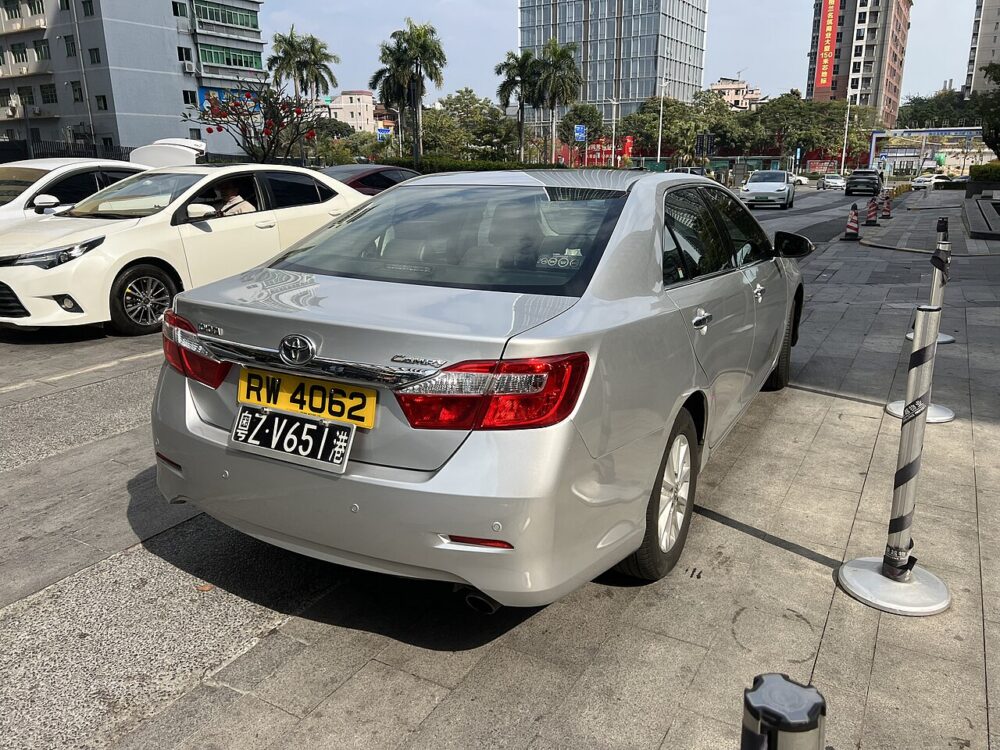
Camry trunk problems usually come down to one of two parts: the mechanical trunk latch that physically grabs the striker, and the powered trunk lock actuator that pulls or releases the latch when you hit the key fob or dash button. If your trunk won’t open or close correctly, your first job is to figure out which of those has failed, then match the right part number for your model year and decide whether you want genuine Toyota or an aftermarket replacement.
For most US buyers, OEM Camry trunk latches and actuators are easiest to source through online Toyota dealer parts catalogs that list exact part numbers and fitment years. Aftermarket latch assemblies that cross‑reference those OEM numbers are widely available on major marketplaces like Amazon and eBay, and they can be good value if you’re comfortable trading brand authenticity for price.
How Toyota Camry trunk latches fail and what needs replacing
The Camry’s trunk system has a few distinct pieces:
- Mechanical latch / trunk lid latch – the metal assembly bolted to the trunk lid that catches the striker and holds the trunk closed.
- Trunk lock actuator motor – a powered unit that moves a lever on the latch when you use the remote, dash switch, or key.
- Release cables and interior safety handle – linkages that let you open the trunk from inside or via the driver’s seat.
Common symptoms and what they usually point to:
- Trunk won’t pop open with the remote, but opens with the key or interior lever. Often the actuator motor is weak or dead, while the mechanical latch is still fine.
- Trunk won’t stay closed, bounces back open, or needs slamming. This typically indicates a worn or misaligned latch assembly, or damage to the striker.
- No response at all from any release (remote, dash, key), but the lid is clearly latched. Could be a jammed latch, broken cable, or a failed powered latch on certain years.
For 2007-2011 Camry models, multiple dealer parts sites list a trunk lock actuator motor under part number 64610-33080, described as fitting 2007-2011 Camry vehicles and advertised as genuine OEM. One example is the listing at Toyota OEM Parts Online.
On the mechanical side, sites like ToyotaPartsDeal’s 2009 Camry trunk lid latch page show a trunk lid latch for a 2009 Camry as a genuine OEM direct replacement, using SKU 64600-06010. A YouTube walkthrough for removing and bench‑testing a 2007-2011 Camry trunk latch also calls out 64600-06010 as the OEM part number for the powered latch assembly for that generation, reinforcing that you may be dealing with a combined latch/actuator assembly depending on trim.
The practical takeaway: watch the symptoms closely and confirm whether your Camry uses a separate actuator motor plus latch, or an integrated powered latch. That will drive which part number you need.
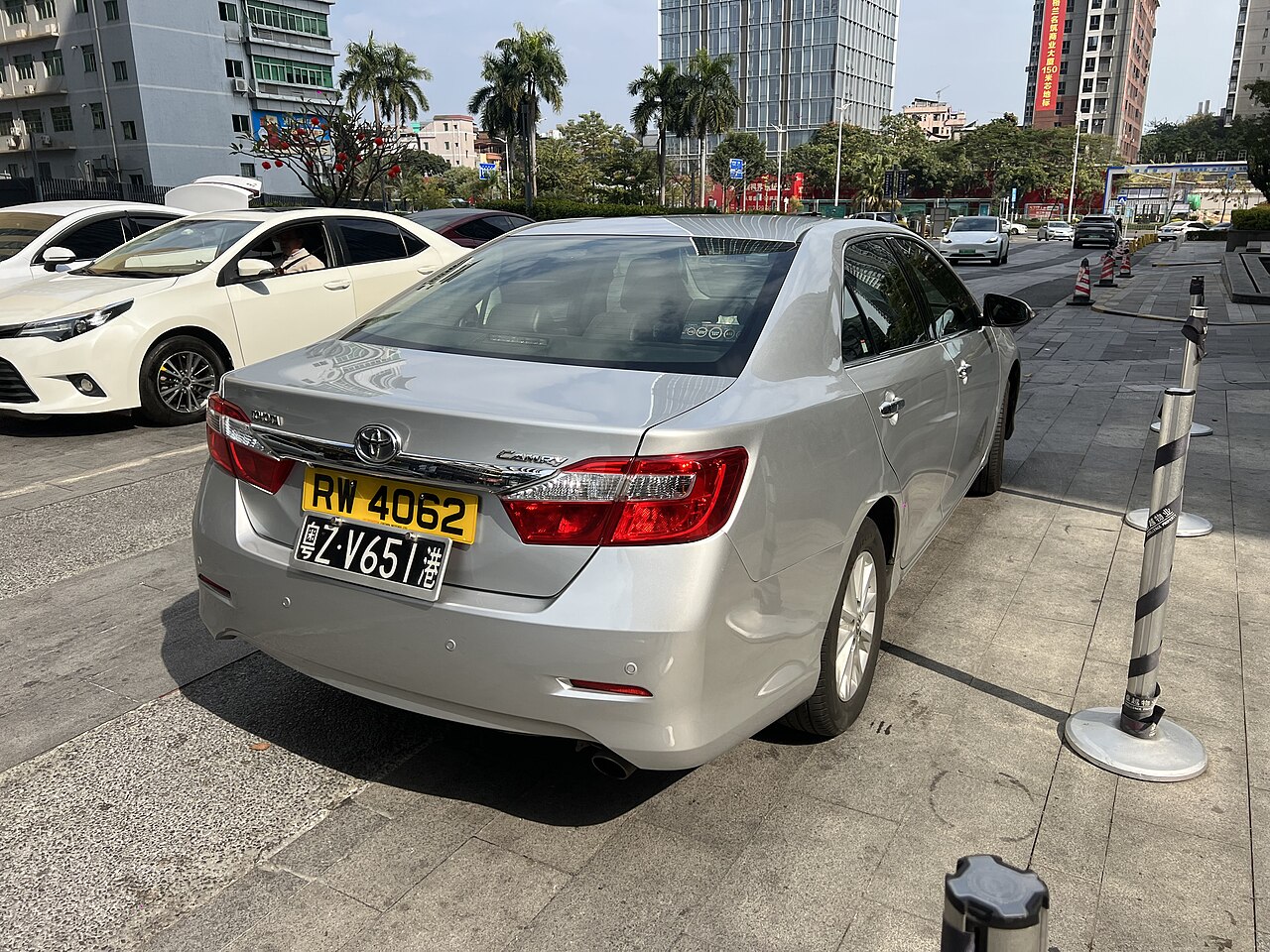
Image credit: 茅野ふたば via Wikimedia Commons, CC BY-SA 4.0.
OEM vs aftermarket Camry trunk latch and actuator types
From a buyer’s perspective, Camry trunk parts split into two main axes:
- Function type – mechanical latch vs powered actuator vs integrated powered latch.
- Source type – genuine OEM vs aftermarket replacements that reference OEM‑style numbers.
Here’s a compact view of what you’ll encounter online:
| Part style | Example related part number | Typical years mentioned | Common source type |
|---|---|---|---|
| Separate trunk lock actuator motor | 64610-33080 | 2007-2011 Camry | Toyota dealer parts catalogs |
| Trunk lid latch (mechanical/powered) | 64600-06010 | 2007-2009 Camry listings | OEM parts sites, how‑to videos |
| Aftermarket latch assembly | 64600-06041 (reference) | 2012-2017 Camry, 2013-2018 notes | Marketplace aftermarket sellers |
| Whole trunk lids/hatches | Various OEM numbers | Multiple Camry generations | eBay body‑panel sellers |
US Toyota dealer parts catalogs often position numbers like 64610-33080 as genuine OEM trunk lock actuator motors for 2007-2011 Camry models. Another dealer site, Longo Toyota Parts, presents the same part number as an OEM actuator for those years.
For the latch itself, the ToyotaPartsDeal trunk lid latch page for 2009 Camry highlights SKU 64600-06010 as a genuine OEM direct replacement for that specific model year. That kind of SKU is what you’d use to make sure you’re buying the correct mechanical latch for a 2007-2011 sedan.
On the aftermarket side, Amazon hosts replacement trunk latch lock assemblies that reference OEM‑style numbers. One listing for 2012-2017 Camry and 2013-2018 coverage describes a black trunk latch lock assembly and cites 64600-06041 as the replacement part number in its description, but it’s marketed as a non‑OEM assembly. You can see an example at Amazon’s trunk latch assembly listing.
Finally, if your trunk lid itself is damaged, eBay has categories of Camry hatches and trunk lids where sellers advertise body panels as genuine OEM and offer fitment tools. The “Genuine OEM Hatches & Trunk Lids for Toyota Camry” category at eBay shows whole lids and hatch assemblies with compatibility filters.
For individual owners, OEM latch/actuator parts make the most sense when your car is relatively new or you care about keeping everything factory‑correct. Aftermarket latch assemblies are attractive if your Camry is older, you’re out of warranty, or you’re a small reseller trying to keep retail prices low.
Where to buy the right Camry trunk latch and actuator online
Once you’ve matched your symptoms to a likely part and have a candidate number (or at least year, trim, and body style), you can decide how to shop.
1. US Toyota dealer parts sites for OEM components
Online dealer catalogs are a direct route to OEM part numbers and diagrams. For a 2007-2011 Camry with trunk unlock problems, you can look up the trunk section and find listings like the Trunk Lock Actuator Motor 64610-33080, as shown on Toyota OEM Parts Online and Longo Toyota Parts.
If your issue is the latch itself, catalogs that break down the trunk lid latch assembly—such as the 2009 Camry page at ToyotaPartsDeal—let you confirm the OEM SKU (64600-06010 in that example) against your VIN or model details. This is especially useful if your car has a powered latch and you’re unsure whether you need the combined assembly.
2. Marketplace listings for OEM‑marketed and body parts
For broader body hardware or used components, eBay can be helpful. The Camry trunk‑lid category at eBay shows whole trunk lids and hatches, and many sellers advertise their parts as genuine OEM while offering fitment filters by year and trim.
These tools are useful for:
- Finding a used or take‑off latch assembly when new OEM pricing is high.
- Sourcing a complete trunk lid with latch included after collision damage.
You still need to cross‑check the specific part numbers (like 64600-06010 or 64610-33080) and your exact model year to avoid mismatches.
3. Amazon‑style marketplaces for aftermarket latch assemblies
If you’re comfortable with non‑Toyota parts and looking for savings, aftermarket latch assemblies are common. The labwork‑branded latch assembly on Amazon is one representative example, marketed as fitting 2012-2017 Camry and 2013-2018 coverage and referencing 64600-06041 as a replacement number.
For small ecommerce sellers, these aftermarket assemblies offer margin potential: you can stock a generic latch that fits a range of late‑model Camrys and price it below OEM, as long as you:
- Make your fitment charts match the seller’s stated years and cross‑referenced numbers.
- Clearly label the part as aftermarket, not genuine Toyota.
4. Installation tools and safety
Swapping a trunk latch or actuator on a Camry is a moderate DIY job that typically involves removing trunk trim panels, disconnecting linkages, and unbolting the latch or actuator. The YouTube video that covers 2007-2011 Camry trunk latch removal and bench testing (using part number 64600-06010 as its OEM reference) shows general steps and how the powered latch engages.
If you’re doing the job yourself, plan on basic hand tools (socket set, screwdrivers, trim removal tools) and be careful with interior trim and the emergency release handle. If any step is unclear—or the car’s security system is tied into the trunk lock—it’s reasonable to let a professional shop handle the installation while you supply the correct part.
The core buying move is the same either way: diagnose whether it’s the latch, actuator, or both, confirm the right part number for your generation (2007-2011 vs 2012-2017, etc.), and then choose between dealer OEM and aftermarket based on how long you plan to keep the car and how sensitive you are to fit and longevity.