
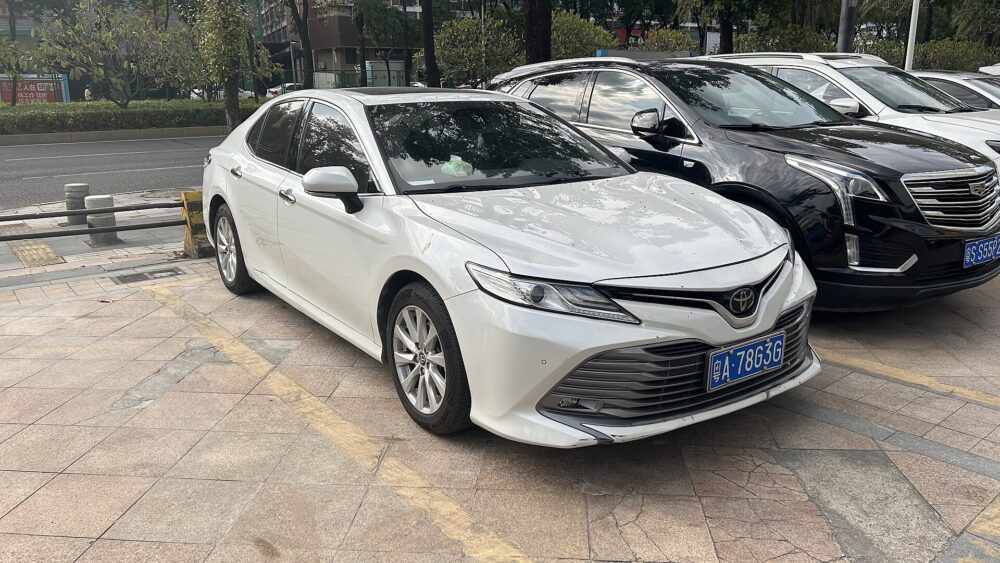
For a 2025-2026 Toyota Camry, the cleanest path to an OEM bumper replacement is to use genuine Toyota parts or a specialist that works from your VIN. Toyota’s own autoparts site for the 2026 Camry Hybrid lists factory bumper and body components, while third‑party retailers catalog OEM bumper covers as specific SKUs. From there you decide: pay extra for a painted OEM bumper that arrives ready to bolt on, buy a primed cover and have a local shop paint it, or switch to an aftermarket body‑kit bumper for a more aggressive look but less factory‑like appearance.
That choice depends on what actually broke, how picky you are about fit and finish, and whether you’re a single‑vehicle owner or a small reseller planning repeat orders.
What counts as bumper parts on a 2025-2026 Toyota Camry?
On recent Camry models, the “bumper” is a stack of parts, not one big piece. For the front and rear, you’ll typically see:
| Component | What it does on the car | How it’s usually sold for 2025-2026 Camry |
|---|---|---|
| Bumper cover | Visible plastic outer skin with openings & trim | As individual front/rear covers, OEM or aftermarket |
| Absorber/impact foam | Energy‑absorbing layer behind the cover | Separate part in OEM catalogs |
| Reinforcement bar | Metal beam that supports the system | Listed as “reinforcement” or “bumper bar” |
| Trim & moldings | Sport lips, chrome accents, fog bezels, etc. | Individual pieces, often trim‑specific |
| Brackets & hardware | Mounting points, clips, fasteners | Separate part numbers or hardware kits |
For the 2026 Camry Hybrid, Toyota’s official parts catalog shows front bumper assemblies broken down into these kinds of components, with individual part numbers and fitment notes. You can see an example catalog view on the Toyota autoparts site for the 2026 Camry Hybrid.
That breakdown matters because a parking‑lot tap that scuffs plastic doesn’t necessarily mean you need the absorber or reinforcement bar; a harder crash might.
For buyers, this means you shouldn’t just search “Camry bumper” and click the first result. You need to know if you’re replacing:
- Just the cover (most common after cosmetic damage)
- Cover plus absorber (mid‑level impact)
- Full assembly including reinforcement (serious impact that may involve structural inspection)
The answer changes your budget, shipping complexity, and which channels make sense.
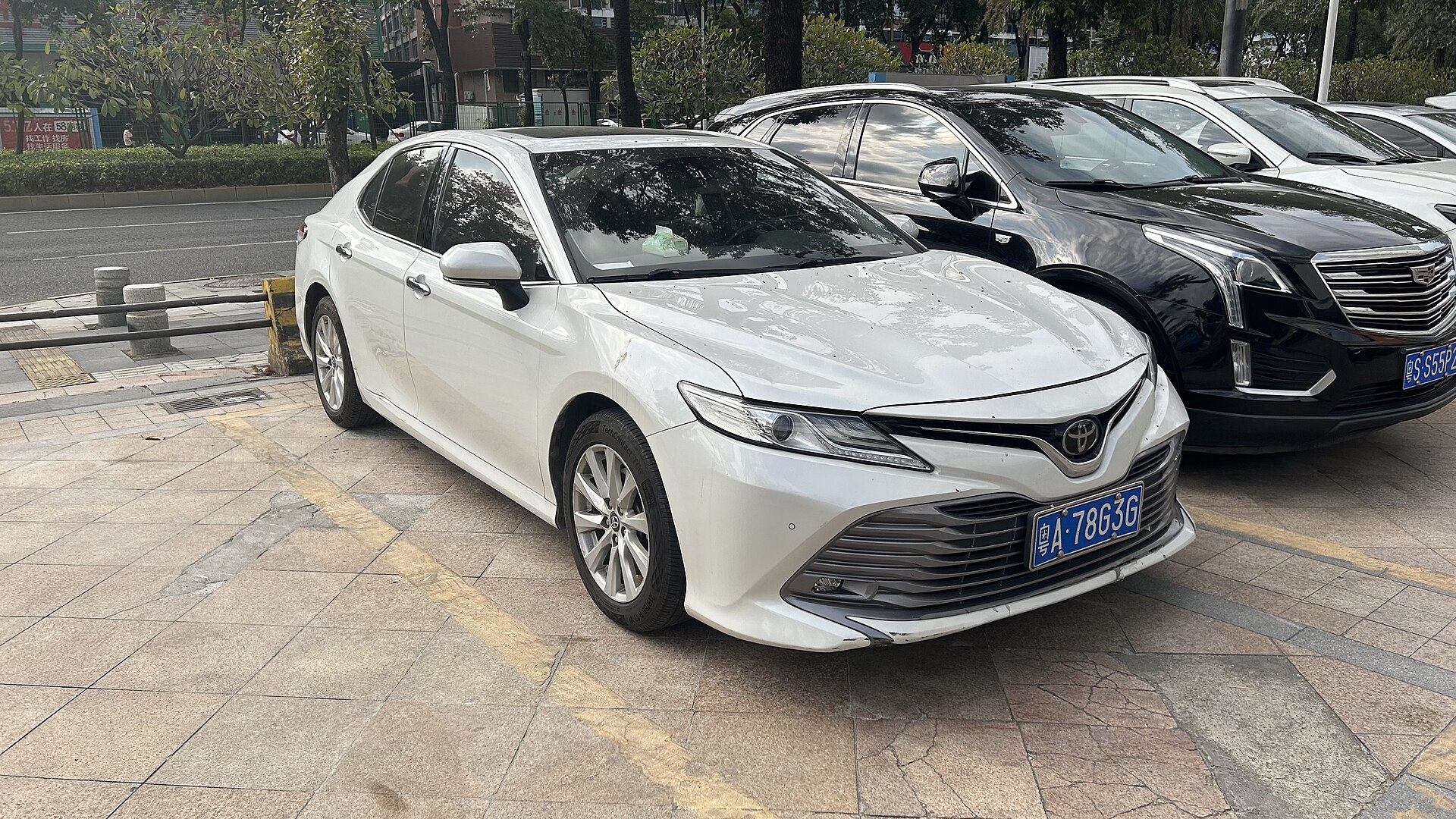
Toyota Camry front view. Photo by メイド理世, CC BY-SA 4.0, via Wikimedia Commons.
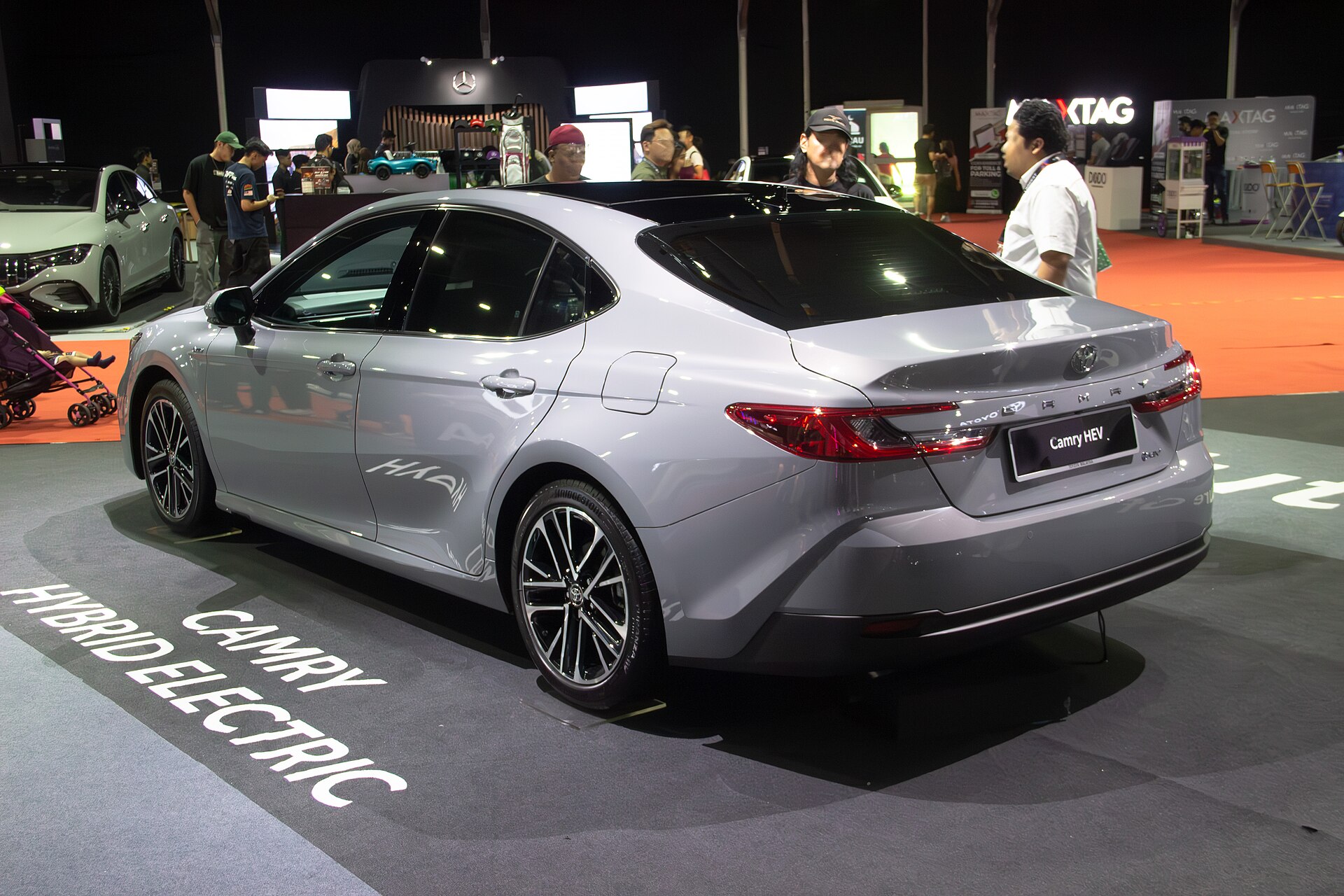
Rear view of a 2025 Toyota Camry XV80. Photo by Hdbdp4, CC BY 4.0, via Wikimedia Commons.
OEM, painted, and aftermarket bumper options for 2025-2026 Camry
You’ll generally see four broad categories of bumper parts for these model years.
1. Genuine OEM bumper covers from Toyota
Toyota’s autoparts portal for the 2026 Camry Hybrid lists genuine front and rear bumper components sourced directly from Toyota. Dealer‑affiliated sites (for example, one wholesaler that catalogs a Toyota bumper cover as part number 521190X954) treat these covers as discrete SKUs tied to specific years and trims, such as the listing on wholesaledirect.moderntoyota.com.
This path is best if you want factory‑correct fitment and material. You’ll still need to deal with paint: most OEM covers ship unpainted or primed. For a one‑off replacement on a newer car, owners usually pair an OEM cover with a local body shop that matches the color.
2. Painted OEM services
Painted OEM services go one step further by handling both the part and the paint for you. One specialist offers a painted 2025-2026 Toyota Camry front bumper using a genuine Toyota part, matched to your vehicle’s VIN and paint code and shipped ready for installation, as shown on Painted OEM Parts.
This option makes sense when:
- You don’t have a preferred local body shop.
- You’re willing to pay a premium for a bumper that arrives painted and ready.
- You care about a factory‑like color match without managing the paint process yourself.
Color match is never absolutely guaranteed in text, but using the VIN and official paint code is as close as you’ll get without blending adjacent panels.
3. Primed replacement covers targeting specific trims
Mass‑market platforms list primed front bumper covers for 2025-2026 Camry SE/XSE models, including hybrids. These parts are described as compatible with particular trims and arrive ready for paint (not bare plastic), such as the primed cover shown in an Amazon catalog page for SE/XSE Camry models.
This is the middle ground: you’re typically buying an aftermarket cover that approximates OEM fit, then paying a local painter. It can be cost‑effective, but you must watch trim compatibility. SE and XSE styling differs from LE or other trims, and an SE/XSE‑specific cover may not look right or mount correctly on another model.
4. Styling‑focused body‑kit bumpers (e.g., YOFER)
For buyers chasing a more aggressive look, YOFER‑branded bumpers are a different category. A YOFER 2025-26 Camry front bumper is marketed as a body‑kit style part: multiple factory‑match colors, included daytime running lights (DRLs), and mounting hardware, with coverage across trims, as illustrated by the product listing on hirevsports.com.
This is less about repairing collision damage and more about customizing the car. You should treat these as styling components, not safety upgrades. They may change airflow and ground clearance, and they’re designed to stand out visually rather than replicate factory function.
Where to buy Camry bumper parts and how to choose the right channel
For a 2025-2026 Camry, the real decision isn’t just what bumper you buy but where you buy it.
Toyota‑affiliated parts sites
If you prioritize fit and part integrity, start with Toyota‑linked catalogs:
- The official Toyota autoparts site for the 2026 Camry Hybrid shows a spread of genuine front and rear bumper components, including absorbers, reinforcement bars, and covers.
- Dealer wholesale sites catalog OEM bumper covers as specific part numbers and usually let you select by year, model, and trim.
Use these when you want to be certain you’re getting a genuine part tied to your VIN or trim, and you’re comfortable arranging paint separately.
Painted OEM specialists
Painted OEM services are niche, but practical for newer Camrys. A retailer such as Painted OEM Parts offers a painted 2025-2026 Camry front bumper (genuine OEM) and states that it uses your VIN to order the correct bumper and color.
This channel suits:
- Single‑vehicle owners after a straightforward, one‑time repair.
- Small shops that don’t have in‑house paint but want ready‑to‑install OEM bumpers.
You trade a higher part cost for lower coordination overhead.
Aftermarket styling brands and sports retailers
For YOFER‑style bumpers, sports and tuning retailers are the primary channel. A performance‑focused shop lists a YOFER 2025-26 Camry front bumper with multiple factory‑match colors, DRLs, and hardware.
Pick this route if your goal is visual transformation, not factory restoration. For small ecommerce businesses, these parts can anchor a niche catalog focused on Camry customization rather than collision repair. Be cautious about how you describe them in your own listings: avoid implying they perform like OEM safety parts without formal testing data.
Mass marketplaces and primed replacement covers
Large marketplaces host a mix of primed replacement covers and miscellaneous bumper components. One Amazon listing, for instance, offers a primed front bumper cover compatible with 2025-2026 Toyota Camry Hybrid SE/XSE.
These are useful when:
- You’re cost‑sensitive and willing to accept an aftermarket cover.
- Your trim matches exactly what the listing describes (SE/XSE vs LE or other trim differences matter).
Search results can be noisy. A generic OEM Camry bumpers link on a marketplace like eBay currently returns an error page instead of a clean catalog, illustrating how broad “Genuine OEM” searches may lead to incomplete or broken results.Source
For buyers and small resellers, that’s a cue to search via very specific filters: year, exact trim, and part type (for example, “2025 Camry SE front bumper cover, primed”).
Cross‑border sourcing considerations for small resellers
If you’re a small ecommerce business thinking about cross‑border sourcing of bumper parts, consider:
- Volume and SKUs: Bumper covers are bulky; importing makes more sense if you’re standardizing on a few popular trims (e.g., 2025-2026 SE/XSE) rather than carrying every combination.
- Paint vs. no paint: Shipping painted bumpers risks surface damage and color disputes. Many cross‑border buyers stick to unpainted or primed covers and rely on local paint.
- Regulatory and safety positioning: Avoid marketing imported aftermarket bumpers as crash‑equivalent to OEM unless you have test data. Position them as cosmetic or styling replacements.
For one‑off replacements and most retail customers, domestic OEM or painted OEM channels are usually the least painful route. Cross‑border is more of a fit for businesses chasing a price or styling niche with clear expectations on what these bumpers are—and aren’t.